From Recollection to Recognition
Plato, in the Phaedrus, presents the doctrine of recollection (anamnesis): love awakens the soul’s memory of eternal realities that it once beheld. From the perspective of Trika Shaivism, however, a more fitting word is recognition (pratyabhijñā) rather than recollection. Nothing absent is recovered. Nothing forgotten is remembered. What matters is the direct recognition of what is present Here and now.
Love prompts recognition; recognition is the precondition for knowledge, and knowledge is the precondition for the right handling of words (rhetoric).
Recollection suggests remembering something absent.
Recognition suggests directly noticing what is present.
Love awakens recognition of one’s true nature. Knowledge follows because reality is now seen rather than merely inferred. Only then can language serve truth instead of obscuring it.
Liberation is not acquiring something new or remembering a forgotten past. It is recognising what has always been the case.
#Plato #Anamnesis #Recognition #Nonduality #KashmirShaivism
T/Here: London, New York, and the Stillness of the Centre
I first encountered the notation t/here in Heidegger many years ago. I can no longer remember which work it came from, but it stayed with me because it conveyed what ordinary language could not. I have since adapted it for the Headless Way to express a phenomenological insight difficult to state.
The notation distinguishes two simultaneous standpoints.
there refers to the distance between regional appearances.
Here refers to the non-local Centre—the First Person, Capacity, or Awake Emptiness.
T/Here means that every appearance is genuinely there while simultaneously being given Here.
Every form there is given Here. Two galaxies may be millions of light years apart, yet both are perceptions at zero distance from the perceiving consciousness.
A galaxy is there as an appearance, but it is given Here.
The Centre is therefore empty Here, because no form is found at the Source.
Yet the Centre is simultaneously full, because every appearance is already given Here.
This can be illustrated by a flight from London to New York.
Regionally, London and New York are approximately 3,450 miles apart.
The journey takes about eight hours.
The aircraft crosses the Atlantic.
The distance is real.
The duration is real.
There is genuinely a there.
But from the standpoint of the Centre:
London is given Here.
The aircraft is given Here.
The Atlantic is given Here.
New York is given Here.
The distance between London and New York is 3,450 miles.
The distance between London and Here is zero.
The distance between New York and Here is zero.
Both cities are equally Here.
The Here never moves from London to New York.
It never accompanies the aircraft across the Atlantic.
It never arrives.
It never departs.
Only the appearances change.
The same is true of time.
The flight between London and New York takes about eight hours.
Departure precedes arrival.
The sequence is perfectly real regionally.
Yet the time in London is always Now.
The time in New York is always Now.
The aircraft is experienced Now.
The arrival is experienced Now.
Now never travels through time.
Events arise and pass within it.
The journey from Here to Here is always Now and never takes place.
Not because the flight is unreal.
Not because London and New York are illusions.
But because every there is already Here, every then is already Now, and every will-be is already Now.
The notation T/Here holds both truths together.
If I simply write, London is Here, it sounds as though London has somehow ceased to be London.
If I write, London is there, the First Person disappears from view.
But London is T/Here expresses both truths at once.
London remains regionally there.
Yet London is given Here.
Neither standpoint is sacrificed.
The slash is not merely punctuation. It performs philosophical work. It signifies the inseparability of the regional and the First Person, of appearance and Capacity, of there and Here.
This is the meaning of T/Here.
There is genuinely a world of distance, movement, and time.
Yet every appearance in that world is already given Here, at zero distance from the Centre.
Thus the Centre is not an empty void standing behind the world.
Nor is it a witness observing the world from afar.
It is empty because no form is found at the Source.
It is full because every appearance is already given Here.
The world never leaves the Centre.
The Centre never travels through the world.
Every appearance is already T/Here.
The same applies to walking.
Every destination appears there, but it is given Here.
A clock measures the time from A to B, yet the Centre makes no journey. It is already at the destination towards which the body walks.
The body moves.
The world changes.
The clock advances.
The Centre remains still.
The journey from the Centre to the Centre is timeless and covers zero distance. There is nowhere else to arrive.
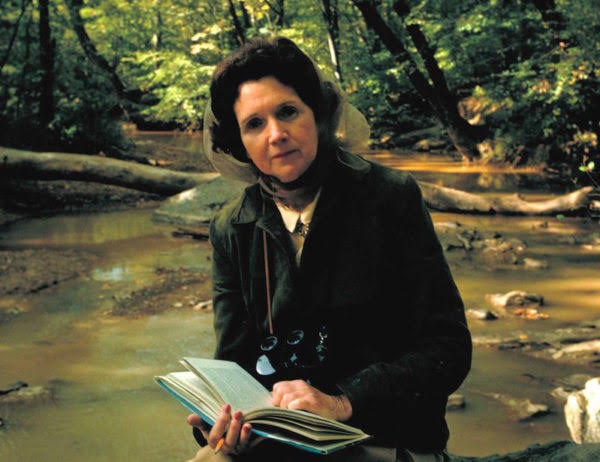
“The question is whether any civilization can wage relentless war on life without destroying itself, and without losing the right to be called civilized.”
— Rachel Carson
One implication of this two-way looking is that it helps explain why psychological therapies can be so effective. Psychology has shown that awareness is not limited to perceiving objects; it can also become aware of its own contents. For example, I may be aware of the thought, “I am Superman,” while simultaneously being aware that I am having that thought. This capacity for meta-awareness is fundamental to mindfulness and many forms of psychotherapy because it allows thoughts to be observed rather than automatically believed or identified with.
The Headless Way goes one step further. Awareness is not only aware of the objects and thoughts appearing within it; it is simultaneously aware of itself as the clear, boundless Capacity in which they arise. Two-way looking is therefore not merely awareness reflecting upon its contents, but awareness recognising both itself and its contents in one indivisible act.
The Face That Faces One Way, and the No-Face That Faces Both
How does the face in the mirror differ from this No-Face at the Centre?
There are many complete contrasts:
No-face / face
Awareness / no awareness
Transparency / opacity
Formlessness / form
First Person / Second Person
Non-locality / locality
Spacelessness / space-bound
Timelessness / time-limited
Boundlessness / bounded
Capacity / no capacity
No-will / will
But there is another very revealing contrast.
The opaque face in the mirror faces in one direction only. Its eyes are directed outwards. Phenomenologically, that is all that can be said. It faces outwards, opposite to oneself, as a Second Person confronting what grammar calls the First Person. It is a visible object.
The No-Face is open both ways simultaneously, without effort or choice.
Looking “in,” there is clear, self-knowing Awareness: no face, no form, no boundary.
Looking “out,” there is the world in all its richness: colours, sounds, thoughts, sensations, people, trees, and stars.
These are not two successive movements of attention, nor two different acts of awareness. They are one indivisible fact. Awareness knows itself while simultaneously knowing the forms appearing within it.
This is what Douglas Harding meant by two-way looking. It is not a matter of alternating between inspection and perception. Rather, every perception is the self-revelation of the self-aware Absence at the Centre. The world appears Here, at zero distance, within the Capacity that is simultaneously aware of itself.
The face in the mirror can only face one way.
The No-Face at the Centre is simultaneously open to itself and to the entire world.
The face in the mirror—which we often mistakenly equate with our “true self”—is limited by the very nature of an object. It appears as a Second Person, facing me across an apparent divide.
The No-Face at the Centre (Zen’s Original Face), however, is irreducibly First Person. But the First Person is not itself a person. It is not another object at all, but the very Capacity within which the mirror, the face, and indeed the entire world appear.
#HeadlessWay #Phenomenology #Awareness #SelfInquiry #OriginalFace #MirrorFace
Astonishment and Gratitude
One peculiar feature of this ontological astonishment—the fact that there is awareness to be aware of anything at all—is that it is accompanied by a deep gratitude without an object. It is not gratitude for health, wealth, success, or achievement. It is gratitude simply for there being anything at all: for having occurred at all, for there being a cosmos, for there being beings capable of asking questions.
This gratitude is unlike ordinary gratitude, which is directed toward some particular gift or giver. It arises prior to all such distinctions. It is the quiet recognition that existence itself is an unimaginable gift, even though there is no obvious recipient and no identifiable benefactor.
The astonishing fact is not that life contains wonderful things. It is that there is a world in which there can be anything whatsoever.
#Philosophy #Wonder #Gratitude #Existence #Astonishment
The Greater Astonishment.
Dear Heisenberg,
It is not nature that is absurd; it is our categories of understanding.
But on a deeper level, it is not quantum mechanics that is most astonishing. It is that anything exists at all.
That there is something rather than nothing is the original wonder—the one mystery that never grows stale. Every possession, every consumer product, every achievement, every theory eventually fades into familiarity. But the sheer fact that there is a world, that anything appears at all, remains inexhaustibly fresh.
The deepest astonishment is not that nature refuses to fit our concepts. It is that there is a Nature to refuse them.
Are You Enlightened?
Someone asked me, “Are you enlightened?”
I replied, “Questions like this need to be answered with precision. Why don’t you come to my house and we’ll talk it over with some friends over a cup of tea?”
I got three friends together, along with the questioner, and invited everyone to stand in a circle in the middle of the room, linking arms. This is one of Douglas Harding’s Headless Way experiments.
Then I asked everyone to look down.
There was a circle of feet and legs: different shoes, different clothes, different bodies. Colour, form, opacity. Four separate human beings. From this third-person perspective, there was obvious multiplicity.
Then I asked everyone to look up.
Where each person expected to find their own head, what was actually present?
No head. No face. No boundary. No separation.
Instead, there was transparent, self-aware Capacity. Many bodies arose from no head at all. Subjectively, there were not four awarenesses looking at one another. Nor was there one awareness standing over against many. There was simply headlessness—self-aware Capacity—with no second Centre anywhere.
Then I turned back to the questioner and said:
“Now ask your question again.”
“Are you enlightened?”
Which you?
The shoes in the circle? The body? The personality? No third-person appearance is enlightened.
Or the transparent, self-aware Capacity? That does not become enlightened. It is already the light by which everything is known.
Four No-Heads do not add up to one, so no person is enlightened. The I AM at your Centre is already timelessly enlightened.
The questioner responded:
“If there is no difference between us, how come you know about this and I don’t?”
I replied:
“I don’t know something that you don’t. The Centre is the same. The difference is that I take my Seeing seriously. I don’t imagine that I have something on my shoulders that, in fact, I do not, and I relate to the world from that Vision. You imagine that you have something at your Centre that you do not, and you organise your world around that misperception. That is the only difference.”
#HeadlessWay #HeadlessCircle #SelfInquiry #IAm #Seeing #Enlightenment
Capacity, Not a Bowl: Traherne and the Headless Way**
"I felt no dross nor matter in my soul,
No brims nor borders, such as in a bowl
We see. My essence was capacity,
That felt all things;
The thought that springs
Therefrom's itself…
It acts not from a centre to
Its object as remote,
But as present is when it doth view;
Being with the Being it note
Whatever it doth do"
— Thomas Traherne
Douglas Harding repeatedly describes our First Person Nature as Capacity for the world—the boundless, edgeless openness in which everything appears. Traherne describes the soul in these same terms:
“No brims nor borders” → no experienced edge to Awareness.
“My essence was capacity” → identity is not a thing but the capacity for all things.
“That felt all things” → everything is immediately present in Awareness.
“It acts not from a centre to its object as remote” → there is no little observer inside the head looking out at distant objects.
“Present is when it doth view” → whatever appears is given immediately, at zero distance, in experience.
That last line especially anticipates Harding's insistence that what appears "there" is given Here. Vision is not a subject projecting outward toward a remote object; the object is already present in Capacity.
#ThomasTraherne #DouglasHarding #TheHeadlessWay #MysticalPoetry
Traherne and the Interminable Temple
Thomas Traherne — God I love this Anglican priest! — looked into himself, and this is what he found:
“O the riches of thine infinite goodness in making my Soul an interminable Temple, out of which nothing can be made, from which nothing is removed, to which nothing is far off; but all things immediately near, in a real, true, and lively manner.”
— Centuries of Meditation
What is he saying?
Traherne is describing the Soul not as one object among others, but as the boundless Temple in which everything is immediately present. It is “interminable” because it has no experienced edge or limit. Nothing can be added to it or taken away from it. It is not a thing in the world, but That within which the whole world appears.
This immediately reminded me of Douglas Harding’s First Person perspective. Looking from the Centre, there is no boundary Here. Mountains, trees, people, stars, and distant galaxies may be separated by immense distances, yet they are all given at zero distance in Awareness.
Traherne’s words — “to which nothing is far off” — say it exactly.
The Andromeda Galaxy is over two million light-years away, yet it appears immediately Here. Objectively it is there; subjectively it is Here. Or perhaps it is best written: t/here.
Everything that can be stripped away — body, thoughts, memories, sensations — may disappear. But what cannot be stripped away is this No-thing at the Centre: the boundless, self-knowing openness in which all things are given.
Death may remove every appearance, but it cannot touch That, for That is not another appearance.
A seventeenth-century Anglican priest looked into himself and found what contemplatives across the centuries have found before him.
The Temple was never elsewhere.
#Traherne #InterminableTemple #FirstPersonPerspective #AwarenessWithoutBoundary
Aristotle’s Anagnorisis and Trika’s Pratyabhijñā: An Important Distinction
The comparison between Aristotle’s anagnorisis and the Trika doctrine of pratyabhijñā is illuminating, but so too is the difference.
Aristotle defines anagnorisis as a movement from ignorance to knowledge that transforms relationships and, consequently, action. In literature, this usually involves the discovery of previously hidden facts. Oedipus learns his true parentage. Karna discovers that the Pāṇḍavas are his brothers. Odysseus is recognised after returning home in disguise. New information changes the meaning of the world.
The knowledge involved is personal, social, and historical. It concerns identity within the world: who my parents are, who my brothers are, who this stranger really is. It is biographical knowledge, and it has profound consequences for how one acts.
Pratyabhijñā—Recognition—belongs to a different order.
In the Trika tradition, Recognition is not the acquisition of new information but the recognition of what has always been the case: that one’s true identity is Śiva, universal Consciousness. Ignorance falls away because what is ever-present is recognised.
The knowledge involved is therefore ontological rather than biographical. It does not answer the question, “Who am I within the world?” but “What am I in reality?” It is not the discovery of another fact about oneself, but the recognition of one’s true nature.
Douglas Harding’s Headless Way belongs with pratyabhijñā rather than anagnorisis. The experiments do not reveal some hidden object that was previously inaccessible. They remove layers of assumption and identification until what has always been present becomes obvious. Looking at what is here, at the Centre, I discover nothing new. Rather, I recognise what has been overlooked from the very beginning.
Aristotle’s recognition is therefore fundamentally additive. Something previously unknown becomes known.
Trika’s Recognition is fundamentally subtractive. Nothing is added. Misidentification falls away, revealing what was never absent.
One uncovers what was hidden.
The other recognises what has always been immediately present.
Both transform life, but by different paths.
Aristotle is concerned with our identity within the world. Abhinavagupta and Harding are concerned with the identity from which the world is known.
#Anagnorisis #Pratyabhijna #HeadlessWay #KashmirShaivism
Recognition (Anagnorisis): The Self-Knowledge That Changes Everything
In ‘The Poetics’, Aristotle names one of drama’s most decisive events: recognition, anagnorisis. A movement from ignorance to self-knowledge that transforms relationships, and with them, action.
World literature is filled with such moments.
In ‘The Mahābhārata’, Karna discovers that the Pāṇḍavas, whom he has been fighting, are in fact his own brothers. The battlefield has not changed, but its meaning has. The same people are now seen in a completely different light.
Oedipus discovers who he really is. Odysseus, disguised as a beggar, is finally recognised. Fairy tales return again and again to the same pattern: the prince becomes a beggar, or the beggar discovers that he is really a prince.
The world has not changed. The knowledge has.
Recognition transforms the meaning of every relationship. Friends become enemies. Enemies become family. Identity is reinterpreted, and with it the entire field of action.
Douglas Harding’s Headless Way can be understood as a recognition of a different kind. It is not the discovery of a hidden social identity, but of one’s first-person identity. Looking for what is at the Centre, I do not find a face, a head, or a bounded observer. I find clear, self-knowing Aware Capacity for the whole world.
In a different register, Abhinavagupta places Recognition (pratyabhijñā) at the very heart of the Trika tradition. It is not the acquisition of new knowledge, but the recognition of what has always been the case: that one’s true identity is Śiva, the universal Consciousness appearing as every finite subject. The world remains, but it is disclosed in an entirely different light because the knower has recognised their own real nature.
Nothing outward changes. The same people remain. The same responsibilities continue. But the meaning of everything is transformed.
The stranger is no longer absolutely other. Every face becomes a reminder of the face-free Centre from which it is seen. Conflict is recontextualised. Compassion is no longer merely a moral ideal but the natural consequence of recognising a deeper kinship.
Recognition is never merely intellectual. It changes how we act because it changes who we understand ourselves to be.
As Aristotle writes in The Poetics, recognition is “a change from ignorance to knowledge, producing either friendship or hatred in those who are destined for good fortune or ill fortune.”
#Anagnorisis #Pratyabhijna #HeadlessWay #Recognition
The Primacy of Self-Knowledge
• “To understand everything except one’s own self is very comical.”
Kierkegaard, Unscientific Postscript.
Kierkegaard suggests that intellectual brilliance is almost absurd if it is not accompanied by self-understanding. It is a criticism of objective knowledge pursued at the expense of subjective existence.
• “I will see if I have no meaning, while the houses and ships have meaning.”
Walt Whitman, “By Blue Ontario’s Shore.”
Whitman rejects the idea that human beings are less meaningful than the objects they create. The question of meaning must begin with the self, not merely with the world or the things we create.
• “If thou desirest peace of mind and true unity of purpose, thou must put all things behind thee, and look upon thyself.”
Thomas à Kempis, Imitation of Christ.
Here the emphasis is contemplative. Peace comes by withdrawing attention from the multiplicity of things and turning towards oneself.
• “I will confess then what I know of myself; I will confess also what I know not of myself.”
St Augustine, Confessions.
Augustine acknowledges that the self is partly hidden even from itself. Genuine self-knowledge includes humility before the mystery within.
In Summary
Taken together, the quotations express four complementary insights:
Self-knowledge is more important than knowledge of the world (Kierkegaard).
The question of meaning must begin with the self, not merely with the world or the things we create (Whitman).
The path begins by turning attention towards oneself (à Kempis).
That inward journey reveals both what is known and what remains mysterious (Augustine).
#SelfKnowledge #Philosophy #Contemplation #KnowThyself
When Hera Speaks: Homer and the Gift of Insight
It is Hera who puts the thought into Achilles’ mind to gather the Greeks after nine days of Apollo’s plague devastating the Greek camp.
It is easy to dismiss this as primitive superstition. But doing so misses something important.
Genuine insight often arrives from beyond the known. It is not merely the rearrangement of memory or the mechanical working of the intellect. It comes as an irruption—an intervention. Suddenly, a new possibility appears.
Different traditions give this mystery different names. It may be called grace, intuition, inspiration, the unconscious, or a flash of knowing. Homer gives it a divine face: Hera.
Achilles is not presented as the ultimate source of the idea. The thought comes to him. The ego is rarely the origin of genuinely creative insight; it is the recipient.
Where psychoanalysis speaks of the unconscious, Homer speaks of Hera. Where a Christian may speak of grace, a scientist of intuition, or a mystic of divine inspiration, Homer speaks of a goddess whispering into the human heart.
Pure Land Buddhism expresses a similar intuition through the distinction between self-power (jiriki) and Other-power (tariki). Liberation is not achieved solely through the efforts of the separate self but through entrusting oneself to the compassionate working of Amida Buddha. Once again, the vocabulary is different, but the underlying structure is strikingly familiar. What transforms us appears to come from beyond the calculating ego.
The names differ across cultures—Hera, grace, the unconscious, intuition, Other-power—but they point towards the same fundamental experience: our deepest insights seem to arrive as gifts rather than achievements. They break into consciousness rather than being manufactured by it.
This does not mean that these traditions are saying exactly the same thing. Their metaphysical frameworks differ profoundly. But they recognise a common feature of human experience: the ego is not the ultimate source of its most creative, transformative moments. The new enters from beyond the familiar. Whether we call that source Hera, God, the unconscious, intuition, or Other-power, the experience itself is recognisable.
#DivineInsight #HomericWisdom #OtherPower #GiftOfKnowing
The Things Myth Remembers
Modern thinking sorts texts into two categories: scientific treatise or fiction. Traditional civilizations rarely respected this division.
Take the Purāṇas in the Indic tradition. They are clearly mythological, yet they also preserve fragmentary knowledge about astronomy, medicine, temple architecture, social organisation, genealogy, ritual, and history. They are not scientific texts in the modern sense, but neither are they simply “made up.” They are repositories of cultural memory, where cosmology and observation share the same page.
Homer offers a sharper case, because of what happened next.
The Iliad is not a treatise on epidemiology, yet Apollo appears as both the sender of plague and “Mouse Lord” *Smintheus*. Whether or not this reflects a genuine folk understanding that rodents and disease often accompany one another is unprovable; ancient sources also connect the epithet to a local cult title or totemic animal worship. But consider what medieval Europe did with plague in the absence of this clue. Flagellants scourged themselves through the streets. People carried flowers and herbs against miasma—a practice that, by accident, may have offered some real protection by keeping rodents and fleas at a slight distance, without anyone understanding why. Entire towns were burned, wells poisoned by rumor, minorities massacred, all in pursuit of a cause. This was not a culture short on desperate hypotheses. It was a culture that tried almost everything.
And yet the one text sitting in its own inherited canon—a text that literally names its plague-god after a rodent—was never read as a clue. Homer was received as a poet, filtered through allegory and moral commentary, not treated as a source of natural knowledge. The channel that might have connected “Mouse Lord” to “rats spread plague” simply didn’t exist in medieval reading practice. The observation was there. The desperation was there. They never met.
This is how much traditional knowledge survives: folded into narrative rather than stated as fact, and therefore just as easily lost as preserved. Like weather sayings—“Red sky at night, shepherd’s delight” or “Clear moon, frost soon”—myths can carry generations of accumulated observation without offering a modern scientific explanation.
Rather than asking whether a myth is “true” or “false,” a better question is: What kinds of knowledge are embedded within it?
A myth can simultaneously express theology, preserve historical memory, encode practical observations about nature, and communicate ethical insight. It is precisely this richness that has allowed texts such as the Purāṇas and Homer to speak across millennia.
#Mythology #CulturalMemory #HistoryOfKnowledge #HistoryOfIdeas
Silence is the highest expression of Truth, yet it is not self-interpreting. That is why the Vedas are indispensable: they reveal the meaning of that silence.
Without revelation or instruction, silence can be understood as emptiness, ignorance, peace, boredom, or simply the absence of sound.
Most of these racists have one functioning brain cell, and in some cases they have to share it. They don’t know their own history. During the British Raj, Indians such as Sir Syed Ahmad Khan were honoured with British knighthoods, approved by Queen Victoria herself. That doesn’t fit their fantasy, so they simply ignore it. Their deepest problem isn’t Sadiq Khan—it’s historical ignorance. His very existence short-circuits their worldview.