𝗦𝘁𝗮𝗿𝘁 𝗵𝗲𝗿𝗲.
I'm reading every Warren Buffett letter, in order, starting with 1957.
One letter a week. His own words, the numbers, and the one lesson worth keeping.
#1, 1957: while he was buying, he hoped his stocks would go nowhere.
Next: 1958.
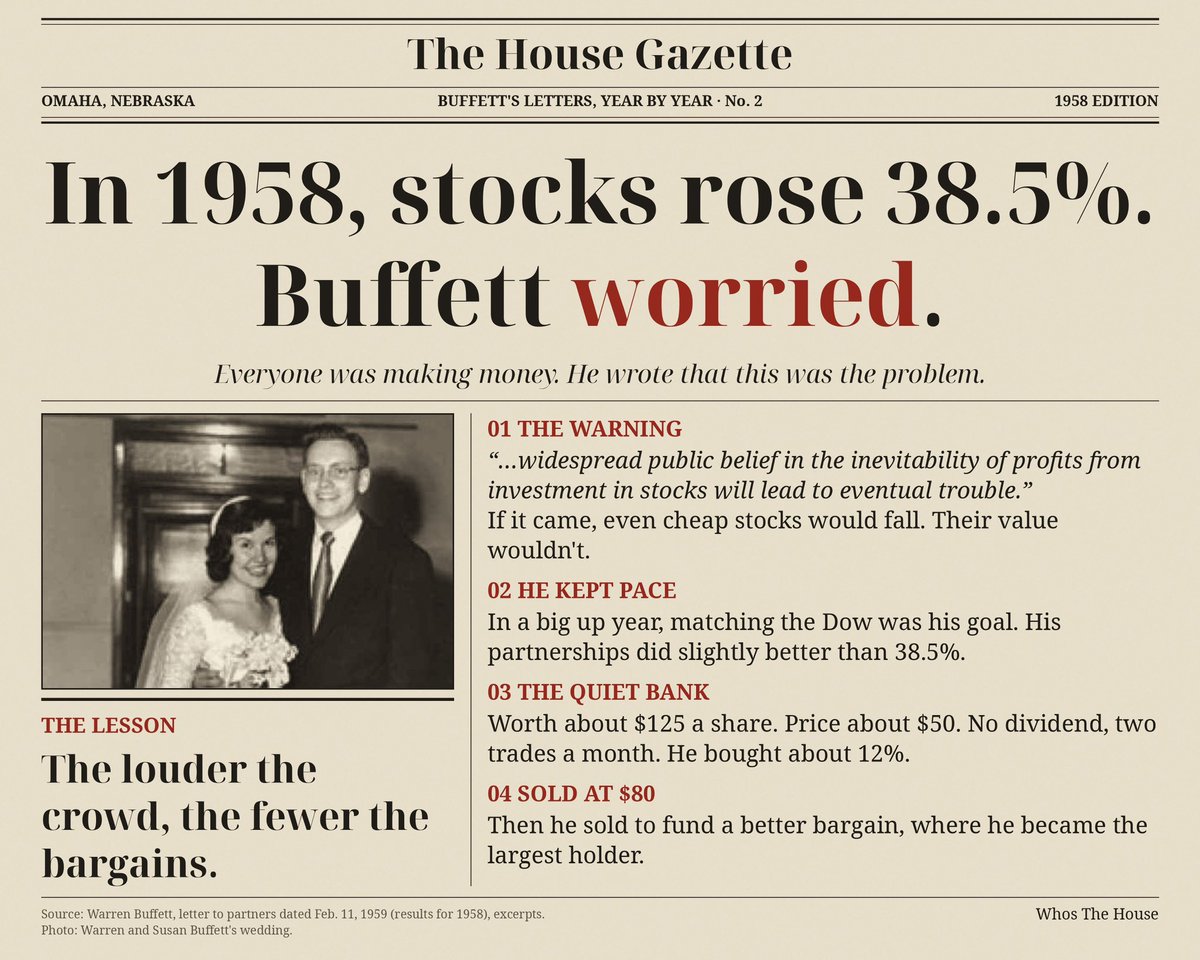
Stocks rose 38.5% in 1958. Buffett's reaction was worry.
A friend who ran an investment trust summed up the year in one word: "exuberant."
Buffett didn't forecast the market. He hunted for undervalued stocks. But he wrote that "widespread public belief in the inevitability of profits from investment in stocks will lead to eventual trouble."
He'd said that in a big up year, matching the Dow would be enough. That's what happened. His five partnerships averaged slightly better than the Dow's 38.5%.
The best part of the letter is a small New Jersey bank. Worth about $125 a share by his math. Earning about $10. Paying no dividend. Trading near $50.
He bought about 12% of it over a year or so and was glad the price stayed asleep. Then he sold at $80 to fund something better, where his partnerships became the largest holder.
The more everyone is making money, the 𝗳𝗲𝘄𝗲𝗿 𝗯𝗮𝗿𝗴𝗮𝗶𝗻𝘀 there are.
When everyone around you is winning, what do you do differently?
You’d take extraordinary care of a car if it were the only one you’d ever own.
But do you give your mind and body the same care?
Buffett’s reminder: don’t wait until 50 to start looking after what has to last your whole life.
Anyone can spot a cheap stock in a panic. The harder discipline is recognizing when high current earnings are merely a 𝘁𝗲𝗺𝗽𝗼𝗿𝗮𝗿𝘆 𝗴𝗶𝗳𝘁 𝗳𝗿𝗼𝗺 𝗰𝗼𝗺𝗺𝗼𝗱𝗶𝘁𝘆 𝗽𝗿𝗶𝗰𝗲𝘀.
In 𝟮𝟬𝟬𝟴, without urging from Charlie Munger or anyone else on his team, Warren Buffett spent $𝟳.𝟬𝟭 𝗯𝗶𝗹𝗹𝗶𝗼𝗻 accumulating 𝟴𝟰.𝟵 𝗺𝗶𝗹𝗹𝗶𝗼𝗻 𝘀𝗵𝗮𝗿𝗲𝘀 of 𝗖𝗼𝗻𝗼𝗰𝗼𝗣𝗵𝗶𝗹𝗹𝗶𝗽𝘀 right as oil and natural gas hit their cyclical peak. When crude collapsed below $𝟱𝟬 in the second half of the year, Berkshire's stake fell to $𝟰.𝟰𝟬 𝗯𝗶𝗹𝗹𝗶𝗼𝗻 by December 31—forcing Buffett to write off billions in shareholder value even while still believing oil would eventually trade higher.
"𝗪𝗶𝘁𝗵𝗼𝘂𝘁 𝘂𝗿𝗴𝗶𝗻𝗴 𝗳𝗿𝗼𝗺 𝗖𝗵𝗮𝗿𝗹𝗶𝗲 𝗼𝗿 𝗮𝗻𝘆𝗼𝗻𝗲 𝗲𝗹𝘀𝗲, 𝗜 𝗯𝗼𝘂𝗴𝗵𝘁 𝗮 𝗹𝗮𝗿𝗴𝗲 𝗮𝗺𝗼𝘂𝗻𝘁 𝗼𝗳 𝗖𝗼𝗻𝗼𝗰𝗼𝗣𝗵𝗶𝗹𝗹𝗶𝗽𝘀 𝘀𝘁𝗼𝗰𝗸 𝘄𝗵𝗲𝗻 𝗼𝗶𝗹 𝗮𝗻𝗱 𝗴𝗮𝘀 𝗽𝗿𝗶𝗰𝗲𝘀 𝘄𝗲𝗿𝗲 𝗻𝗲𝗮𝗿 𝘁𝗵𝗲𝗶𝗿 𝗽𝗲𝗮𝗸. 𝗜 𝗶𝗻 𝗻𝗼 𝘄𝗮𝘆 𝗮𝗻𝘁𝗶𝗰𝗶𝗽𝗮𝘁𝗲𝗱 𝘁𝗵𝗲 𝗱𝗿𝗮𝗺𝗮𝘁𝗶𝗰 𝗳𝗮𝗹𝗹 𝗶𝗻 𝗲𝗻𝗲𝗿𝗴𝘆 𝗽𝗿𝗶𝗰𝗲𝘀 𝘁𝗵𝗮𝘁 𝗼𝗰𝗰𝘂𝗿𝗿𝗲𝗱 𝗶𝗻 𝘁𝗵𝗲 𝗹𝗮𝘀𝘁 𝗵𝗮𝗹𝗳 𝗼𝗳 𝘁𝗵𝗲 𝘆𝗲𝗮𝗿. 𝗘𝘃𝗲𝗻 𝗶𝗳 𝗽𝗿𝗶𝗰𝗲𝘀 𝘀𝗵𝗼𝘂𝗹𝗱 𝗿𝗶𝘀𝗲, 𝗺𝗼𝗿𝗲𝗼𝘃𝗲𝗿, 𝘁𝗵𝗲 𝘁𝗲𝗿𝗿𝗶𝗯𝗹𝗲 𝘁𝗶𝗺𝗶𝗻𝗴 𝗼𝗳 𝗺𝘆 𝗽𝘂𝗿𝗰𝗵𝗮𝘀𝗲 𝗵𝗮𝘀 𝗰𝗼𝘀𝘁 𝗕𝗲𝗿𝗸𝘀𝗵𝗶𝗿𝗲 𝘀𝗲𝘃𝗲𝗿𝗮𝗹 𝗯𝗶𝗹𝗹𝗶𝗼𝗻 𝗱𝗼𝗹𝗹𝗮𝗿𝘀." — 𝟮𝟬𝟬𝟴 𝗕𝗲𝗿𝗸𝘀𝗵𝗶𝗿𝗲 𝗛𝗮𝘁𝗵𝗮𝘄𝗮𝘆 𝗦𝗵𝗮𝗿𝗲𝗵𝗼𝗹𝗱𝗲𝗿 𝗟𝗲𝘁𝘁𝗲𝗿
Anthropic Slips Even as Nasdaq Soars 7% and Leveraged ETFs Debut
Even as chipmakers and the Nasdaq-100 surged roughly 7% on Monday, newly public Anthropic (ANT) slipped around 1% to 2% to ~$87–$88 in its third trading session—right as ProShares and T-Rex rolled out 2x leveraged single-stock ETFs tied to the AI lab. Meanwhile, Barron's struck a cautious tone on the broader bounce, noting that "their continued weakness suggests investors are still more interested in reducing exposure than celebrating a few hours of improved sentiment."
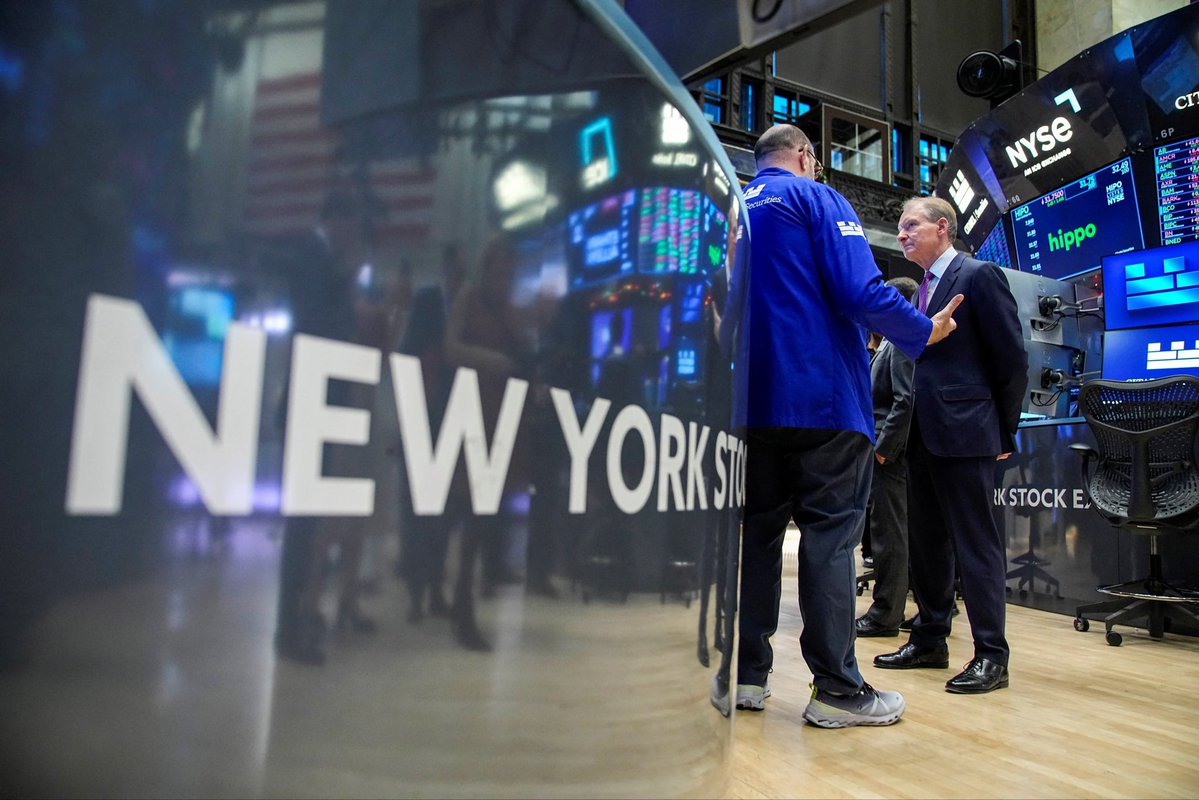
When Wall Street starts launching double-leveraged ETFs on a company in its third day of trading, it is usually catering to speculators rather than long-term owners. Anthropic's flat performance during a huge tech rally shows that plenty of early buyers are still using any strength to lighten up
@steve_hanke Invert it and you see the scary part. If one man coming back is worth a trillion, one man leaving again costs the same, and most holders never meant to make that bet.
@YahooNews Seven red days made everyone a seller and one headline made everyone a buyer, which is about the cleanest picture of crowd psychology you'll ever get.