#Goodbye
This early spring, our project ended as well. Now our results are published in a brief article on the CORDIS website. We bid farewell to our followers, thank you for following our work and for spreading the message. @deusto#whyh2020
https://t.co/FgupkghJUq
Join us tomorrow at 12:00 for the final WHY Webinar. It will provide policy recommendations for local and EU policymakers on fostering citizen participation in the energy transition as well as introduce the already in use WHY toolkit for urban planning. https://t.co/VNSmiXWMVf
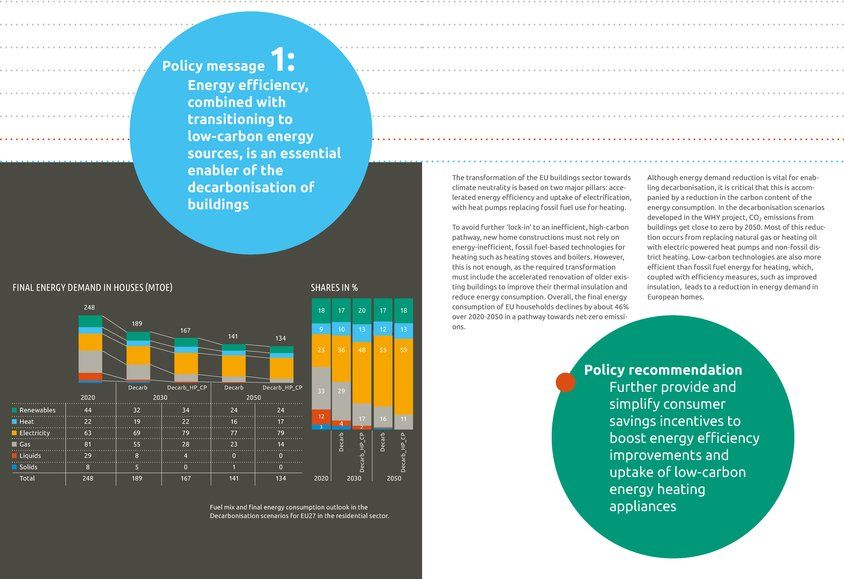
After more than three years of work with the WHY causal model on household energy consumption, we have developed recommendations for local and EU policymakers to encourage citizen participation in the energy transition. ---> Read it here: https://t.co/CXkxMR2Z3k
Read our policy recommendations for local and regional policy makers and join our final event! We address the challenge of transitioning the municipal energy system to an environmentally conscious, sustainable energy system. ---> Read it here https://t.co/TppQdsvhjk #whyh2020
@whyh2020project@Nature 🔸 El proyecto @WhyH2020Project, en el que participa Goiener, publica en la revista @Nature un análisis basado en los hábitos de las consumidoras de electricidad. Los datos están disponibles con licencia libre para otros proyectos de investigación.
Leer: https://t.co/xtyr4YiQBf
Join us on the 19th of January at 12:00 for the final WHY Webinar. This event provides policy recommendations for local and EU policymakers and we will present final results of the WHY toolkit, a flexible tool used in planning a neighborhood in Germany.
https://t.co/VNSmiXWMVf
Calling on Municipalitiy and EU policy makers! Join our Final WHY Webinar to hear our Policy Recommendations to Foster Citizen Participation in the Energy Transition!
When: 19th January 2024, 12:00-14:00 CET | Where: Online: https://t.co/CXkxMR3wSS
#energyefficiency#whyh2020
Did you know? Consumer behavioural change will be integral for short-term demand reductions. Join us tomorrow for our webinar "Empowering Consumer Energy Sharing and Saving": https://t.co/2zJjrCv5Qu #webinar#energyefficiency#energysharing https://t.co/2zJjrCv5Qu
🔬📖💡 Just published! The research expands on how we can optimize our resources, reduce emissions and create a sustainable future. Read these scientific articles on energy system modelling! https://t.co/Xfh6mNCMaf 🌍💚 #EnergySystemModelling#whyh2020 https://t.co/Xfh6mNCMaf
📌Our 1st policy brief is hot off the press!
The brief highlights the importance of the #CircularEconomy for a deep #decarbonisation of the industry as well as the demand reduction for secondary #energy carriers & thus, the overall transformation costs!
🔗https://t.co/vvEI33X7Bm
Registration open! Calling all stakeholders and experts in #energyefficiency and #behavioural issues! 🏘️🌱 We join forces with sister projects to organise a joint workshop: Empowering consumers to share and save energy on 12. 09. 2023 | 11:30 - 13:00 CET |
https://t.co/cxTLEiTEgw
How can energy-saving measures structurally reduce #energyconsumption in the long term to deliver a more affordable, secure and decarbonised electricity supply? Come and discuss at our joint Workshop on 12. 09. 2023 | 11:30 - 13:00 CET: https://t.co/0f7QhvTI7O #energycommunity
#ECEMP23 Call for papers and skills workshops is open! The Conference will be online streching over 2 days: 5-6. 10. 2023. Net Zero, intermediate targets, sectoral decarbonization facing geopolitical and macroeconomic challenges are on the agenda: https://t.co/1IQhOPgbDk
Registration open! Calling all stakeholders and experts in #energyefficiency and #behavioural issues! 🏘️🌱 We join forces with sister projects to organise a joint workshop: Empowering consumers to share and save energy on 12. 09. 2023 | 11:30 - 13:00 CET |
https://t.co/cxTLEiTEgw
🎉 It's official: the EU has a new EED!
Despite a few Member States abstaining or voting against👇, the @EUCouncil just approved the 2023 #EED with a comfortable majority!
To know more about what has been agreed and how to translate it in the #NECPs 👉https://t.co/Pe7hJ3Dykg
@LeireAstiga and Cruz Borges presented how WHY is identifying household electricity consumption patterns and their role in #flexibility. Experts discussed solutions for residential and commercial building flexibility and multilevel energy system optimisation. #energy
Yesterday, the #WHY project partnered with the PAC project in organising “The Future is Flexibility”, an expert workshop on building sector flexibility and its role in system planning. Thanks to our colleagues Amanda Schibline and Andrzej Ceglarz for facilitating the event.