Psyop-Entertainment-Complex:
Modeling the phrase on the "military-industrial complex," this label merges psychological operations (psyops) with the mainstream news and Hollywood entertainment industries.
It posits that media conglomerates, intelligence agencies, and creative studios function as a single unified system to manufacture public consensus and engineer social perception.
--https://t.co/zlwuwBTpa6
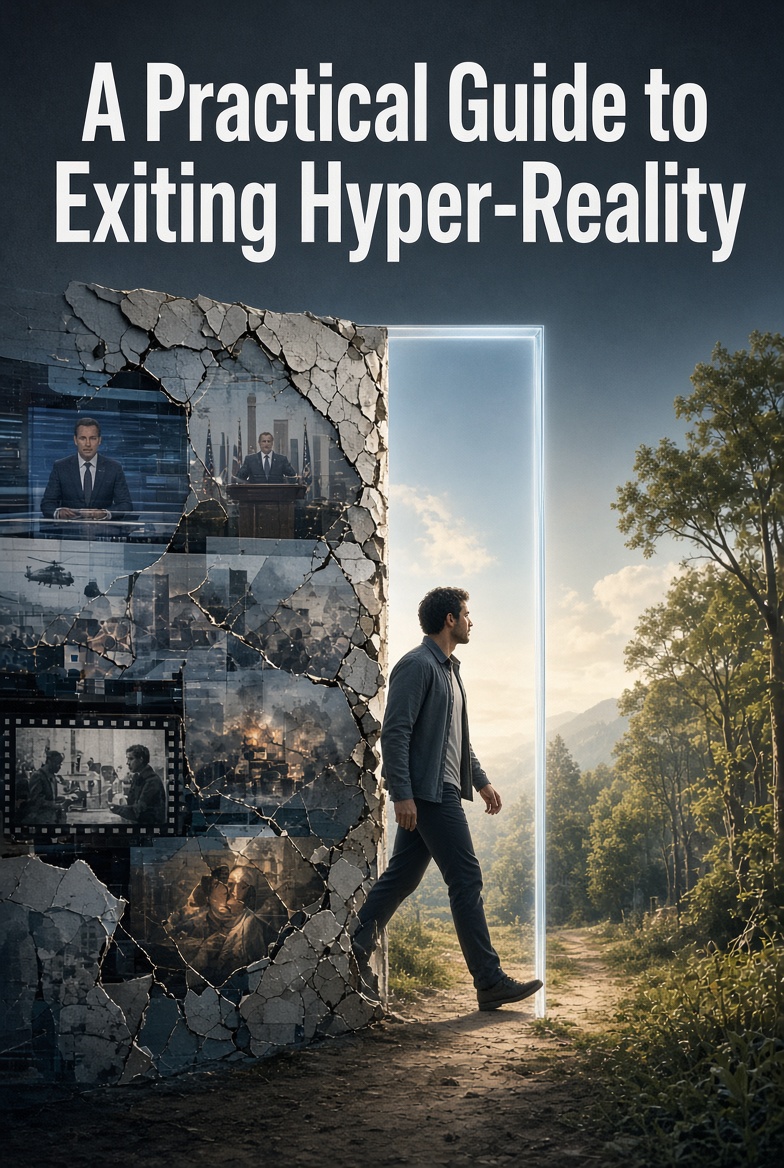
A Practical Guide to Exiting Hyper-Reality
Hyper-reality is the fusion of the actual physical world with a secondary timeline of simulated, staged, or scripted events that are presented through news, entertainment, drills, and political theater. These events are treated as real history once they enter collective memory.
The result is an augmented worldview in which media consumers (both mainstream and alternative) absorb a mixture of verifiable reality and prefabricated narrative.
The secondary layer is called the Metascript or the program: a long-running sequence of productions that organizes individual news cycles, films, controversies, and public rituals into a larger story. Exit from hyper-reality does not require rejecting all media or claiming that every reported event is staged. It requires learning to suspend automatic belief, subtract what cannot be independently verified, and maintain a clear distinction between what is experienced through the senses and what is delivered through the screen. The following guide synthesizes the method of analysis presented in the transcripts into a workable sequence of practices.
1. Map the closed system you are inside
Most people process media in one of three ways. The first is mainstream mediation: accept the broadcast account as the default reality. The second is the conspiracy-theory overlay (MSM Plus): accept that the event occurred but replace the official explanation with a darker subplot (Deep State, foreign intelligence, occult ritual, etc.). The third is the subtractive position (MSM Minus): begin from the premise that an event reported through media is fakeable until it is shown to be real by independent evidence. Only the third position is outside the closed informational system.
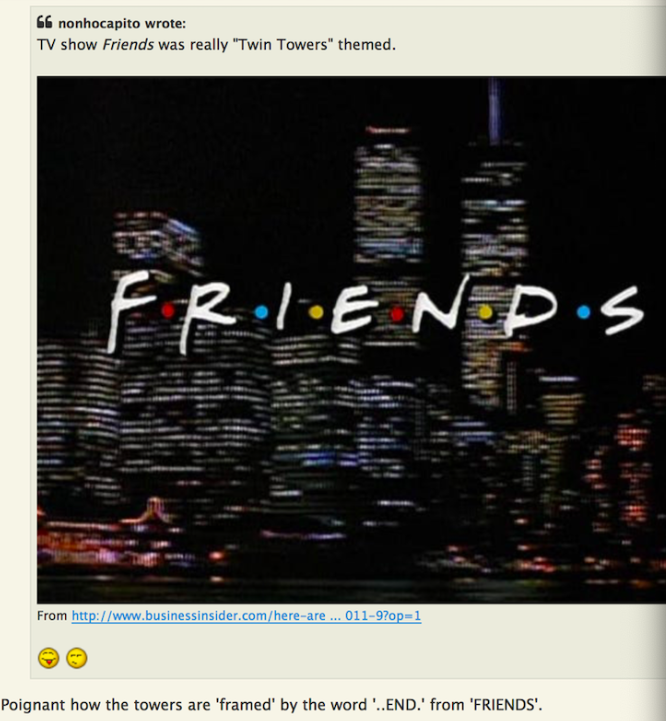
The closed system is dual. Mainstream outlets and alternative outlets appear to oppose each other, yet both treat the same foundational claims as given. Both accept that a particular shooting, crash, or attack took place; they differ only on the identity of the responsible party. This produces a dialectic in which energy is spent defending or attacking the official story rather than examining whether the story is necessary at all. Predictive and concurrent programming (entertainment released before or during an event that mirrors its imagery and themes) is dismissed by the mainstream as coincidence and treated by alternative media as evidence of supernatural foreshadowing or demonic permission. Neither side asks why entertainment would be synchronized with an event that is itself a production.
To exit, first locate yourself. If your reaction to a breaking story is immediate emotional investment followed by either full acceptance or the search for a more elaborate villain, you are still inside the system. The exit begins by refusing both the pro and the anti position and adopting the non position: insufficient evidence to believe the event occurred as reported, therefore withhold belief.
2. Treat media as production, not window
A central observation is that media organizations are not neutral recorders who arrive after an event. In the cases under discussion they function as producers who supply the imagery, the eyewitness accounts, and the framing that become the public record. This does not mean every journalist is an actor; it means the institutional relationship among government, entertainment, and news allows pre-produced material, controlled access, and narrative coordination. The practical consequence is that “I saw it on television” is not evidence. The screen is not a sensory apparatus. It is a delivery system for a finished product.
When evaluating a claim, ask first whether the reported phenomenon is fakeable with techniques already used in film and television (squibs, CGI composites, controlled access, pre-briefed witnesses, smoke generators, etc.). If it is fakeable, the burden of proof shifts to those asserting it is real. This is the opposite of the default journalistic posture, which treats the official account as true until a conspiracy theorist supplies an alternative. The subtractive method simply notes that doubt has been raised by the technical possibility of simulation and therefore suspends judgment.
3. Subtract the bloody guardrail and other built-in assumptions
One of the strongest barriers to leaving the system is the assumption that deaths occurred. Once an audience believes people died, criticism of the surrounding production is experienced as callousness toward victims. The transcripts call this the bloody guardrail. The practical response is not to assert that no one ever dies in any reported incident. It is to refuse the automatic transfer of belief. If the visual record is consistent with special-effects techniques, if early eyewitness statements are unusually uniform or theatrically phrased, and if the event is accompanied by concurrent entertainment that mirrors its imagery, the default is suspension rather than grief. Grief can be appropriate later if independent evidence establishes real harm. It is not required as a precondition for analysis.
Other guardrails include the appeal to motive (“they are so evil they would of course kill people”) and the loaded question (“what are they spraying?”). The latter assumes a spray exists and that the question has not already been answered by atmospheric physics. Recognizing these moves as rhetorical devices rather than genuine inquiries removes their force.
4. Recognize subplots as containment
When an event is widely perceived as anomalous, the system supplies ready-made alternative explanations. These subplots keep the audience inside the original premise while giving the appearance of independent investigation. Classic examples include the claim that a visible squib was actually an exploding microphone planted by a foreign service, or that a celebrity death was faked only to escape a deeper conspiracy. In each case the core assertion (someone was shot, someone died) remains intact. The investigative energy is redirected into identifying the correct villain inside a story whose reality has not been established.
The exit method treats every conspiracy theory that begins from the mainstream premise as a subplot. The relevant question is not “who did it?” but “did the reported event occur?” Only after that question is answered by non-media evidence does the identity of perpetrators become meaningful.
5. Desynchronize from the news cycle
Hyper-reality is maintained by continuous engagement. Breaking stories, live coverage, and social-media amplification keep attention synchronized with the secondary timeline. The practical countermeasure is deliberate desynchronization. Limit intake to scheduled, finite reviews of primary documents or raw footage rather than continuous feeds. When a story appears, note the date, the production elements, and any concurrent entertainment, then set it aside. Return later to check whether independent corroboration has appeared. Most stories do not survive this delay; the emotional charge dissipates and the technical questions become clearer.
This practice also reduces the effect of news bending: the tendency of a single high-profile production to dominate every other outlet and thereby shape the interpretive frame for subsequent events. By refusing real-time synchronization, the individual retains the ability to compare the new story against the longer pattern of previous productions rather than against the immediate emotional atmosphere.
6. Use continuity and predictive programming as diagnostic tools
The transcripts emphasize that major productions are not improvised. They are coordinated with entertainment that is completed years earlier. When a film, series, or trailer released before an event contains highly specific visual or thematic parallels, the coordination is evidence of planning, not prophecy. The same directors, writers, and production companies recur across multiple such alignments. This continuity supplies a diagnostic test: if an event is accompanied by pre-existing entertainment that mirrors its distinctive imagery, and if the visual record of the event itself is consistent with special effects, the probability that the event is a production rises. The test is falsifiable. A real event with no such alignments, or an alignment that can be shown to be post-hoc editing, would weaken the hypothesis. In practice the alignments are frequent enough, and specific enough, that the hypothesis remains useful.
7. Maintain the off-world stage perspective in daily life
The off-world stage perspective is simply the habit of treating media claims as provisional. It does not require isolation. It requires that physical experience remain the primary reference. When a story claims that a particular neighborhood was attacked or that a particular public figure was killed, the first check is whether anyone in the physical vicinity independently confirms the claim through non-media channels. If the only evidence is the media product itself, the claim stays provisional. This habit prevents the gradual fusion of the two timelines. Over months the individual notices that many high-emotion stories leave no durable trace outside the media system. The real world continues; the secondary timeline continues to generate new productions that are absorbed by those who remain synchronized.
8. Refuse both the pro and the anti dialectic
The closed system is maintained by triangulation. One side accepts the official account; the other side rejects the official account but accepts the event and supplies a different culprit. Both sides generate engagement, both sides reinforce the premise that the event occurred, and both sides treat the opposing side as the primary threat. The non position declines to participate. It does not defend the official story and it does not adopt the alternative villain. It simply notes that the evidence presented so far is insufficient and moves on. This refusal is experienced by both camps as betrayal or ignorance. It is in fact the only position that does not feed the dialectic.
9. Practical daily sequence
A workable daily practice looks like this. Upon encountering a high-emotion media claim, write down the bare asserted facts without commentary. Note whether the claim is fakeable with existing techniques. Note any concurrent or predictive entertainment. Note whether independent, non-media corroboration exists. If the answers are “yes,” “yes,” and “no,” place the claim in a provisional file and do not invest further attention until new evidence appears. Once a week, review the provisional file. Most items will have generated no durable independent evidence; they can be discarded. The few that have generated independent evidence can be examined further. Over time the provisional file remains small and the emotional charge attached to breaking news diminishes.
The same sequence applies to conspiracy content. When an alternative explanation is offered, ask whether it subtracts unverified claims or merely adds a new villain to the original story. If it adds, treat it as a subplot and set it aside.
10. Expected results and limitations
Individuals who apply the method consistently report a reduction in ambient anxiety and a clearer distinction between events that affect their physical surroundings and events that exist only as media products. They also report social friction. Friends and family who remain synchronized interpret the refusal to react as coldness or conspiracy-mindedness. The transcripts note that this friction is structural: the closed system does not validate the subtractive position because the position removes the premise on which both mainstream and alternative engagement depend. The practical response is to limit discussion of specific productions to people who have already adopted the same method, and to treat ordinary conversation as belonging to the physical timeline.
The method does not claim that every reported event is simulated, nor does it require the rejection of all institutional knowledge. It claims only that media products are productions and that automatic belief in those products produces a distorted history. Where independent evidence later confirms a real event, belief can be updated without difficulty. The default is simply no longer automatic acceptance.
Exit from hyper-reality is therefore not a single revelation but a sustained practice of subtraction, suspension, and desynchronization. The physical world remains available. The secondary timeline continues for those who prefer it. The difference is that the individual who has exited no longer confuses the two.
@HighersideChats There’s no one more articulate and accurate, than @realtimozman at describing the current state of deception we find ourselves in these daze..
GZA has one of the largest vocabularies in hip-hop. A 2014 analysis found 6,426 unique words across his first 35,000 lyrics, ranking him #2 among the artists studied.