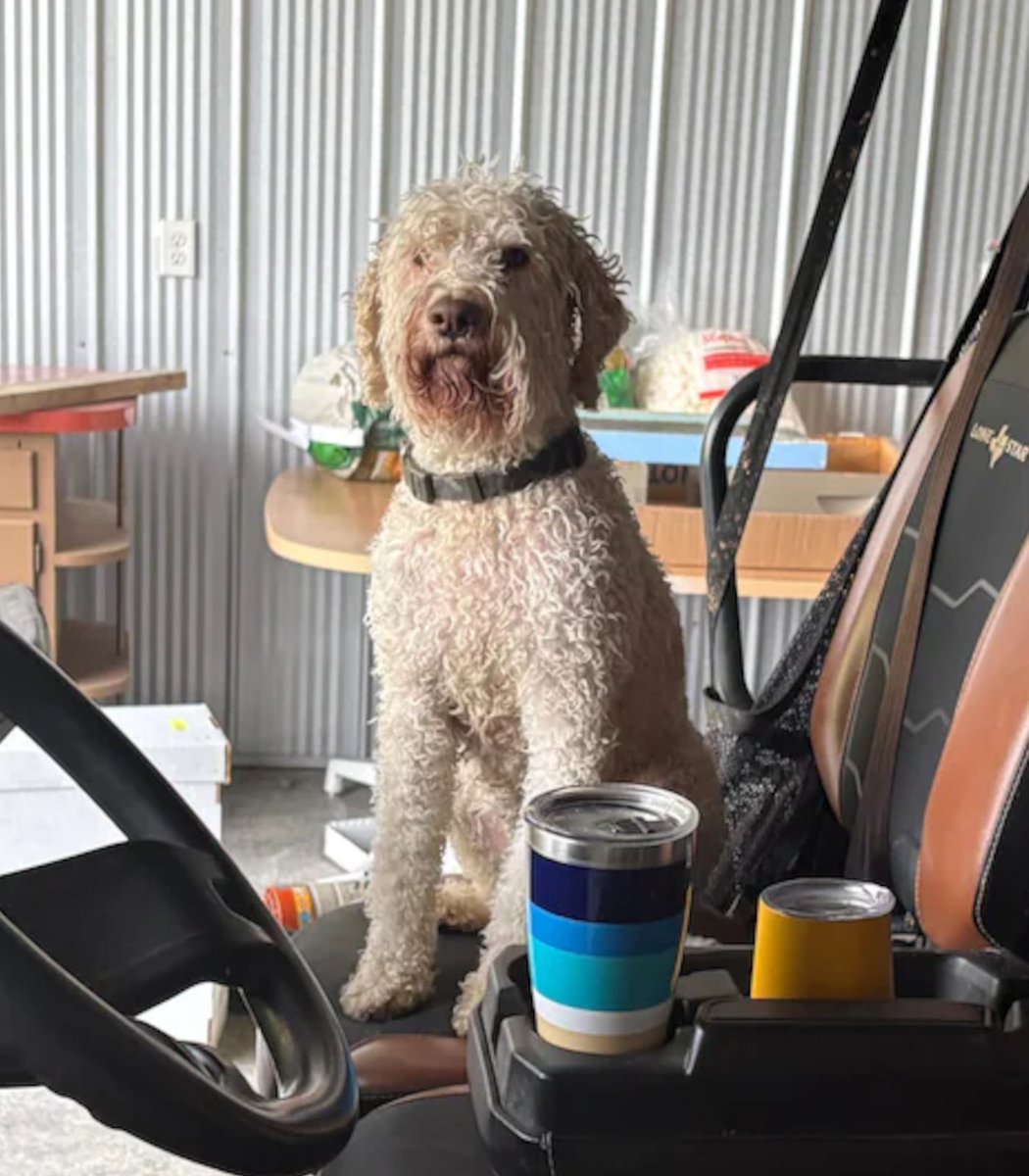
A dog named Carl fell off a cliff, tumbling 120 feet and catching himself on a narrow ledge before an 100 foot drop to almost certain death.
Gigachad Carl managed to hang on for 17 hours and was rescued with only minor injuries.
For those wondering, what does https://t.co/yXFnzzQ7kQ actually do?
Here's the new thing in cancer treatment, in plain terms.
Doctors remove your tumor and read its DNA. Software then picks the 34 mutations most likely to teach your immune system to hunt the cancer — and a drug is manufactured just for you. That approach just beat the standard of care in a 1,137-patient trial.
We built two things around it. A study that walks through what was actually proven — including the numbers the headlines skipped. And a simulator where you pick a cancer, pick the treatments, and watch 2,000 cells respond in real time. It runs in your browser, it's free, and every number on it comes with a source.
Roadmap going forward and how we plan to secure funding from @solanalabs and a product market collab with $MRNA Moderna Pharmaceuticals
What exists: a sourced study, a 13-cancer simulator that runs in your browser, a 10-page field manual.
What's next: open-sourcing the model, deepening the evidence layer, funding it in the open.
Read the limitations section first. That's the point of it.
https://t.co/F0iLsJOcEP
03 — The dormant state
Implementation note. Our chamber carries a state most contagion models don't: DORMANT — an agent still holding the payload on disk, no longer transmitting it.
That is the paper's 68% spreader failure seen from outside. Set storage to 'ordinary file' and the outbreak stalls.
01 — Apparatus
Apparatus note. The chamber holds up to 800 agents in one of three network shapes: a sparse pairwise chain, dense cells joined by two or three bridges, or hubs with followers. Per-contact transmission is the source paper's measured rate, not a number we chose.
-Patient Zer0