One of those things that never happens if you open up women's changing rooms to any man who wants to come inside has happened. Again.
https://t.co/B3CoQkqcNF
This is not an acceptable thing for a Prime Minister to tweet
We have due process and the Rule of Law
Our Prime Minister should not engage in Mob Rule.
What Mongols ate:
- Fatty mutton
- Fermented mare's milk
- Blood tapped from the horse they rode
- Dried meat pounded into fat
- Curds
- Bone marrow
What Mongols wouldn't touch:
- Vegetables (fit only for the horses)
- Grain (the food of the people they'd already beaten)
- Fruit
- Anything you'd call processed
What Mongols built:
- The largest connected empire in history, all of it from the saddle
- Bodies that could ride and fight for days without folding
- A level of conditioning their grain-fed enemies never came close to
The grain-fed civilisations in their path were dominated and erased, whole cities wiped off the map and never rebuilt.
What modern nutritionists say about this diet:
"Unsustainable, dangerous, nutritionally incomplete, riddled with deficiencies."
The Mongols would have fed them to the horses.
Most people come to carnivore for one reason. They want to lose weight.
And it works, better than almost anything else they've tried, which is usually enough to keep them around for a few weeks.
But the ones who stay start noticing other things. The aches that quietly fade. The fog that lifts. The low mood, the restless sleep, the gut that never once settled, all of it easing in the background while they were only watching the scales.
Things they'd long since made peace with. Things they'd been told to simply live with. Things they never thought to connect to what was on their plate.
That's the part nobody warns you about at the start.
Weight loss is the headline. It is also the smallest thing this way of eating will ever do for you.
It is merely the buy-in.
The real returns come after.
In 1832 a young naturalist named Charles Darwin rode out across the Argentine pampas and watched grown men live on almost nothing but cattle. He expected the diet to break them. It did the opposite.
The men were the gauchos, the horsemen of the grasslands, and they ate beef. Beef in the morning, beef at midday, beef again at night, roasted on a spit or thrown straight onto the embers. No bread. No vegetables to speak of. A gourd of bitter mate tea passed from hand to hand, and that was the whole of it. Darwin, raised on the careful mixed diet of the English table, could scarcely credit that a man could live this way, yet he watched them do it for months on end, in the saddle from dawn till dark, and flourish.
One detail he recorded matters more than the rest. The gauchos did not eat their beef lean. They went for the fat, ate a great proportion of it, and turned up their noses at any meat too dry to satisfy. Darwin set down the old observation alongside it, that a man kept long on lean flesh alone will crave fat so fiercely he can swallow it by the mouthful without disgust. The gauchos had landed on the same truth with not a book between them. Lean meat alone is a trap. The fat is what turns a pile of beef into a diet a man can ride all day on.
He left one scene that says everything. Darwin passed a night at the house of a wealthy landowner who held square miles of ground rich enough to grow any crop on earth. Supper was two great heaps of beef, one roasted and one boiled, a jug of water for the whole table, a little pumpkin, and not so much as a crumb of bread. The man could have grown wheat to the horizon. He saw no reason to. He had cattle.
That was the gaucho mind entire. Grass and grain were food for animals, for the horse and the steer. A man ate the animal. To live on what cattle eat, they reckoned, was to end up labouring like cattle and faring little better.
William Henry Hudson, who grew up among them on the pampas, recorded the same flesh diet a generation later. These were hard, lean, formidable men, half horse, who could ride through a day and a night and fight at the end of it, and who lived on the steer and the fire and not much else.
Then the wheat came, with the railways and the ships full of European settlers, and the old way was bred out of them. Today more than a quarter of Argentine adults are obese, roughly one in ten is diabetic, and heart disease kills more of them than anything else. The beef never left. It simply arrived now beside the bread, the sugar, the refined oil and the rest of the modern larder.
Here is the part worth sitting with. The gaucho was no superman, and his life was brutally hard, lived almost wholly on horseback with no sugar, no flour and no factory food within a thousand miles. Strip all that away and the conclusion is hard to dodge. The beef was never the thing making the modern Argentine sick. The trouble rode in with everything we started serving beside it.
Same animal. Same red meat their great-great-grandfathers thrived on. The only thing that changed was what we put on the plate next to it.
Name one country that climbed out of poverty and chose to eat less meat. Not forced by famine, war or rationing.
Free to afford anything on earth, and it picked the plants instead. I'll wait.
>Be human
>Run on fat and protein for 2.5 million years
>Grow a monstrous brain, conquer the planet, sit at the top of the food chain
>Agriculture turns up 10,000 years ago
>Switch to grains
>Average height drops six inches
>Bones thin out
>Teeth begin to rot
>Skeletons start showing signs of malnutrition
>Fast forward to 1992
>Government stacks grains at the base of the food pyramid, 6 to 11 servings a day
>Obesity climbs from 13% to 42%
>Diabetes goes from a rarity to 11.6% of the population
>The official response:
>"Clearly we're not eating enough whole grains"
Wishing everyone a beautiful and blessed Summer Solstice ☀️
A video of a lovely sunrise over the river Great Ouse in Ely, at the Solstice four years ago. 🥰
#FolkloreSunday
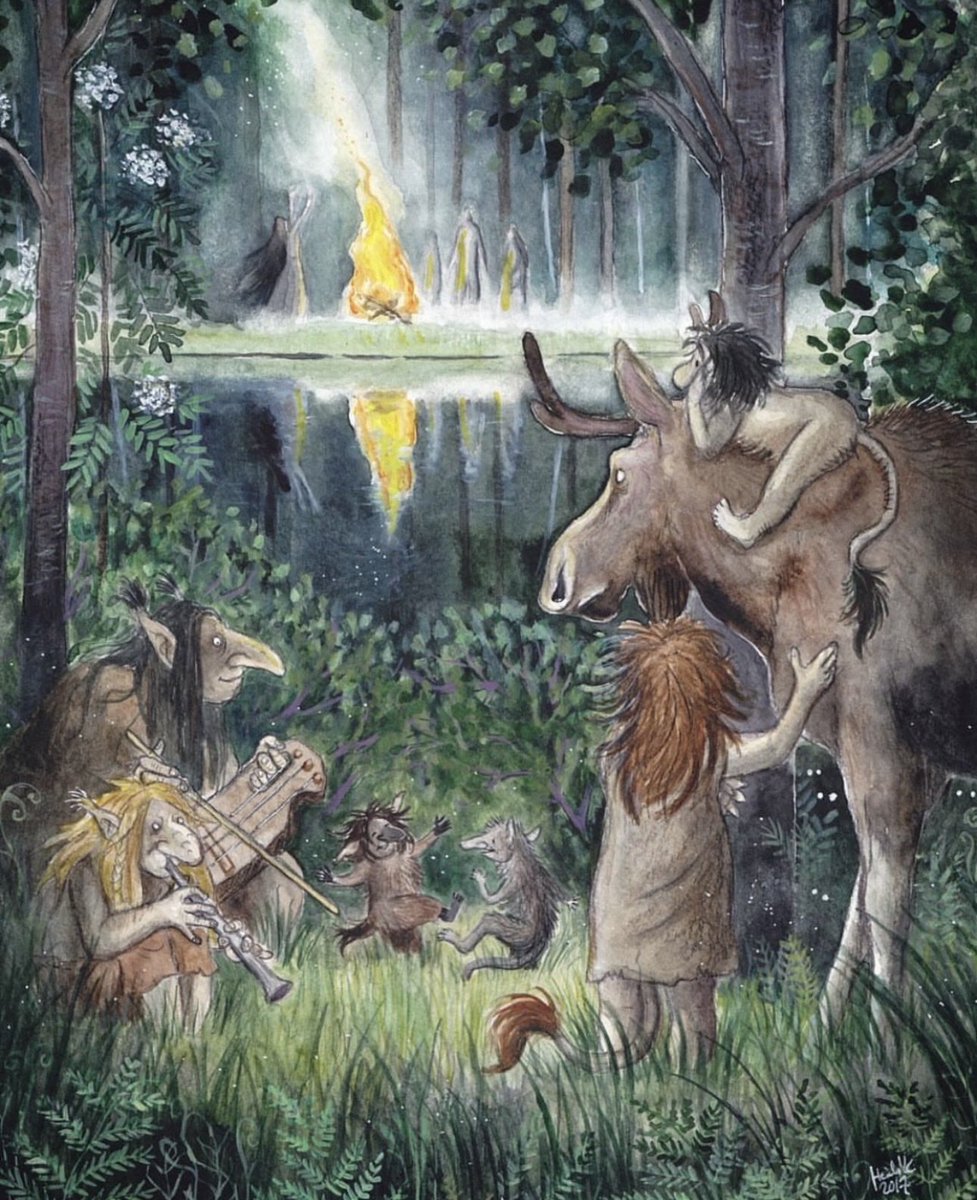
According to folklore, the summer solstice is a liminal time of the year, when the veil between this world and the Otherworld is thinning, and fairies and other supernatural creatures may cross over into the human world.
Traditionally bonfires were lit to keep otherworldly beings at bay, and it was believed that carrying oatmeal in your pockets could offer protection against fairy mischief.
🎨 Annie Stegg