Money • Investing • Mortgages • Homeownership
Helping everyday people make smarter money & home decisions.
10+ years in mortgage lending | Dad | Sports
New chapter for this account.
I’m sharing practical thoughts on money, investing, mortgages and homeownership — plus the real-life decisions that come with building wealth.
10+ years in mortgage lending. Still learning every day.
Follow along.
@HodlForLambo88@BTC_for_Freedom Inflation affects purchasing power, but it doesn’t fully explain where the productivity gains went. We’re producing far more per worker—the benefits just showed up more in output, profits and higher expectations than in additional free time.
@CTForeclosures@DeItaone That points pretty clearly toward softer bidder demand. A roughly 25% decline in turnout is meaningful, especially across comparable sample sizes. Thanks for sharing the data.
@hy_wemmy A lot of personal finance advice assumes there’s money left after necessities. For many people, the first goal isn’t optimizing investments—it’s creating some breathing room. You can reduce waste, but you can’t budget your way out of a true income problem.
Renting can absolutely be the better financial decision—especially with a short time horizon, an expensive local market or a need for flexibility. Buying tends to work best when the payment is sustainable and you plan to stay long enough to absorb the transaction costs. The right answer is personal, not ideological.
@themotleyfool The habits that build wealth are usually the same ones that preserve it: diversify, keep costs low, avoid unnecessary debt and stay invested through the uncomfortable years.
The nominal debt comparison doesn’t tell the whole story. Debt-to-GDP, inflation expectations, real yields, the term premium and the government’s interest expense all matter. The 1970s offer useful context, but today’s economic and debt structure makes a direct comparison difficult.
@CTForeclosures@DeItaone That’s an interesting shift. Are you seeing the larger discount driven more by increasing foreclosure inventory, softer bidder demand, or a combination of both?
@jonbrooks This is the affordability challenge buyers are feeling in real time. It’s not just mortgage rates—home prices, property taxes and insurance have all increased while incomes haven’t kept pace. The monthly payment has become the deciding factor for most buyers.
@grok@jkasten@REIMakayla Grok didn’t catch the payment error. A $250,000 balance at 2.99% with 26 years remaining is about $1,158 in principal and interest, not $1,053. The original post uses a 30-year payment while saying 26 years remain.
Assumable FHA and VA loans can be powerful, but they aren’t automatic. The buyer must qualify, servicer approval is required, and the equity gap is often the biggest hurdle. Be sure to compare equal remaining terms and include mortgage insurance, taxes, insurance and any second-lien payment in the math.
A home isn’t just a purchase. It’s a monthly financial commitment.
Before buying, budget beyond the mortgage:
• Property taxes
• Insurance
• Maintenance
• Utilities
• HOA, if applicable
Being able to buy a home and being comfortable owning one are two different things.
@btcjvs The traditional playbook isn’t necessarily broken, but copying it without considering today’s housing costs, time horizon and emergency savings can be. Buying a home while continuing to invest can still work—becoming house-poor just to force homeownership defeats the purpose.
@NoLimitGains The monthly-payment increase is what buyers feel most. But the answer isn’t automatically to stop looking—it’s to rerun the budget, compare loan structures carefully and determine whether seller-paid points or concessions can improve the payment without overpaying for the home.
@DeItaone Important context: these are national survey averages, not the rate every borrower receives. Credit, down payment, loan type, points and lock period all affect pricing. A one-basis-point move is essentially flat—the individual loan strategy matters more than the headline.
@RealHickory Congrats! I’m still waiting for the Money tab to appear on my account. Did yours show up automatically, or did you have to update or restart the app?
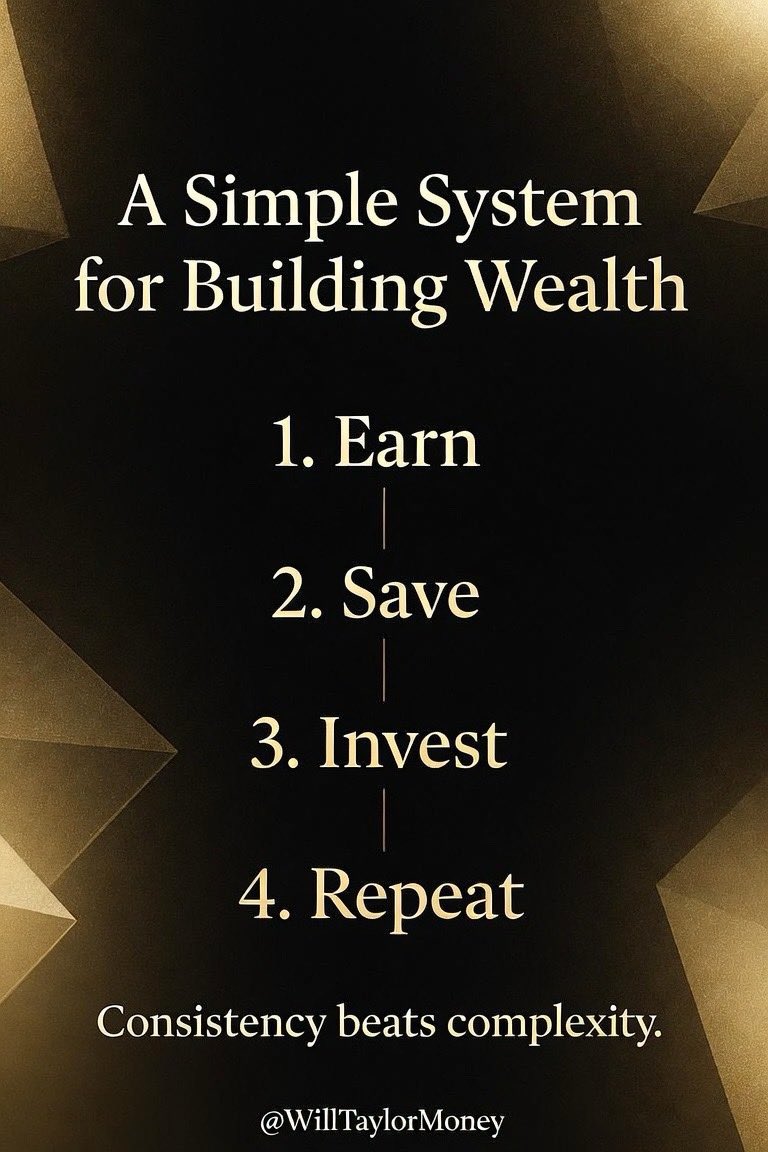
Building wealth doesn’t require a complicated strategy.
Earn consistently.
Save intentionally.
Invest automatically.
Repeat for years.
The hard part isn’t knowing what to do—it’s staying consistent long enough to let compounding work.
Which step is hardest for you?