Le budget de défense allemand s’envole : 56,5 milliards d’euros en 2021, avant l’invasion de l’Ukraine. 88,5 milliards en 2025. Une projection à près de 150 milliards d’ici 2030.
L’économie industrielle traditionnelle allemande, elle, prend l’eau : 120 000 emplois perdus en un an, dont 50 000 dans le seul secteur automobile.
Plutôt que de financer des plans sociaux massifs et impopulaires, l’État semble orchestrer le transfert des travailleurs qualifiés et des usines vers la défense. Les géants de l’armement (Rheinmetall, Hensoldt) absorbent la main-d’œuvre laissée sur le carreau par les équipementiers automobiles en crise (Bosch, Continental, ZF).
Une reconversion industrielle à grande échelle : les cas concrets
∙FWM (Sarre) : passe de moins de 10% de son chiffre d’affaires dans la défense à plus de 80%, porté par les commandes de Rheinmetall et KNDS.
∙Rheinmetall transforme sa filiale de pièces automobiles Pierburg (Berlin) en ligne de production de munitions, et négocie le rachat de l’usine Volkswagen d’Osnabrück.
∙Deutz adapte ses moteurs de trains civils pour propulser des obusiers lourds, avec l’objectif de doubler sa part défense, de 5% à 10% du chiffre d’affaires.
∙Alstom à Görlitz : l’usine de matériel ferroviaire est reprise par KNDS pour fabriquer du blindé lourd, avec l’appui d’IG Metall , le syndicat pourtant classé pacifiste.
SVI-Connect : une stratégie assumée par l’État
La plateforme SVI-Connect, pilotée conjointement par les ministères de la Défense et de l’Économie, formalise cette bascule. Ce n’est plus seulement le marché qui redistribue les cartes : l’État allemand connecte directement les sous-traitants civils en difficulté aux donneurs d’ordres militaires. Tout se passe comme si l’Allemagne avait choisi de faire du réarmement l’outil de sa relance industrielle. 🇩🇪Cet article de Marianne donne une profondeur nouvelle à l’analyse de la trajectoire d’Airbus. Le sujet ne se limite plus aux murs des usines de Toulouse ou d’Espagne.
La défense comme planche de salut protectionniste. Derrière les discours sur la “souveraineté européenne” et la “coopération”, chaque pays semble jouer une carte nationale. L’Allemagne mobilise ses milliards pour sauver son propre tissu industriel — son Mittelstand automobile et équipementier en crise.
La position ambiguë d’Airbus Defence & Space dans ce jeu. Sur SatcomBw-4, Airbus se retrouve positionné en partenaire du consortium mené par OHB et Rheinmetall, deux acteurs purement allemands, plutôt qu’en maître d’œuvre comme sur les précédents contrats SATCOMBw. Le rôle exact d’Airbus dans ce projet reste débattu chez les observateurs du secteur, mais le simple fait que la question se pose est déjà révélateur d’un rapport de force qui a changé.
Le coût humain de cette bascule. La direction d’Airbus tente d’imposer à ses salariés — via RELOAD ou la réduction du télétravail — une logique de cadences et de discipline proche de celle de l’industrie de défense allemande, sans que la France n’orchestre cette transition avec la même protection sociale que Berlin déploie pour ses propres emplois. Les salariés d’Airbus se retrouvent pris entre la rigueur managériale de leur direction et le nationalisme industriel assumé de leurs voisins allemands.
When the Western Roman Empire collapsed in 476 AD, Rome did not actually end — it simply continued, in a different form, for nearly another thousand years through what historians now call the Byzantine Empire, centered on the magnificent city of Constantinople.
The Byzantines themselves never called their state "Byzantine" — they considered themselves Romans, the direct continuation of the Roman Empire, speaking primarily Greek rather than Latin but maintaining Roman law, Roman administrative structures, and a direct unbroken line of emperors tracing back to Augustus himself. The term "Byzantine Empire" was actually coined by later European historians, well after the empire's eventual fall in 1453.
During the centuries when most of Western Europe is popularly imagined as experiencing technological and cultural stagnation during early medieval period, Constantinople remained one of the largest, wealthiest and most technologically and culturally sophisticated cities on Earth — a center of trade connecting Europe, Asia, and Africa, home to extraordinary architectural achievements like the Hagia Sophia, and a preserver of classical Greek and Roman knowledge that would eventually help fuel the European Renaissance centuries later.
The empire survived numerous existential crises that would have ended most states — plague, civil wars, religious schisms, and repeated sieges from Arab, Bulgar, Crusader, and eventually Ottoman forces — partly through sophisticated diplomacy, partly through formidable fortifications, and partly through military technologies like Greek Fire that gave it decisive advantages during critical moments.
Constantinople finally fell to Ottoman forces under Sultan Mehmed II in 1453, an event that many historians mark as the definitive end of the ancient world and the true beginning of the early modern era — nearly two thousand years after the founding of Rome itself.
#archaeohistories
Cette climatologue affirme : « Le problème, c’est que si vous climatisez, vous allez vous dire que l’on peut continuer à vivre comme avant, et donc que rien ne doit changer. »
Lorsque des vies sont directement menacées par des vagues de chaleur extrêmes, ce raisonnement devient non seulement irrecevable, mais DANGEREUX. Il ne relève plus d’une analyse scientifique, mais d’une posture idéologique qui place la contrition et la souffrance au-dessus de la préservation de la vie humaine.
En exigeant que les populations acceptent de subir des conditions thermiques mortelles afin de « prendre conscience » et de changer leurs comportements, ce discours bascule dans une forme de religiosité eschatologique : il faut souffrir pour expier, prendre conscience pour se racheter, et renoncer au confort pour mériter le salut collectif.
Or, le « vivre comme avant » dont il est question n’est pas un caprice consumériste. Il correspond au maintien des conditions thermiques nécessaires au bon fonctionnement de la physiologie humaine. Refuser l’adaptation technique quand celle-ci permet de sauver des vies n’est pas un refus du réel : c’est un choix religieux déguisé en position scientifique.
Le véritable problème, aujourd’hui, n’est plus seulement l’existence de ce type de discours, mais son influence durable dans les sphères décisionnelles... au point même de se faire dérouler le tapis rouge chez @franceinfo, sans l'ombre d'une contradiction. Depuis plus d’une décennie, des figures comme François Vimieux, et de nombreux autres experts ou commentateurs occupant des positions influentes, ont répété la même logique : l’adaptation serait suspecte car elle retarderait la transformation profonde des modes de vie. Cette vision, qui mêle analyse climatique et injonction morale de pénitence, a largement imprégné le débat public et certaines politiques.
Dès lors, le débat devient particulièrement difficile. Il est toujours possible de discuter sur le terrain scientifique et technique. Mais lorsque l’on affronte une vision du monde qui transforme la lutte contre le réchauffement en une forme de salut par la souffrance et la restriction, on ne débat plus avec des arguments rationnels : on se heurte à un système de croyances. Et un système de croyances résiste beaucoup mieux aux faits que ne le fait une simple erreur d’analyse scientifique.
@lel_media@Cobra_FX_@sjowall69@MacLesggy@parizot
Ma tribune du jour dans le Figaro.
Quelques idées clés que j’y défends :
- Le temps presse, nous approchons du moment de bascule où les capacités des IA frontières représentent de vrais risques géopolitiques en matière de cybersecurité et avec leur capacité à s’auto-ameliorer, ce différentiel de capacité risque de s’accroître.
- Nous vivons la révolution industrielle mais en 10 ans au lieu de 50. Il y a donc peu de marge pour les retardataires.
- Si Mistral semble en retard aujourd’hui, c’est que jusqu’à très récemment la stratégie historique était d’être complémentaire sur les usages souverains aux géants américains plus que concurrents directs. Il est désormais clair que ce n’est plus tenable et qu’il nous faut des modèles agentiques forts à horizon long.
- Ce rattrapage n’est pas aussi compliqué que ce que l’on pourrait croire. Les Chinois comme Zai y arrivent avec des moyens pas si différents de ceux de Mistral.
- Le véritable enjeu est d’avoir des boucles de retour sur des projets complexes permettant d’entraîner de l’agentique de frontière. Ça tombe bien, il y a tout l’appareil numérique d’état à rénover. C’est le terrain d’entraînement parfait.
Alerte ! Les États-Unis ont coupé cette nuit au reste du monde l’accès à Fable et à Mythos d’Anthropic, les IA les plus puissantes jamais créées. Au nom de la sécurité nationale.
Plus de doute possible : la guerre technologique mondiale est désormais ouverte. Et dans cette guerre, celui qui contrôle la technologie contrôle l'avenir.
Mais ici, en France, tout le monde s’en fout : la prochaine présidentielle parlera de réforme des retraites et de taxation des riches.
Le réveil de la France et de l’Europe sera brutal.
Je relaie une pétition pour le rétablissement des points bonus au bac des options latin-grec lancée par l'association @EurekaParis5 .
Elle appuie une lettre ouverte au ministre de l'éducation nationale par un collectif de plus de 120 personnalités du monde de l'enseignement, de la recherche, de la culture, du journalisme et de la création.
En effet la suppression de ces points bonus au bac lors de la réforme des lycées a encore contribué à affaiblir la motivation des élèves et de leurs parents pour ces options exigeantes.
Or, il y a plein de bonnes raisons de faire du #grec et/ou du #latin pour affronter le monde d'aujourd'hui! Il y a des intangibles sur la nature humaine et sur la Nature tout court, que les Anciens avaient déja décryptés et que l'étude des textes permet de comprendre en nous ramènenant aux fondamentaux . A l'heure des IA et des fakes news, un esprit critique est indispensable! Les universités elles-mêmes se plaignent du niveau de français des étudiants: quoi de mieux que d'en connaitre les racines pour maitriser grammaire etvirthographe! Enfin dans un monde instable et violent nous avons besoin d'Humanités, c'est ce qui nous relie entre nous en Europe et de l'autre côté de la Méditerranée! S'ouvrir l'esprit en découvrant les anciennes civilisations, à la fois si proches et lointaines de nous et une autre façon de voir le monde!
Enfin plus prosaïquement, quand on est un "élève moyen", outre le goût de l'effort que l'étude du grec et du latin amène, ces points bonus peuvent être précieux pour obtenir son bac !
Alors si vous partagez ces convictions, signez la pétition!
https://t.co/nuTusvORd3
En tant qu’enseignante-chercheuse, je ne peux que soutenir cette initiative.
Mes années de latin m’ont été utiles bien au-delà des cours de langues anciennes : pour comprendre les textes, enrichir mon vocabulaire, développer mon esprit critique et acquérir une véritable rigueur intellectuelle.
À l’heure où l’on s’inquiète du niveau en français, du recul de la culture générale et de la difficulté à distinguer l’information de la désinformation, affaiblir les humanités me semble être une erreur.
Le latin et le grec ne sont pas des reliques du passé. Ce sont des outils pour comprendre le monde d’aujourd’hui.
Si vous partagez cette conviction, je vous invite à signer cette pétition :
https://t.co/DGHYeopuBA
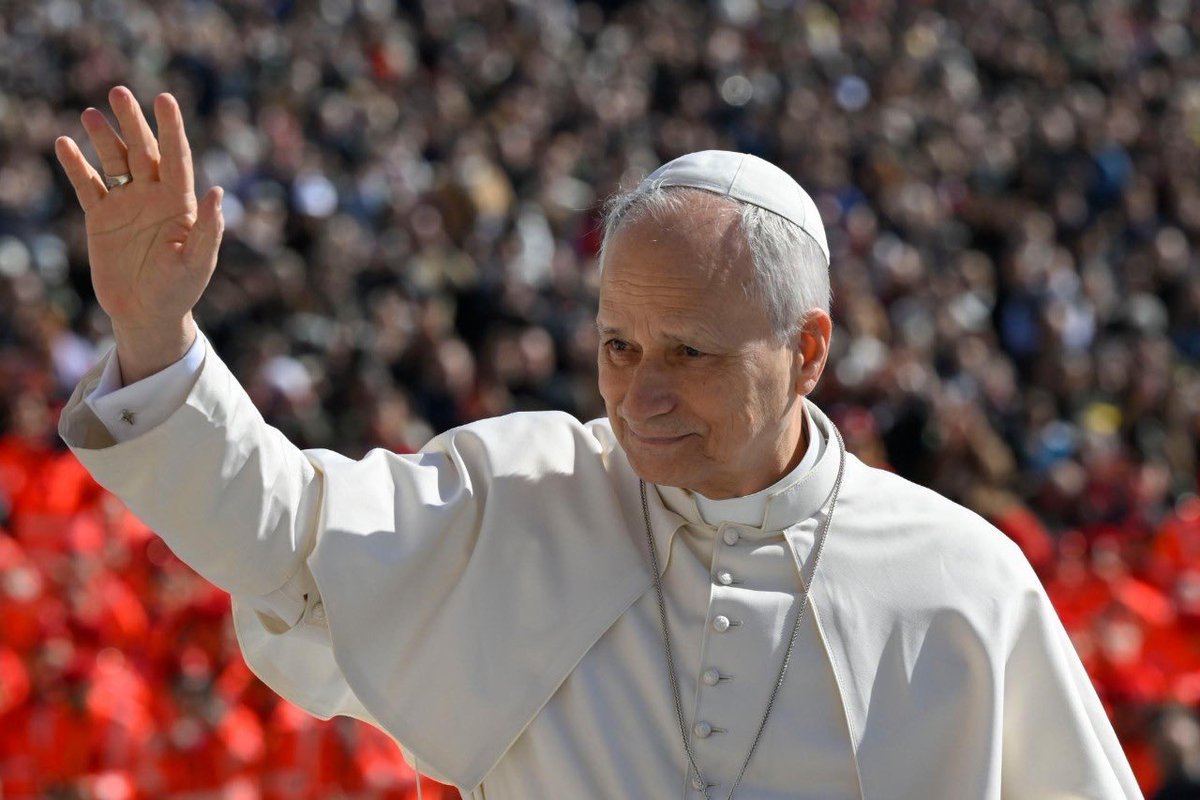
Pope Leo XIV in Madrid: “I encourage you to nurture the process of European Union, which is not merely a counterweight to other powers, but a gift to humanity.”
Wonderful.
A powerful reminder of how beautiful and hopeful the European project truly is.
🇪🇺🇪🇸
L'indicateur thermique national de ce 26 mai s'établit à 24,9°C.
C'est 8°C au-dessus des normales.
Il s'agit de la journée de mai la plus chaude observée depuis le début des relevés.
Graphique @infoclimat
Ce 25 mai 2026 est la journée de mai la plus chaude observée à l'échelle nationale depuis près d'un siècle avec un indicateur thermique de 24,3°C.
La semaine à venir promet de battre à nouveau ce record.
Demain mardi, des pointes à 37/38°C ne sont pas exclues localement dans l'ouest.
Graphique @infoclimat
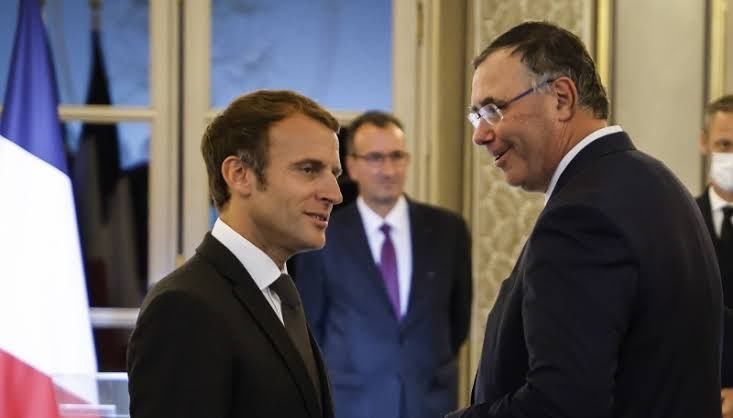
🚨 Ce qui me choque avec TotalEnergies, c’est qu’on est en train de transformer une crise énergétique en débat moral simpliste en cherchant un coupable facile plutôt qu’en regardant les mécanismes en face.
🛢️ Le prix du carburant reste une chaîne complexe avec un prix du brut négociés sur les marchés internationaux, des coûts de raffinage, de la logistique, de la distribution, l’impact du taux de change euro/dollar, et surtout de la fiscalité. En France, une part majeure du prix final est liée aux taxes et c’est une décision politique. Pendant des années, cette fiscalité a été acceptée, justifiée, intégrée dans le modèle. Apres, quand le prix devient trop élevé socialement, on change de narratif. On ne parle plus de fiscalité. On ne parle plus de dépendance énergétique. On ne parle plus de stratégie industrielle. On parle de Total.
➡️ On transforme un sujet complexe en opposition morale et ça devient intellectuellement faible parce que TotalEnergies n’est pas une station-service isolée. C’est un groupe mondial avec des activités diversifiées, des investissements massifs, des risques géopolitiques, et des cycles violents. Réduire toute cette réalité à “ils gagnent trop pendant que le plein coûte cher” relève du refus de penser.
📈 Il y a surtout une forme d’hypocrisie profonde dans ce débat. Quand les prix sont élevés et que cela génère des recettes fiscales importantes, personne ne remet en cause le système. Quand les prix deviennent politiquement sensibles, on cherche un responsable externe.
💰 C’est là que le terme de “superprofits” devient révélateur. Ce n’est plus un concept économique mais un outil rhétorique. Il ne cherche pas à comprendre d’où viennent les profits mais à les disqualifier. Il suggère qu’au-delà d’un certain niveau, le profit devient illégitime. On ne peut pas demander à ces entreprises d’investir des milliards, de prendre des risques industriels et géopolitiques considérables, de financer la transition énergétique, et dans le même temps considérer que leur rentabilité devient un problème dès qu’elle est visible. On ne peut pas construire une stratégie énergétique, industrielle et climatique crédible en diabolisant les acteurs capables de la financer.
🧐 Le plus frappant est que derrière cette polémique, il y a en réalité des contradictions que personne ne veut vraiment assumer. On veut une énergie accessible mais on veut aussi réduire la consommation d’énergies fossiles. On veut accélérer la transition mais on critique les profits qui permettent de l’investir. On veut protéger le pouvoir d’achat mais sans toujours questionner la structure du prix de l’énergie. On veut de la souveraineté énergétique mais on s’en prend aux groupes capables d’opérer à l’échelle mondiale. Quel désastre !
🤷♂️ Si le prix à la pompe est trop élevé, parlons fiscalité, dépendance énergétique, offre mondiale, infrastructures, mobilité. Si le pouvoir d’achat est sous pression, parlons salaires, redistribution, organisation du territoire. Si la transition énergétique est insuffisante, parlons investissements, réglementation, délais, acceptabilité sociale. Déplacer tout cela sur Total, c’est éviter le cœur du problème et relevé de la puérilité.
⚠️ Je suis très clair, le “Total bashing” n’est pas une analyse, c’est un raccourci. Un raccourci pratique, politiquement efficace mais économiquement pauvre. TotalEnergies ne fait rien d’autre que ce qu’une entreprise performante est censée faire dans son secteur : produire, investir, optimiser, et rémunérer ses actionnaires quand les conditions de marché le permettent.
🤔 La seule question qui compte est celle-ci : pourquoi notre système est-il à ce point vulnérable qu’un choc sur les prix de l’énergie suffit à déclencher une crise politique majeure ? Pourquoi préfère-t-on pointer une entreprise plutôt que d’assumer collectivement les choix énergétiques, fiscaux et industriels accumulés depuis des années ?
C’est là que se trouve le débat, pas dans le cours de Bourse de TotalEnergies.