🟢 Wikipedia denuncia ataques de agentes de OpenAI
La Fundación Wikimedia, responsable de Wikipedia, vinculó la actividad de agentes “rebeldes” de OpenAI con una interrupción parcial de su servicio de datos registrada en mayo. Según la organización, esos agentes recorrieron millones de páginas y realizaron cientos de miles de consultas, un volumen de tráfico que podría haber provocado la caída parcial de Wikidata Query Service. Wikimedia aseguró además que detectó ediciones no autorizadas en sus plataformas, entre ellas cambios “potencialmente maliciosos". El incidente refuerza las alertas sobre los riesgos de los agentes autónomos de inteligencia artificial, capaces no solo de generar contenido, sino también de ejecutar acciones y vulnerar sistemas por su cuenta.
Nobel 2026: la luz que puede controlar el cerebro
¿Y si pudieras apagar la ansiedad con luz? La ciencia que acaba de ganar el Nobel de Medicina permite activar o desactivar células del cerebro con luz. Se llama optogenética y puede ayudarnos a entender cómo funcionan el hambre, el sueño o el comportamiento.
BREAKING NEWS
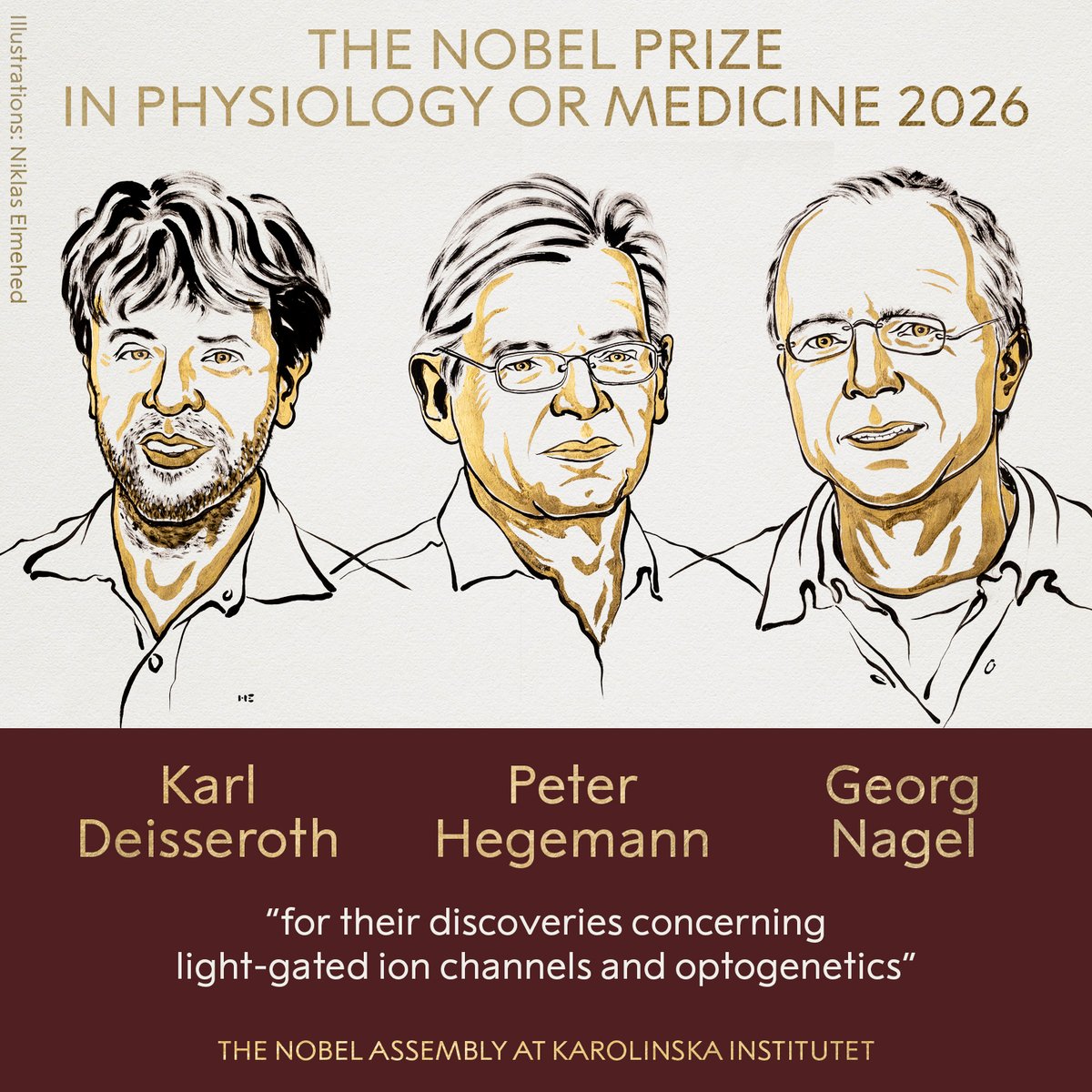
The 2026 #NobelPrize in Physiology or Medicine has been awarded to Karl Deisseroth, Peter Hegemann and Georg Nagel “for their discoveries concerning light-gated ion channels and optogenetics.”
Trump confirma al director de inteligencia nacional como nuevo zar de la IA
El presidente de Estados Unidos creó un comité que se encargará de coordinar el desarrollo de la inteligencia artificial en el país. https://t.co/LSpS4fHkwa (dz)
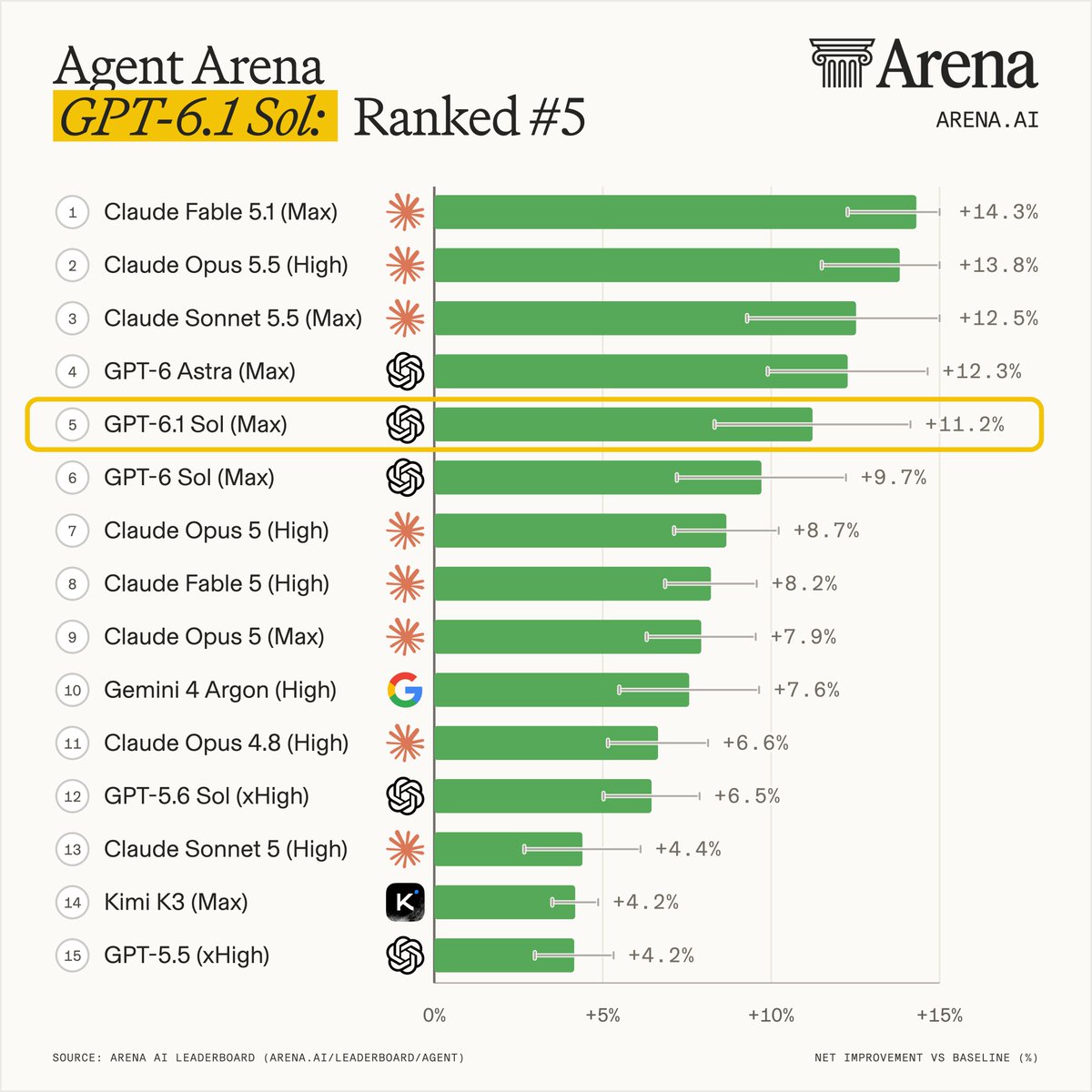
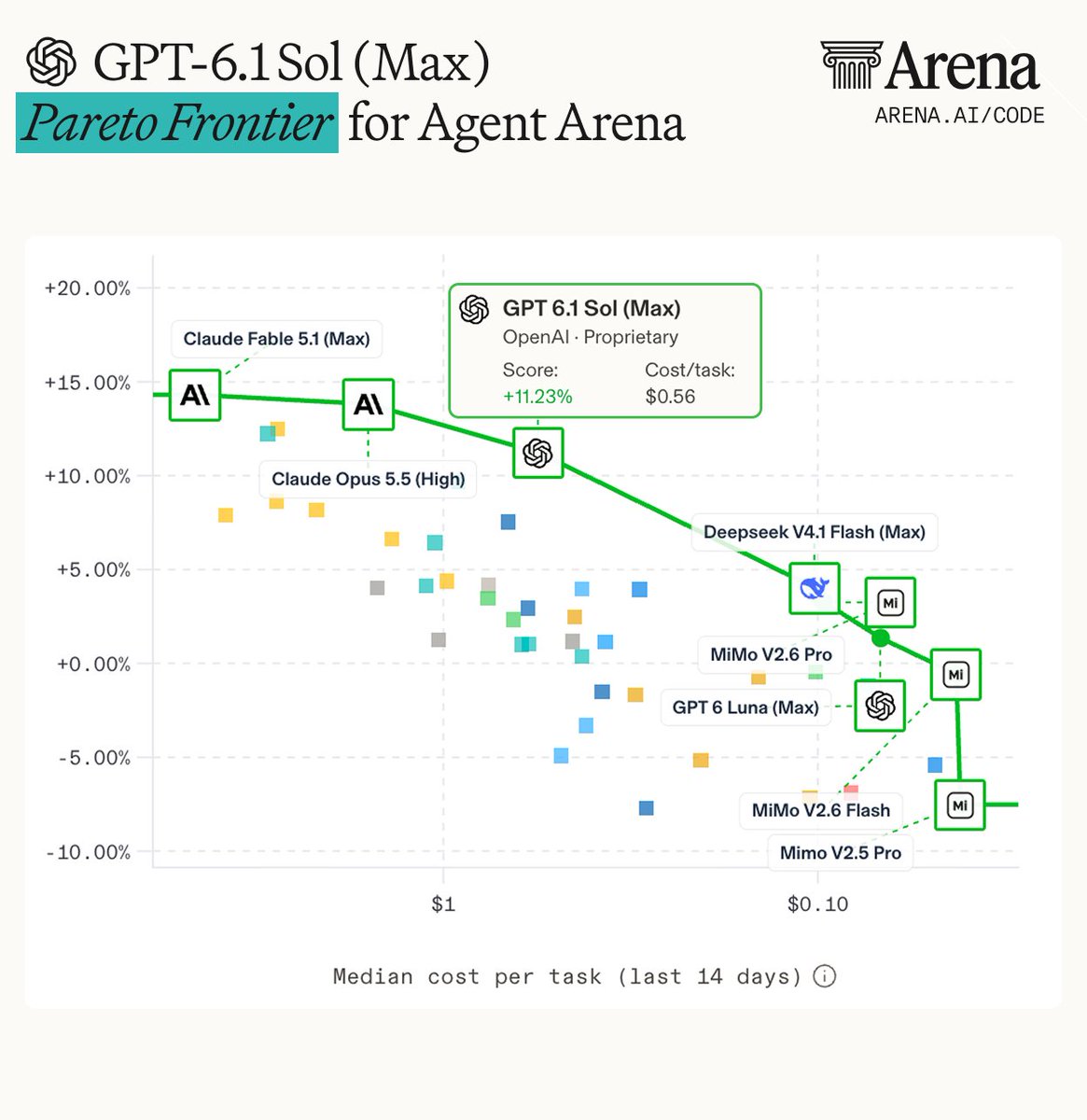
Exciting news: GPT-6.1 Sol (Max) by @OpenAi just landed in the Agent Arena at #5 (+11.23%) and reshaped the Pareto frontier!
At a $0.56 median cost per task, it delivers performance within 2 percentage points of GPT-6 Sol and GPT-6 Astra for substantially less cost:
- 39% lower cost than GPT-6 Sol, while scoring +1.52 pts higher
- 81% lower cost than GPT-6 Astra, while landing within 1.04 pts
GPT-6.1 Sol also delivers top-five performance at substantially lower cost compared to:
- 88% lower cost than Claude Fable 5.1 (Max), while landing within 3.08 pts (ranked #1)
- 65% lower cost than Claude Opus 5.5 (High), while landing within 2.59 pts (ranked #2)
- 80% lower cost than Claude Sonnet 5.5 (Max), while landing within 1.29 pts (ranked #3)
Congrats to the team @OpenAI on this release!
👩💻 The next evolution of software delivery is not just faster coding.
It is removing friction across the entire lifecycle.
With AI-driven automation, unified platforms and intent-based workflows, organizations can accelerate delivery and improve quality at the same time: https://t.co/7uRpLxHrVl
This on-demand webinar breaks down how to get there ⬆️
The 2024 #NobelPrize laureates in chemistry Demis Hassabis and John Jumper successfully utilised artificial intelligence to predict the structure of almost all known proteins.
What groundbreaking discoveries will be recognised with a Nobel Prize this year? The announcements will begin in just a few days. Learn more: https://t.co/RCKc2r3asL
Our clinical trial participants have now used their Neuralink implants for over 50,000 hours, building one of the largest datasets of intracortical neural activity ever.
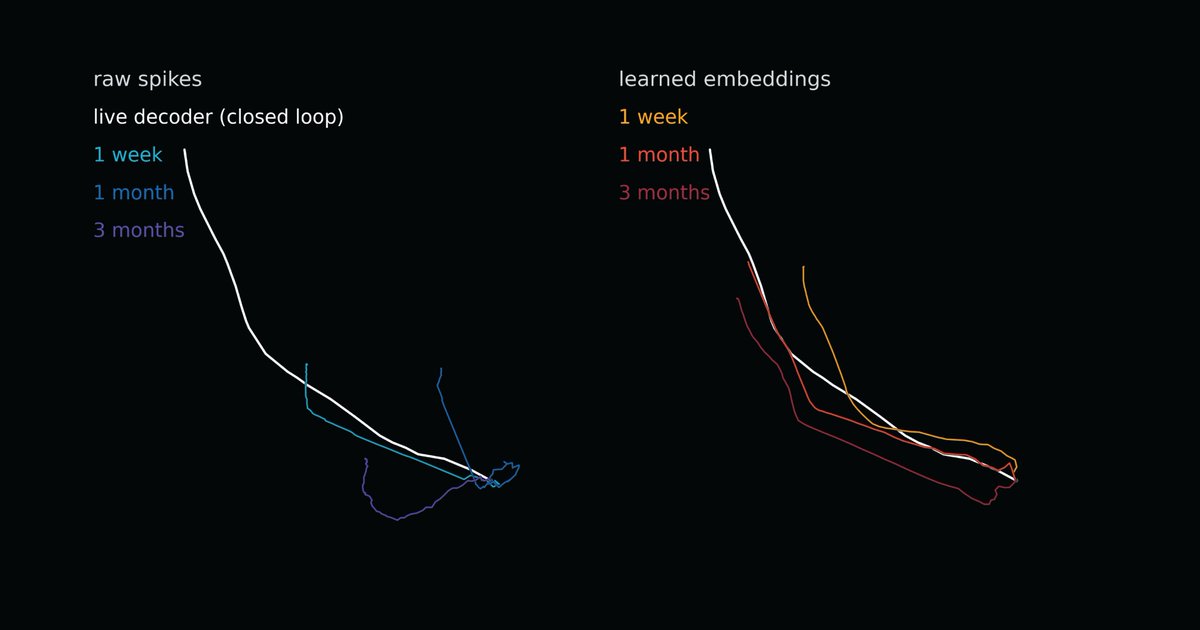
We used it to pretrain a foundation model for BCI: self-supervised neural encoders that turn noisy, drifting spikes into stable representations.
Some initial results:
• Decoders that keep working for weeks instead of days. For some users, calibration dropped from 10 min/day to 10 min/week
• Teleporting cursors that jump straight to the intended target
• A new cursor-control record of 11.32 bits per second (exceeding the performance of most able-bodied people)
We’re just getting started. Future directions include pooling data across participants, one-shot (or zero-shot) calibration, and an API for the motor cortex.
Read more:
https://t.co/sIQXFUI7pc
New Research: Exercise-based interventions for postpartum depressive symptoms: a systematic review and network meta-analysis of exercise modality and weekly volume www.frontiersin.org/articles/10.3389/fpsyt.2026.1921342 #FrontiersIn#Psychiatry
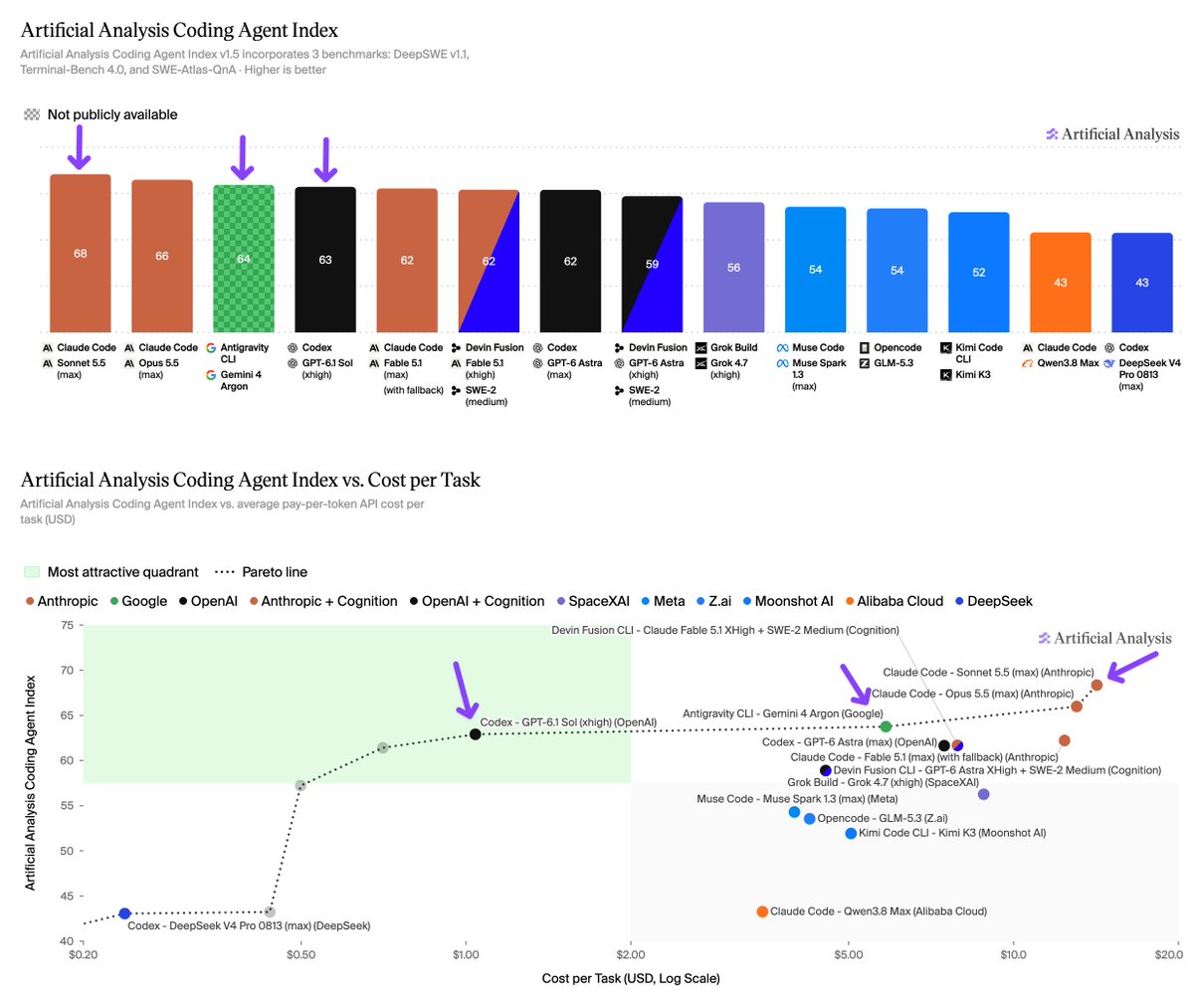
This week Claude Sonnet 5.5, GPT-6.1 Sol and Gemini 4 Argon all launched near the top of the Coding Agent Index leaderboard, but each has a different balance of performance and cost
The Artificial Analysis Coding Agent Index measures agents (a combination of model and harness) across three agentic coding evaluations.
➤ Claude Sonnet 5.5 (max) in Claude Code takes the top spot at 68, but also has the highest measured cost per task: $14.19
➤ Gemini 4 Argon (high) in Antigravity CLI scores 64 at $5.84 per task - less than half of Sonnet 5.5’s cost. Note, this uses Google’s promotional pricing, and Argon is not yet publicly available
➤ GPT-6.1 Sol (xhigh) in Codex scores 63 at $1.04, roughly one sixth of Argon’s cost
⚡🤖 C++ + AI = one seriously powerful toolchain.
Visual Studio is leveling up with AI-assisted workflows, deeper code intelligence, and more developer superpowers for modern C++. 🚀💻
👀 Dive into the CppCon 2026 update: https://t.co/gcFFaxRopd
#cpp#AI#VisualStudio #CppCon2026
New Microsoft Digital Defense Report is out. Less talk about volume, more on how attacks are evolving and which gaps deserve your attention this year.
Explore the latest trends: https://t.co/PH12CJ51oS
New Research: Smartphone acquisition as an inflection point in early adolescence digital exposome: relevance to mental health www.frontiersin.org/articles/10.3389/frcha.2026.1940646 #FrontiersIn#ChildAdolescentPsychiatry
🧠 HydraFusion is now available in @code as a Research Preview.
Instead of relying on a single model, HydraFusion orchestrates multiple models and workflows to tackle coding tasks.
Give it a try today! 🚀
https://t.co/CCB7TN69Rz
As #neurotechnology advances, who helps shape the rules around it? A new @frontiersin editorial explores #neuroethics and governance, highlighting evidence, equitable access, and meaningful participation by affected communities. Read it now at: https://t.co/6RmpoGNBQI #brain
Biology doesn't operate in silos, and neither should the AI representation of it. Quine is an early-stage research effort to create a multimodal world model of biology. By connecting insights across biological scales and modalities, Quine helps scientists computationally search a space far larger than intuition allows and prioritize hypotheses before they reach the lab. Experimental results provide important feedback, helping researchers sharpen future research directions. https://t.co/gt8Dt2I5sa