𝗕𝗮𝗰𝗸-𝘁𝗼-𝗯𝗮𝗰𝗸 𝗯𝗼𝗼𝗸𝗶𝗻𝗴𝘀? 𝗟𝗲𝘁’𝘀 𝗽𝗿𝗼𝘁𝗲𝗰𝘁 𝘆𝗼𝘂𝗿 𝗳𝗼𝗹𝗹𝗼𝘄-𝘂𝗽 𝘁𝗶𝗺𝗲 𝗯𝗲𝗳𝗼𝗿𝗲 𝘆𝗼𝘂𝗿 𝗱𝗮𝘆 𝗳𝗶𝗹𝗹𝘀 𝘂𝗽.
I’ll walk you through a HighLevel setup that leaves room to finish one customer’s work before starting the next.
For this example, we’ll plan for a 30-minute appointment plus 15 minutes of follow-up.
𝟭.) 𝗖𝗼𝘂𝗻𝘁 𝘁𝗵𝗲 𝘄𝗵𝗼𝗹𝗲 𝗷𝗼𝗯, 𝗻𝗼𝘁 𝗷𝘂𝘀𝘁 𝘁𝗵𝗲 𝗰𝗼𝗻𝘃𝗲𝗿𝘀𝗮𝘁𝗶𝗼𝗻.
In HighLevel, 𝗦𝗹𝗼𝘁 𝗗𝘂𝗿𝗮𝘁𝗶𝗼𝗻 sets appointment length. 𝗦𝗹𝗼𝘁 𝗜𝗻𝘁𝗲𝗿𝘃𝗮𝗹 controls how frequently starting times are offered; it isn’t a reserved break after a booking.
Write down what you need to do immediately after the call: save notes, assign a task, or send the information you promised.
Those jobs need somewhere in the day, too.
I don’t want a calendar that looks beautifully organized while all the follow-up is waiting until dinner!
𝟮.) 𝗥𝗲𝘀𝗲𝗿𝘃𝗲 𝘁𝗵𝗲 𝘁𝗶𝗺𝗲 𝗮𝗳𝘁𝗲𝗿 𝘁𝗵𝗲 𝗮𝗽𝗽𝗼𝗶𝗻𝘁𝗺𝗲𝗻𝘁.
Go to 𝗖𝗮𝗹𝗲𝗻𝗱𝗮𝗿𝘀 → 𝗖𝗮𝗹𝗲𝗻𝗱𝗮𝗿 𝘀𝗲𝘁𝘁𝗶𝗻𝗴𝘀 → 𝗘𝗱𝗶𝘁 𝘁𝗵𝗲 𝗿𝗲𝗹𝗲𝘃𝗮𝗻𝘁 𝗰𝗮𝗹𝗲𝗻𝗱𝗮𝗿 → 𝗔𝘃𝗮𝗶𝗹𝗮𝗯𝗶𝗹𝗶𝘁𝘆.
In our example, set 𝗣𝗼𝘀𝘁 𝗯𝘂𝗳𝗳𝗲𝗿 𝘁𝗶𝗺𝗲 𝘁𝗼 𝟭𝟱 𝗺𝗶𝗻𝘂𝘁𝗲𝘀, leave the pre-buffer at zero, and save. HighLevel uses configured buffers when calculating available appointment times.
Choose the gap your work actually requires.
Fifteen minutes is our example, not the right answer for every business.
𝟯.) 𝗚𝗶𝘃𝗲 𝘆𝗼𝘂𝗿𝘀𝗲𝗹𝗳 𝗲𝗻𝗼𝘂𝗴𝗵 𝗻𝗼𝘁𝗶𝗰𝗲 𝘁𝗼 𝗽𝗿𝗲𝗽𝗮𝗿𝗲.
𝗠𝗶𝗻𝗶𝗺𝘂𝗺 𝗦𝗰𝗵𝗲𝗱𝘂𝗹𝗶𝗻𝗴 𝗡𝗼𝘁𝗶𝗰𝗲 controls how far ahead someone must book.
A setting of 24 hours requires that much notice for new appointments; it does not move existing bookings.
Use a notice period that fits the preparation.
A consultation requiring you to review a customer’s project may need more notice than a routine check-in.
𝟰.) 𝗦𝗲𝘁 𝗮 𝗱𝗮𝗶𝗹𝘆 𝗹𝗶𝗺𝗶𝘁 𝘁𝗵𝗮𝘁 𝗹𝗲𝗮𝘃𝗲𝘀 𝗿𝗼𝗼𝗺 𝘁𝗼 𝗱𝗲𝗹𝗶𝘃𝗲𝗿.
𝗔𝗽𝗽𝗼𝗶𝗻𝘁𝗺𝗲𝗻𝘁𝘀 𝗽𝗲𝗿 𝗗𝗮𝘆 limits bookings on that calendar, not the combined total across every calendar you use.
At 𝟰 𝗮𝗽𝗽𝗼𝗶𝗻𝘁𝗺𝗲𝗻𝘁𝘀, our example accounts for:
𝟮 𝗵𝗼𝘂𝗿𝘀 𝗼𝗳 𝗰𝗼𝗻𝘃𝗲𝗿𝘀𝗮𝘁𝗶𝗼𝗻𝘀 + 𝟭 𝗵𝗼𝘂𝗿 𝗼𝗳 𝗳𝗼𝗹𝗹𝗼𝘄-𝘂𝗽 = 𝟯 𝗵𝗼𝘂𝗿𝘀.
Compare that with your other commitments before deciding it fits.
A day with four calls still needs room for the work those calls create.
𝟱.) 𝗧𝗲𝘀𝘁 𝘄𝗵𝗮𝘁 𝘁𝗵𝗲 𝗰𝘂𝘀𝘁𝗼𝗺𝗲𝗿 𝗰𝗮𝗻 𝗯𝗼𝗼𝗸.
In 𝗗𝗮𝘆 𝗼𝗿 𝗪𝗲𝗲𝗸 𝗖𝗮𝗹𝗲𝗻𝗱𝗮𝗿 view, use 𝗠𝗮𝗻𝗮𝗴𝗲 𝘃𝗶𝗲𝘄 → 𝗦𝗵𝗼𝘄 𝗯𝘂𝗳𝗳𝗲𝗿 𝘁𝗶𝗺𝗲 to display the reserved periods.
Use test bookings to check the gap after a call, the minimum notice period, and the daily limit.
Check other commitments and already-booked appointments separately.
Read your schedule as the person who has to deliver it.
Your customers deserve attention, and your promises need time.
To explore HighLevel for this process, try your 14 day FREE trial using our affiliate link: https://t.co/NnujD6X0IL
We’re HighLevel affiliates and earn a commission when you subscribe through our link.
Look forward to saving you time and hassle!
i made this free guide for anyone starting TikTok Shop from zero
7 mistakes that cost beginners their first month and what to do instead
reply GUIDE and i’ll dm it to you
I'm shocked people still retype the same prompt every day.
Save your best 5 in a note on your phone and name them by job: reply, summarise, plan, rewrite, check.
Two taps instead of two minutes, and the prompt keeps improving because you keep editing the same one.
I'm shocked people still retype the same prompt every day.
Save your best 5 in a note on your phone and name them by job: reply, summarise, plan, rewrite, check.
Two taps instead of two minutes, and the prompt keeps improving because you keep editing the same one.
𝗟𝗲𝘁𝘀 𝘁𝘂𝗿𝗻 𝘆𝗼𝘂𝗿 𝗰𝘂𝘀𝘁𝗼𝗺𝗲𝗿’𝘀 𝗰𝗼𝗺𝗽𝗹𝗮𝗶𝗻𝘁𝘀 𝗶𝗻𝘁𝗼 𝘆𝗼𝘂𝗿 𝗯𝘂𝘀𝗶𝗻𝗲𝘀𝘀𝗲𝘀 𝗻𝗲𝘄 𝘀𝗲𝗿𝘃𝗶𝗰𝗲 𝘂𝗽𝗴𝗿𝗮𝗱𝗲.
We’ll use AI to organize the feedback, then check the actual experience before deciding what to fix.
𝘈 𝘣𝘦𝘵𝘵𝘦𝘳 𝘢𝘱𝘰𝘭𝘰𝘨𝘺 𝘸𝘰𝘯’𝘵 𝘳𝘦𝘱𝘢𝘪𝘳 𝘢 𝘭𝘪𝘯𝘬 𝘵𝘩𝘢𝘵 𝘴𝘵𝘪𝘭𝘭 𝘥𝘰𝘦𝘴𝘯’𝘵 𝘸𝘰𝘳𝘬!
𝟭.) 𝗦𝘁𝗮𝗿𝘁 𝘄𝗶𝘁𝗵 𝘁𝗵𝗲 𝗰𝘂𝘀𝘁𝗼𝗺𝗲𝗿’𝘀 𝗼𝘄𝗻 𝘄𝗼𝗿𝗱𝘀.
Collect 𝟭𝟬 𝗿𝗲𝗰𝗲𝗻𝘁 𝗳𝗲𝗲𝗱𝗯𝗮𝗰𝗸 𝗺𝗲𝘀𝘀𝗮𝗴𝗲𝘀 from a defined period. Include questions and positive comments as well as complaints.
𝗞𝗲𝗲𝗽 𝗲𝗻𝗼𝘂𝗴𝗵 𝗰𝗼𝗻𝘁𝗲𝘅𝘁 to understand what happened. Use an approved business tool and remove identifying information where it isn’t needed.
“𝘐 𝘤𝘰𝘶𝘭𝘥𝘯’𝘵 𝘧𝘪𝘯𝘥 𝘵𝘩𝘦 𝘶𝘱𝘭𝘰𝘢𝘥 𝘭𝘪𝘯𝘬” tells us something we can investigate.
Replacing it with “dissatisfied with onboarding” makes the problem sound more sophisticated and much less clear.
𝟮.) 𝗔𝘀𝗸 𝗔𝗜 𝘁𝗼 𝗼𝗿𝗴𝗮𝗻𝗶𝘇𝗲, 𝗻𝗼𝘁 𝗲𝘅𝗽𝗹𝗮𝗶𝗻 𝗮𝘄𝗮𝘆, 𝘁𝗵𝗲 𝗳𝗲𝗲𝗱𝗯𝗮𝗰𝗸.
Try:
"Group these messages by the specific issue described. Keep the original wording and message number beside each group. Count distinct messages and flag possible duplicates. Separate reported facts from interpretation. Don’t assume causes or add feedback that isn’t supplied."
Review the groups against the messages.
Suppose 𝟰 𝗼𝗳 𝘁𝗵𝗲 𝟭𝟬 𝗺𝗲𝗻𝘁𝗶𝗼𝗻 difficulty finding a link. That describes this sample, not 40% of all your customers.
It gives you a reasonable place to investigate.
𝟯.) 𝗙𝗼𝗹𝗹𝗼𝘄 𝘁𝗵𝗲 𝘀𝗮𝗺𝗲 𝗽𝗮𝘁𝗵 𝘁𝗵𝗲 𝗰𝘂𝘀𝘁𝗼𝗺𝗲𝗿 𝘁𝗼𝗼𝗸.
Find out whether the link is missing, buried in a long message, or inaccessible without permission.
𝗧𝗵𝗼𝘀𝗲 𝗻𝗲𝗲𝗱 𝗱𝗶𝗳𝗳𝗲𝗿𝗲𝗻𝘁 𝗳𝗶𝘅𝗲𝘀.
I don’t want us spending an afternoon improving the wording when the folder simply won’t open!
Choose one change, assign someone to make it, and record what you expect it to improve.
𝟰.) 𝗖𝗵𝗲𝗰𝗸 𝘁𝗵𝗮𝘁 𝘀𝗼𝗺𝗲𝗼𝗻𝗲 𝗰𝗮𝗻 𝗻𝗼𝘄 𝗳𝗶𝗻𝗶𝘀𝗵 𝘁𝗵𝗲 𝗷𝗼𝗯.
Ask 𝟯 𝗽𝗲𝗼𝗽𝗹𝗲 unfamiliar with the process to try it using sample information.
Can they find the link, open it, and complete the upload without coaching?
Record where they still get stuck. Revise those parts and test again.
Then watch subsequent feedback for the same issue. A small test gives you useful information; it doesn’t establish that the problem can never recur.
Where appropriate, tell the customers who raised the issue what you investigated and what changed.
“𝘛𝘩𝘢𝘯𝘬 𝘺𝘰𝘶 𝘧𝘰𝘳 𝘺𝘰𝘶𝘳 𝘧𝘦𝘦𝘥𝘣𝘢𝘤𝘬! 𝘞𝘦 𝘤𝘩𝘦𝘤𝘬𝘦𝘥 𝘪𝘵. 𝘏𝘦𝘳𝘦’𝘴 𝘸𝘩𝘢𝘵 𝘸𝘦 𝘤𝘰𝘳𝘳𝘦𝘤𝘵𝘦𝘥.”
𝗧𝗵𝗮𝘁 𝗴𝗶𝘃𝗲𝘀 𝘆𝗼𝘂𝗿 𝗿𝗲𝘀𝗽𝗼𝗻𝘀𝗲 𝘀𝘂𝗯𝘀𝘁𝗮𝗻𝗰𝗲 𝗮𝗻𝗱 𝗹𝗲𝘁𝘀 𝘁𝗵𝗲 𝗰𝘂𝘀𝘁𝗼𝗺𝗲𝗿 𝘀𝗲𝗲 𝘁𝗵𝗮𝘁 𝘁𝗵𝗲𝗶𝗿 𝗲𝘅𝗽𝗲𝗿𝗶𝗲𝗻𝗰𝗲 𝗺𝗮𝘁𝘁𝗲𝗿𝗲𝗱.
Everyone says reply to leads within 5 minutes. Nobody says who replies at 8pm on a Sunday.
The cheapest answer I've found is the one I built on Day 5. Missed call, wait 30 seconds, send a text. 41 seconds end to end in my test.
The catch: in the US no text reaches a lead until A2P registration is approved, and from what people are posting that can take a few tries. Start it before you need it.
Then a human still has to pick it up on Monday. That's what the internal comment from Day 7 is for, so whoever calls back knows what already happened.
How does your business handle Sunday calls right now?
the moat isn’t the AI
it’s the 100 reps the next person hasn’t done yet
most people are trying to shortcut the reps with better tools
but the tool only amplifies what you already understand
someone with 10 reps and GPT-4 still loses to someone with 100 reps and a notes app
because the person with 100 reps knows which questions to ask
they know which customer objections are real and which ones are just fear
they know which features get requested and never used
they know when to ship and when to wait
you can’t prompt your way to that
the only way to build real advantage right now is to pick one problem and stay closer to it than anyone else is willing to
talk to the people with the problem every week
ship something small every month
write down what you believed before and what actually happened after
do that for a year and you will see things that nobody who started six months after you can see yet
that’s the moat
not the model
the accumulated reps that make you better at using it than someone starting today
doing hard things makes life easier over time
doing easy things makes life harder over time
most men understand this intellectually
and do nothing with it
here’s why
the brain is wired for the present
the pain of the hard thing is immediate
the reward is months or years away
so the brain convinces you to wait
tomorrow. next week. when things calm down. when you’re ready
but the biology doesn’t care about your reasons
every day you choose comfort over difficulty your body adapts to comfort
your testosterone drops
your pain tolerance drops
your capacity for hard work shrinks
and the hard thing gets harder
the opposite is also true
every time you do the thing you didn’t want to do
train when you’re tired
eat right when it’s inconvenient
sleep on time when the phone is calling
your body adapts to that instead
the threshold for hard drops
what used to feel impossible starts to feel normal
this is not motivation
this is neuroscience
the brain rewires around what you repeatedly do
choose the hard path enough times and it stops feeling hard
choose the easy path enough times and easy stops feeling like enough
the men who figured this out early don’t have more willpower
they just started the compound interest earlier
overall the choice between hard and easy is not a one time decision it is made every single day and the result is who you become
A lot of beginners assume free samples are all about follower count. Sellers are checking a bunch of other stuff too...
One guide written for sellers lists what they look at: audience fit, recent content in the same niche, how often you post shoppable videos, how you show the product, comment quality, and whether you finish the collabs you agree to. Past sales only count "when available"
What I'd take from it:
- Stay in one niche. A seller with kitchen products wants to see kitchen videos on your page
- Post shoppable videos regularly, even before samples. Buy one cheap product and review it so there's something to look at
- Finish every collab. Free and refundable samples have different posting windows, so check the deadline when you accept one
Your page is pretty much what they're judging you on
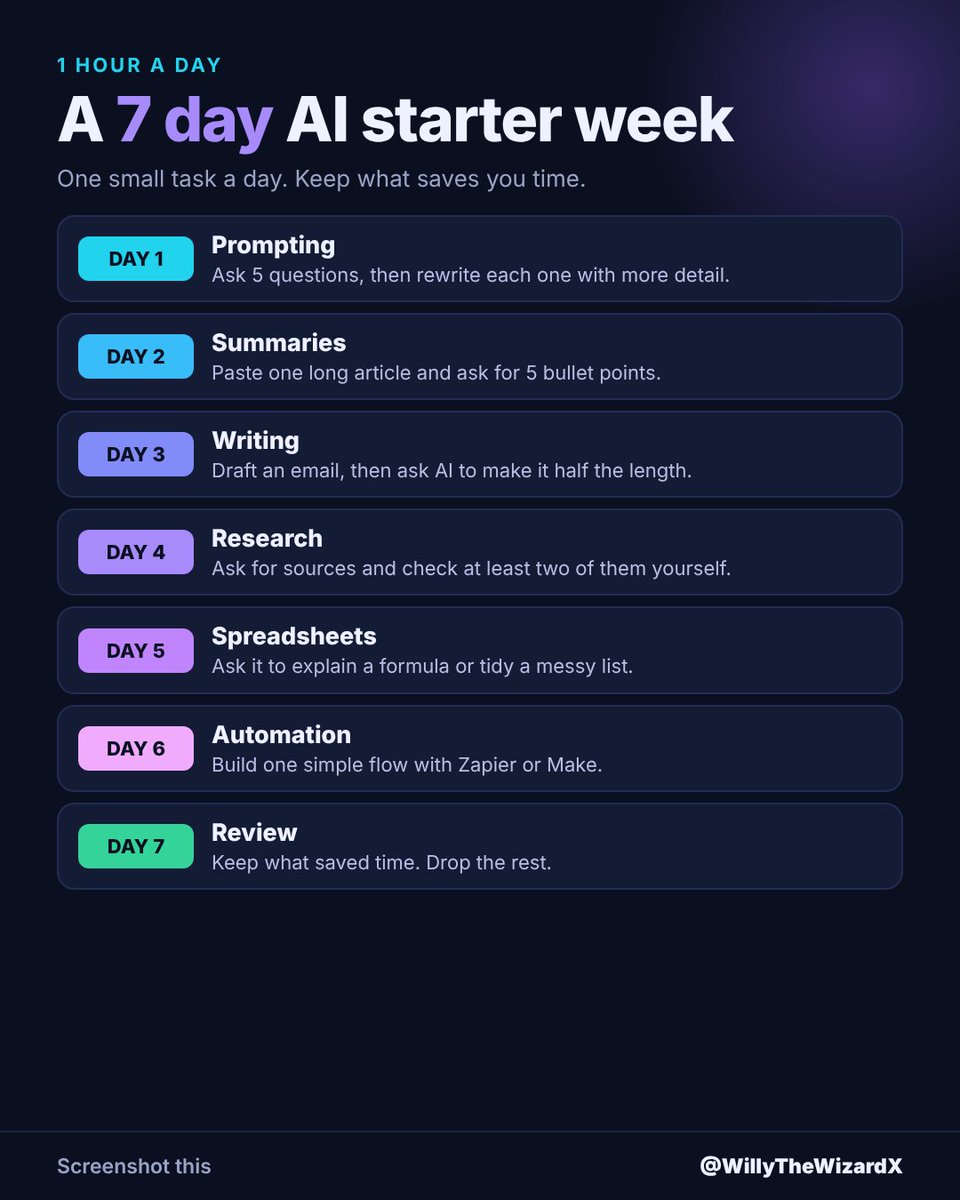
You can learn the basics of AI in a week with 1 hour a day.
Prompts, summaries, writing, research, spreadsheets, one automation, then a review.
The full 7 day plan is below (screenshot it).
You can learn the basics of AI in a week with 1 hour a day.
Prompts, summaries, writing, research, spreadsheets, one automation, then a review.
The full 7 day plan is below (screenshot it).
I'd take the ten clips at 100K each, and the reason isn't the views, because the total is the same…
On Promote you're paid per verified view, so 1M views is 1M views whichever way it's split (at the same rate, the cheque is identical). That makes the real question which one you can do again
One clip at 1M is partly luck. The moment, the timing and the way the algorithm happened to pick it up all had to line up, and you can't be sure which of those did the work. Ten clips at 100K each says something different: the format, the hooks and the niche all work for your page, and you've now got ten data points instead of one
That's the useful part of tracking. Once a week, note your posts, your verified views, your average rate and your best-performing page, and ten steady results tell you what to repeat in a way a single spike never will (one big clip is a story, ten decent ones are a pattern)
Brands notice it too. A clipper who delivers consistently is easy to plan a budget around, whereas a lucky one is hard to rely on
I'd still take the 1M if it was the first of ten, because one big clip tells you what to make more of
The viral clip gets the attention, and the ten clips are what pay the bills
Both, and the order you use them in matters more than which one you pick…
Competitor posts are the best place to start for format. Every niche has its own style, so studying the top pages first shows you what's working (what they open on, how long the clips run, what the on-screen text looks like). The danger is stopping there, because if everyone cuts the same moment from the same top pages, you end up posting the clip everyone else just posted
Audience questions are where the different angle comes from. The comments under the source video, the questions people keep asking and the points they argue about all show you what viewers actually care about, and a clip built around one of those stands out from a feed of near copies (if the audience is already arguing about it, the opening is half written)
The way I'd run it is a daily sourcing folder: a few minutes each day saving competitor clips for format and audience comments for angles. When a campaign needs content you're choosing from a pile instead of starting blank
Copying competitors gets you into the feed, and listening to the audience is what gets you noticed once you're in it
Picture a clipper whose edits are clean and whose clips still get skipped, and it usually comes down to three things that have nothing to do with the cut…
The first is the opening. If the first second doesn't give someone a reason to stay, the rest of the clip doesn't matter, because retention and rewatches are what get a clip pushed to more people (the fix is to open on the strongest moment and cut anything before it)
The second is the on-screen text. It reads as decoration to a lot of beginners, but it's really copywriting. A good line of text tells a viewer why to keep watching, and a weak one wastes the one place you get to speak to them directly
The third is copying the wrong format. Formats differ a lot between niches, so a style that works for one kind of page can flop on another. The fix is to study the top pages in your niche before you cut anything, and notice what they open on, how long the clips run and what the text looks like
What he should've done is fix those three before spending any more time on the edit, because they're quicker to change and they decide whether the clip is seen at all
Most clips that don't land weren't badly made, they were made for a viewer who'd already scrolled past
Day 7. HighLevel shipped a new workflow action this week, Add Internal Comment. Added it to my missed-call text-back.
Now when the text goes out, the workflow also drops a private note on the conversation: missed call, text sent, waiting on a reply.
Took 9 minutes. Most of that was getting the caller's number and the call time into the comment with custom values.
Tested it with 3 calls. All 3 notes showed up in Conversations, visible only to the team.
Small thing, but whoever calls back now knows what already happened before they dial.
What would you put in that note?
ChatGPT is a skill most people never practise.
To start you need:
1. Internet
2. A phone or laptop
3. 30 mins a day
Spend week one on a single task, not twenty. You get better at asking, and that part compounds.
most men are overcomplicating it
your grandfather didn’t track his macros
he didn’t measure his cortisol
he didn’t read studies on sleep architecture
he woke up before the sun
he moved heavy things
he ate real food
he went to bed when it got dark
and he was built like a weapon
somewhere between 1950 and now men traded instinct for information
now you’ve got a guy with 47 supplements a CGM on his arm and a sleep score app who still can’t get out of bed before 9am
the science is not the problem
you are the problem
wake up
piss
attack your goals like an animal
sleep
do it again tomorrow
that’s the entire protocol
everything else is just a man searching for a reason not to start
𝗟𝗲𝘁’𝘀 𝗴𝗲𝘁 𝘆𝗼𝘂 𝗿𝗲𝗮𝗱𝘆 𝘁𝗼 𝗻𝗮𝗶𝗹 𝘁𝗵𝗲 𝘀𝗮𝗹𝗲𝘀 𝗾𝘂𝗲𝘀𝘁𝗶𝗼𝗻 𝘆𝗼𝘂’𝘃𝗲 𝗯𝗲𝗲𝗻 𝗵𝗼𝗽𝗶𝗻𝗴 𝗻𝗼𝗯𝗼𝗱𝘆 𝗮𝘀𝗸𝘀.
I’ll show you how to use AI to practice answering a customer’s concern fully so its resolved and they feel confident to move forward with you.
For this exercise, the customer says:
“We tried automation once. It created more work.”
𝘛𝘩𝘢𝘵 𝘥𝘦𝘴𝘦𝘳𝘷𝘦𝘴 𝘢 𝘳𝘦𝘢𝘭 𝘤𝘰𝘯𝘷𝘦𝘳𝘴𝘢𝘵𝘪𝘰𝘯.
𝟭.) 𝗚𝗶𝘃𝗲 𝘁𝗵𝗲 𝗿𝗲𝗵𝗲𝗮𝗿𝘀𝗮𝗹 𝘆𝗼𝘂𝗿 𝗿𝗲𝗹𝗲𝘃𝗮𝗻𝘁 𝗯𝘂𝘀𝗶𝗻𝗲𝘀𝘀 𝗱𝗲𝘁𝗮𝗶𝗹𝘀 𝘁𝗼 𝘄𝗼𝗿𝗸 𝘄𝗶𝘁𝗵.
Supply your actual offer, what it includes, its limits, and the prices you’re ready to discuss.
Use a fictional buyer situation rather than private customer information.
In our example, the buyer runs a small service business and is concerned about setup and maintenance.
We’re practicing how to understand that concern and explain the relevant help.
𝟮.) 𝗔𝘀𝗸 𝗔𝗜 𝘁𝗼 𝗽𝗹𝗮𝘆 𝘁𝗵𝗲 𝗰𝘂𝘀𝘁𝗼𝗺𝗲𝗿 𝗼𝗻𝗲 𝗲𝘅𝗰𝗵𝗮𝗻𝗴𝗲 𝗮𝘁 𝗮 𝘁𝗶𝗺𝗲.
Try:
"Role-play a prospective customer in the situation below. Start with the stated concern. Respond to one message at a time and don’t automatically agree with me.
After 5 exchanges, stop. Review whether I understood the concern, explained the offer accurately, and proposed an appropriate next step. Flag promises unsupported by the offer details."
Respond as you would in a real conversation.
Don’t aim for a perfect paragraph. Practice finding out what the person needs to know.
𝟯.) 𝗨𝗻𝗱𝗲𝗿𝘀𝘁𝗮𝗻𝗱 𝘄𝗵𝗮𝘁 𝗵𝗮𝗽𝗽𝗲𝗻𝗲𝗱 𝗯𝗲𝗳𝗼𝗿𝗲 𝗲𝘅𝗽𝗹𝗮𝗶𝗻𝗶𝗻𝗴 𝘆𝗼𝘂𝗿 𝘀𝗼𝗹𝘂𝘁𝗶𝗼𝗻.
A useful first question could be:
“Which part created the extra work: setting it up, keeping it running, or correcting what it produced?”
𝙇𝙚𝙩 𝙩𝙝𝙚 𝙖𝙣𝙨𝙬𝙚𝙧 𝙜𝙪𝙞𝙙𝙚 𝙮𝙤𝙪.
Then check your understanding:
“𝗦𝗼 𝘆𝗼𝘂𝗿 𝗺𝗮𝗶𝗻 𝗰𝗼𝗻𝗰𝗲𝗿𝗻 𝗶𝘀 𝘄𝗵𝗼 𝗺𝗮𝗶𝗻𝘁𝗮𝗶𝗻𝘀 𝗶𝘁 𝗮𝗳𝘁𝗲𝗿 𝘀𝗲𝘁𝘂𝗽. 𝗛𝗮𝘃𝗲 𝗜 𝘂𝗻𝗱𝗲𝗿𝘀𝘁𝗼𝗼𝗱 𝘁𝗵𝗮𝘁?”
Now you have a particular concern to address using the actual terms of your offer.
I wouldn’t want to give someone a beautiful explanation of faster setup when they’re worried about six months of maintenance!
𝟰.) 𝗥𝗲𝘃𝗶𝗲𝘄 𝗵𝗼𝘄 𝘄𝗲𝗹𝗹 𝘆𝗼𝘂 𝗵𝗲𝗹𝗽𝗲𝗱 𝘁𝗵𝗲𝗺 𝘂𝗻𝗱𝗲𝗿𝘀𝘁𝗮𝗻𝗱.
Look for 𝟯 𝘁𝗵𝗶𝗻𝗴𝘀:
Did you understand the concern before recommending anything?
Did you explain the relevant help without adding promises?
Did the next step fit their situation?
Read the exchange yourself. Treat the AI’s feedback as something to consider, not a verdict on your ability.
Try another round with a different concern, such as timing or whether the service fits the job.
A chatbot agreeing to buy isn’t the result we’re measuring.
The useful result is being better prepared to listen, explain, and help a real customer.
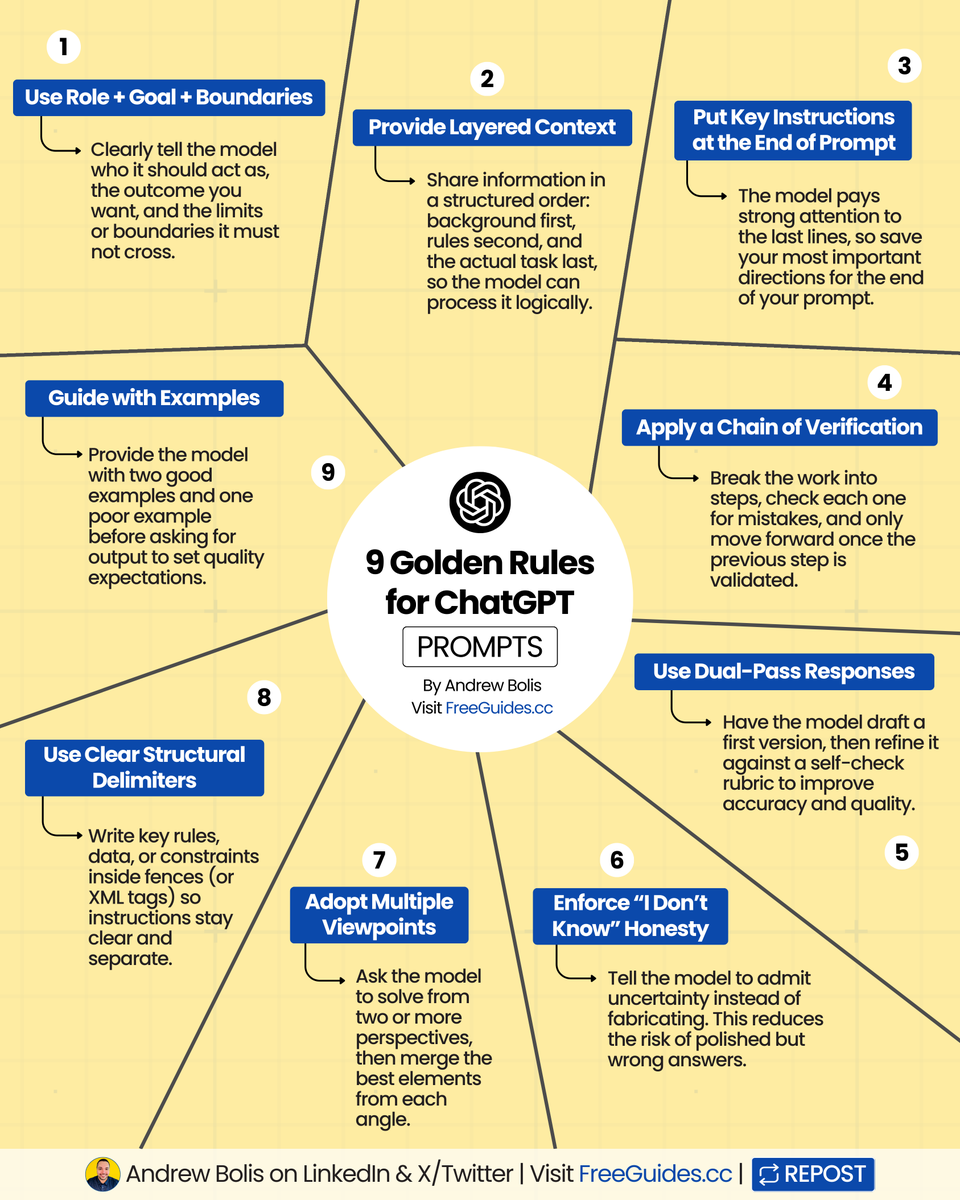
OpenAI released a ChatGPT Prompting Guide.
Here are 9 tips for writing expert-level prompts:
[🔖 bookmark this to upgrade your prompts]
What you ignore ➟ can limit your results.
How you phrase ➟ determines the response.
What you emphasize ➟ impacts focus of model.
1. Use Role + Goal + Boundries
↳ Clearly tell the model who it should act as, the outcome you want, and the limits or boundaries it must not cross.
2. Provide Layered Context
↳ Share information in a structured order: background first, rules second, and the actual task last, so the model can process it logically.
3. Put Key Instructions at the End
↳ The model pays strong attention to the last lines, so save your most important directions for the end of your prompt.
4. Apply a Chain of Verification
↳ Break the work into steps, check each one for mistakes, and only move forward once the previous step is validated.
5. Use Dual-Pass Responses
↳ Have the model draft a first version, then refine it against a self-check rubric to improve accuracy and quality.
6. Enforce “I Don’t Know” Honesty
↳ Tell the model to admit uncertainty instead of fabricating. This reduces the risk of polished but wrong answers.
7. Adopt Multiple Viewpoints
↳ Ask the model to solve from two or more perspectives, then merge the best elements from each angle.
8. Use Clear Structural Delimiters
↳ Write key rules, data, or constraints inside fences (``` or XML tags) so instructions stay clear and separate.
9. Guide with Examples
↳ Provide the model with two good examples and one poor example before asking for output to set quality expectations.
📌 Get Advanced ChatGPT Guide (free): https://t.co/kOBWfKrBaX
👉 Follow me @AndrewBolis for more and 🔄 Repost this to help others use AI