If I were forced to pick one scene in Lynch's run that encapsulates his art (which is impossible), my pick is the Llorando sequence in Mulholland Drive.
Even in the dark of our nightmares, the beauty and pain of art can reach us, even if that art is built on nightmares itself.
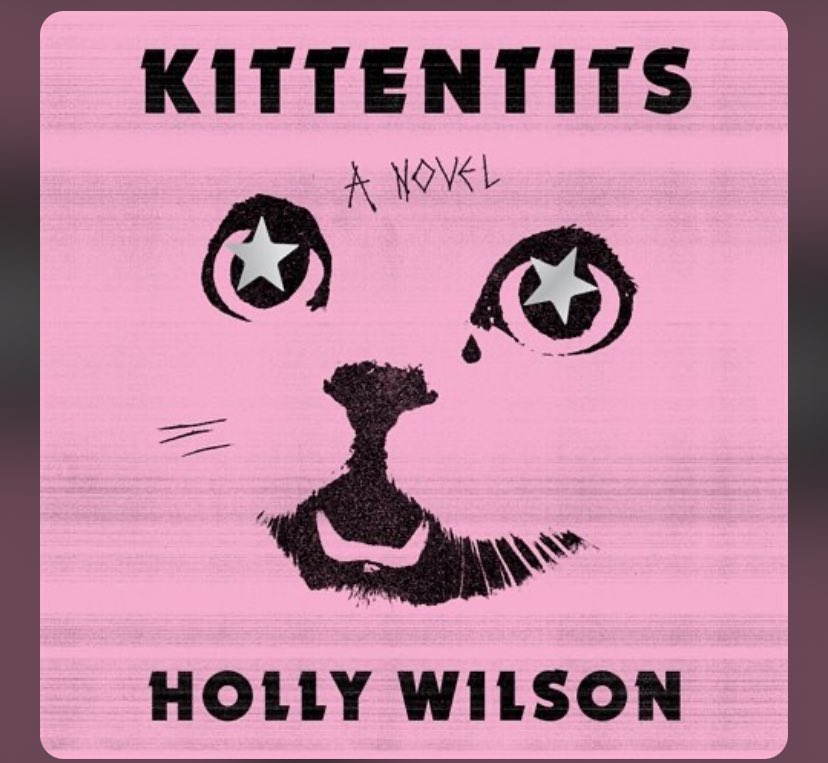
Kansas native and Wichita State University graduate, Holly Wilson, has published her debut novel. On “Wichita’s Early Edition,” she speaks with KMUW's Beth Golay about returning home to celebrate that novel, “Kittentits.”
https://t.co/V6qfcU71qq
There are writers of fiction who present as precisely and as accurately as they can the hidden heart of the human condition. They expose dark tendencies and temptations, moral failings, meannesses, violence, cruelties, the whole inner bastard that all of us meet at least to a certain degree when we are introspective but that very few have the creativity or bravery to discuss out in the open. I’m thinking of writers like William Faulkner, William S. Burroughs, Vladimir Nabokov, or Thomas Pynchon, though there are of course many more. Flannery O’Connor might be another example. These people are not moral authorities and many of them are very far indeed from being moral paragons. However, I feel it is very dangerous to criticise such writers on the grounds of the dark themes and positions laid out in their fictions as though those elements of their creative project were a window into their personal moral turpitude and not a broad comment on either human nature or the state of play in a specific society. Today, it seems to me, there is a tendency for us to try to present our hidden, inner lives as at least more unimpeachable than those of our neighbours, if not absolutely so. There is a spirit of stagey moral competition and no one feels it is advisable to fall behind. And, so, brave writing that picks at the scabs of human character unapologetically is often framed as the aberration of one ethically bankrupt individual. In reading this way I feel we lose most of all the reach of literature, which seeks to plumb depths and cross distances between our visions of perfection and our most loathsome (often secret) shortcomings. Essentially, I suggest, to write about moral lack is not itself, ironically, a symptom of moral lack. It is rather a deeply corrective and emancipatory technology aimed at meeting us where we live rather than where we often, erringly, pretend to be.
Holly Wilson @WilsonJHolly speaks with @DouglasMGordon for @WPR 's BETA about her debut novel, KITTENTITS https://t.co/vnmap3KVnF
"To be a thought form, someone has to think you into existence... We think about people we’ve lost, and we almost allow them to haunt us that way."