Survival of 8 common viruses in the air:
RSV: up to 45 mins
Influenza: at least 1 hour
Rhinovirus: 1-2 hours
Measles: up to 2 hours
Norovirus: up to 2 hours
COVID-19: up to 3 hours
Chickenpox: several hours
Mumps: several hours
TB: 6-12 hours
😷+🪟+ HEPA
#CleanAir
🚨NEW: What COVID-19 Does to the Body, 10th Edition
Over 75 recent studies on COVID-19's impacts & how to best prevent it. Three years in the making, I hope you appreciate the time & effort spent compiling this resource.
👇READ, SUB, SHARE WIDELY: https://t.co/6zeG3714ci
The Price of Denial: Early Warnings, Arrogant Dismissal, and the Lingering Cost of COVID's Immune Legacy
There have been a recent number of articles framing the immune harm from Covid as a new insight. While I am pleased this has entered the mainstream, I am afraid it is too gracious to the lagging scientific consensus of how covid has been wearing away at our immune responses. Especially given how when I raised this based on T cell phenotypes, I was dismissed and attacked with extreme prejudice.
Reframing Covid's immune harm as a new insight rather than a long-fought hypothesis contrary to 'immunity debt' achieves several aims:
1) It deemphasizes the role in propagating false narratives that several individuals had along with choice medical journals. For example, the BMJ extensively platformed Alasdair Munro's claims of the 'immunity debt' hypothesis. When an editor was approached with a proposal for how covid was harming immunity by individuals who had published in the BMJ before and myself, they refused to accept it.
2) It saves face for the individuals who staunchly attacked the hypothesis and dismissed it as a joke. Those people also strongly attacked me, and they would go on to claim that it is my fault such a false and ridiculous narrative of immune harm from covid even existed. These are lay people but also others.
3) it preserves a semblance of credibility for the established sources who previously denied the hypothesis and obfuscated it.
4) It shirks accountability for the duty of discernment, consideration, and equipoise that stewards of information and knowledge, like the BMJ, had to the public. They had access to the hypothesis and rationales previously and chose to trounce on it and dismiss it with extreme prejudice. To me, it highlights how many of the experts were ill-equipped to grasp early immunological changes and project them to their outcomes.
This was not just an oversight, it was an editorial choice. The author of the BMJ article, Nick Tsergas, confided that the editors wanted to avoid controversy and drama. They wanted to whitewash its history. What did I do to earn such controversy? Tell the truth before other scientists could see. By the time immune harm manifests there is much damage already done.
In the first half of 2020, I noted that SARS-CoV-2 had been shown in preprints to downregulate MHC Class I, overstimulate and kill CD8 T cells, and would likely accumulate harm with reinfections. I noted this even in mild cases and was dismissed by many figures, including Francois Balloux Marc Veldhoen, Zeynep Tufekci, and Antonio bertoletti. They did not dismiss kindly. Bertoletti, a senior professor at Duke NUS would reply under my posts calling me a clown and insulting me constantly. I was a medical student at the time and this behavior seemed inappropriate and offensive, especially considering how I was engaging him with genuine concern when I was discussing T cell death with him in the summer of 2020.
By late 2022, I was pointing out that many people, after even mild infections, appeared to have reductions in plasmacytoid dendritic cells and other immune changes without reporting symptoms that would fit the conventional definition of Long COVID. These were not dramatic claims; they were mechanistic observations grounded in emerging data. However, the implications were stark. I had numerous media appearances discussing that immune harm was occurring. This was discussed in The Tyee by Andrew Nikiforuk.
https://t.co/qwDICB5xrr
In April 2023, https://t.co/jcfALtlfsM published a piece that characterized concerns about lasting immune effects from mild infections as exaggerated. They quoted Professor Danny Altmann, who stated there was “no phenotype” resembling immunodeficiency, only “nuanced differences” that did not translate to real-world consequences. The article framed early warnings as misinformation, implying that those raising them were overstating risks. This was not neutral correction; it was authoritative closure of debate. The message was clear: mild infection left no meaningful immune scar outside severe disease or formally diagnosed Long COVID. Discussion effectively ended there for many. https://t.co/Ia0h8xW5TO
Where did factcheck find the authority to promise that no such immune harm was occurring? Did they truly seek to understand what the consequences of broad t cell activation, differentiation, and death would manifest in? The dismissal was reckless and arrogant. And now proven wrong.
The personal cost for telling the truth when people were actually concerned about covid was immediate and lasting. I was tagged in threads alongside senior immunologists who dismissed the ideas outright, accused (implicitly or explicitly) of fearmongering or misinterpreting preliminary data. These characterizations spread quickly on social media, embedding themselves in timelines and memories. People lied about me. Zeynep and Jeremy Kamil said that I had paid for my own PhD, when it was actually paid directly by the National Cancer Institute for my discovery of a linked mechanism of T cell death and differentiation. Years later, a search of my name still surfaces echoes of those accusations, unaccompanied by context or correction. Professional relationships cooled; invitations to collaborate quietly dried up. I lost a fellowship offer at the National Cancer Institute as Tom Misteli, the head of NCI research, wrote how, "I needed to learn what I can and can not say." The energy spent defending basic mechanistic possibilities was energy not spent on research or clinical work. It was isolating, and it was unnecessary.
This manifested into something remarkably shocking and completely unprecedented in scientific literature. My two greatest and most eminent antithetical-fans teamed up and published an article mocking my twitter handle, saying that mild breakthrough infections correlated with 'fit and happy' t cells. https://t.co/B5z7CGPt3W
It was shared across social media with an interpretation to mock my claim that T cells were harmed. People that mocked me cheered, like the Harvard professor Mark Davis, along with zeynep saying that it was a good rebuttal to 'looney twitter-only claims.' On Indie Sage, Christina Pagel did not disagree with the scientific content but expressed disappointment at the devolution of my interlocutors, that she was not a fan of shaming and mocking no matter how outlandish my claims were. She was wrong on both counts. Their mockery is now a testament to their ignorance and the devolution. This is not something they can retract, only deny publicly.
When it occurred I reached out to the editor and he asked me if I would like to reply about the scientific content. I wanted to, but, on advice of a friend who was mortified at the conduct of the individuals and the journal itself, asked for an investigation of bullying from professors. The journal concluded the investigation saying that only my followers would know that I was the one being referenced, so were under no fault or obligation to amend the title. They retracted the offer for my response. (I included this saga and the emails to Nick and the BMJ. They chose not to include it.)
I continued to watch the literature. The signals did not vanish: persistent T-cell alterations, exhausted phenotypes, subtle shifts in innate compartments. These were not the province of fringe voices; they appeared in mainstream journals, yet the narrative remained that mild infection was immunologically inconsequential for most. The possibility that repeated or even single mild infections could erode immune resilience was treated as speculative at best, irresponsible at worst. I paid a price for insisting otherwise, not in fame or notoriety, but in the quieter currency of reputation and peace of mind.
Now, in early 2026, the conversation has shifted. A recent Daily Mail article discusses widespread reports of people “getting sicker more often,” with doctors noting struggling immune defences against routine bugs. The piece quotes Danny Altmann again, this time describing the hypothesis of lasting immune harm from mild COVID as “reasonable.”
The idea is presented as fresh and worthy of consideration. There is no mention of the earlier certainty that no such phenotype existed, no acknowledgement that some of us were attacked for articulating precisely this possibility years ago.
The system lacks both memory and foresight.
The absence of reckoning is striking. Those who confidently declared “no phenotype” now entertain the same hypothesis without reference to prior denial. No correction, no apology, no credit to those who endured the backlash. This is not personal grievance alone; it reflects a broader pattern in science where consensus resists challenge until the evidence becomes overwhelming, then absorbs the insight as if it were always obvious. History is replete with such examples (Semmelweis, Warren and Marshall), yet we seem incapable of learning the lesson.
The societal toll compounds the individual one. Delayed acceptance meant delayed mitigation: fewer precautions against reinfection, less urgency in studying immune reconstitution, slower recognition that population-level immune dysregulation might follow waves of mild cases. Excess respiratory illness, rising cancer concerns, unexplained reactivations. These are not abstract. They represent preventable burden born of a refusal to countenance uncomfortable possibilities when they were first raised.
Vindication, when it arrives quietly and without acknowledgement, is a hollow reward. The smears linger longer than the evidence ever did. Yet the deeper failure is not personal. It is the persistent hubris that treats early, mechanistic warnings as threats rather than contributions. Until we cultivate the humility to listen when the data are still emerging, rather than demanding certainty before engagement, we will pay this price again in the next crisis. I hope the record shows that some of us tried to warn you, not for credit, but because the immune system deserved better stewardship than it received.
I am glad I can look upon this period knowing that I did my very best, was ruthless, about conveying what seemed so clear to me, in very unambiguous terms. What is happening was more important than my professional standing as a fragile, early-career immunologist, because I was placed in a niche position as a specialist in T cell aging and death.
For years the hypothesis that covid harms immunity was derided, but it was extremely apparent
The average person had a 10% reduction in T cells lasting at least 20 months
And those were average people, not even long covid patients
Heart patients had over 80% loss of T cells
Lay people posing as health experts is what is bad for patients.
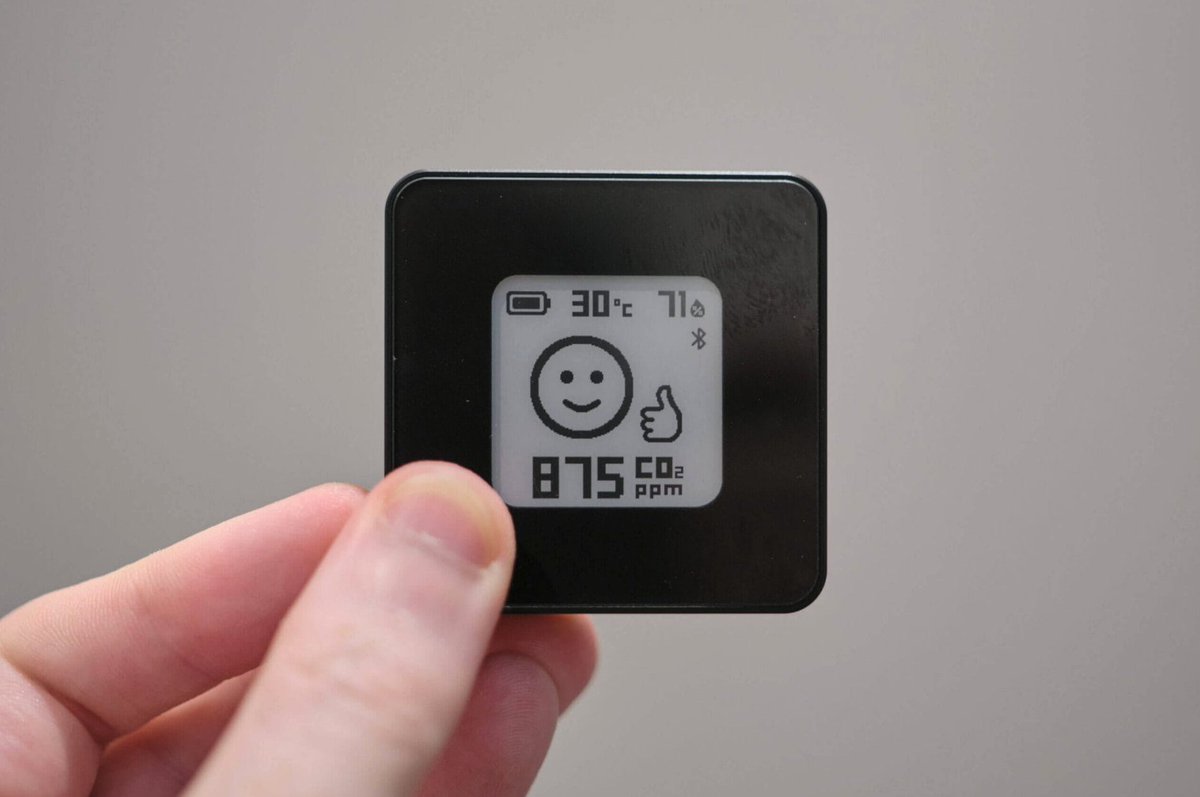
🎉Free CO2 Monitor Giveaway🎉
Just in time for Christmas, I will be giving away one free AIRVALENT CO2 monitor.
This is one of my favourite monitors, and I am looking forward to giving one away to a lucky winner!
To enter the giveaway, just repost this post and let me know in the comments which design you would like to win (there are a lot of options - check their website to see them all!).
Thank you to @AIRVALENT_com for providing the monitor for this giveaway. Entries will be closed on December 24th at midnight (GMT +8). The winner will be contacted via messages on X. Giveaway is open to all, and the winner will be randomly selected.
Finally finished my last COVID-related article! Some people get social pressure from peers asking why they are avoiding it, so this FAQ addresses the common issues.
Going forward, I'll be writing about totally different stuff!
https://t.co/5IgMOxk2gU
In light of the fact that repeated studies suggest that women are more likely to be develop Long Covid, I think it's really important to know what's happening with the different health conditions that specifically affect women.
This is a painful thread at times.
The mask sale you've been waiting for is here!
Save 15% on the ultra breathable BreatheTeq KN95's.
These are the most breathable and comfortable respirator masks on the Canadian market.