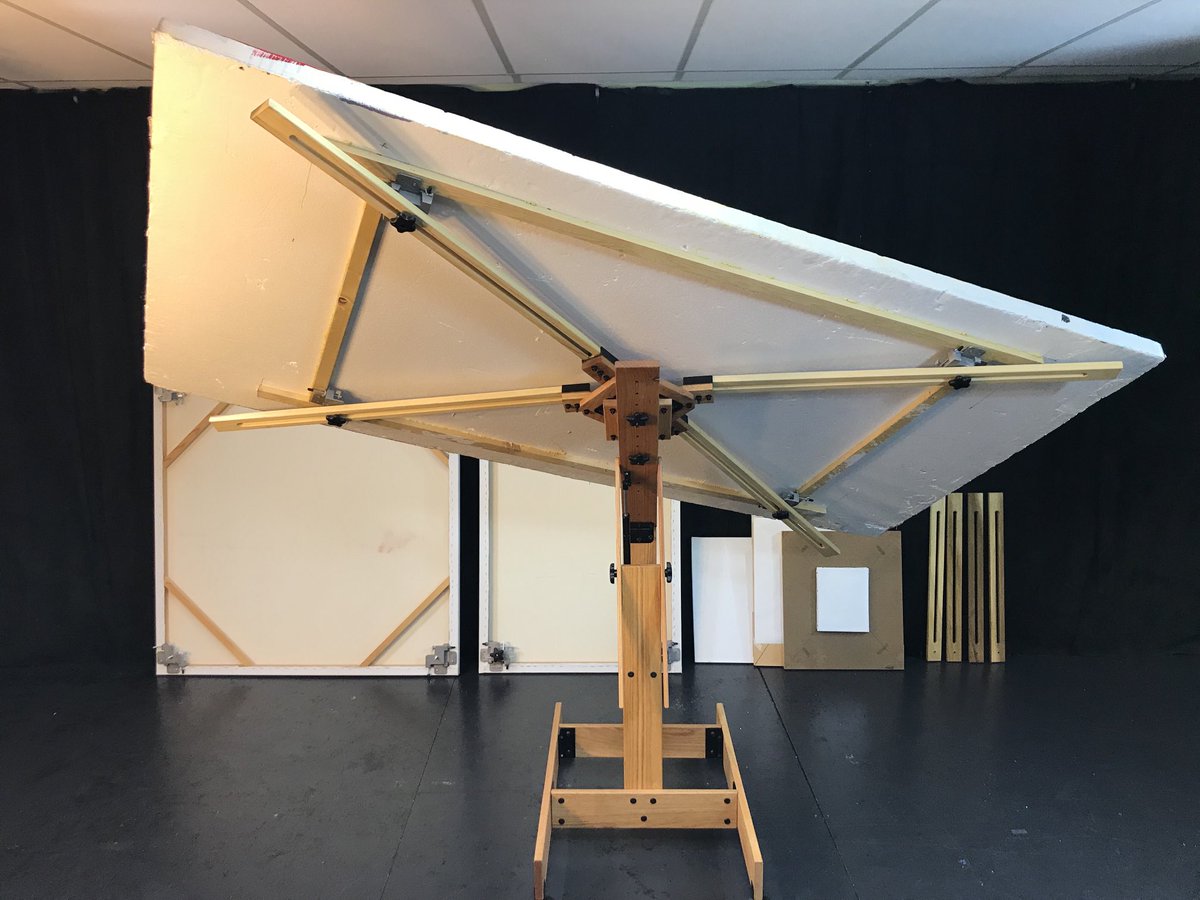
Windmill the Revolving Easel. Revolves a Canvas 360 Degrees Bringing the Artwork to the Artist. Time Saving Creative Tool. Reduces fatigue Enhances Access
Recent genetic research confirms that modern humans (Homo sapiens) and Neanderthals repeatedly interbred across a period spanning roughly 200,000 to 250,000 years.
While it was long believed that interbreeding occurred during a brief window about 50,000 to 60,000 years ago, advanced genomic mapping shows multiple waves of contact occurred much earlier:
200,000–250,000 years ago: An early wave of Homo sapiens migrating out of Africa encountered and mated with Neanderthals in Eurasia. The offspring from these early encounters integrated primarily into Neanderthal populations, leaving traces of modern human DNA inside Neanderthal genomes.
100,000–120,000 years ago: A second wave of contact occurred during intermediate migrations, continuing the genetic exchange.
47,000–60,000 years ago: The major and final period of gene flow took place over several thousand years as modern humans expanded permanently into Eurasia. Children born from these pairings were raised within human communities, passing down Neanderthal genes to present-day populations.
Because of these encounters, people of non-African descent today carry approximately 1% to 2% Neanderthal DNA in their genomes. Rather than dying out in complete isolation, Neanderthals were slowly absorbed into the modern human gene pool over tens of thousands of years.
#archaeohistories
@histories_arch Recently took a DNA test. Results said I have more Neanderthal DNA than 84% of their customers. True. So I have started looking for a cave.