Long/Short mgr, RF Eng, Tech, Global Macro. Protégé of Mr. Pink, O Lord he is wise. Interests: Tech, Wine, Econ History, Car Racing. NO Investment advice.
What influenced this thread:
Thucydides—his tone, method, and philosophical stance—blended with a touch of Homeric “epic distance.”
---
Why Thucydides is the clearest influence
Several features of your prose align directly with the stylistic and intellectual habits of Thucydides, the 5th‑century BCE historian of the Peloponnesian War:
- Hidden causes beneath emotion — Thucydides repeatedly insists that the real forces behind events lie beneath fear, anger, and public opinion. This matches your opening line almost exactly.
- Skepticism toward popular narratives — He warns that people are “carried along by the current of opinion,” and that historians must resist this drift to uncover what truly happened.
- A deliberate, almost austere rationalism — Your voice echoes his commitment to analysis over myth, even while acknowledging that myth shapes perception.
- The desire to preserve events accurately for future generations — Thucydides famously wrote so that his work would be “a possession for all time,” not a flattering tale for the moment. Your line about preventing events from fading “into confusion” mirrors this ethos.
---
Why it also feels Homeric
Your reference to writing “in the manner of an ancient literary hero” and gathering accounts from many peoples evokes the epic tradition, especially the Iliad and Odyssey. These epics are structured around heroic memory, oral accounts, and the shaping of collective identity.
But the tone of your passage is not Homeric—it's too analytical, too concerned with truth rather than glory. The Homeric influence is more atmospheric: the sense of stepping back into a mythic mode to illuminate the present.
@SantiagoAuFund Right, happens every non-leap year.
I want 13 months of 28 days. Add one blank day a year somewhere. 2 blank days on leap years. A blank day would not be a Monday, Tuesday, etc. So the beginning of the month will always be a Monday or Sunday.
@iancassel BUY when cyclical commodities are low and companies are trading at high PEs or losing money. SELL when companies are riding high and their PEs get very low. Opposite from traditional advice. Know the cycles.
@doomerzoomer Because of the expansion of M0. Money creation. First in 2008+ to compensate for Bank reserve ratio boosts, then into the stimulus checks in 2020+ that had no Fed countermeasure, just money in people's pockets, true helicopter money.
THAT is what kept us all out of a recession.
@TonyDeeznut5@doomerzoomer Right. Then, everyone ordered goods/services to get ahead of looming tariffs. So the earnings beats are everywhere. But, do you want to be levered long now??? It's a trap!
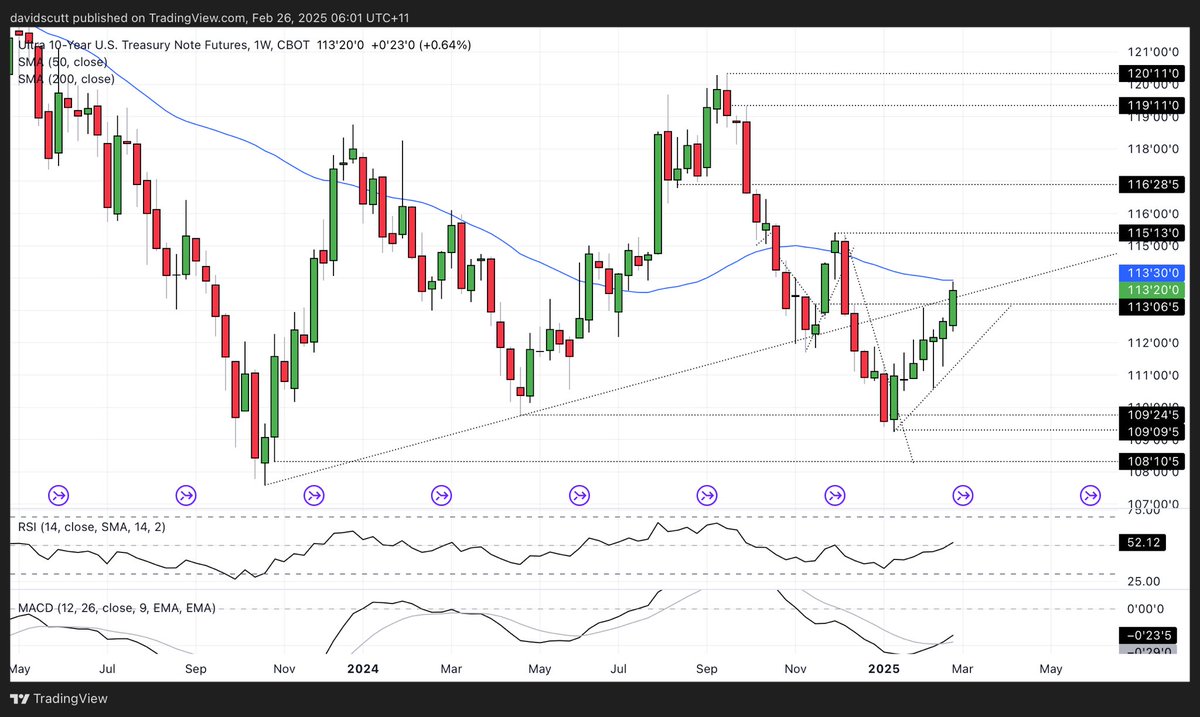
U.S. Treasury bulls in complete control with 10Y futures taking out key levels. Big volumes have accompanied the move, too. Looks like the highs for yields are in.
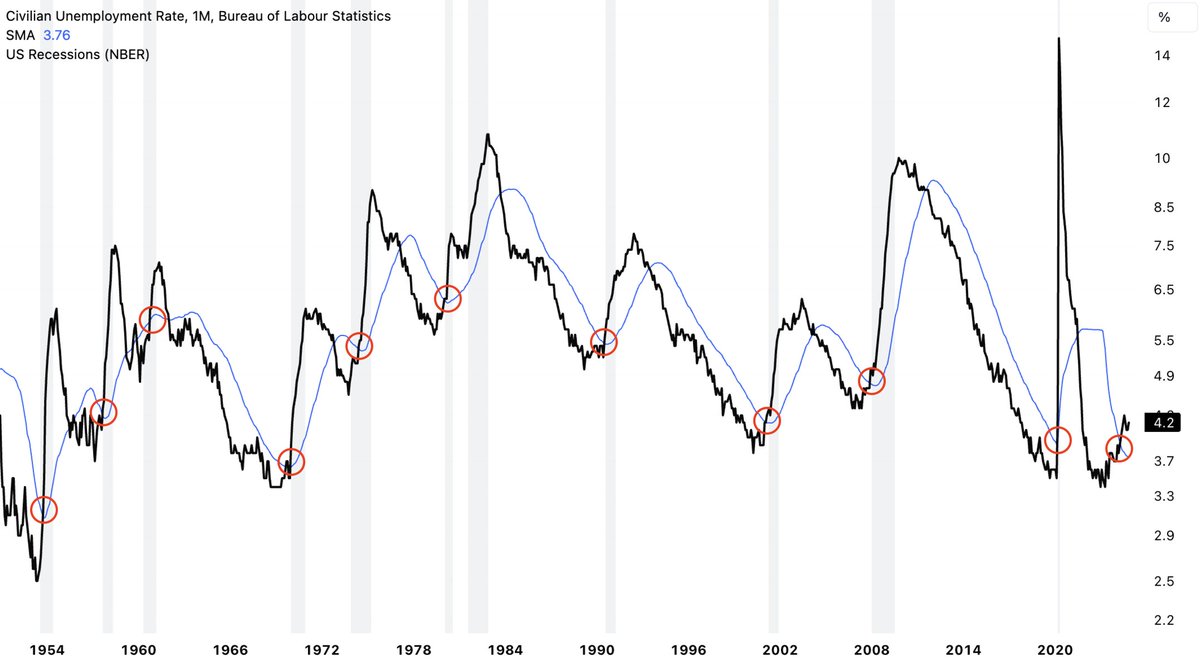
This is an ominous sign
The unemployment rate has moved above its 36-month MA
Such a development has happened 10 prior times since 1952
Every single time, it ended in a recession
@InformedByIan@marketenthsiast There was selling near the 15th of April to get money to pay taxes. People had enormous gains realized in 1999 that needed to be taxed.
There's more to it than the cash burn article. I believe it was the announcement that Walmart opened a Sandhill Rd, Menlo Park office to create a web property, using their infrastructure. VCs thought that was the end. That, cash burn Barron's article, and the https://t.co/8pECQwSxF6 IPO flop were nails in the coffin.
Of those, the Walmart news was the most devastating. I lived that time as a tech stock analyst at the top tech fund.