How does subsidized childcare impact the long-run careers of mothers? Evidence from Quebec's universal childcare program shows an enduring and growing impact with higher earnings, from Michael Baker, Jonathan Gruber, and @kevinmilligan https://t.co/0wxfDMClJm
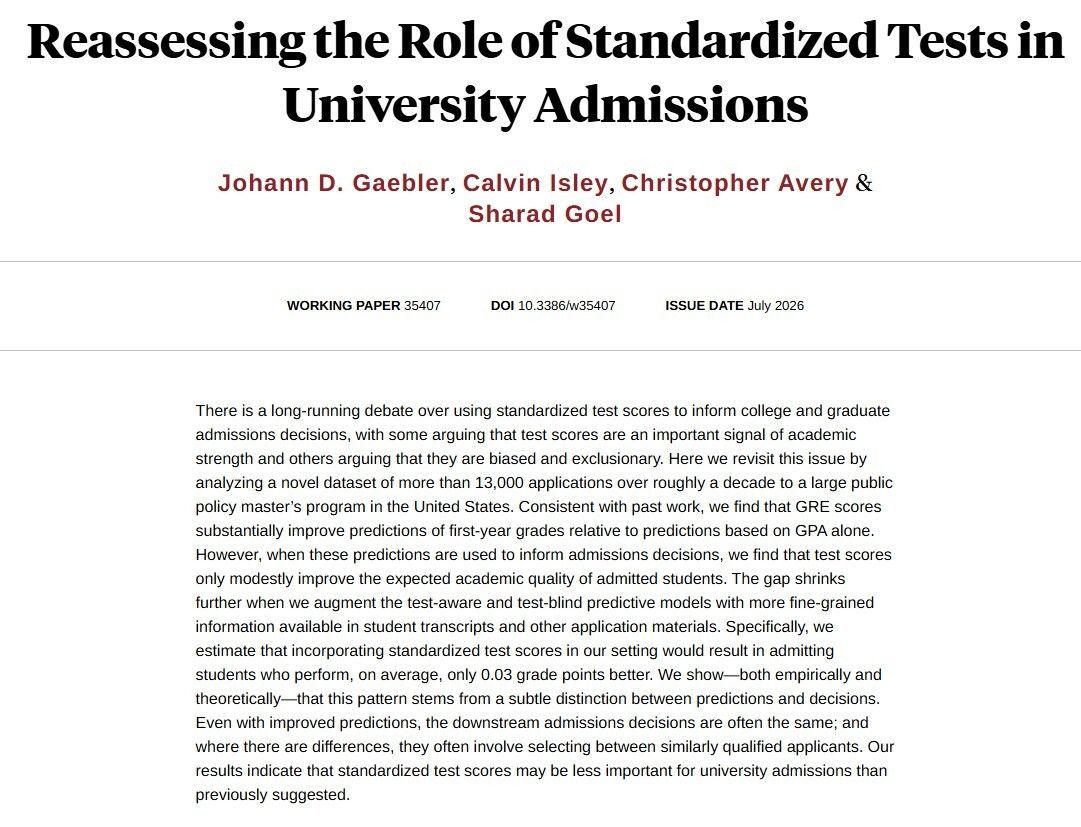
Standardized test scores improve predictions of academic performance but matter relatively less for admissions decisions, since few applicants are near the decision threshold, from @jgaeb1, Calvin Isley, Christopher Avery, and @5harad https://t.co/zwlcFJVvz2
What you need to know about SNAP work requirements:
- They do not increase employment.
- They cause a large decrease in participation in SNAP.
- They impose burdens on workers, even those outside the policy’s intended target.
Learn more: https://t.co/SdA2zZJG0l
Check out our NBER working paper evaluating two programs to facilitate labor market transitions. Incredibly exciting to invent a new program and see that it was effective! We also used a novel approach to measure selection and treatment effects for mentoring.
📢now forthcoming in ECMA!
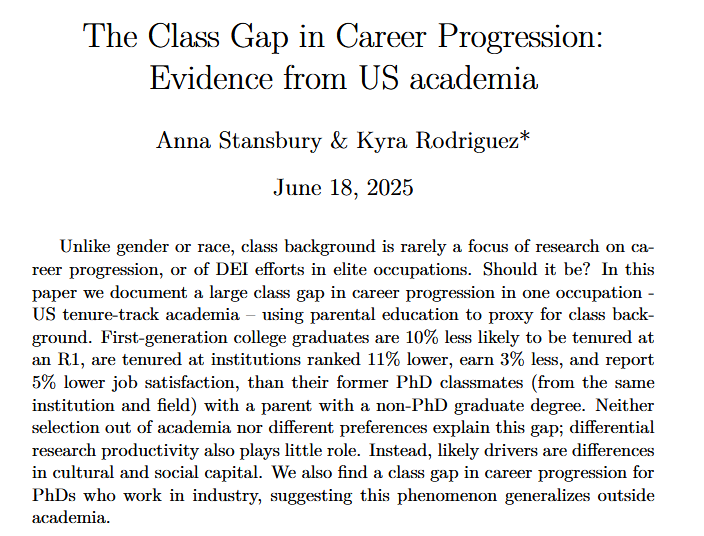
The Class Gap in Career Progression: Evidence from US Academia
Class is rarely a focus of research or DEI in elite US occupations.
Evidence suggests it should be: we find a large class gap in at least one occupation - tenure-track academia...🧵
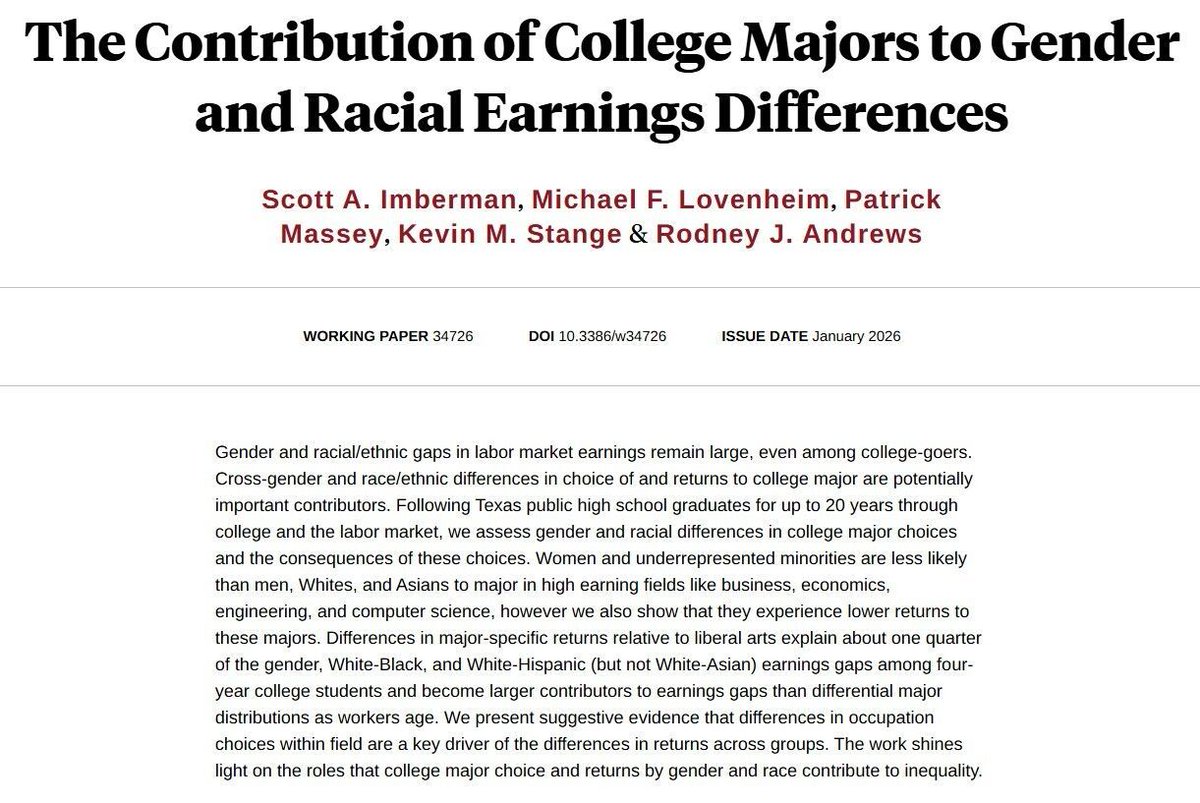
Women and under-represented minorities experience lower returns to college majors that has substantial impact on cross-group earnings gaps, from Scott A. Imberman, Michael F. Lovenheim, Patrick Massey, @kevin_stange, and Rodney J. Andrews https://t.co/Zk7gzdTRfU
I study academic accommodation in my JMP and show at the university I study accommodations usage more than doubled between 2011 and 2024 (4% -> 10%) and is driven by students getting accommodations for mental health conditions. This is an important and growing area of research!
What is the impact of studying STEM vs. Humanities? We consider this in Romanian high schools, where otherwise identical kids can be assigned to STEM-focused or Humanities-focused curricula. Our key finding is that kids are malleable to what they study. This happens on 4 fronts:
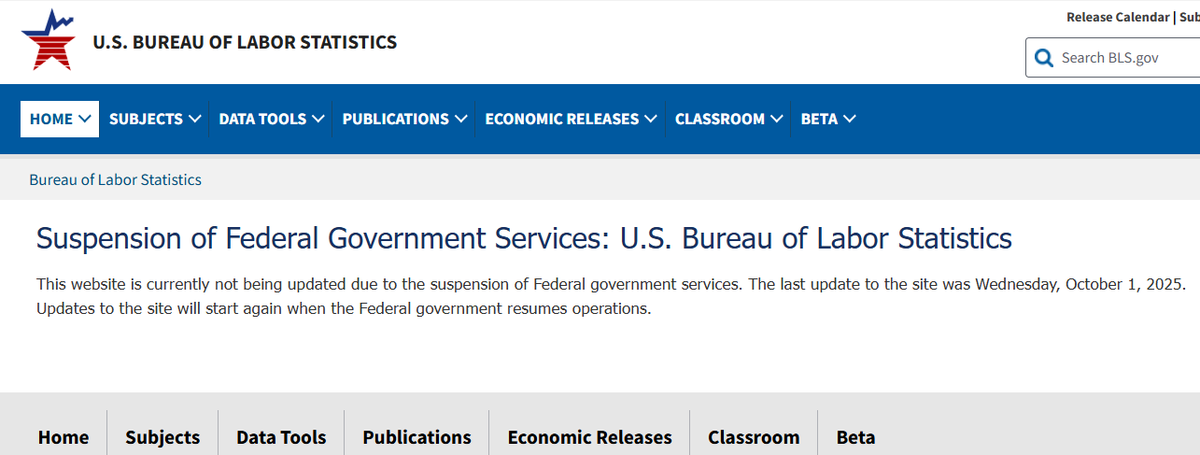
No jobs report today.
This is the first time this has happened since the 2013 shutdown.
It's unsettling.
The economy is about people. And a lot of people are struggling in this "frozen" job market with almost no hiring. Is it stabilizing or getting worse? Today's data would have shed important light on that.
🚨 Hi #EconTwitter, I'm on the #EconJobMarket! 🚨
My #JobMarketPaper studies how targeting the leaders of criminal enterprises (CEs) affects the criminal market structure and the resulting implications for rates of violent crime.
Website: https://t.co/Z2TI3PMfqm
🧵1/10
How college enrollment by income at highly rejective colleges has evolved over the past century:
--High income students dip after WWII but regain share starting in the 80s at the cost of middle-income students.
--Low-income students remain a small share across the century.
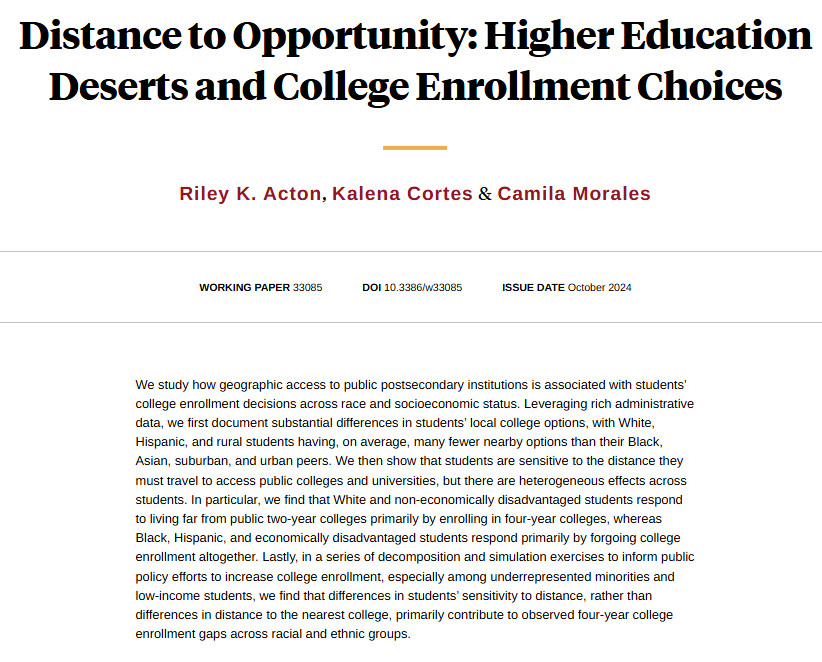
How geographic access to public colleges affects enrollment across race and socioeconomic status, with Hispanic and rural students facing fewer local options, shaping their enrollment decisions, from @riacton, @KalenaCortes, and @CamilaNtMorales https://t.co/sAammOjnpW
🧵New from Kyle Ross and me on the BLS funding issue and potential cuts to the CPS sample. A simple primer for a non-technical audience:
https://t.co/Z31ihHhBP1
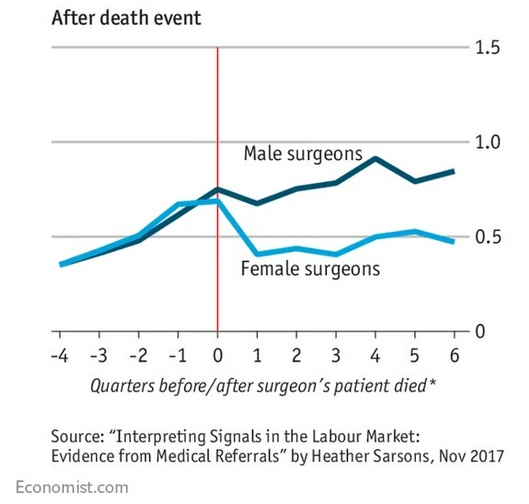
An common form that discrimination takes, which is often hard to spot: when people from underrepresented groups make a mistake, the response to it is often harsher than for someone from the dominant group
Here an example of a study in women surgeons (by @saskatchewin)