Time to drive 10 km:
10 km/h — 60 min
20 km/h — 30 min
30 km/h — 20 min
40 km/h — 15 min
50 km/h — 12 min
60 km/h — 10 min
70 km/h — 8:34
80 km/h — 7:30
90 km/h — 6:40
100 km/h — 6:00
110 km/h — 5:27
120 km/h — 5:00
130 km/h — 4:37
Going from 10 to 20 saves 30 minutes. Going from 120 to 130 saves 23 seconds.
Hynek I Suchý Čert of Kunštát and Jevišovice
Or also just nicknamed Dry Devil, This historical figure from the early XVth century gained popularity through the video game Kingdom Come: Deliverance 2. Although he hailed from the ancient and respected Kunštát family in the Kingdom of Bohemia, the details of his early military career remain obscure.
It is believed that he seized the opportunity presented by the Margraves Moravian Wars, which broke out in 1380, to enlist in the late XIVth century. He initially participated in the conflict as a soldier, driven not by political interests but by personal and financial gain. Losing interest in conventional warfare, he evolved into a notorious bandit leader rather than an honorable knight; he quickly gained a reputation across southern Bohemia, Moravia, and especially the Austrian border as a "robber knight" leading his own band. His methods included infiltrating strongholds, ambushing travelers on the roads, and living off the land.
Local populations gave him the nickname Suchý Čert ("Dry Devil"), a moniker recorded in contemporary chronicles. While his physical stature, tall and imposing, may have played a role, the name primarily stemmed from his behavior and his military aptitude for treachery and cunning. It was first attributed to him in 1401 during a raid on Weikertschlag, a castle on the Austrian border. The nickname became so integral to his identity that it was passed down as a legacy after his death; his nephew Jan inherited the Czech moniker Suchý Čert.
His greatest military feat occurred in the summer of 1404, when he joined forces with the rebel leader Jan Sokol of Lamberg to defend the Moravian town of Znojmo. They faced an Austro-Hungarian force of 24,000 troops led by King Sigismund of Hungary and Duke Albrecht IV of Austria. The Duke, along with a large portion of the army, died of dysentery after their camp was poisoned.
However, unlike many captains across various kingdoms who enjoyed their lords' protection against the consequences of their misdeeds, Dry Devil did not share such immunity. After the war ended in 1405, he was promptly arrested in 1407 by order of King Wenceslas IV of Bohemia for his acts of pillaging, though he was just as quickly released. However, he died of illness in 1408. His involvement in banditry and mercenary work may well have led him to meet the famous bandit and mercenary leader Jan Žižka through his friendship with Jan Sokol of Lamberg even if it's unsure.
Few people realize that Hynek of Kunštát was also the cousin of Jitka of Kunštát; she married Jan Ptáček of Pirkštejn in 1404, and their union produced Hynek of Pirkštejn, a great warrior and diplomat who would rise to prominence twenty years later during the Hussite Wars.
WATCH: A humanoid robot training for the “Robot Olympics” in Beijing runs too fast, fails to stop, slams into a safety cushion, and breaks at the waist
Highest non-winning vaults in history
6.16m - Karalis (Mondo)
6.06m - Guttormsen (Karalis)
6.05m - Karalis (Mondo)
6.05m - Karalis (Mondo)
6.02m - Kendricks (Mondo)
6.02m - Karalis (Mondo)
6.02m - Karalis (Mondo)
6.01m - Karalis (Mondo)
Femke Broeders-Bol anchors the Netherlands to victory in the women's 4x400m ‼️
With a 49.50 last lap – after three rounds of 800m – she combines with Myrte van der Schoot, Lieke Klaver and Eveline Saalberg to clock 3:21.10 🇳🇱
These are the splits:
Van der Schoot – 51.0
Klaver – 49.5
Saalberg – 51.1
Broeders-Bol – 49.50
🔄 RT if you think 🇩🇰 Mads Pedersen is the Super-combative of the #TDF2026!
🔄 RT si vous pensez que 🇩🇰 Mads Pedersen est le Super-combatif du #TDF2026 !
👋 @century21fr l @LidlTrek
L'Italienne Adele Cobelli (14 ans) est morte ce samedi à l'entraînement, percutée par un automobiliste.
L'Irlandais Shane O'Brien (16 ans) mardi et le Français Adrien Chipault (21 ans) dimanche dernier ont aussi perdu la vie sur la route, dans des collisions avec des véhicules.
Yesterday, the President of Poland noted that the Order of the White Eagle is not an ordinary award. It is a symbol of the highest trust of the Republic of Poland. It signifies a special bond with the Polish state and the special gratitude of the Polish People. Such a symbol requires not only merit, but also respect for the values that form the foundation of our community.
Therefore, if it is considered that this special symbol may remain with Catherine II, Benito Mussolini, and Gerhard Schröder, then we in Ukraine will not argue with that.
Ukraine is grateful to the Polish People for their support and cooperation, which play a significant role in the struggle for our and your independence from Russia.
Ukraine never forgets solidarity and understands that cooperation between states and peoples in our region is one of the tangible security guarantees for Ukrainians and for each neighboring state.
Ukraine will continue to defend itself in this war unleashed by Russia, and we will undoubtedly achieve a dignified peace.
Ukraine is grateful to all peoples, states, and leaders who will continue to stand with us in the defense of freedom and who, together with Ukraine, will serve as guarantors of postwar peace in Europe and a new, real security.
Ukraine will remain open to all meaningful formats of engagement with Poland in order to try to avoid conflicting interpretations of the difficult and painful chapters of our shared past and to ensure proper respect for all innocent victims of the 20th century.
And Ukrainians are doing everything in our power to ensure that Europe does not suffer defeat in this century.
I am proud of our people and of EVERY Ukrainian warrior – of the millions of Ukrainian men and women who deserve unquestionable respect for the heroism the Ukrainian People have shown in defending themselves against Russian aggression.
We believed that the Order of the White Eagle, awarded in 2023, was meant for the Ukrainian People and our army. That is what was said at the time. Today, I sent the Order back to the President of Poland.
I believe the future will confirm the respect Ukrainians deserve.
Glory to Ukraine!
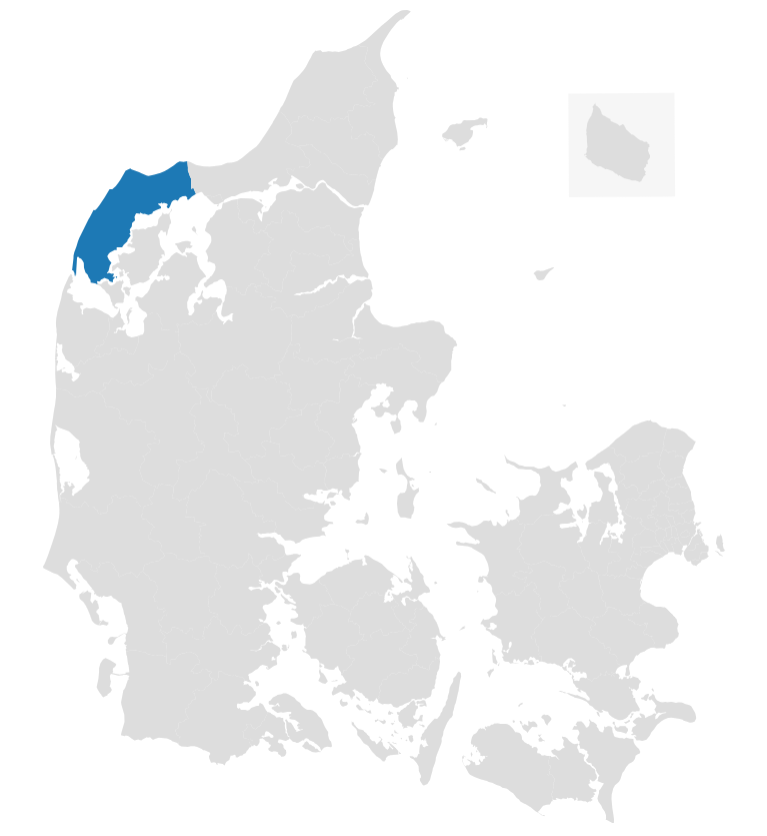
Jonas Vingegaard and Michael Valgren both come from this small part of 🇩🇰 Denmark called Thy.
If Thy was a country, it would currently rank as the 10th greatest cycling nation in the world based on points earned by active riders. 👀
🇦🇺 9. Australia
🇩🇰 10. Thy 👏
🇩🇪 11. Germany
The plane circling the Nürburgring is a flying relay station
The 25km (15.53mi) track is full of deep valleys and dense forests, ground receivers can't get a stable signal from the cars, so this plane continuously beams the live TV and onboard feeds back to the broadcast trucks
The Battle of Lochy, the end of Sigismund domination over the silver city
On August 13, 1403, the Battle of Lochy took place in the Kingdom of Bohemia near Kuttenberg.
This historical event and context, which could have been featured in KCD2, was the final battle for the fate of the city of Kuttenberg in the Margraves Moravian Wars.
After the Easter truce, the war resumed violently on July 3, 1403. The forces of Margrave Jobst of Moravia, allied with Bohemian loyalists, launched an offensive while Ladislaus of Naples landed at Zara to seize Hungary. Forced to leave for Hungary, King Sigismund held a council on July 18 in Kuttenberg and entrusted the defense of Bohemia to the League of Lords.
During his absence, the League struggled to contain the rebellion. Many cities rallied to Jobst of Moravia, a former supporter of Sigismund who had become leader of the loyalists of Wenceslaus IV after the capture of his brother Prokop. Kuttenberg, loyal to Wenceslaus since 1402, immediately opened its gates to Moravian and Bohemian reinforcements.
The League retreated to Čáslav, governed by Smil Flaška of Pardubice, a fervent supporter of Sigismund. Smil Flaška, who hated Kuttenberg for its loyalty to Wenceslaus, was tasked with preparing a punitive expedition to retake the city by force with troops from Čáslav, Prague, and other lords.
Kuttenberg, having been warned, went on high alert and refused to relive the humiliation of January 1403 after the siege by Sigismund. The burghers, loyalist troops, and Moravian reinforcements prepared to confront him.
On August 13, 1403, as the League army commanded by Smil Flaška was crossing the hamlet of Lochy in the forest between Kuttenberg and Čáslav, it fell into an ambush. The battle was extremely violent. Smil Flaška was killed in such brutal circumstances that no description of his death exists. His army, disorganized, retreated and abandoned any further operations against Kuttenberg.
On November 11, 1403, King Wenceslaus IV fled Vienna. On November 24, 1403, Wenceslaus arrived in Kuttenberg, greeted by his loyalist army: Margrave Jobst, Jan Sokol of Lamberg, Hynek of Kunštát "the Dry Devil", Zbyněk of Hazmburk, and Racek Kobyla.
This artwork was prepared for a month with my great friend artist @AleksandrG78133 for an artistic and historical project commission aimed at paying tribute to this forgotten battle which has no representation and no memorials. Lochy is now a small innocent village between the two cities that we wouldn't imagine that is here where one of the most important member of the League of Lords died (Smil Flashka was also a great writer whose works are still studied today.)
I discovered the existence of this battle two years ago in old czech books during my research on the KCD2 setting around Kuttenberg. I thought the battle would be included, especially since it's historical and represents the liberation of Kuttenberg.
This historical art project is not the last one and we already got an idea for the next one about KCD historical context !
Footage shows Ukrainian forces raiding a Russian trench and eliminating soldiers at point-blank distance. The attackers move quickly through the trench, taking out defenders in intense close-quarters com