Quant fan. tweets are for info only and not financial advice, DYOR before investing in anything. All likes, retweets & follows are very much appreciated!
Most people look at $QNT and ask, “How high can the price go?”
I start with a completely different question: what happens if banks in different countries start issuing tokenized money on different systems and all of those systems need to talk to each other?
Warning: this one is LONG.
Probably one of my deepest $QNT posts yet. Give me a few minutes and read the whole thing. It’ll be worth it.
That question led me straight back to The Clearing House.
And once you understand the architecture The Clearing House is building, the entire Quant thesis starts making a lot more sense.
The Clearing House is one of the most important pieces of U.S. banking infrastructure.
It is owned by 25 banks.
Its CHIPS network has 43 direct participants.
CHIPS settles more than $2T in average value each business day.
During 2025 it processed around $2.014T in average daily payments.
Its liquidity efficiency was around 26:1.
So when I talk about The Clearing House moving toward tokenized deposits, understand the scale.
This is not a crypto company trying to get banks interested.
These are banking rails banks already use.
Now they are preparing those rails for tokenized commercial bank money.
On August 24, 2026, The Clearing House published a discussion with Chief Strategy Officer Sal Karakaplan.
The message was simple but extremely important.
Banks using CHIPS and RTP already have their settlement infrastructure.
They already maintain funds.
They already have liquidity processes.
They already have payment connectivity.
So tokenized deposits should not force them to rebuild everything.
Instead, tokenized transactions can be tightly connected with the systems they already use.
That one idea is massive.
Because the biggest obstacle to institutional blockchain adoption has always been disruption.
Banks do not want to throw away working infrastructure.
They want new capability without destroying the old system.
Now fast-forward one month.
September 24, 2026.
The Clearing House selects Quant.
Quant becomes the announced technology provider for:
Interoperability.
Orchestration.
Transaction management.
Quant also brings Tokenized Deposits-as-a-Service.
So imagine the future banking system.
Bank A issues tokenized dollars on one ledger.
Bank B uses another private network.
Bank C wants programmable deposits but has not built its own blockchain system.
A tokenized-securities platform needs cash settlement.
A treasury platform needs programmable payments.
A public blockchain contains tokenized assets.
CHIPS remains the regulated high-value dollar settlement network.
RTP handles real-time payments.
These systems are different.
But the money still needs to move between them.
Quant’s job is to coordinate that complexity.
I think this is much bigger than “blockchain interoperability.”
This is financial-system interoperability.
And the banks around The Clearing House initiative show how serious it is.
JPMorgan Chase.
Citi.
Bank of America.
HSBC.
BNY.
Wells Fargo.
Santander.
TD Bank.
Then:
BMO.
Citizens.
Fifth Third.
Huntington.
KeyBank.
PNC.
Regions.
Truist.
The comments from these institutions focused on exactly the problems Quant wants to solve.
Tokenized-deposit clearing.
Interbank connectivity.
Trusted financial infrastructure.
Interoperability.
Programmable payments.
Connecting blockchain capability with existing payment rails.
The Clearing House subsequently chose Quant.
That gives Quant a completely different distribution opportunity.
Instead of selling software one bank at a time, Quant is now inside an initiative connected to an institution already serving major banks.
That can shorten the path to institutional adoption dramatically.
Then look at what Quant has already done in Britain.
The Great British Tokenised Deposit initiative gives us a preview.
Quant was selected in September 2025.
One year later, seven banks had completed live customer transactions.
The names:
Barclays
HSBC UK
Lloyds Banking Group
Monzo
Nationwide
NatWest
Santander
These transactions involved real money.
Mortgage completions.
A marketplace purchase.
Funds could be reserved and released when conditions were met.
This is programmable commercial bank money doing actual work.
Now compare the timeline.
UK Quant selection: September 2025.
UK live customer transactions: September 2026.
U.S. Quant selection by The Clearing House: September 2026.
U.S. network targeted for availability: H1 2027.
I see a pattern.
Quant builds.
Banks test.
Transactions go live.
Then the model expands to another market.
Now layer international interoperability on top.
In October 2026, Quant participated directly in the UK Finance Tokenised Markets and Money Conference.
The discussion involved how tokenized-deposit initiatives from countries including the UK, Japan, the U.S. and Germany could connect.
The industry is talking about:
Standards.
Rulebooks.
Overlapping bank participation.
Commercial corridors.
Synchronized settlement.
Payment-versus-payment.
That is the future Quant has been preparing for.
People sometimes think tokenization will simplify finance because everything moves onto one blockchain.
I think the opposite can happen.
Tokenization can create even more systems.
Every major bank may have its own approach.
Countries may build national frameworks.
Central banks may support separate settlement infrastructure.
Private asset ledgers will exist.
Public blockchains will exist.
Commercial bank deposit tokens will exist.
Stablecoins will exist.
Digital securities will exist.
The technology becomes more diverse.
The need for coordination becomes bigger.
That is where a “network of networks” becomes valuable.
Think about U.S.-UK payments.
The U.S. bank has tokenized dollars.
The UK bank has tokenized sterling.
Both have domestic rules.
Both have their own settlement rails.
Both need foreign exchange.
Both need confirmation.
Both need compliance.
Both need the cash and asset legs synchronized.
Quant already has technology connected to both banking environments.
I think that gives it an incredibly interesting strategic position.
And I am not stopping at deposits.
Look at Murex.
Murex runs MX.3, widely used in institutional trading, risk management and post-trade operations.
In March 2026, Murex and Quant announced an integration.
Quant’s programmable money infrastructure can work alongside MX.3.
Now banks can potentially handle tokenized deposits and digital bonds without changing the core institutional workflow they already use.
This matters because tokenized assets need money.
A digital bond cannot settle itself.
A tokenized fund still needs subscriptions and redemptions.
Tokenized collateral still needs financing.
Tokenized securities still need delivery-versus-payment.
If the asset moves but the cash cannot move with it, the system is incomplete.
Quant is working across both sides.
Asset systems.
Money systems.
Institutional software.
Interoperability.
That creates more commercial opportunities.
Now I want to talk about token utility because this is where a lot of crypto research gets lazy.
The Clearing House settling $2T does not mean $2T buys QNT.
I care about a different mechanism.
QNT is documented as an access and licensing token.
Overledger subscribers can pay platform fees in USD or QNT.
Historical licensing models used QNT for annual mainnet licensing.
The 2026 MiCA disclosure also describes QNT utilization and locking in licensing arrangements.
So institutional growth can potentially create token demand through access rather than through the gross dollar value of payments.
That model makes more sense to me.
If one bank moves $100B using Quant infrastructure, QNT does not need to absorb $100B.
Quant needs commercial contracts.
Licensing.
Platform access.
Network services.
Potential token commitments.
If the number of institutions keeps increasing, those commitments can compound.
I care even more about locking.
One-time purchases can come back to market.
Locked tokens cannot.
If enterprise arrangements require QNT to remain committed for periods of time, liquid supply can tighten.
Then incoming demand has fewer freely available tokens to compete for.
And QNT supply is already small.
Roughly 14.56M circulating.
Around 14.61M total supply in the data used for this research.
That scarcity matters.
Then add Fusion.
Fusion launched on mainnet in June 2026.
It initially connected 74 networks.
Its Trusted Node Program gives institutions more control around who processes transactions.
QNT has a documented staking role.
So now I can see a second demand channel.
Overledger and enterprise licensing create one path.
Fusion execution and staking create another.
If both scale together, QNT becomes much more interesting.
Think of the potential progression.
Bank joins Quant infrastructure.
Bank or service provider needs platform access.
Access creates licensing economics.
Some licensing arrangements involve QNT usage or locking.
Meanwhile, institutional networks connect through Fusion.
Trusted nodes stake QNT.
Network execution grows.
More QNT becomes tied to productive use.
Supply stays around 14.6M.
That is the flywheel I want.
We are not fully there yet.
The exact QNT economics attached to The Clearing House contract have not been publicly disclosed.
But the general utility already exists.
That makes public confirmation of recurring institutional QNT demand one of the biggest catalysts I am waiting for.
Now do the valuation math.
Using about 14.61M tokens:
$5B valuation = ~$342 QNT
$10B = ~$684
$20B = ~$1,369
$30B = ~$2,053
$50B = ~$3,422
Again, these are valuation scenarios.
They are useful because they show what QNT’s scarcity does when the market cap expands.
The question becomes:
What valuation would investors assign to a token if Quant becomes recurring infrastructure for bank-issued digital money?
I think $10B becomes much easier to discuss if we see meaningful commercial bank onboarding, recurring QNT-linked revenue, rising activity and token commitments.
Higher scenarios need even more.
International usage.
Multiple national banking systems.
Cross-border network connectivity.
Large-scale Fusion adoption.
Material staking.
Recurring institutional contracts.
That is what I want to watch.
And the catalysts are already lined up.
1. The Clearing House network opening in H1 2027.
The partnership moves closer to real commercial usage.
2. U.S. bank onboarding.
More institutions can mean more Quant products being used.
3. Tokenized Deposits-as-a-Service.
Banks that do not want to build token infrastructure themselves can still participate.
4. QNT-linked enterprise licensing.
This is where institutional adoption can begin translating more directly into token demand.
5. Great British Tokenised Deposit expansion.
The UK already has live transactions.
More banks and more use cases would strengthen the proof.
6. U.S.-UK interoperability.
Both national banking environments already have Quant technology involved.
7. Fusion trusted-node adoption.
More nodes can mean more staking.
8. Fusion transaction growth.
More execution can increase ongoing QNT utility.
9. Murex MX.3 integration.
Tokenized bonds and institutional settlement open another market.
10. Delivery-versus-payment.
Tokenized cash and tokenized securities can move together.
11. Corporate treasury automation.
Conditional payments and programmable liquidity become real business use cases.
12. International network-of-networks development.
This is the monster opportunity.
Multiple national financial systems using Quant to coordinate transactions.
Now zoom out globally.
Britain already has live tokenized-deposit customer transactions.
The United States has The Clearing House preparing its initiative with Quant.
Europe has launched the first phase of Pontes for wholesale tokenized-asset settlement using central bank money.
And international banking discussions are focusing on cross-border connectivity.
Pontes is not currently an announced Quant project.
I am not claiming it is.
But Europe moving in the same broad direction matters.
Because every new financial network increases the need for interoperability.
The future is not going to be one giant blockchain.
It will probably look more like the internet.
Different networks.
Different systems.
Different protocols.
Different organizations.
Still able to communicate.
Quant wants to become part of the layer making that possible for financial institutions.
And the thing I like most is that Quant is approaching banks without asking them to abandon what already works.
That is a huge advantage.
Banks already have CHIPS.
They already have RTP.
They already have Murex.
They already have internal ledgers.
They already have compliance systems.
Quant can sit between those systems.
That is a much easier institutional pitch than saying:
“Throw away your current infrastructure and put everything on our chain.”
This is why I think Quant has a chance to scale differently from many crypto networks.
It is not competing to be the one ledger every bank uses.
It is monetizing the fact that banks will use many ledgers.
More fragmentation can actually increase the value of Quant.
Think about that.
If JPMorgan has one system.
Citi has another.
HSBC has another.
A public blockchain hosts an asset.
A central bank runs the final settlement layer.
Murex manages trading.
The Clearing House manages interbank payment infrastructure.
Every connection between those pieces becomes an interoperability problem.
Quant sells the solution to that problem.
That is the business.
Now think about $QNT.
If those commercial connections increasingly require QNT for access, licensing, locking, execution or staking, the token begins reflecting that business growth.
That is the bridge between the technology thesis and the investment thesis.
And because QNT supply is small, the potential asymmetry is what keeps me interested.
A lot of people saw QNT at $60.
Then $100.
Then $200.
Then over $300.
They only started asking questions after price moved.
I prefer studying the infrastructure before the crowd starts chasing the chart.
Right now I’m watching the next phase.
Can The Clearing House deliver the H1 2027 network?
How many banks participate?
How much transaction activity appears?
Does TDaaS expand the customer base?
Does the UK system grow?
Does cross-border interoperability become commercial?
Does Murex bring Quant deeper into digital bonds and securities?
Does Fusion gain institutional trusted nodes?
Does QNT staking grow?
Do enterprise licenses create recurring QNT demand?
Those are the questions that matter.
And if several of those answers become “yes,” the QNT story gets much bigger.
I see Quant’s future in three steps.
First:
Become infrastructure banks trust.
The UK and U.S. partnerships are doing that.
Second:
Become infrastructure banks repeatedly use.
Commercial tokenized deposits, settlement, securities and treasury activity can do that.
Third:
Convert that usage into measurable QNT economics.
Licensing.
Locking.
Execution.
Staking.
That final step is where I think the market could dramatically reprice QNT.
I am bullish today because stage one is no longer imaginary.
Quant has already delivered the UK banking infrastructure.
The Clearing House already selected Quant.
Murex already partnered with Quant.
Fusion is already live.
QNT utility is already documented.
The banking industry is already talking about a network of networks.
Everything does not need to happen tomorrow.
I am looking years ahead.
I want Quant sitting in the middle as more commercial bank money becomes digital.
I want Quant helping banks move between networks.
I want Quant coordinating tokenized cash and tokenized securities.
I want recurring licensing.
I want more QNT locked.
I want institutional Fusion activity.
I want trusted nodes staking QNT.
Those are the things that can turn institutional adoption into sustainable token demand.
And if Quant gets there, I think the upside could be much larger than people expect today.
The Clearing House already moves trillions. Britain already has live tokenized-deposit transactions. The banks are already building programmable money. Quant is already inside the infrastructure.
Now I’m watching how much of that institutional growth eventually reaches $QNT itself.
That’s the part that could make the next QNT cycle very different from the last one.
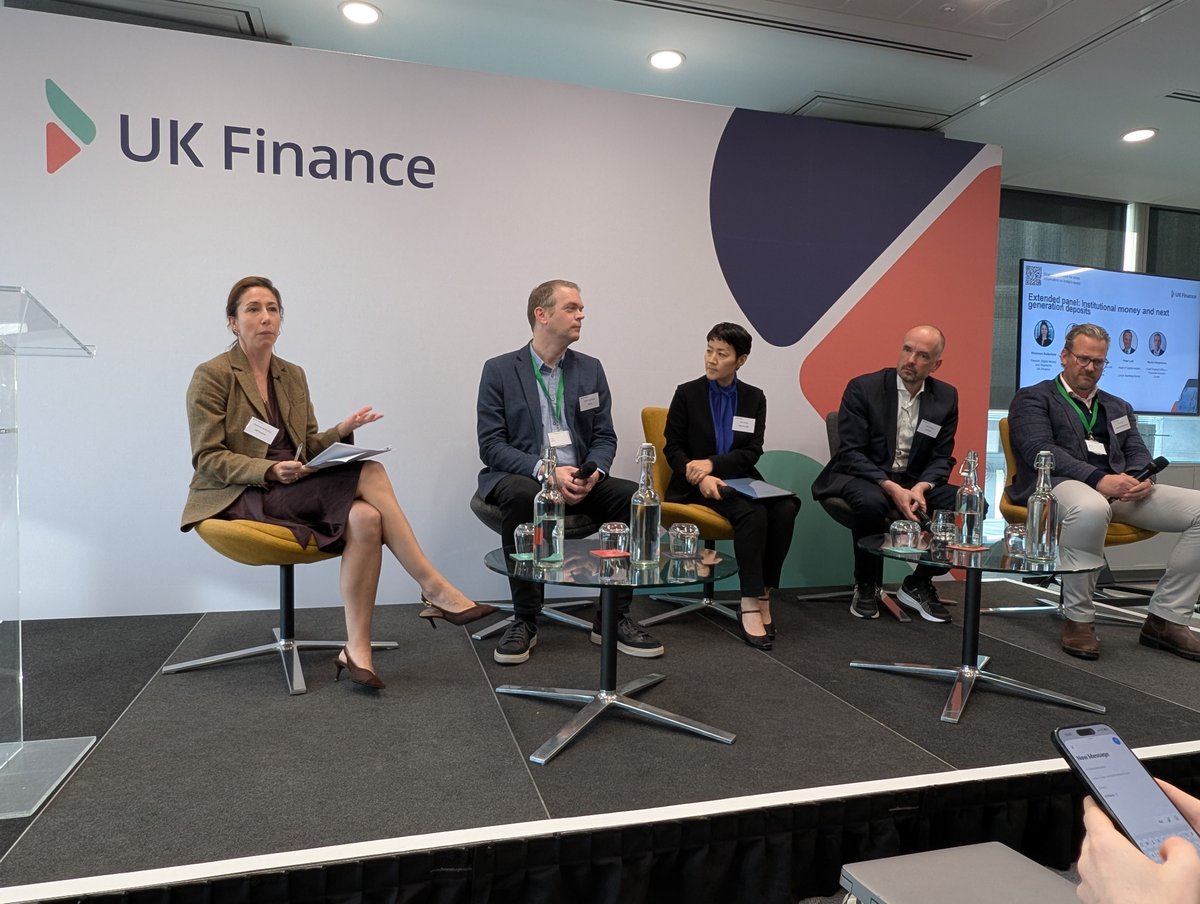
Yesterday at @UKFtweets's Tokenised Markets and Money Conference 2026, our Chief Product Officer, Martin Hargreaves, joined a panel exploring how #tokeniseddeposit initiatives from the UK, Japan, the US and Germany can connect across borders.
“Connecting tokenised deposit networks across borders comes down to standards, rulebooks and overlapping participation to create commercial corridors. It’s a more complex journey than #stablecoins, but tokenised deposits bring advantages stablecoins don’t, so it’s worth the work,” said Martin.
Thanks to @UKFtweets for hosting. Look out for our key takeaways article next week.
#DigitalAssets #ProgrammableMoney
🏦UK Finance dropped a new update on GBTD
3 Key Points:
✅3 Live TXs (2 remortgage 1 marketplace)
✅Entire platform by $QNT confirmed
✅New pilot w GBTD & digital assets
Look how Quant's described here:
"Developed by Quant as shared UK INDUSTRY INFRASTRUCTURE for tokenized comm bank money."
We already knew Quant was integral to the overall initiative of GBTD itself
But the way they're describing it here almost makes it seem like we've been underselling how critical this is.
They literally call Quant INDUSTRY INFRASTRUCTURE
You don't earn that name simply by being a one off technical provider at small scale
And with what Quant's enabled with 6 of the largest financial institutions across UK...
Paired with what's happening in US with TCH now,
It's quite deserving of the title industry infrastructure
How integral's $QNT to The Clearing House's future?
Look at what they're presenting at Money 20/20
"Enabling today's infrastructure to create a more CONNECTED, accessible & safe payments FUTURE"
"What's NEXT in payments"
TCH is already looking forward
Quant's integration with them for the OCMI touches on ALL of the points mentioned here
We've already seen each case presented with Overledger orchestrating UK GBTD too
SAFETY
Conditional payment releases only unlocking when set conditions are met to counter potential fraud
ACCESS
Ease of integration with banks that already have tokenized deposits + banks without it can access platform as a service
CONNECTIVITY
One shared orchestration layer across multiple banks with Overledger as the API Gateway + legacy to DLT interoperability as proven in BoE Sync Lab
–––––––––––
This is no longer just a simple "partnership"
Quant is literally future-proofing The Clearing House's payments infrastructure for money to come on-chain
JP Morgan has issued the first bank deposits (JPMD) on the Ethereum Mainnet.
This is all thanks to the $QNT Fusion network, the only one capable of providing institutional access to public networks.
https://t.co/az4K1Exq5i
🔥NEW $QNT Update is LIVE
In this 1 Hour long Deep Dive I uncover some key recent details across Quant
• SWIFT SIBOS Discussions
• More hints to DCJPY
• Connections w TD Bank
• Capgemini Partner Details
• LSEG x UK GBTD
Project Agorá is one of the BIS's most ambitious projects ethereum:0x4a220e6096b25eadb88358cb44068a3248254675
And is set to advance to real-value testing.
Eight central banks and 40+ institutions are testing tokenised money across borders as one system.
A unified ledger holds tokenised bank deposits
While central bank reserves stay on separate ledgers by jurisdiction.
Quant designed Fusion on the same principle
A shared layer connecting existing networks without replacing them.
See the full explanation below 👀 👇
Insane work @DutchAlchemist
Tokenised deposits have moved quickly from concept to execution. Issuing them inside one bank is now well understood. The harder part is moving them between banks, across borders and onto the settlement rails the financial system already relies on.
In our latest article, our Chief Product Officer, Martin Hargreaves, looks at how #tokeniseddeposits and #stablecoins do different jobs, where use cases are taking hold, from intragroup liquidity to the cash leg of securities transactions, and how funds earmarking could connect regional networks: https://t.co/PCdx9aG0eD
#Programmability #DigitalMoney
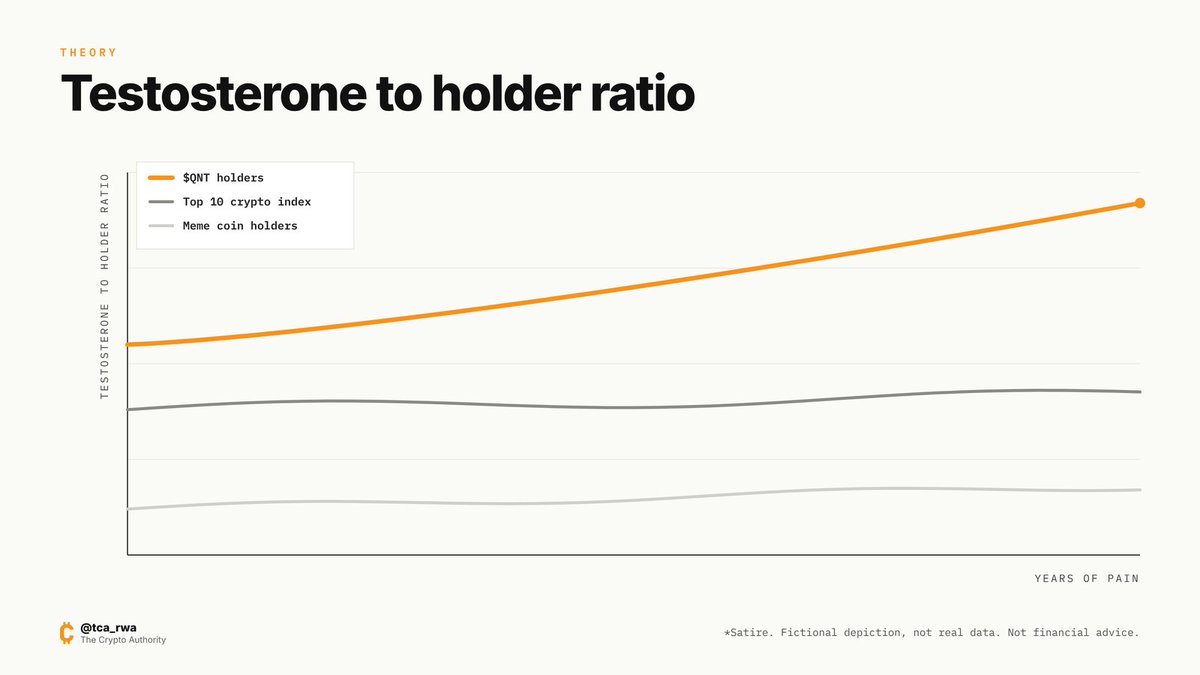
Theory:
$QNT holders have the highest testosterone-to-holder ratio in all of crypto.
Years of pain, brutal drawdowns, zero instant gratification.
And these people still won't sell. 💀
*Satire
New series: Quant Pills 💊 Short, sourced videos on one piece of the Quant stack at a time.
Pill 1 is x402: how software can pay a website per request, with no account or card, and why Quant wants agents paying in bank money too. 🧵👇
Would you let an AI agent spend for you?
🚨 HUGE! One of the world's most influential think tanks has released an incredibly bullish report on TOKENISED FINANCE! $QNT
France's IFRI, ranked 5th globally in the 2020 Think Tank Index, highlights initiatives including the ECB's Project Pontes, which @quantnetwork has publicly discussed!
The world's leading financial minds are increasingly focused on the very infrastructure Quant was built to deliver! 🤯🔥
Quant has partnered with Dentsu Soken to support tokenized deposits and bank-issued stablecoins in Japan. Dentsu Soken builds settlement systems for Japan's leading financial institutions, including one compatible with BOJ-NET.
@quantnetwork
Fusion is built to be the neutral infrastructure layer the whole industry can build on 📌
Whose fabric is this?
Every transaction banking head asks it. ethereum:0x4a220e6096b25eadb88358cb44068a3248254675
Networks governed by their own members cannot be neutral ground the whole industry builds on.
Project Agorá, the BIS unified ledger prototype, has eight central banks and 40+ institutions behind it.
Reserves stay on separate ledgers by jurisdiction, with a shared layer on top.
@FusionLayer25 is designed on that principle and built to ISO TC 307's interoperability standard
"So conformance is testable rather than asserted."
NEW 🚨: TD and RBC (Canadian Banks) are now directly connected to $QNT CEO. Why does it matter?👀
Remember the Quant community predicted involvement with TCH (25+ largest US banks 🇺🇸) months before the announcement that led to a x5📈?
Pure detective work 🕵️
And I am seeying the same happening again. Canada’s big six banks (RBC and TD are 2 out of 6 involved) is next on $QNT list and no one can stop it🔥
And you can bet more Canadian banks will join this✅
🧿💥 $QNT Back in 2019, $QNT was already working on something much bigger than connecting crypto.
Interoperability across banking infra.
By 2020, the technology had been successfully tested
7 years later, how many people have actually looked back at what Quant was building? 👀
Tokenised assets are ready to move. If the cash leg doesn’t move with them, the risk stays.
Our recent paper with Murex shows how #programmablesettlement synchronises cash and asset across ledgers, while teams keep working in MX.3.
Read the paper here: https://t.co/We0Jbjm8mC
#Tokenisation
Quant might have the best client list in crypto.
$QNT ran 287% in a week after The Clearing House picked it for bank payments.
Quick version:
- The client: The Clearing House is owned by 25 of the largest U.S. banks.
- The peak: QNT hit $373 on Binance, its highest since September 2021 and about 13% under its all-time high.
- The whales: two wallets dormant for 3+ years woke up and sent QNT to exchanges.
The catch? The bank network isn't due to open until the first half of 2027.
Bookmark this one for 2027.
Tokenised finance is fragmenting fast. Every bank, market infrastructure and fintech is building its own chain, and connecting them one bridge at a time gets harder with every network added.
Quant Fusion takes a different approach: one neutral fabric that connects permissioned networks and public chains, without asking anyone to migrate.
🔗 One canonical bridge per network, built and secured by Quant
🏦 Assets keep their origin-chain trust
⚖️ No single institution owns the fabric
Why neutrality is the precondition for core infrastructure: https://t.co/myXRvTHWna
#QuantFusion #FinancialInfrastructure