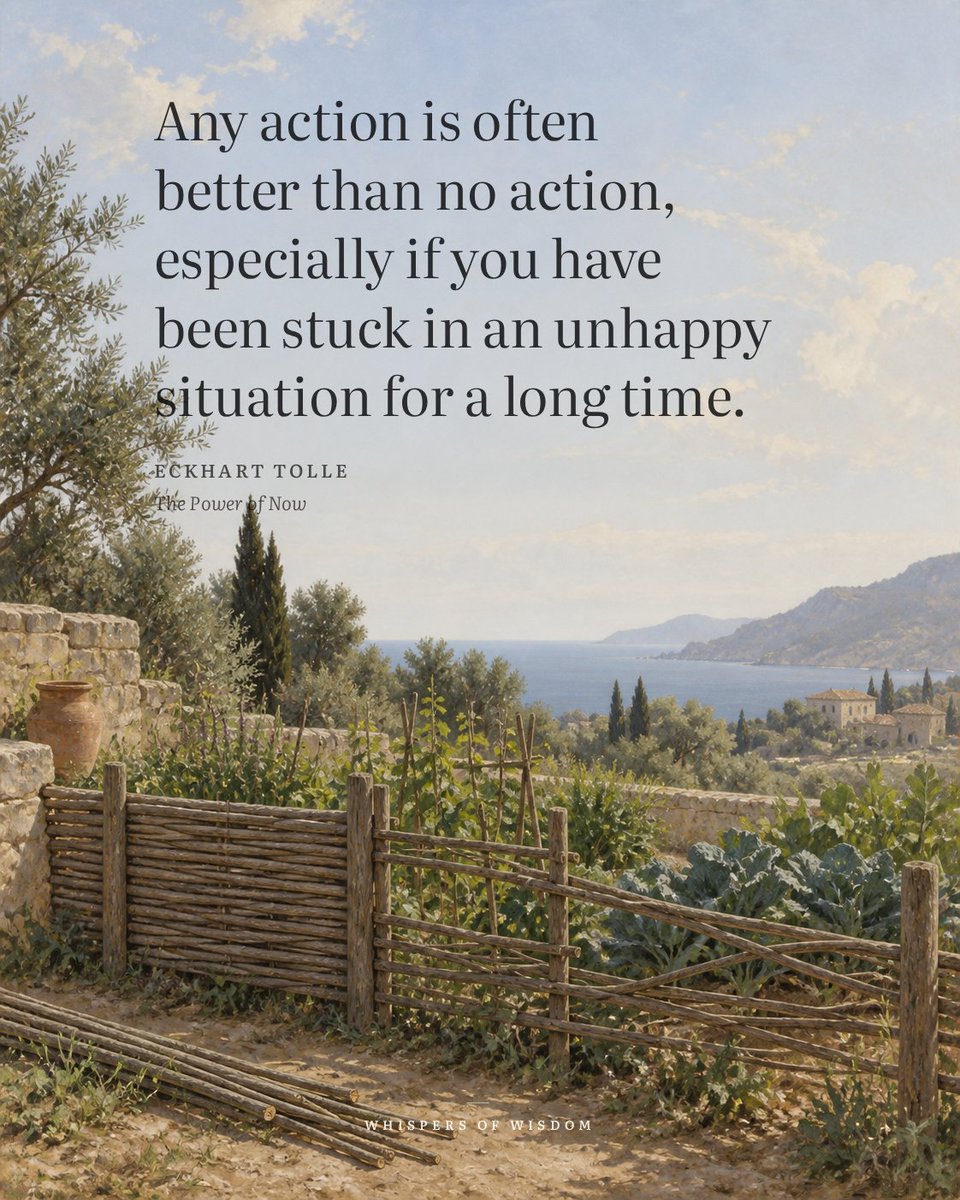
Sticking points are rarely solved by more thinking. When you’ve been miserable in a situation for a long time, your mind tends to loop, replaying the same reasons to stay put. That loop feels like progress, but it isn’t.
A wrong step still breaks the trance. It gives you new information, a different angle, a real consequence to work with. You can correct a mistake. You cannot correct a blank space.
The unhappy situation has already cost you enough. Don’t let it take your capacity to move. Start badly, start small, but start in the direction of your own life.
“Any action is often better than no action, especially if you have been stuck in an unhappy situation for a long time.”
— Eckhart Tolle
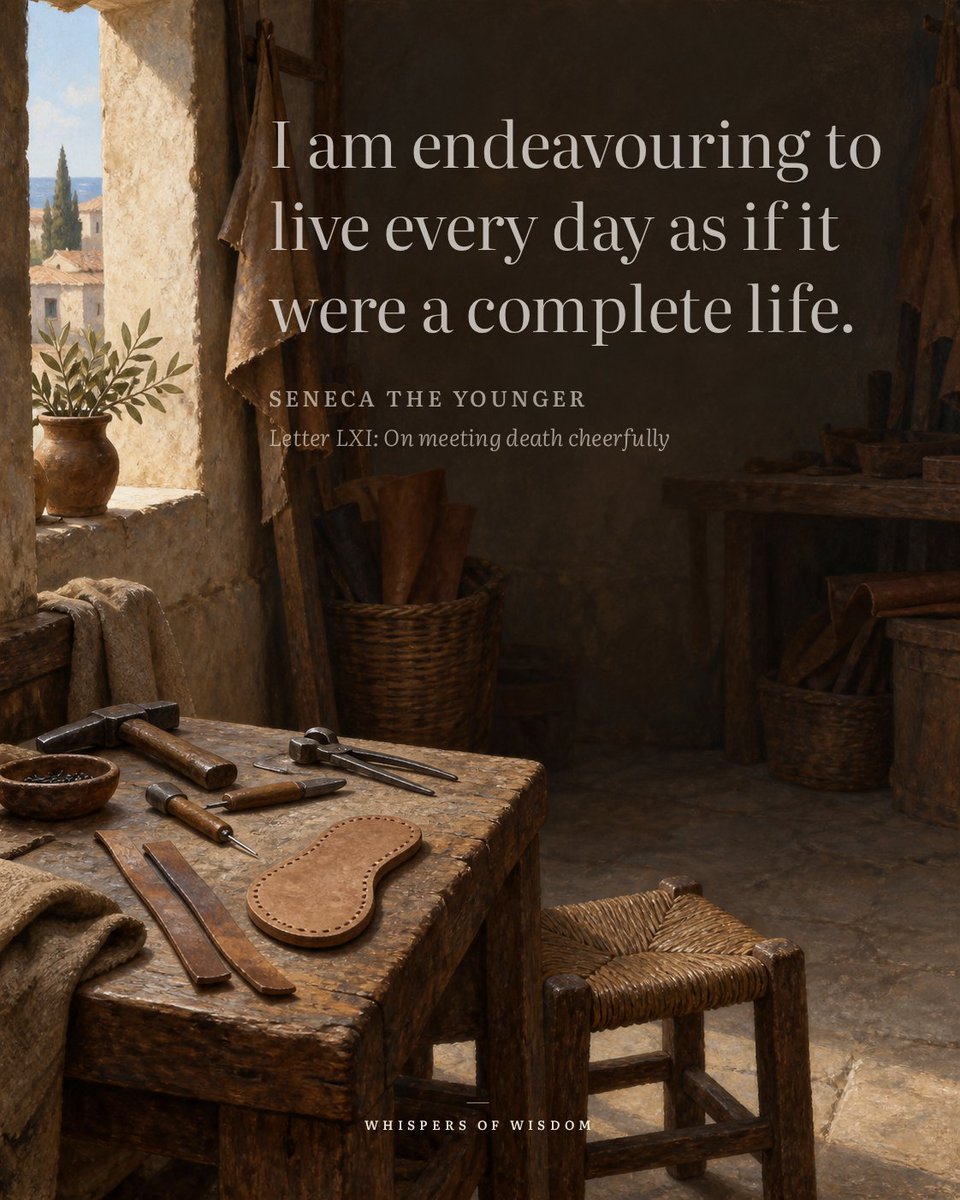
A complete life doesn’t mean a finished one. Seneca isn’t suggesting we rush to the end. He means giving the day its full weight—its work, its rest, its small obligations—as if it needed nothing from tomorrow. Procrastination usually hides behind the idea that today is just a rehearsal. But it isn’t. The hard thing you’re avoiding is part of this day’s completeness. Not a burden to survive, but a piece of the whole. So you start where you are. Not because it guarantees a better future, but because this day, right now, is already your life.
“I am endeavouring to live every day as if it were a complete life.”
— Seneca the Younger
Explaining something is a way to feel smart without the risk of being wrong in public. Understanding, or doing, means you might fail. So we get very good at the first part.
The curse is real: an essay about why you can't start is still not starting. A detailed plan for the hard thing is still not the hard thing. We think the clarity of the explanation is progress. It isn't. It’s just a more comfortable place to stand.
The work only happens when you stop describing the problem and start touching it.
“The curse of modernity is that we are increasingly populated by a class of people who are better at explaining than understanding, or better at explaining than doing.”
— Nassim Nicholas Taleb
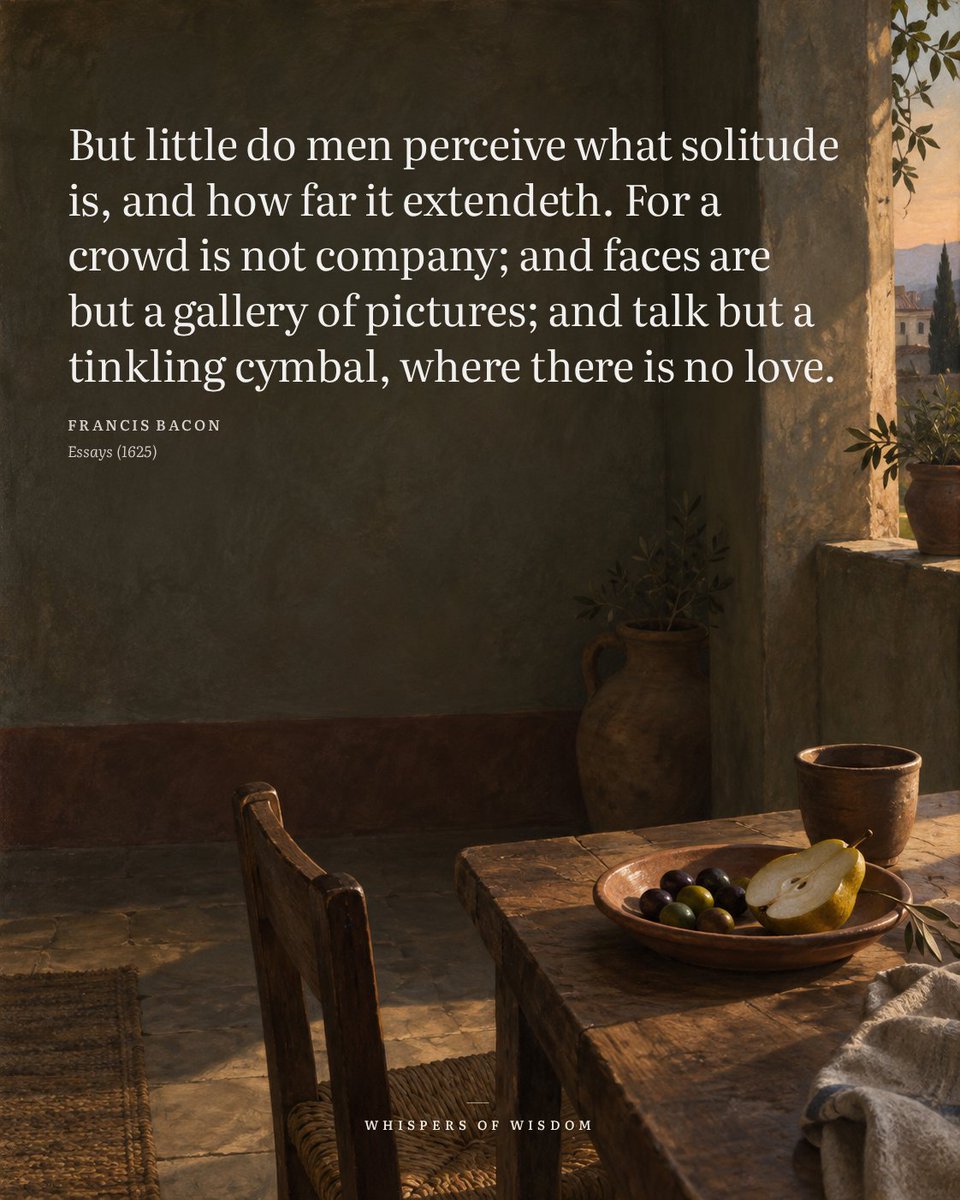
Most of us mistake proximity for connection. We sit in a crowded room, surrounded by voices, and still feel unseen. That is not solitude. That is merely being alone in a crowd.
Bacon saw it clearly: faces without love are just pictures on a wall. Talk without care is only noise. We can be surrounded by people and still be starving for something real.
Solitude is not the absence of people. It is the space where we stop pretending that noise counts as company. It is honest. And once we understand that, we stop fearing being alone—and start noticing when we are truly lonely even when we are not.
“But little do men perceive what solitude is, and how far it extendeth. For a crowd is not company; and faces are but a gallery of pictures; and talk but a tinkling cymbal, where there is no love.”
— Francis Bacon
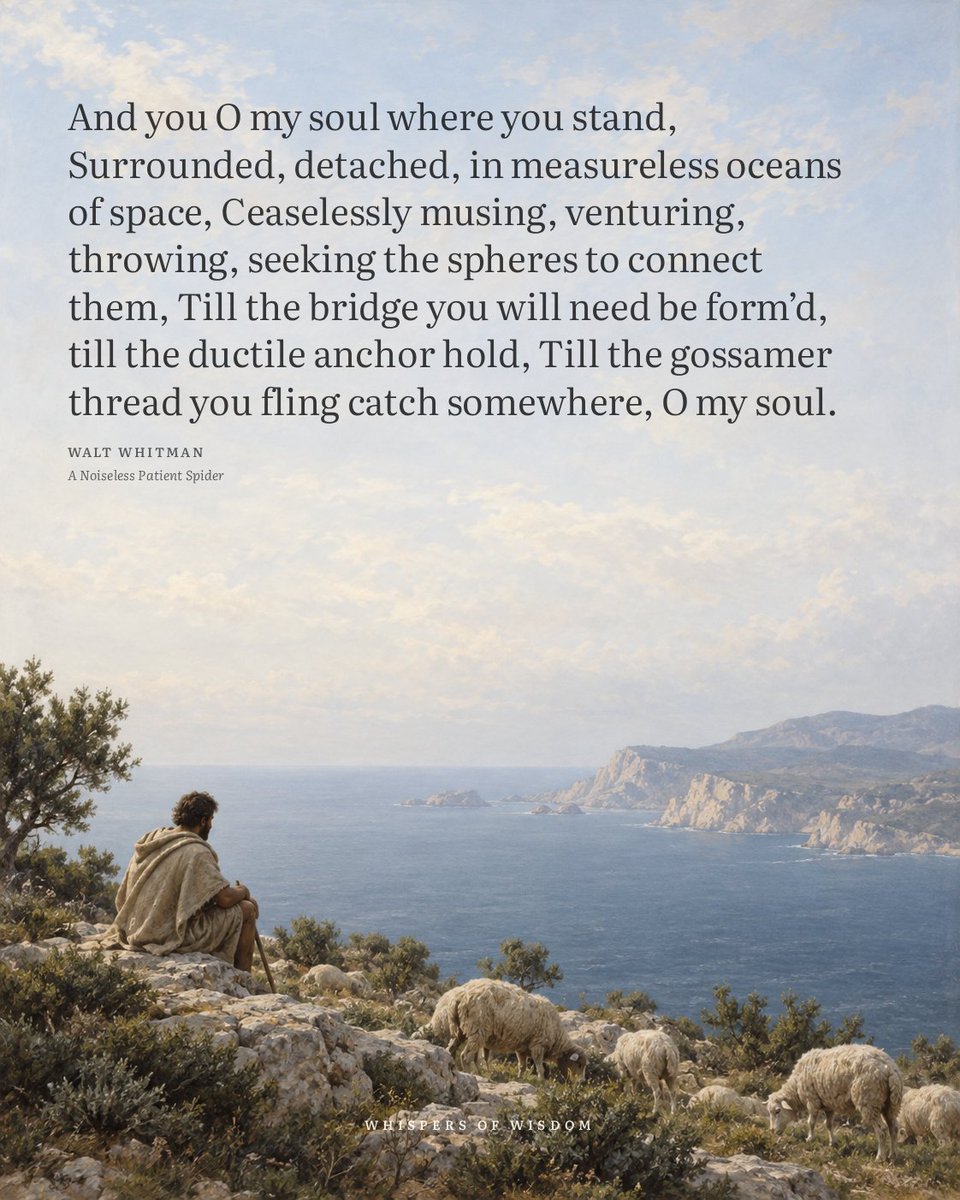
The soul doesn’t panic in the wide-open. It stands where it is, surrounded by space, and keeps doing its quiet work—musing, venturing, throwing itself outward. The image isn’t of someone desperate for connection, but of someone patient with their own reaching. The thread goes out before the bridge exists. It may not catch anything yet. That’s not failure; that’s the process. Being alone can feel like an ocean, but it’s also where the soul practices its casting. To be detached isn’t to be empty. It’s to still be testing the distance, believing a hold will eventually come.
“And you O my soul where you stand,
Surrounded, detached, in measureless oceans of space,
Ceaselessly musing, venturing, throwing, seeking the spheres to connect them,
Till the bridge you will need be form'd, till the ductile anchor hold,
Till the gossamer thread you fling catch somewhere, O my soul.”
— Walt Whitman
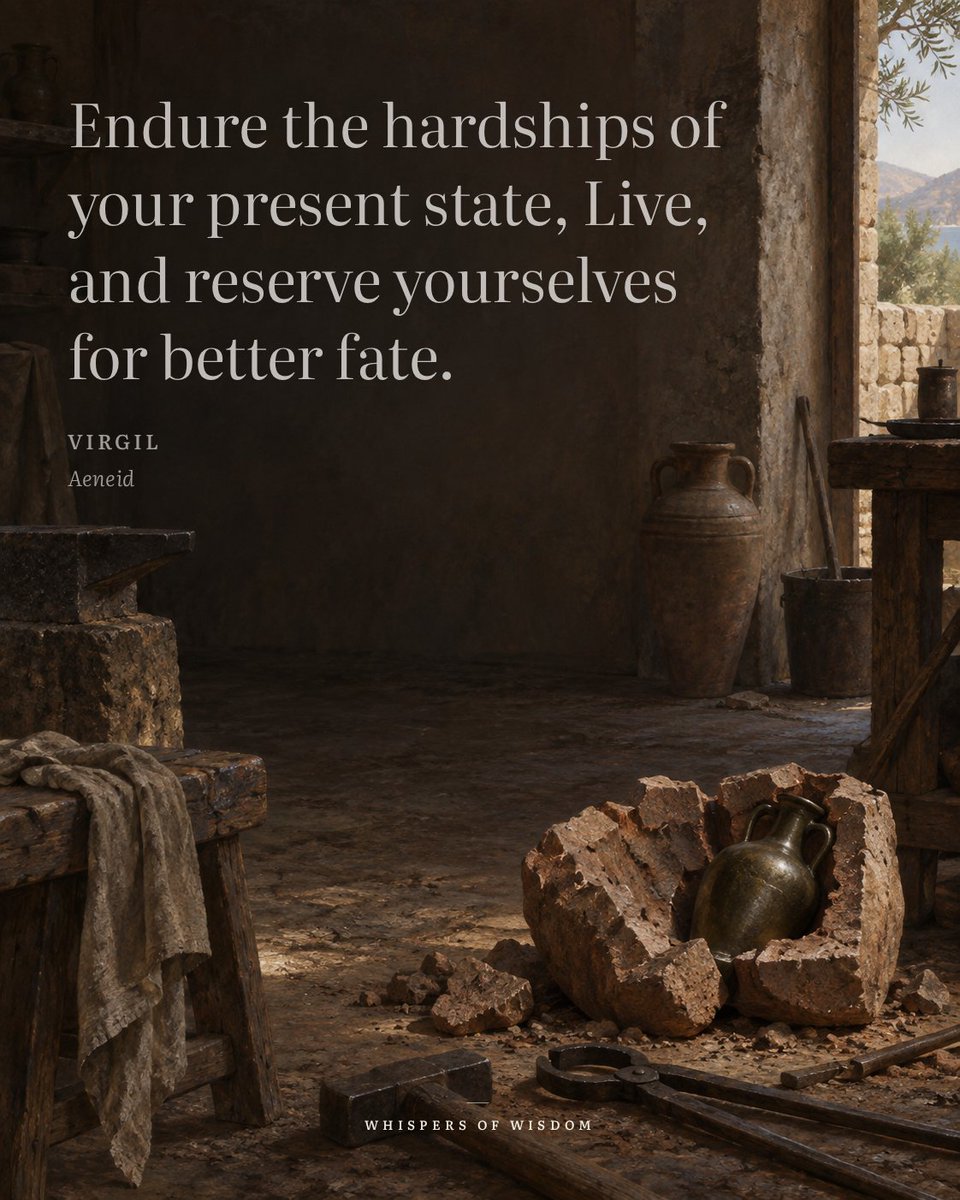
There’s a specific kind of courage in simply staying put. Not fixing, not fleeing—just enduring the weight of the present moment, trusting it isn’t the final chapter.
These lines from the *Aeneid* aren’t a promise that everything will be easy. They’re a reminder that survival can be an act of faith. By holding on, you reserve something for the future—your energy, your hope, your ability to meet a better day when it arrives.
The hardship is real. But so is the living that happens in spite of it. Don’t spend yourself completely on today’s struggle. Keep something in reserve. That’s not passivity; it’s prudence.
“Endure the hardships of your present state, Live, and reserve yourselves for better fate.”
— Virgil
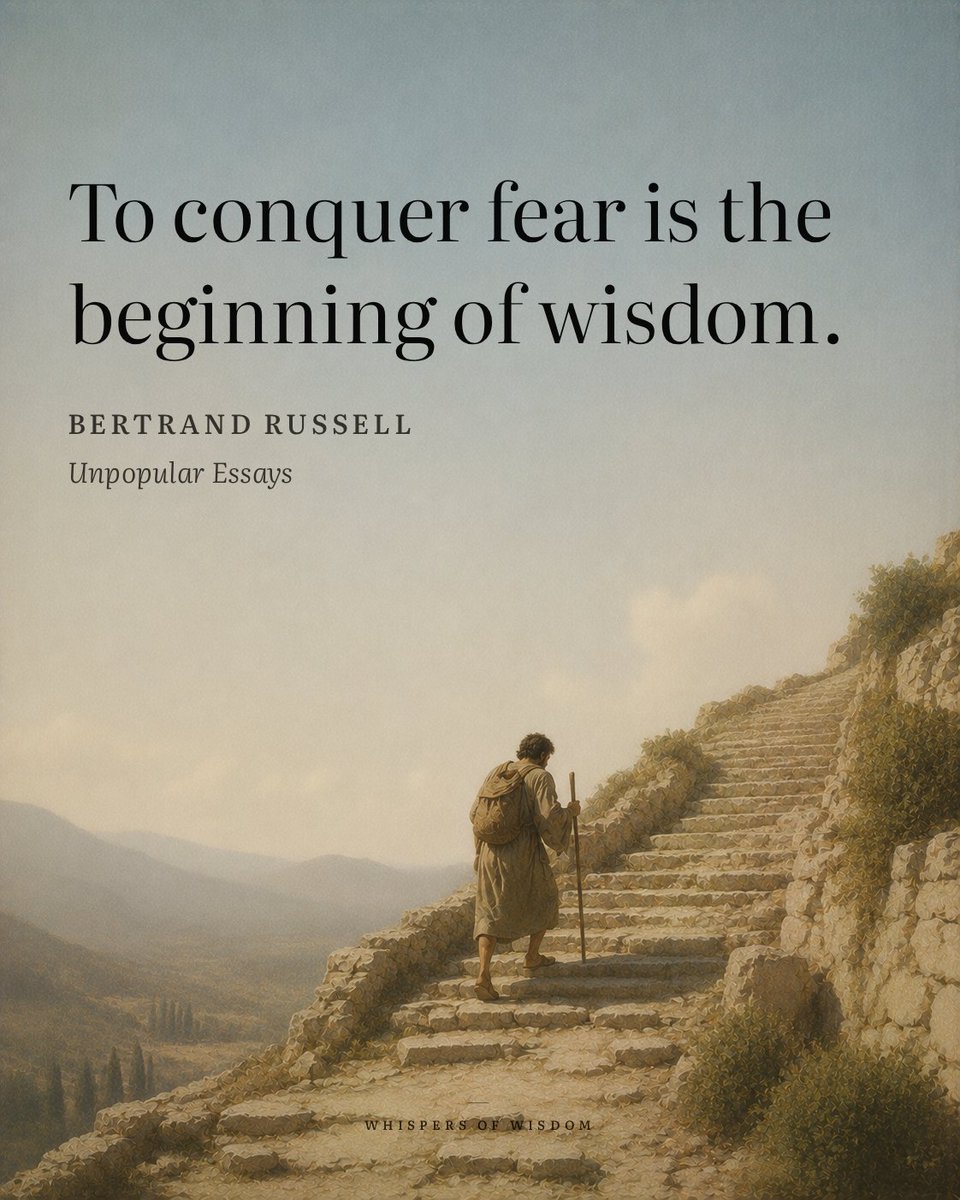
Fear does not ask for permission. It moves in first, and the mind follows—rehearsing outcomes, bracing for the worst. Russell’s line is not about banishing fear overnight. It is about placing it where it belongs. Fear is a signal, not a verdict. When you stop obeying it automatically, something shifts. You see more clearly. You act because a thing is worth doing, not because terror demands a response. That is not courage as a loud performance. It is the quieter work of refusing to let fear cast the final vote. Wisdom begins there, in that refusal—unspectacular, repeatable, and real.
“To conquer fear is the beginning of wisdom.”
— Bertrand Russell
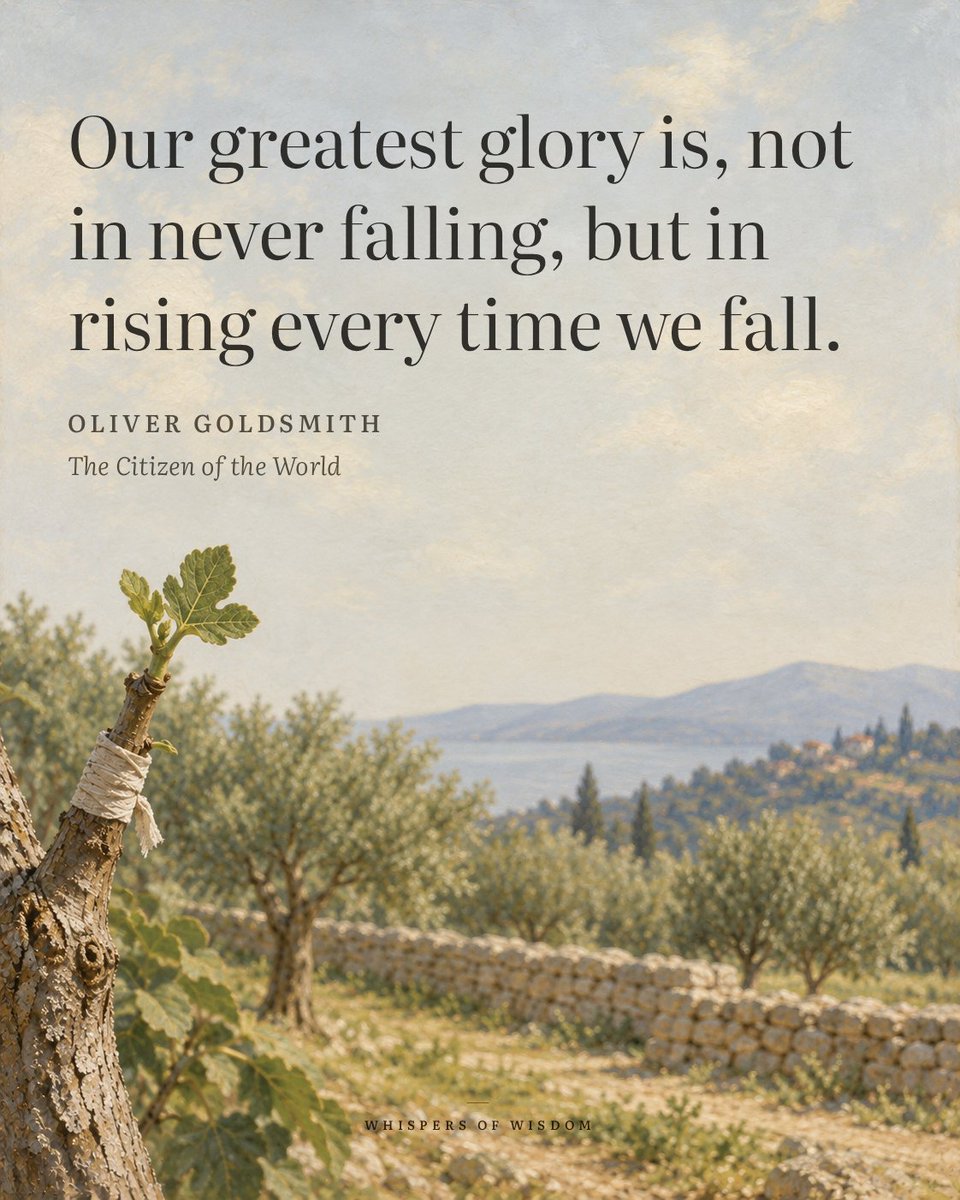
We treat falling as the end of the story, so we brace ourselves against it. But the quote shifts the measure of us entirely. It is not about avoiding the stumble; it is about what we do in the moment after. Rising is not a single grand act. It is the quiet decision to stand up again, dust off, and continue. It does not erase the fall, and it does not pretend the fall did not happen. It simply refuses to let the fall have the final word. Glory is not in a perfect record. It is in the return.
“Our greatest glory is, not in never falling, but in rising every time we fall.”
— Oliver Goldsmith
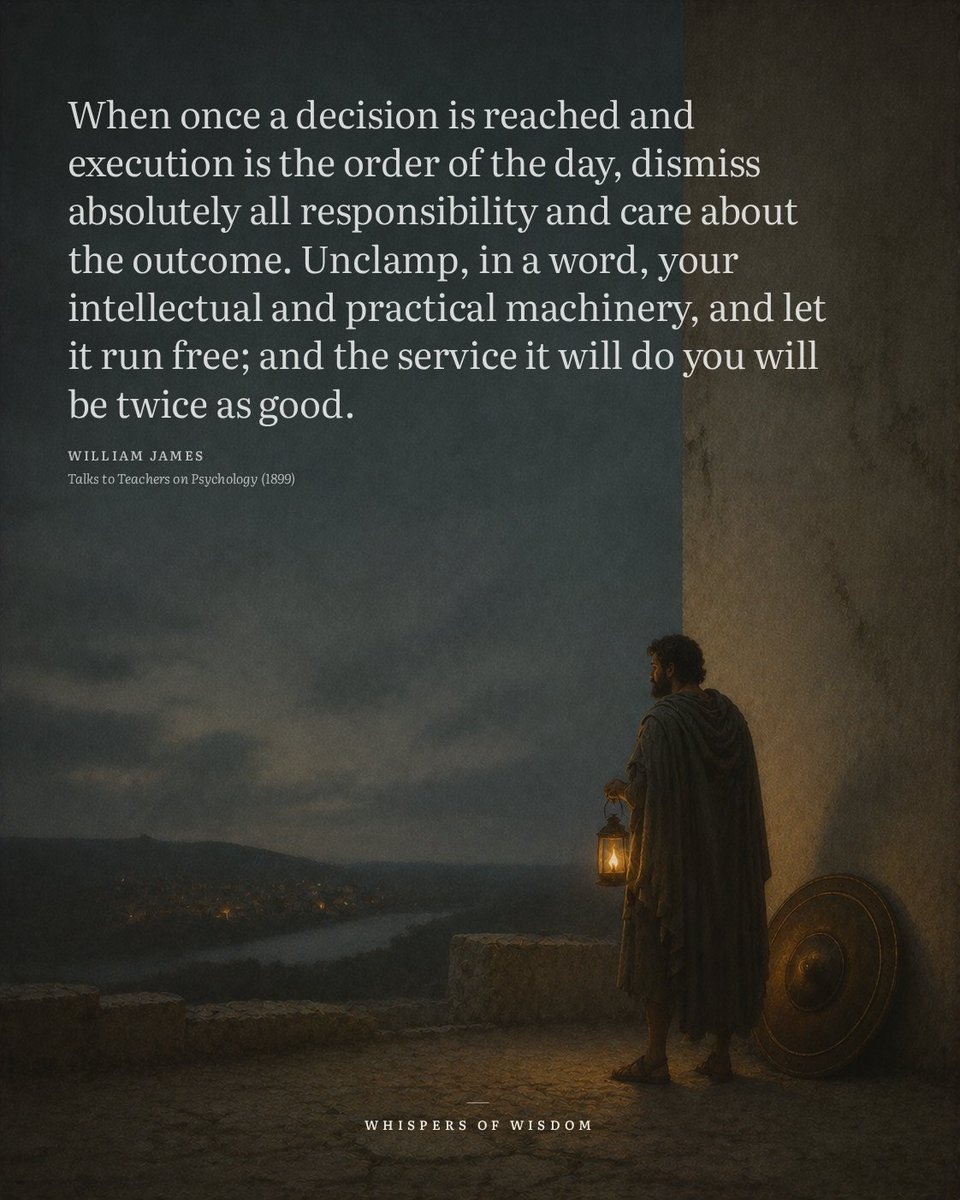
We treat decisions like switches we have to keep holding down. James suggests the opposite. Once you commit to a course, the energy spent worrying about whether it was right is energy stolen from the doing itself.
This is not about carelessness. It is about trust in preparation. You think, you choose, and then you let the machinery run. Rechecking the anchor every minute does not steady the ship; it exhausts the crew.
Next time you act, notice where your attention goes. If it drifts to outcomes you cannot control, that is the clamp James describes. Loosen it. The work will move faster.
“When once a decision is reached and execution is the order of the day, dismiss absolutely all responsibility and care about the outcome. Unclamp, in a word, your intellectual and practical machinery, and let it run free; and the service it will do you will be twice as good.”
— William James
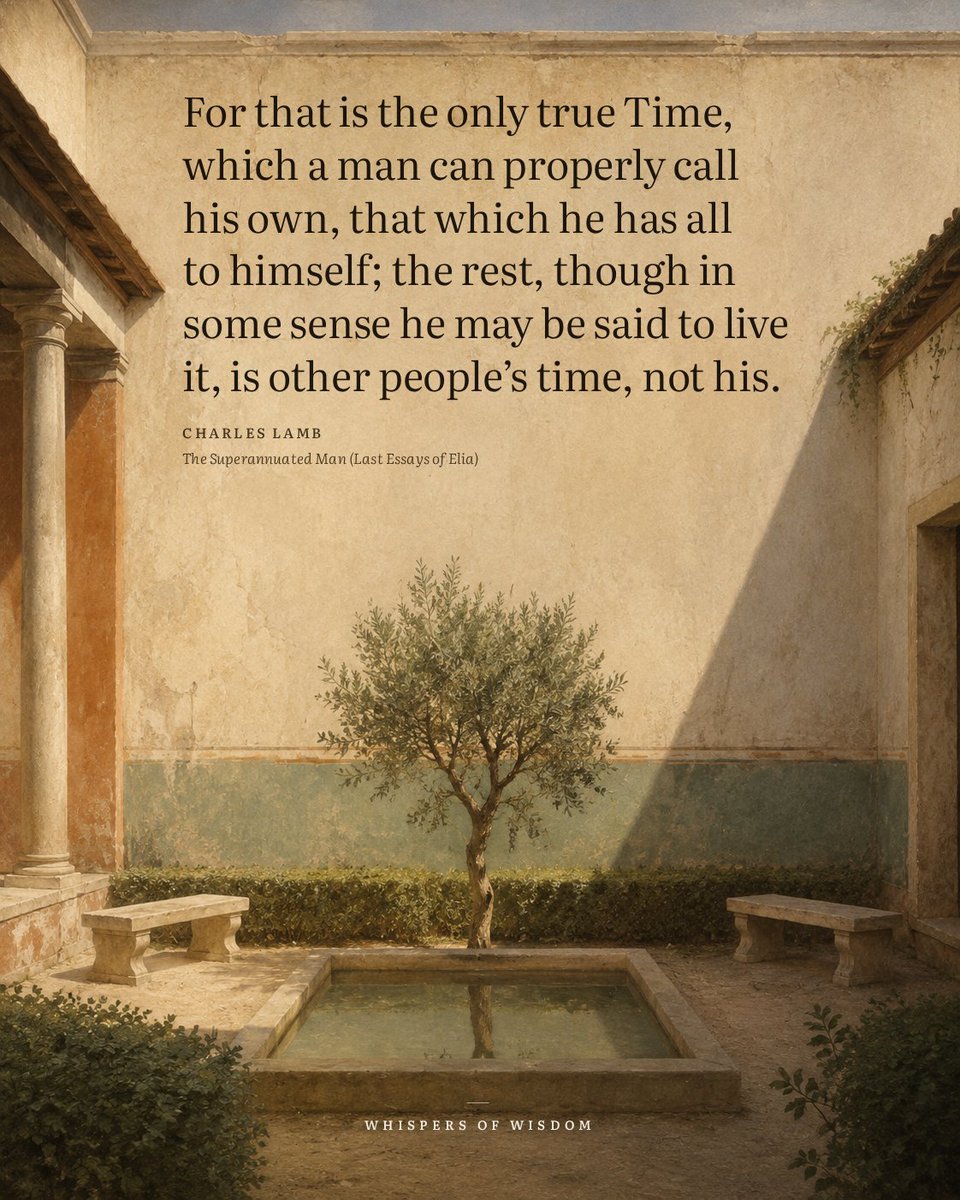
There is a kind of time that belongs entirely to you. Not the hours spent in meetings or running errands, not the time given to conversations you did not choose. Those belong to others, even if you are present for them. Lamb calls the rest the only true time — the part you keep for yourself. It is a sober thought, not a cheerful one. Most of a life can slip away in borrowed hours. The question is not how to fill the day, but how much of it you ever really had. Perhaps rest is simply reclaiming a small piece of it.
“For that is the only true Time, which a man can properly call his own, that which he has all to himself; the rest, though in some sense he may be said to live it, is other people's time, not his.”
— Charles Lamb
We treat rest as a reward we have to earn, or as a failure to be productive. This passage offers a quieter truth. Rest is not the absence of work. It is its own activity, with its own value.
Lying in the grass and watching clouds is not a waste of time, because time spent restoring ourselves is never wasted. We are not machines that run until empty. We are creatures that need stillness as much as we need movement.
The murmur of water, the drift of clouds—these are not distractions. They are reminders that the world continues without our effort. That can be a relief.
“Rest is not idleness, and to lie sometimes on the grass under the trees on a summer's day, listening to the murmur of water, or watching the clouds float across the blue sky, is by no means waste of time.”
— John Lubbock
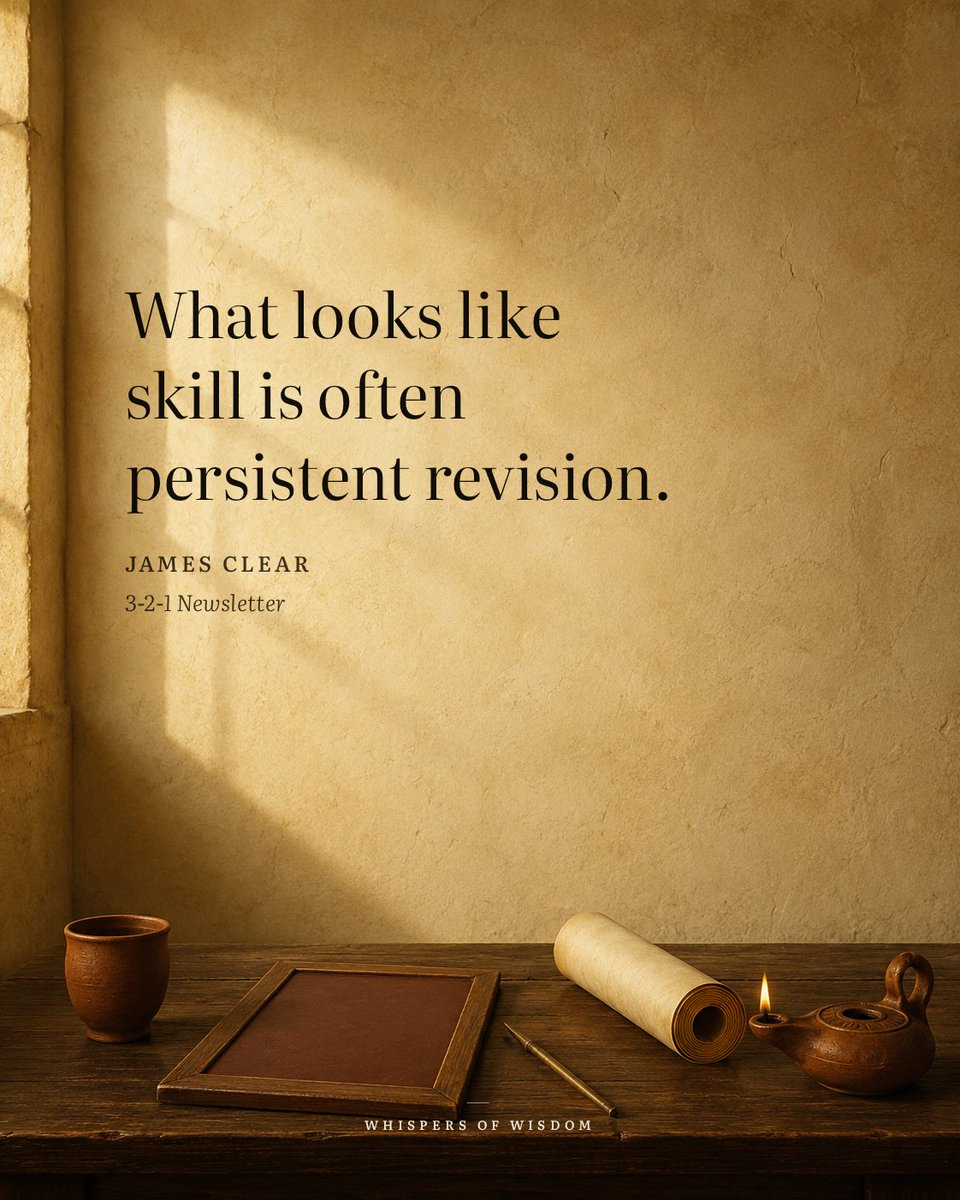
We tend to admire the finished thing—the effortless performance, the clean result. It looks like talent. But watch any skilled person closely enough and you will see them circling back, changing a word, adjusting a grip, redoing what they already did once. The magic is not in the first pass. It is in the willingness to look at your own work and say, *this can be better*. That is not a glamorous discipline. It is a quiet, stubborn one. And it is where real freedom lives: the freedom to keep improving, one revision at a time.
“What looks like skill is often persistent revision.”
— James Clear
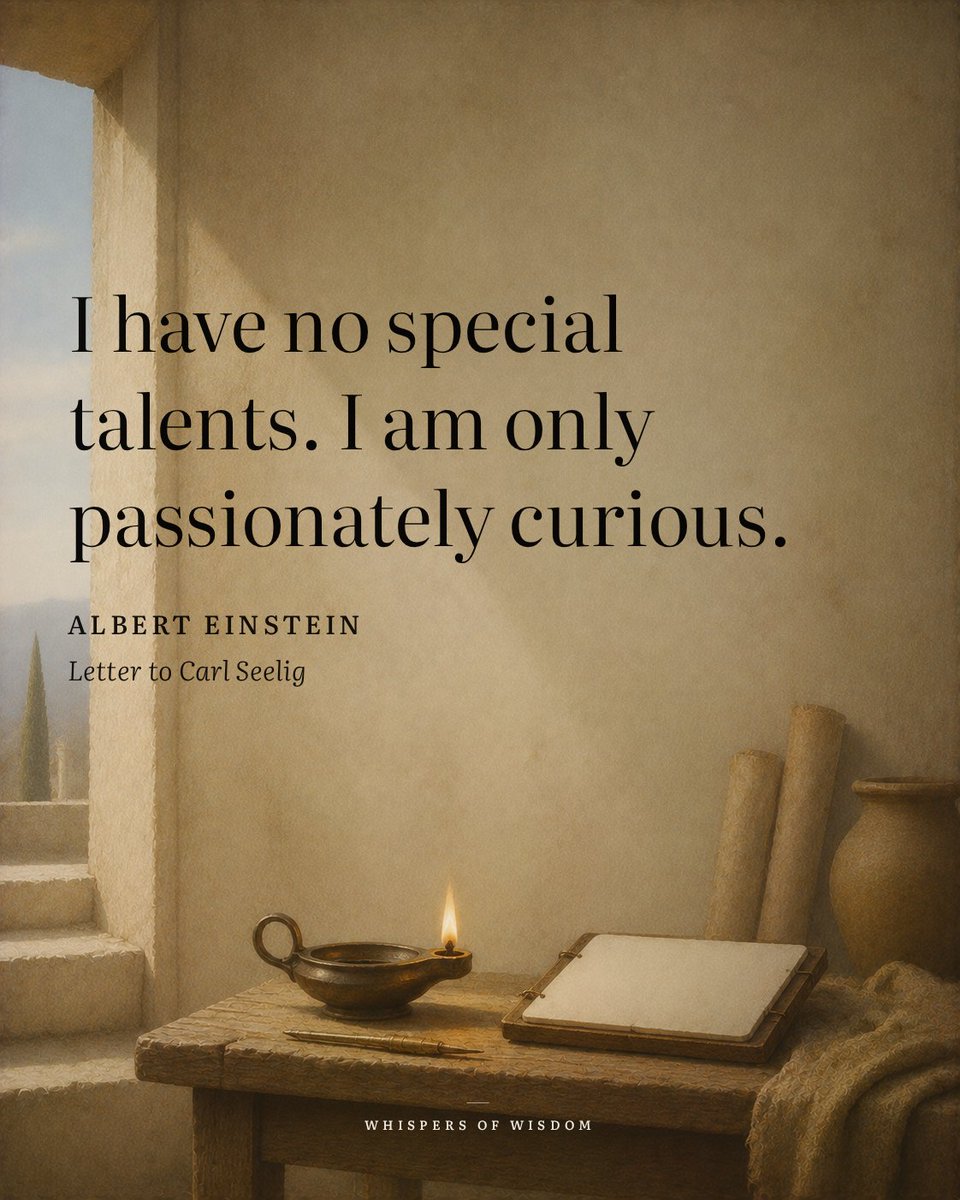
Curiosity rarely feels like a gift when you’re inside it. It can feel like restlessness, like never quite being satisfied with the easy answer. Einstein, of all people, understood this. He didn’t see his mind as a rare instrument. He saw it as a habit of paying attention.
That distinction matters. Talent is something you either have or you don’t. Curiosity is a choice you make again and again—to ask the next question, to look closer. You don’t need to be exceptional to do that.
Give yourself permission to follow the question. That is enough.
“I have no special talents. I am only passionately curious.”
— Albert Einstein
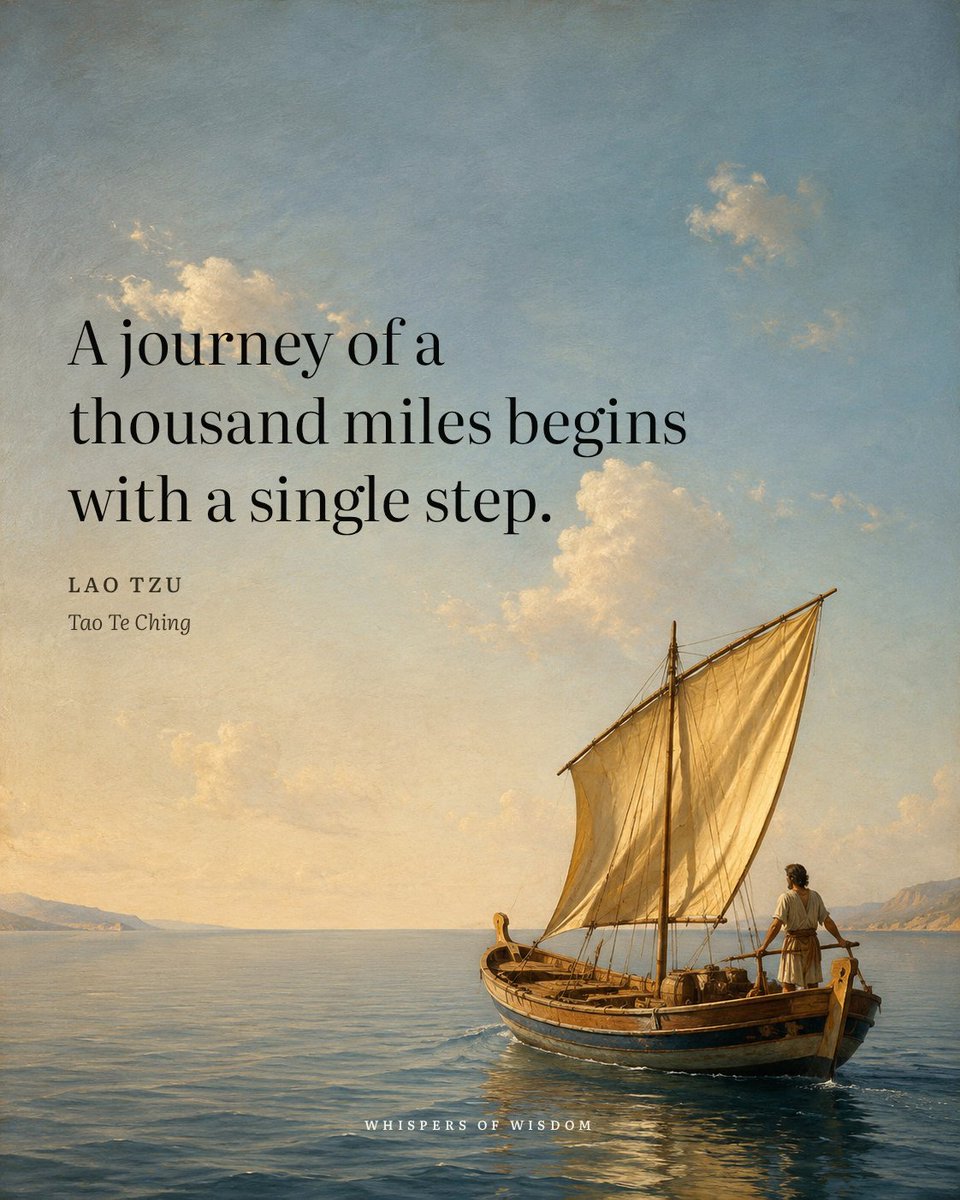
We often stall because the finish line feels impossible. A thousand miles is an abstraction. It numbs us. So we wait for the right moment, the perfect plan, or a surge of certainty that never arrives.
But the journey does not ask for the whole distance at once. It only asks for the weight of one foot, then the other. The step is not a promise to finish. It is a decision to begin.
Clarity rarely comes before action. It comes from it. So look away from the map for a moment. Look down at the ground right in front of you. The only step you ever have to take is the next one, and it is always smaller than the distance you fear.
“A journey of a thousand miles begins with a single step.”
— Lao Tzu
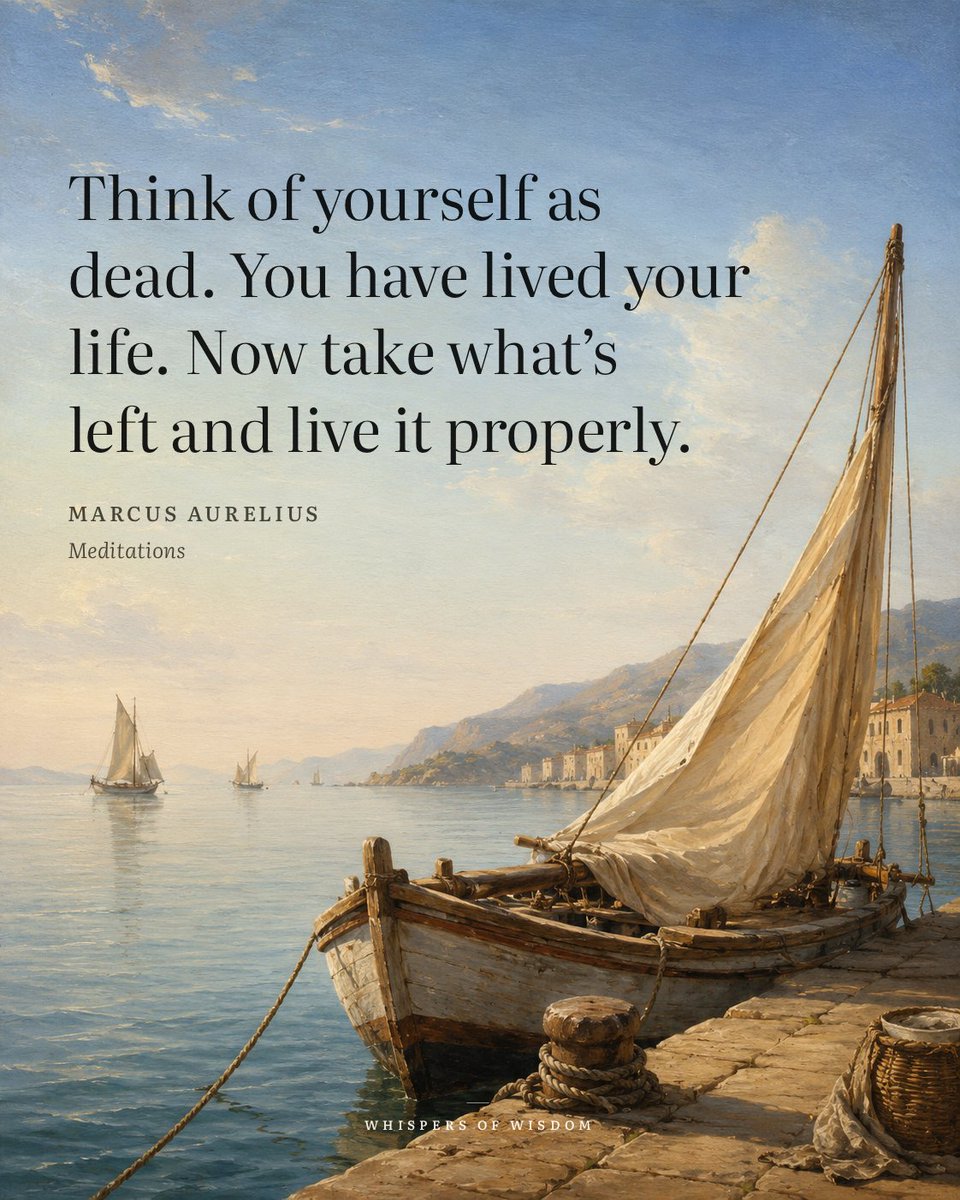
Most of us live like we have an endless account to draw from. We postpone, we hesitate, we save our best energy for a future that may never come. Marcus Aurelius suggests a sharper trick: consider the account closed. That version of you is gone. What remains is a gift, not a guarantee.
When you stop assuming more time will come, the noise quiets. You stop negotiating with yourself about what matters. The work, the relationship, the difficult conversation—they either get your attention now, or they don’t get it at all.
You don’t need a dramatic ending to start living properly. You only need to remember that this is it. Spend what’s left on what’s real.
“Think of yourself as dead. You have lived your life. Now take what's left and live it properly.”
— Marcus Aurelius
The difference between the two isn’t always visible from the outside. Both can work hard, both can appear successful. The distinction is quieter.
It’s in what occupies the mind when no one is watching. One person weighs choices against their character and long-term integrity. The other weighs everything against ease and immediate relief from discomfort.
That internal compass shapes a life more than any resolution does. Comfort asks for little and promises rest, but it never builds anything. Virtue asks for more, and that asking is where the will to act comes from. Not from motivation, but from a habit of considering what kind of person you want to be.
“The superior man thinks of virtue; the small man thinks of comfort.”
— Confucius
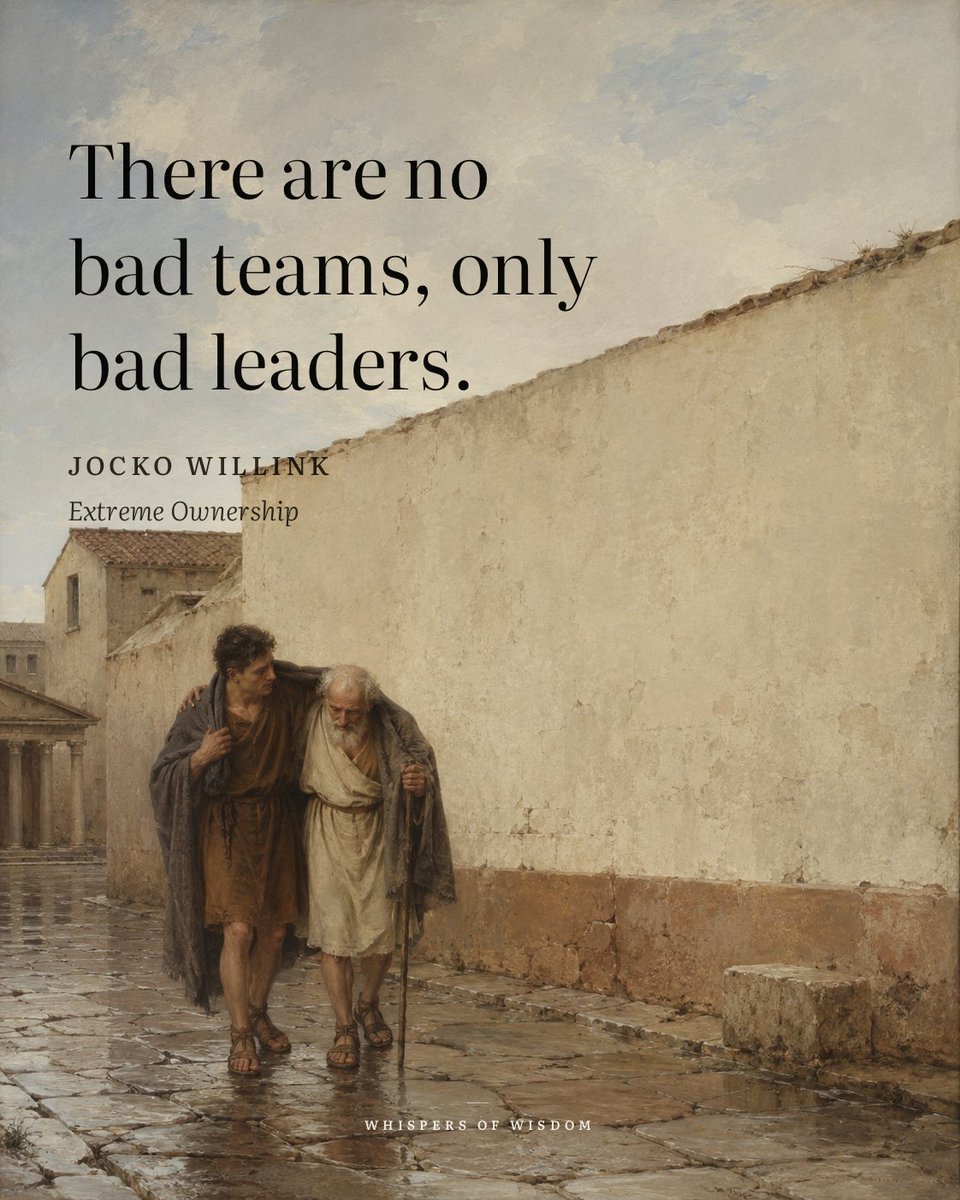
A team that fails is rarely full of bad people. More often, it is a group of capable individuals pulling in different directions. That incoherence is a leadership problem, not a people problem. When the energy is chaotic or the morale is flat, the fault usually sits at the top. It is a hard truth to accept, especially if you are the one in charge. Blaming the group is easy, but it solves nothing. Taking ownership of the direction, the communication, and the standards is the only way to change the outcome. The unit reflects the standard set for it.
“There are no bad teams, only bad leaders.”
— Jocko Willink
Some people are built for rooms where every word is measured twice. The rest of us were never going to thrive there. Molière’s frankness wasn’t a lack of skill—it was a different kind of equipment. He knew that pretending to be someone smoother would cost him more than any favor was worth. There’s a quiet relief in admitting you don’t have the stomach for games. Not as a failure, but as a fact. Being sincere isn’t always the easiest path, but it saves you the exhausting work of remembering who you pretended to be last Tuesday.
“Heaven, when it sent me into the world, did not give me a soul suited to the air of courts... My chief talent is to be frank and sincere.”
— Molière
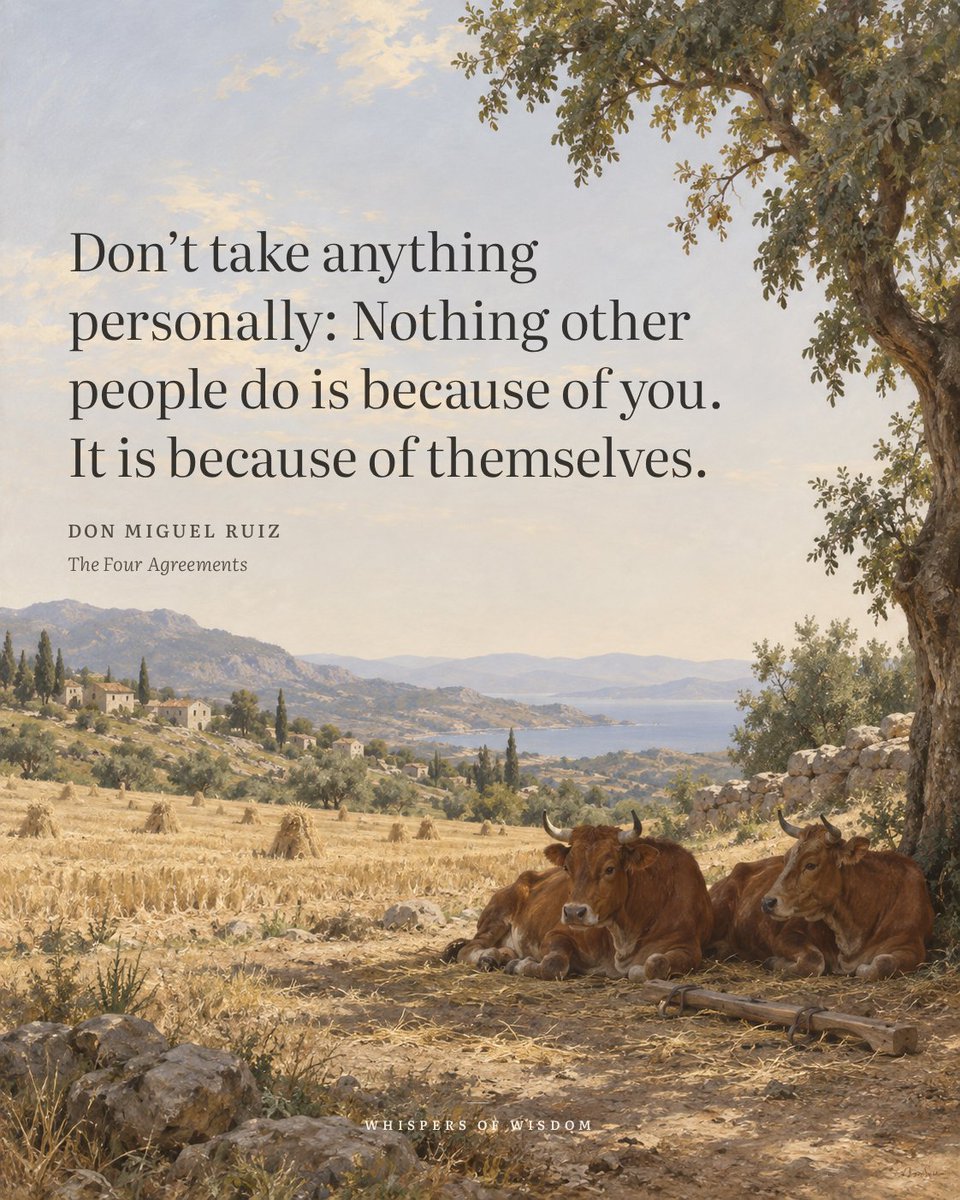
Most of what stings in a conversation isn't about you at all.
When someone snaps at you or leaves you out, your first instinct is to look inward: What did I do? But the other person's reaction is their own weather, shaped by their history, mood, and pressures. You're just the surface their storm lands on. Seeing this doesn't excuse bad behavior, but it does give you a choice about how much of it to carry.
“Don't take anything personally: Nothing other people do is because of you. It is because of themselves.”
— Don Miguel Ruiz
When someone cuts you off in traffic, your first reaction isn't curiosity.
Spinoza's line sounds abstract, but it's a practical tool for cooling the heat. The next time you feel anger rising, try swapping judgment for a question: What might explain their behavior? Not to excuse it, but to see it clearly. Anger narrows; understanding expands.
One concrete move: before you respond to a grudge today, write down one possible reason the other person acted as they did—not to forgive yet, just to understand. Then notice how your body changes. That pause is where wisdom starts.
“I have striven not to laugh at human actions, not to weep at them, nor to hate them, but to understand them.”
— Baruch Spinoza