Exploring the themes & lessons found in the #HarryPotter series through analysis, discussions, workshops & events. Australia's first HP academic-hub & charity.
On this day 29 years ago, Harry Potter and the Philosopher’s Stone was published in the UK and I am very lucky to have one of the first edition, first printings – identifiable by the print-run numbers in the title page, J.R. Rowling being listed as Joanne Rowling, the Hogwarts logo missing (because it hadn’t been designed yet), the “1 wand” error (it’s listed twice), and “Philosopher’s” being misspelt on the back cover.
The image of Dumbledore of the back cover is also widely inaccurate, because the artist had not received the manuscript at that point and didn’t have his description, though this image was still used in later print-runs (see comment's for the photos).
Philosopher’s Stone was rejected by 12 publishers before Bloomsbury accepted it. Rowling has said the reasons she was given were that boarding school stories were considered passé and the book was too long at around 95,000 words (hilarious considering the length of Order of the Phoenix). Publishers were also worried boys might not want to read a book written by a woman, which is why she was asked to publish as “J.K. Rowling”, using her Grandmother’s middle name of Kathleen (Rowling doesn’t actually have a middle name) rather than “Joanne Rowling”.
Bloomsbury gave the manuscript to the chairman’s eight-year-old daughter, Alice Newton. She read the first chapter and immediately wanted more.
Adults kept saying no because they were trying to predict the market for children’s books. Then a child read it and loved it.
Nearly 30 years later, Harry Potter is the most successful book series in history.
23 years ago today, Harry Potter and the Order of the Phoenix was released worldwide.
I was second in line when the book store opened 📚
I still have my copy, the countdown bookmark that came with my pre-order, and the momento's given at the release. It took from Saturday morning until Sunday night for me to devour all 766 pages 🐦🔥
And then the wait for Half Blood Prince began.
#orderofthephoenix #dumbledoresarmy #harrypotter
🦁🐍 Hogwarts House Pride Week is here 🦅🦡
From 20–23 March, each House gets its day.
It’s not official canon, but it’s something the community has built and kept alive over the years — and that says something about what these Houses still mean to people.
⚫🟡 Today belongs to the Hufflepuffs 🟡⚫
Notable House Facts:
• It’s J.K. Rowling’s Favourite House. After the creation of Pottermore, when disgruntled users would complain about being sorted into Hufflepuff, J.K. Rowling herself, a self-proclaimed Gryffindor, admitted in interviews that Hufflepuff is her favourite house.
• Neville Longbottom was almost a Hatstall (an archaic Hogwarts term for any new student whose Sorting takes longer than five minutes. It occurs rarely, perhaps once every fifty years). In Neville’s case, the Hat was determined to place him in Gryffindor. Neville, intimidated by that house’s reputation for bravery, requested a place in Hufflepuff. Their silent wrangling resulted in triumph for the Hat.
• Hufflepuff has produced the fewest dark wizards of any House.
• Their element is earth, which aligns with stability, patience, and growth.
• The Hufflepuff common room is near the kitchens and accessed by tapping one of the barrels in rhythm. (It sprays vinegar in your face if you get it wrong.)
• Notable Hufflepuffs include Nymphadora Tonks, Newt Scamander, Cedric Diggory, and Helga Hufflepuff.
• It's the most inclusive house. Helga Hufflepuff founded the house and said she would "teach the lot and treat them just the same”.
Hufflepuffs are known for their:
Loyalty – standing by people, even when it’s inconvenient
Hard work – values effort over talent or status
Fairness – strong sense of justice and doing what’s right
Patience – steady, consistent, not reactive
Kindness – empathetic, inclusive, non-elitist
Humility – doesn’t need recognition to keep going.
⚫🟡 If you belong to Hufflepuff House, show your House Pride here 🟡⚫
#hufflepuff #hogwarts #housepride #harrypotter
In Snape’s very first lesson in Harry Potter and the Philosopher’s Stone, the first question he asks Harry is:
“Potter! What would I get if I added powdered root of asphodel to an infusion of wormwood?”
Both of these plants have long-standing symbolic associations with grief and loss.
Asphodel is linked with death and the afterlife. In Greek mythology it grows in the Fields of Asphodel, where ordinary souls dwell in the underworld.
Wormwood has traditionally symbolised bitterness, sorrow and grief.
Asphodel was also sometimes placed in the lily family in older botanical classifications, although it is not actually a type of lily.
While the specific translation often shared online (“I bitterly regret Lily’s death”) does not come from an actual Victorian flower dictionary, it is a modern fan interpretation built from the symbolic meanings of the two plants. However, the symbolism of grief and bitterness is real.
Did you know that before Goblet of Fire was published, some early posters advertised it as “Harry Potter and the Doomspell Tournament”?
J.K. Rowling’s original working title was “Harry Potter and the Triwizard Tournament”.
Both were dropped before release, and the book was ultimately published as Goblet of Fire. No official explanation has ever been given for the change.
A small piece of early Harry Potter publishing history.
Get your tissues ready for this one...
Today we launch the "Care of Non-Magical Creatures" section of our website, but not quite in the way we'd planned: our first feature in this section is actually dedicated to one of the most widely recognised magical creatures in the series, recognised across the world as a symbol of Harry Potter, she deserves far more credit than she receives: #Hedwig.
Even the music most people associate with the series is named after her. John Williams’ Hedwig’s Theme is the main motif that defined the entire franchise.
And her name itself carries meaning. In The Philosopher’s Stone, Harry chooses it from A History of Magic by Bathilda Bagshot, but the name “Hedwig” has much older roots. The name traces back to Saint Hedwig of Silesia, the patron saint of orphans and the poor. The symbolism could not be more fitting. Harry begins the series as a poor orphan living in neglect, and the first living creature he forms a bond with, his first true companion, carries the name of a woman who dedicated her life to protecting those just like him. It’s one of those subtle layers of literary symbolism that J.K. Rowling often weaves into the series, and one that readers often miss.
This essay explores how Hedwig—proud, intelligent, and fiercely loyal—was far more than a pet. We examine:
-Hedwig as Harry’s First True Friend
-The Personality That Made Hedwig Unforgettable
-How Hedwig Embodied Harry’s Connection to the Wizarding World
-The Symbolism of Hedwig in the Hero’s Journey
-What Hedwig’s Death Represents in Harry’s Journey - and Did She Really Have to Die?
Read Now at:
https://t.co/DqqZtgljZt
The frequent use of Obliviate in the wizarding world—whether to protect secrets, erase trauma, or cover up crimes—raises ethical questions about consent, free will and the right to control one's own memories. Lockhart’s fate was an accident of his own making, but his fate also highlights how morality shifts when the victim is someone deceitful, challenging how we judge the ethics of Obliviation—by its consequences or by who it’s used against.
READ MORE:
https://t.co/uWdNsfK2cV
“𝑻𝒉𝒆 𝒕𝒉𝒊𝒏𝒈 𝒂𝒃𝒐𝒖𝒕 𝒈𝒓𝒐𝒘𝒊𝒏𝒈 𝒖𝒑 𝒘𝒊𝒕𝒉 𝑭𝒓𝒆𝒅 𝒂𝒏𝒅 𝑮𝒆𝒐𝒓𝒈𝒆 𝒊𝒔 𝒕𝒉𝒂𝒕 𝒚𝒐𝒖 𝒔𝒐𝒓𝒕 𝒐𝒇 𝒔𝒕𝒂𝒓𝒕 𝒕𝒉𝒊𝒏𝒌𝒊𝒏𝒈 𝒂𝒏𝒚𝒕𝒉𝒊𝒏𝒈’𝒔 𝒑𝒐𝒔𝒔𝒊𝒃𝒍𝒆 𝒊𝒇 𝒚𝒐𝒖’𝒗𝒆 𝒈𝒐𝒕 𝒆𝒏𝒐𝒖𝒈𝒉 𝒏𝒆𝒓𝒗𝒆.” -𝑮𝒊𝒏𝒏𝒚 𝑾𝒆𝒂𝒔𝒍𝒆𝒚
𝗦𝗢 𝗪𝗛𝗔𝗧 𝗖𝗔𝗡 𝗚𝗜𝗡𝗡𝗬 𝗧𝗘𝗔𝗖𝗛 𝗨𝗦?
One of the series’ most quietly radical figures, Ginny survives possession, trauma, and being overlooked—and still refuses to be sidelined.
Ginny Weasley’s arc is one of the most quietly powerful in the Harry Potter series. This essay explores how Ginny reclaims her voice after trauma, builds her own identity outside of others’ expectations, and rises as a fierce, funny, and self-possessed force in the fight against tyranny.
In Dumbledore’s Army—a name that Ginny herself comes up with—she proves her magical ability, mastering defensive spells and fighting alongside her peers without hesitation. On the Quidditch pitch, she carves out her own space, not as "Ron's sister" but as a star Chaser (and later Seeker) who is uncompromising in the face of disrespect. Her defense of Luna Lovegood against sneering peers further showcases her defiance, choosing loyalty over conformity.
Ginny matters because...
𝗥𝗘𝗔𝗗 𝗠𝗢𝗥𝗘:
https://t.co/Gv9xgZK43m
Did Draco ever have a choice?
Draco Malfoy entered the series as a sneering symbol of entitlement, privilege, and inherited prejudice. He was the boy who mocked the poor, exalted blood purity, and tossed his father’s influence around like a weapon. To many readers, Draco was a one-dimensional bully. But beneath the perfectly combed hair and smug exterior was something far more uncomfortable. He was a child raised to believe he was superior. From the moment he could walk, Draco was told that he came from an 'old, respected' wizarding family. That he was pure-blood, and that this made him better.
Like many born into privilege, Draco was never forced to question the system that favoured him. He mistook safety for superiority. He assumed his comfort was deserved. His upbringing insulated him from consequence and inflated his sense of importance.
Until it didn’t.
READ MORE:
https://t.co/N7LBAJgAzU
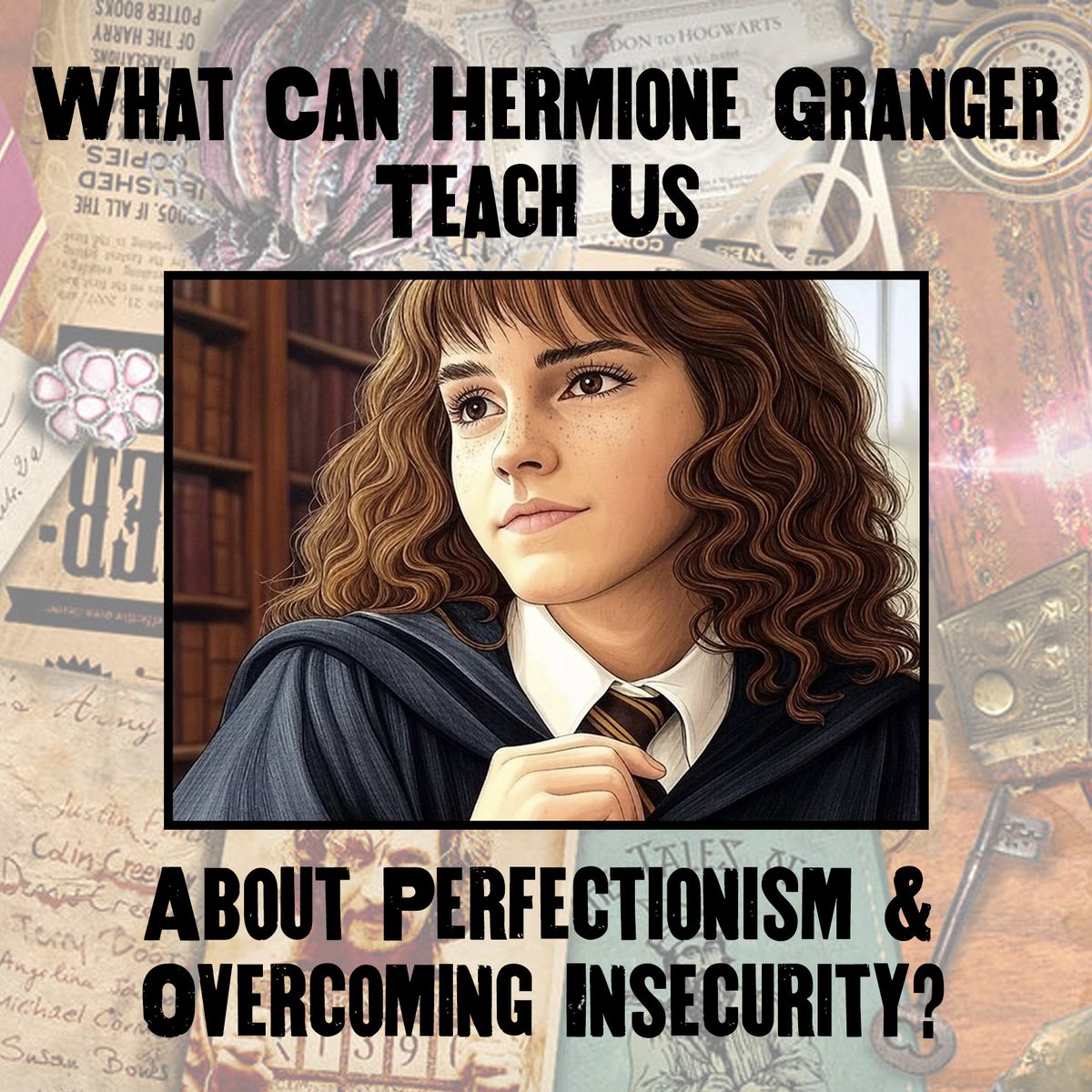
The first in our 𝐁𝐎𝐎𝐊𝐒 & 𝐂𝐋𝐄𝐕𝐄𝐑𝐍𝐄𝐒𝐒: 𝐋𝐞𝐬𝐬𝐨𝐧𝐬 𝐢𝐧 𝐂𝐡𝐚𝐫𝐚𝐜𝐭𝐞𝐫 series features our all-time favourite heroine:
What can Hermione Granger teacher us?
"From the moment Hermione Jean Granger introduces herself on the Hogwarts Express—confidently correcting Ron’s spellwork and declaring, “I’m Hermione Granger, and you are?”—she establishes herself as someone who takes knowledge, competence, and success very seriously.
But beneath the surface of her academic brilliance and apparent self-assurance lies a deep-seated insecurity, one that many perfectionists will find all too familiar…"
𝗥𝗘𝗔𝗗 𝗠𝗢𝗥𝗘:
https://t.co/TFl2eCLmdd