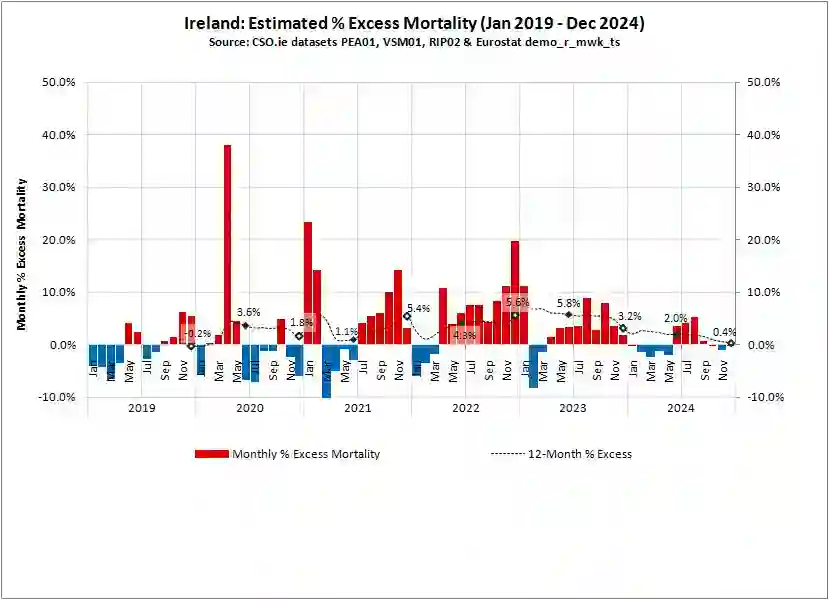
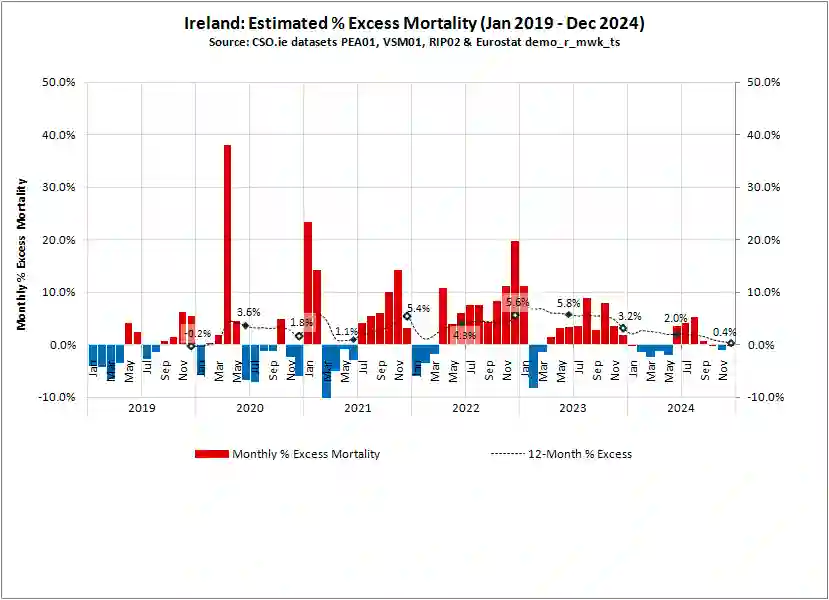
Ireland exprienced in 2022 its highest deaths since the 1950’s. Many have expressed concern about #ExcessDeaths. This 2-part post attempts to better understand if there is excess mortality, to quantify it, and locate it in the Irish population structure.
https://t.co/RLaHld9FtF
@BrigidLaffan@JohnOBrennan2@Toibin1 Irish women waiting longer to start families👇
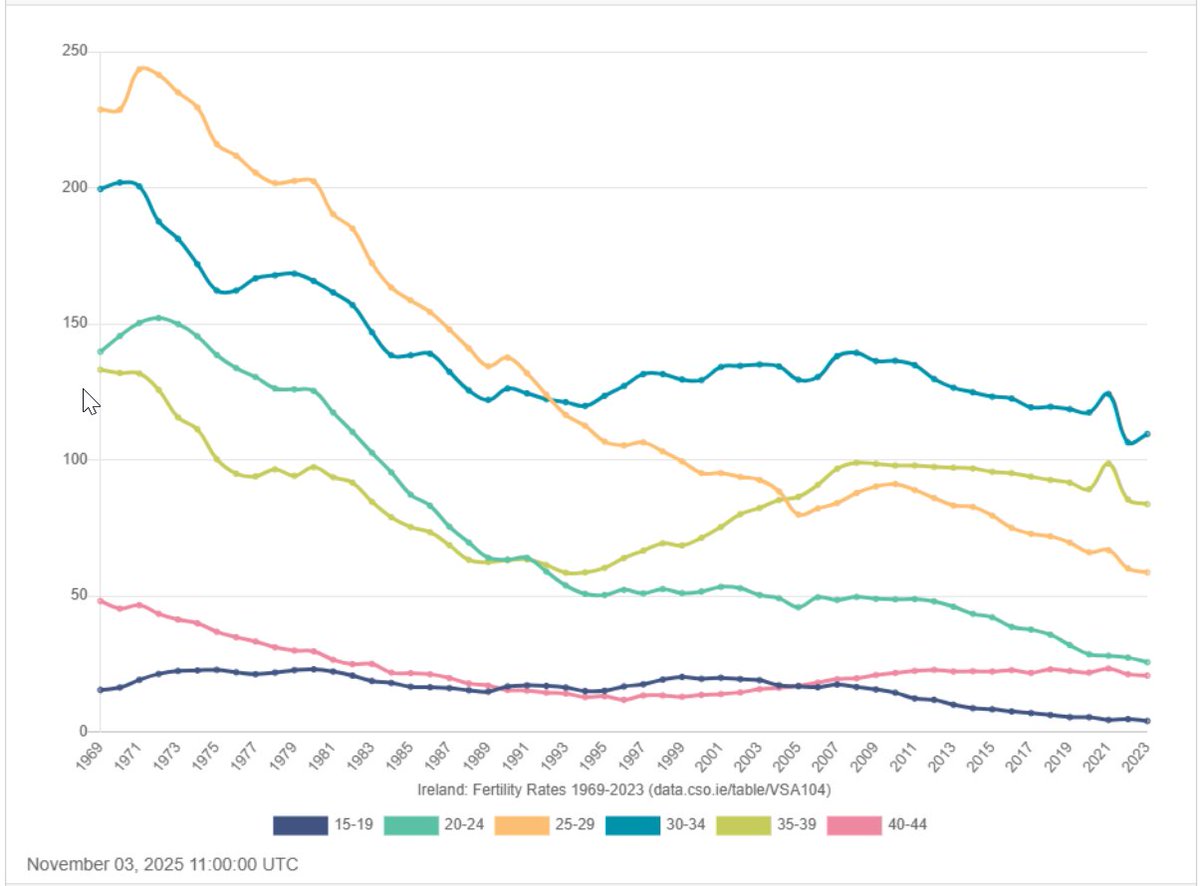
1970s & 80s saw fertility rates decline across all ages
1990s saw rates rise for women in 30s
1994-2011 was period of stability in 20-24 age group
Since 2011 all rates (except 40s) falling again
https://t.co/r5J4m6W5uN
Birth rate is collapsing in Ireland as young people lose confidence in the future.
The housing crisis, the cost of living crisis, the lack of child care and spiking abortion numbers are playing a role.
Demographic imbalance is a major threat to service delivery and to pensions
@davidmcw@ArmchairExpPod Private US banks effectively "print dollars" w credit creation
Federal Reserve NOT public & NOT democratic
US dollar potency due to global reserve currency status
@jeromekurtiss@Donnell98828N@AislingOLoughl1 To estimate excess, expected levels must be determined before subtracting actual totals
Excess Mortality = Expected - Actual
Expected mortality rates in chart were determined from trends in age-specific 5-yr bands and based on CSO census population totals (ie. age-adjusted)
@jeromekurtiss@Donnell98828N@AislingOLoughl1 it seems you have simply assumed Ireland had no significant excess mortality once adjusted for pop growth and aging.
the data does not bear this out.
although Ireland had significantly less than most other countries, it did have significant excess, particularly in 2022.
@jeromekurtiss@Donnell98828N@AislingOLoughl1 WHICH published age-adjusted excess mortality rates for Ireland do you mean?
I've read them all and I can tell you each suffers from various issues around incompleteness of available data and methodological approach.
Note: % excess I showed is both age- & pop.-adjusted
@jeromekurtiss@Donnell98828N@AislingOLoughl1 What am I ignoring???
Which age-adjusted rates do you mean?
If anything age-adjusted rates show % excess mortality was at times worse in younger cohorts in Ireland.
@jeromekurtiss@Donnell98828N@AislingOLoughl1 IMHO many are understandably frustrated that authorities overstated extent of excess mortality in 2020-2021
Only to understate excess mortality in 2022-2023 when it was arguably worse 🤷♂️
https://t.co/tV3LDcIhTA
@jeromekurtiss@Donnell98828N@AislingOLoughl1 By any measure Ireland had excess mortality during years 2020-2024
(albeit lower levels than most countries)
Valid to express excess in absolute terms (tho % excess better), so long as demographic factors included in estimations of expected mortality.
https://t.co/OeA3MvCk8y?
@jeromekurtiss@Donnell98828N@AislingOLoughl1 By any measure Ireland had excess mortality during years 2020-2024
(albeit lower levels than most countries)
Valid to express excess in absolute terms (tho % excess better), so long as demographic factors included in estimations of expected mortality.
https://t.co/OeA3MvCk8y?
@dobssi I'm a fan of seasonal approach. Calendar years can flatten seasonal variation.
A combination of both may be most illustrative!?
Below I plotted rolling 12-month % excess with both calendar year and split-year figures labelled👇
@nwl88444048 Nigerian pop also younger than native Irish and higher percenrage male.
How would Irish vs Nigerian per capita rate for males 18-35 compare?
@Jean__Fisch@STATISTIK_AT Vax uptake grouping 15-44 vs % change fertility rate - too broad?
Uptake increases w age (44 high, 15 low)
but fertility rate increases 15~30, falls 31~44
Which ages showing % decline?
In rate of first child or other?
(Added issue of native vs immigrant pops.)