At one point P.G. Wodehouse was rather upset that somebody writing under the name 'Indignant,' said his work was overrated. His reply!
"I do not wish to labour this point, but I must call Indignant's attention to this letter in The Times from Verrier Elwin, who lives at Patangarh, Mandla District, India.
Mr Elwin speaks of a cow which came into his bungalow one day and ate his copy of Carry On Jeeves, selecting it from a shelf which contained, among other works, books by Galsworthy, Jane Austen and T.S. Eliot. Surely a striking tribute."
Verrier Elwin writing to The Times about Wodehouse. Wow!
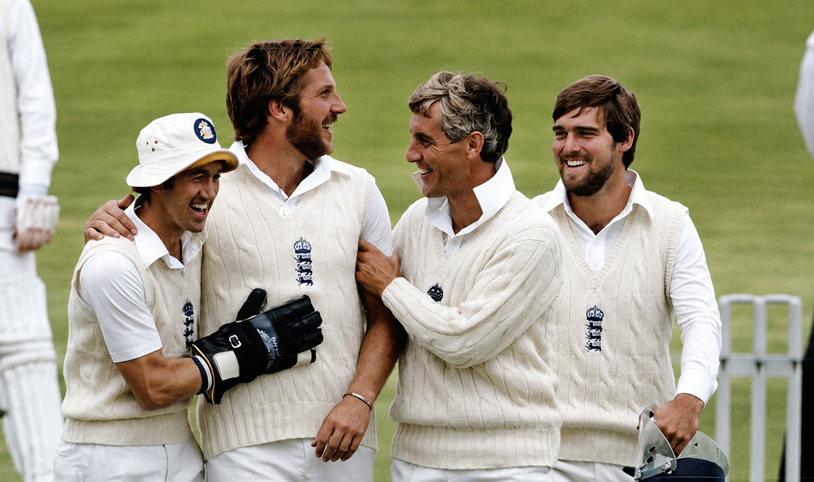
Ian Botham is congratulated on dismissing Graeme Wood, 3rd Ashes Test, Leeds, July 16th 1981. Botham had not taken a five-for as captain, but replaced by Mike Brearley he bounced back with 6 for 95 ... and then came his heroics with the bat ...
In 1897 A W Gamage Ltd of London ( who claimed to be the ‘world’s largest sport and athletic outfitter’) made a blue ball specially for the ladies game as it was feared (by men, obviously) women would "swoon" at the sight of a red one. This ball was originally blue. The idea never caught on, mainly because the blue ball was hard to see against pretty much any background but also, presumably, because women were, amazingly to many Victorian gentlemen, able to cope with the strains of using a red one
“At that moment, however, the drowsy stillness of the summer afternoon was shattered by what sounded to his strained senses like G.K. Chesterton falling on a sheet of tin.”
P.G. Wodehouse, Mr. Mulliner Speaking
Russell Crowe teaching Joe Rogan about cricket is my favourite thing to watch today. 🔥
The way he explains is nothing but "poetry" 🤌
(PS: I had no clue that he is cousin of New Zealand legend cricketer Martin Crowe 🤯)
30 years to the day day that Sourav Ganguly made batting look easy with that amazing 131 at Lords. And the grit and application of Dravid's 95 at the other end. Thanks for some amazing memories..
Every single person who still cringes at the memory of trying to bullshit their way through an interview or exam question: today, the slate is wiped clean. Set down your burden of shame. Nothing - nothing, I say - could touch this.
My mother worked in the City of London immediately after WW2 and told me about the numerous bomb sites dotted around which took years to be cleared and rebuilt. This picture from 1949 shows office workers playing cricket on such a site off Shoe Lane during a lunch break (C)
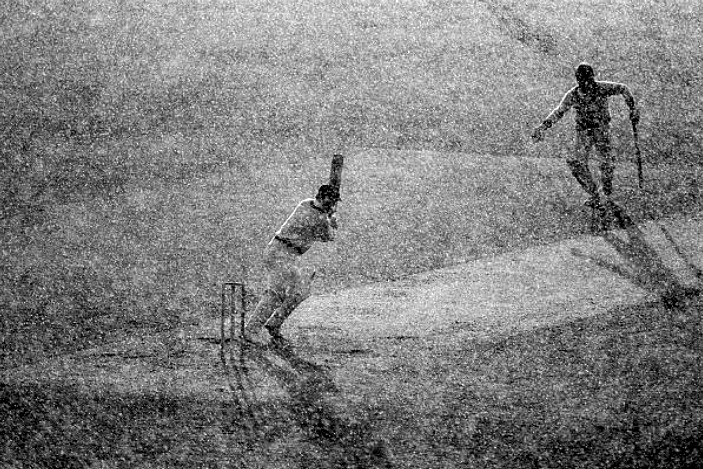
Greg Chappell batting in torrential rain, Prudential Cup, The Oval, June 6th 1977. Patrick Eagar's picture captures the absurdity of the finish of the ODI in low, evening sunshine and driving rain. Water was dripping off the caps of the fielders and batsmen and drying the ball was pointless. Both sides agreed to play to the end as they did not want to come back the next day to finish the game, as was usual back then, as it was the Queen's Silver Jubilee celebrations in London
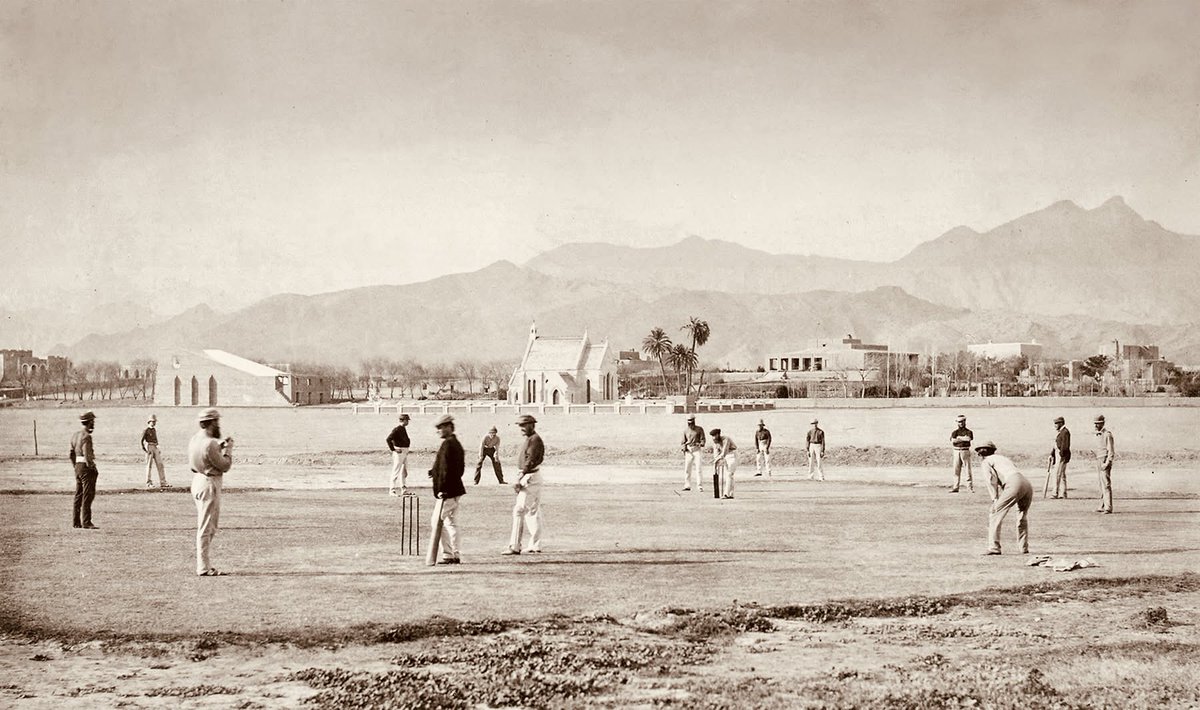
This is thought to be of the earliest photographs of cricket in India and was was taken by Major Keyes of the 1st Punjab Infantry in the 1860s. It shows British officers playing on the parade ground in Kohat, which is now in Pakistan.
This matters.
An obscure London event on the history of the ancient Jewish kingdoms in Judea and Israel is cancelled because of ‘security concerns’ and it turns out this was a reaction to a campaign to fill and then undermine the event by activist disrupters.
How strange! Why would a posse of aggressive activists be interested in the arcane details of bullae and steles and ostraca and inscriptions and numismatics in some small South Levantine kingdoms in the Iron Age?
Well, it is a little more than that which is why it is both disturbing and important. And it matters because at its least it is a threat to history in Britain’s - but also the world’s - greatest temple of History @britishmuseum - and its scholarly integrity.
The BM and its leadership are decent and well-meaning and have explained that they wished to save an event from disruption by bullying vandals but I am sure the BM realizes it is essential to announce a new event fast lest it give the impression that the permission of tiny cadres of aggressive bullies are required before it hold events. But the significance is wider than an event about the Moab and Tel Dan steles in a great museum.
British cultural life is the right and exercise of civic and cultural freedom – a privilege of our liberal democracy - that does not require the permission of gangs of ideological activists nor can it cancelled or postponed nor endured at their beck and sufferance nor permitted with a bend of the knee to their permissions or veto. But that is what this appears to be.
Across the cultural world in the West, though the bewildered middleaged managers of our institutions that are confronting and often submitting to a wave of self-righteous blackmail and mob threat, there is an increasingly thin – indeed ever more fragile and sometimes nigh invisible – line between ‘security concerns’ – and institutional pusillanimity.
Then there is the history itself.
This event concerns the study of the ancient kingdoms of Judah and Israel that existed between roughly 1100BC and 586BCin the Levant. It is not a coincidence that this was chosen for disruption. The history of the Judean kingdoms and the Jewish Temple in Jerusalem that stood for most of the time between 1000BC and 70ADetc is important and fascinating history in its own right, supported by complex and growing archaeological finds.
These small kingdoms and the subsequent Temple priestly mini-state (restored by the Persian kings Cyrus and Darius 539BC) and then the larger Judean kingdoms of the Hasmoneans and Herodians – between 167BC and 135AD chronicle the long indigenous history of Jews in the region – which the protesters are keen to erase. This is a political project of ideological erasure and malicious incitement of course concerned with the complex, brutal Israel-Palestine conflict that has now gone on for a hundred years and is unlikely to be solved in a small lecture theatre in the British Museum. But it also attempts to deny or erase Jewish history itself – and by implication the heritage of British Jews who live here in Britain, a small community that is now under cultural and sometimes physical threat.
Incidentally - but it is worth saying, this history does not deny anyone else’s history, nor the many other small realms in this region through ancient times nor the many names of the region and its entities and the historical origins of those names (Canaan, or Philistia or Peleset, Phoenicia, Aram Damascus or Moab or later Nabatea and the provinces of Palaestina Prime, Seconda and Tertia and the Ghassanid kingdoms and so on etc etc). The history of one can not be used to erase the history of the other and does not need to do so. The pursuit of knowledge which is one of the delights of human life and is the mission of the BM and indeed anyone who writes, reads or enjoys history, can celebrate and recognize all of these.
Yet this protest and the many like it deployed across Britain nowadays is the opposite of that - an attack on history using the methods of intimidation and vandalism. Much of this involves distorting or dismantling actual history or often lying to replace it with a fabricated ideological structure that nourishes no one and helps no one but degrades our culture and civic life not to speak of history itself. By the way, the frequent claims that these histories or names are ‘denied’ or ‘noone knows them’ is nonsense: anyone and everyone who is interested knows this history. (Much of it appears for example in my book Jerusalem a history of the Holy Land.)
And this is relevant not just to those of us who write study or enjoy the history of the region but also to those who believe that cultural life and civic society is a right that must not be submitted to the aggressions and plots of loud well-organized much-indulged ideologues who take advantage of the freedoms of our society to undermine its principles and the very freedoms they are designed to guard.
Just as vital is a rule of history itself that concerrns the rise and fall of civilizations: the society that ceases to allow to free discussion of ideas and stops respecting and recognizing the value of scientific and historical sources and facts is a society that will fail.
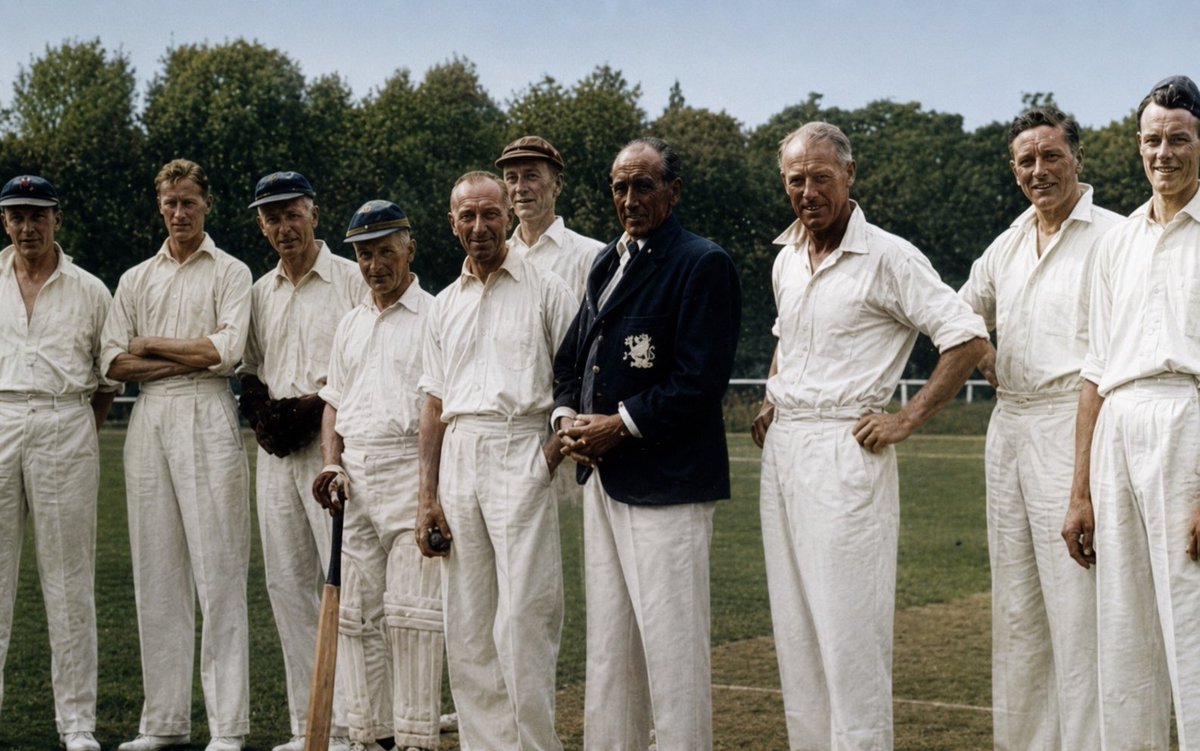
Despite Hitler's loathing of cricket, in 1937 an English team — The Gentlemen of Worcestershire — was invited to Nazi Berlin to play a series of matches against a select German XI.
The Germans played on thin, bumpy rolls of matting laid across the centre circle of a state-owned football pitch. Major Maurice Jewell, the 51-year-old captain of the Gents, made 140 in one match; but the grass was so long that he was only able to hit three boundaries.
The German captain, a slight but aggressive blonde-haired Nazi called Gerhard Thamer, was fond of punching fielders who dropped catches off his bowling. At the dinner which marked the end of the tour, Major Jewell complained to the Nazi Minister of Sport, Hans von Tschammer und Osten, about one blow to a junior player. Tschammer und Osten looked nonplussed. “But I understand it was a very simple catch,” he said.
A short film showing a wartime match at Lord's between Sir Pelham Warner's XI and the RAAF, June 5th 1943. Around 10,000 were there although the film shows empty stands. Keith Miller,23, top scored in what was his first major match outside Australia
I see Euro A/C is in the discourse again. One time I was working for a summer in a law firm in France and I was miserable in the heat. When I asked the partner why they didn't have A/C he said, "It's bad for the lungs," as he took a long drag from his cigarette.