Fantastic question. The issue of sourcing land comes with very little challange. There is enough land in Lagos East to accommodate well over the 100,000 housing units that we propose.
But to the more important issue about funding.
First, my administration will curb the waste and corruption that has redirected public funds to private pockets.
For instance between 2021 and Q3 2025 alone, about ₦1.3 trillion was spent by the state government on “miscellaneous expenses” and “consulting fees”
In the last 6months, Lagos state has spent N19 billion on refreshments, entertainment, hospitality, honoraria, and sitting allowances within the first six months of 2026
More damning is the ambiguity of some of the expenses in the miscellaneous expenses. For example, total spending on “Special Duties Expenses” hit ₦601 billion in just four years,
between 2021 and 2024. These expenses are entirely different from the spending of the Ministry
of Special Duties and Inter-governmental relations, which hit ₦102 billion between 2021 and Q3 2025.
This is just one aspect.
In the same period the state has spend almost 400 billion on “professional fees” and entertainment.
I’d stop just here. The point is, we can redirect over 500 billion of government spending towards housing by curbing corruption and waste over a theee year period.
Secondly, I intend to introduce a tax on luxury developments that will directly fund social housing. My team estimates that we can raise about 100 billion in three years.
I also intend to tax vacant buildings, particularly those in Ikeja, Victoria Island, Ikoyi, and Lekki. The idea is to encourage owners to put such properties in the market or pay a tax that will directly fund social housing.
We will also guarantee financing for the Lagos state mortgage institution to provide the necessary liquidity to back affordable housing projects.
We will also significantly raise government spending on housing because it not only provides shelter and dignity, construction is a huge stimulant for the economy which will create thousands of meaningful job opportunities and improve spending in the economy.
#Ourlagos
GRV DEBATES- ISSUE: 2/5
Connecting Ikorodu and the entire Lagos East:
The benefit of having interlinked belt roads to connect Lagos East far out weighs a 4th-mainland bridge.
1) It is cheaper to achieve.
2) It opens up the entire axis for development
3) It improves the interconnectivity of the eastern foreshore by giving people more options for movement .
#Ourlagos
GRV DEBATES- ISSUE: 4/5
The Lekki Link Bridge :
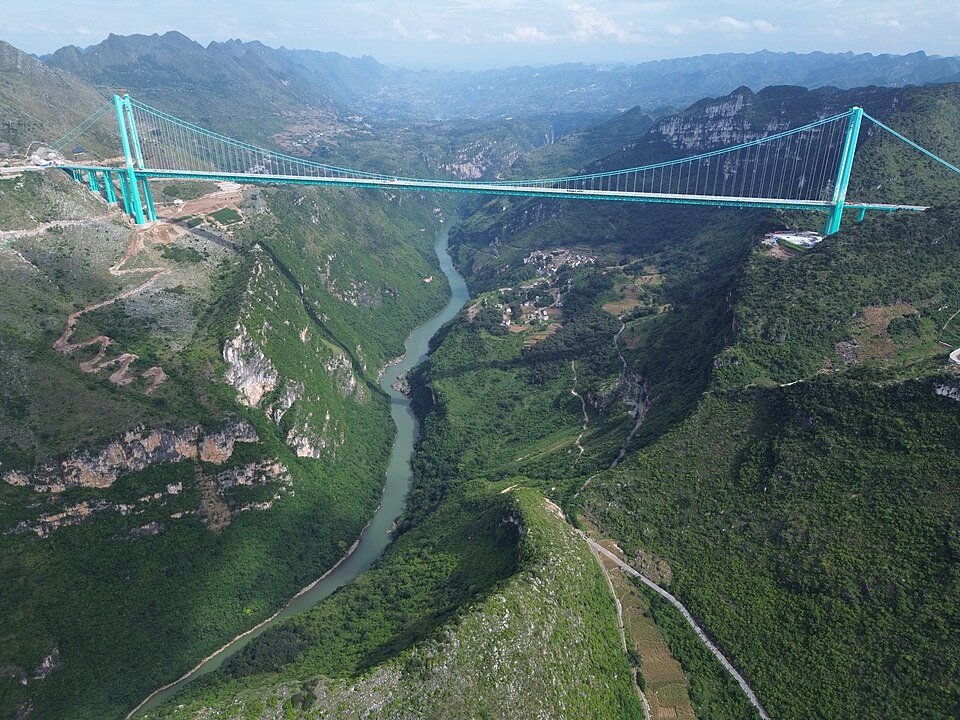
The lekki link bridge was done at $116 million/Km
The far more complex Huajiang Canyon Bridge in Guizhou, was done at $97 million /Km
I ask lagosians to look at the scale of both this cable stayed bridges and ask if we got value for our common wealth.
GRV DEBATES- ISSUE: 5/5
ENDSARS AND THE NORMALISATION OF VIOLENCE BY THE APC
A Government that is truly regretful about the Endsars Tragedy, would not consistency threaten violence at citizens, worse still on a solemn remembrance day.
Whilst the APC government might chose to absolve themselves and blame the military, there has been no military presence on Oct 20th every year since, yet their modus operandi is always threats of violence.
This is completely unacceptable.
Lagosians deserve better.
#Ourlagos
Every year we gather to have countless conversations about Nollywood and its challenges. One forum to another. Seminars, keynotes, investor sessions. The list goes on.
The more of these you attend, the more you notice a few things. One, a lot of people are winging it. Two, many investors don't understand our business model, because frankly it doesn't make sense to them. Three, some of us aren't sure if we really want change or just want to cash out so we can pay school fees.
We say distribution is our biggest problem. We have been saying it for years. So why haven't we fixed it?
It's one thing to name a problem. It's another thing to understand it and actually have solutions.
If the streaming era and this economy taught us anything, it's that a huge number of Nigerians can't afford to stream. Many can't afford the data. And most importantly, the audience that matters can't always relate to what's on the platform.
Nigeria makes up about 10.5% of Netflix viewers in Africa. South Africa makes up 73%.
But don't be fooled. Nigerians are watching. They're watching on Telegram, where it feels free and the files are small enough to download. The demand is there. What's missing is a price and a format that works for them.
Now look at cinema. Around 350 screens for over 200 million people. That's roughly one screen for every 600,000 Nigerians. Tickets average close to 6k and run up to 10k in Lagos. Last year we recorded 2.8 million admissions. That's about 1% of our population, and since many of those are repeat visits, the real number of people is even smaller.
Then there's the cost of making films. I've said it before: a staggering number of cinema releases don't break even. Only the greats do.
And then there's the hunger for the Western gaze. It's not a bad thing in itself. But we push so hard on "taking our stories global" and "see me, I can speak your language" that we forget to sell our stories to ourselves first. It's the Afrobeats conversation all over again.
A few things are glaring. Access to content is expensive. The alternatives are expensive too. So buying content is a challenge for most people.
We all know this. It's not rocket science.
It's been a terrible year for a lot of people in this industry. I'm not knocking the festivals. But we'll all go, party, network, then go home and drink garri. Then send that DM to our egbon producer saying we haven't worked in seven months. Or we took a loan to make a film, did a big premiere, and made 4 million in seven weeks.
We have to rework the entire model.
Access. Stop building only multiplexes. Invest in smaller units and put more screens in front of more people.
Price. Bring ticket prices down to what ordinary Nigerians can pay.
Content. Back smaller producers and bring down the cost of production.
Localise. Make films for specific regions, in the languages and stories people there live with.
Tiers. Group films by budget and audience, so small films build the cinema-going habit and the big films ride on those screens.
Long term. Give filmmakers incentives to build careers, not just one-off releases.
This is India's playbook. Cheap tickets, local-language films, screens where the culture already lives. It's why India sells hundreds of millions of tickets a year.
These are the conversations we should be having, and investors and stakeholders should be acting on them. If we truly value this industry
Every time they ask a big name in the industry what they think the problems of the Nigerian film industry are, the answers are almost always the same. Structure, distribution, funding and so on. And I can’t help but wonder why we love lying to ourselves.
This morning. I will go to Cafe one to go and work and at least use that period to charge my phone and other gadgets
That’s money for transport to & fro, spend money for the services at cafe one and still buy food. All because our government can’t provide a basic amenities like electricity for us.
Even as a content creator, I haven’t been able to shoot content because we only get 5 mins of light daily. When is this going to stop?
Please I am so frustrated this morning, do not let this current administration win in January. Enough is enough
@OrobosaCreator Absolutely enjoyed Adanne! The dialogue, look and feel was giving old Nollywood. And it’s always a breath of fresh air to see new faces casted
Well done
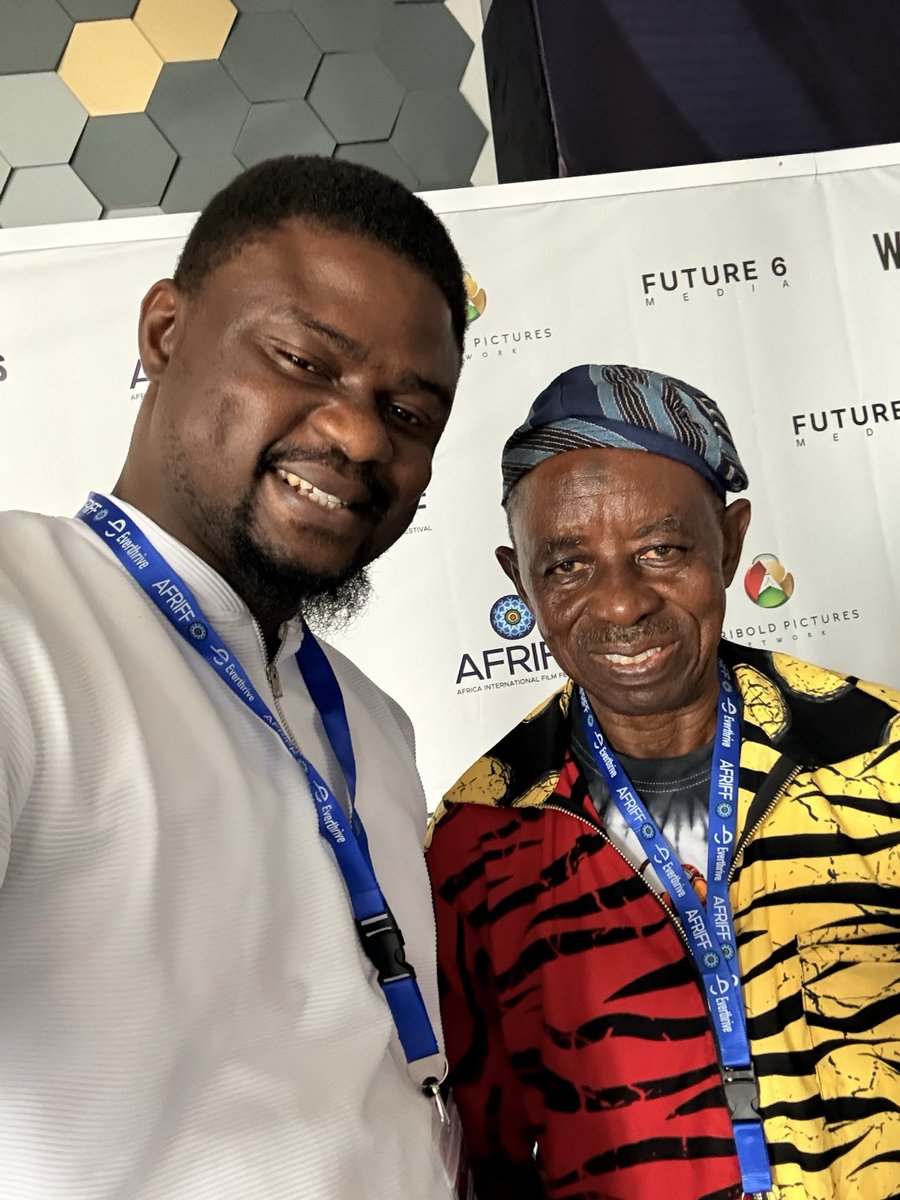
Went to Afriff today and saw three documentaries (Mogabe and Me, Mi Tazi, Amazing Grace Yoruba worlds)
and two films ( Nollybabes and Adanne)
Viva Nollywood!