‼️NIKKE GIVEAWAY‼️
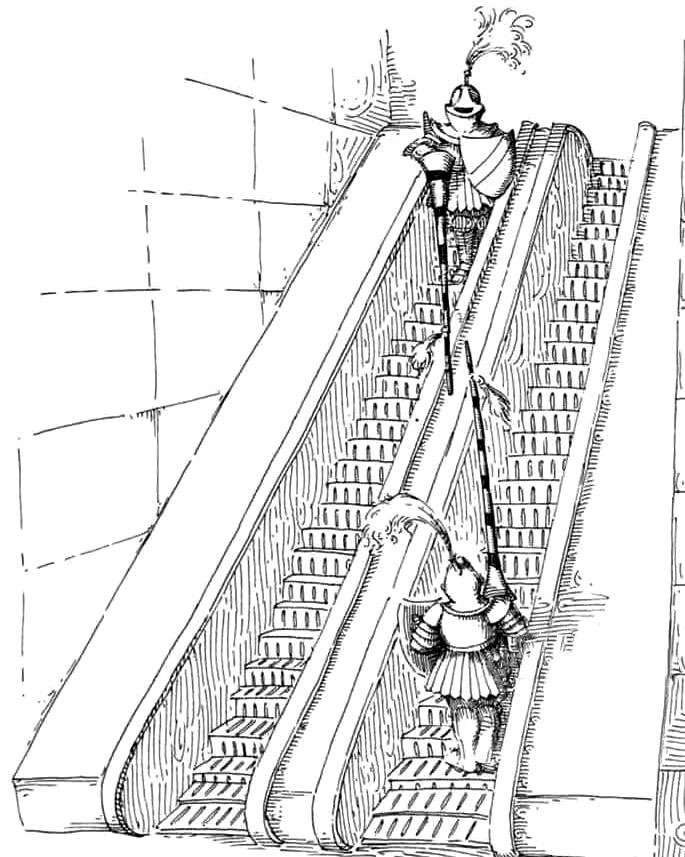
I wanted to give back to the NIKKE community, so I set aside a full set of these lil walking Doros and will be giving one away to 6 different people during my NIKKE concert on the 22nd! There will be a few other giveaways too, so keep an eye out!
To enter:
- like
- RT
- follow @playasia (so you can be contacted if you win!)
「Solicitud para la localización oficial al español de Goddess of Victory: NIKKE」
NIKKEにスペイン語テキストを!と言う署名運動が行われています。未対応言語コミニュティの中でも、スパニッシュ系コミニュティは私個人で見る限りでもかなり大きなものです。あのメキシコのElotes Doroという飲食店も、元は現地のNIKKEコミニュティが翻訳を助け合うために集まり出したのが始まり。
また過去にはサービスから1年半後に仏語テキストが追加された経緯もあるので、署名数が多ければスペイン語版が追加されるかも?
https://t.co/sE6nNnNtgp
-Had one unprotected Outer-Rimjob too many at Ephialtes.
-Moments away from succumbing to the Nikke AIDS.
-Waiting in hospital for cure to AIDS (still wears drip, IV be damned).
-Rejects cure to Nikke AIDS because your son said it’d be mad funny.
-“ENTERTAINMENT!”
-Fucking dies.
Your 40-hour work week was invented by a car salesman who needed you to have free time so you'd buy more stuff. Henry Ford cut his factories to 40 hours in 1926. He'd figured out that mass production doesn't work if your own workers are too broke and exhausted to be customers.
Before Ford, factory jobs during the Industrial Revolution ran 10 to 16 hours a day, six days a week. Kids worked those same hours. Some manufacturing workers clocked 80 to 100 hours a week. The pushback started way before Ford. In 1817, a Welsh factory owner named Robert Owen came up with "eight hours labor, eight hours recreation, eight hours rest." Took 121 years for that to become actual law.
And Ford didn't start this fight. Unions had been organizing for the eight-hour day since the 1860s. In 1919, over 4 million American workers walked off the job across 3,000 separate strikes. Ford was a billionaire who adopted what millions of workers had already demanded. The real legal win came in 1938 when FDR signed the Fair Labor Standards Act, the law that created minimum wage, overtime pay, and a cap on work hours. His Secretary of Labor, Frances Perkins, was the first woman to ever hold a US cabinet job. She spent years battling courts and corporations to push it through. The law originally capped the week at 44 hours. By 1940 it dropped to 40.
I went back and looked at what work was like before the Industrial Revolution, and it messed with my head. An Oxford historian named James Thorold Rogers found medieval workers averaged about eight hours a day. Economist Juliet Schor estimated English peasants after the Black Death (the plague that killed a third of Europe) worked about 150 days a year. Sundays off, plus dozens of religious holidays and festivals. Rogers wrote that workers in the 1890s pushing for the eight-hour day were "simply striving to recover what their ancestors worked four or five centuries ago." The factories didn't invent hard work. They killed the days off.
The legal standard is still 40, but a 2024 Gallup survey found full-time American workers average 42.9 hours a week. Luxembourg, the most productive country per hour on earth, averages 29. In 2025, researchers at Boston College published the biggest four-day-week study ever in a top science journal. They followed 2,896 workers at 141 companies across six countries for six months, all working 32 hours at full pay. Workers slept better, felt less stressed. Over 90% of those companies kept the shorter week for good. A separate UK trial found revenue went up 1.4% and employees quitting dropped 57%.
We've been doing 40 hours for 86 years based on a deal between unions and factory owners, signed by a Depression-era president, originally dreamed up by a man who sold cars. No doctor or sleep researcher ever signed off on that number. The best data we have says we could do with less.
this is arguably one of the most dangerous ways to live as a man even if it looks strong on the surface.
i started working in mining straight out of school, remote sites, long rotations and harsh conditions and out there, weakness gets exposed fast, you carry your own weight, you fix your own gear, you eat what you cook, no one babysits you underground... that environment trains you to rely on yourself or get crushed, literally.
after a few years, that mindset followed me home. i paid my bills early, handled repairs, made my own food, kept my emotions locked up tight and independence became identity. if something broke, i fixed it. if something hurt, i buried it. i didn’t need anyone and i wore that like armor.
but here’s the part nobody tells you: when you build a life where no one is needed, you also build one where no one fits. relationships started feeling inefficient, emotional conversations felt unnecessary, vulnerability felt like handing someone a pickaxe and hoping they wouldn’t swing.
self sufficiency and independence is powerful, yes it makes you competent, steady and hard to shake but if your not careful as a man, it turns into emotional isolation disguised as strength... and unlearning that, learning to let someone stand beside you instead of always proving you can stand alone is harder than any shift underground.