India’s 1999 Nuclear Doctrine emphasized No-First-Use and Credible Minimum Deterrence. However, recent arsenal expansion and modernization efforts have reignited debates over whether its current nuclear posture still reflects those original commitments. @HamdanKhan08#India #NuclearPolicy #NuclearDoctrine
Read Full Article: https://t.co/8F1FBtV3t0
Department of War Restores U.S. Pacific Command Designation.
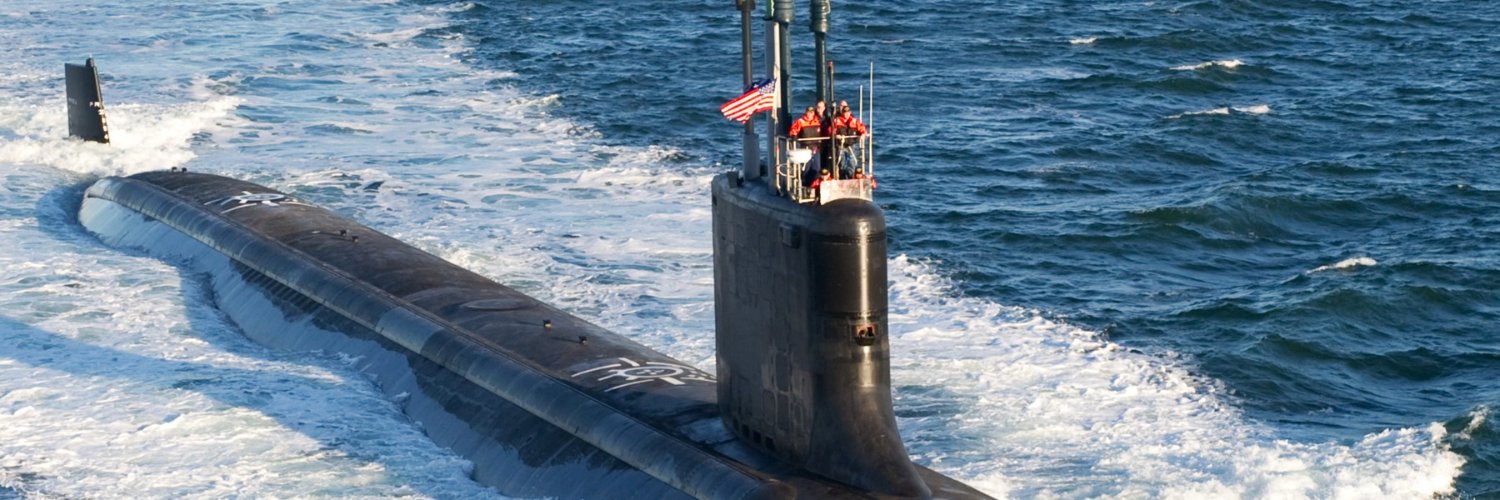
CAMP H.M. SMITH, Hawaii — The Department of War announced today that the U.S. Indo-Pacific Command (USINDOPACOM) will officially restore its name to the U.S. Pacific Command (USPACOM).
Originally established on January 1, 1947, by President Harry S. Truman, the command operated under the USPACOM banner for over 70 years, standing as the oldest and largest of the United States' unified combatant commands.
Restoring the legacy USPACOM designation honors the command’s deep historical roots, fostering a sense of pride and collective spirit among all who serve in the Pacific. From its critical role in establishing the post-WWII regional security architecture to its coordination of joint forces during the Korean War, the Vietnam War, and countless humanitarian operations, the USPACOM namesake carries decades of military heritage and enduring regional partnerships.
USPACOM’s vast area of responsibility—spanning from the waters off the West Coast of the United States to the western border of India—remains exactly the same. The command's fundamental mission and its unwavering commitment to maintaining a free and open theater alongside regional allies and partners are unchanged.
https://t.co/5zeycP2lip
SIPRI Yearbook 2026 now vindicates what I have been documenting for years: India has moved from a so-called recessed, de-mated posture toward operational nuclear warhead deployment and peacetime mating with launchers.
12 warheads are now assessed as deployed with operational forces. The “reliable minimum deterrent” narrative just took a hit.
https://t.co/GwYVSiwamp
#SouthAsia #NuclearDeterrence #SIPRI
1/9
Pakistan is a major regional power and an important partner for the EU.
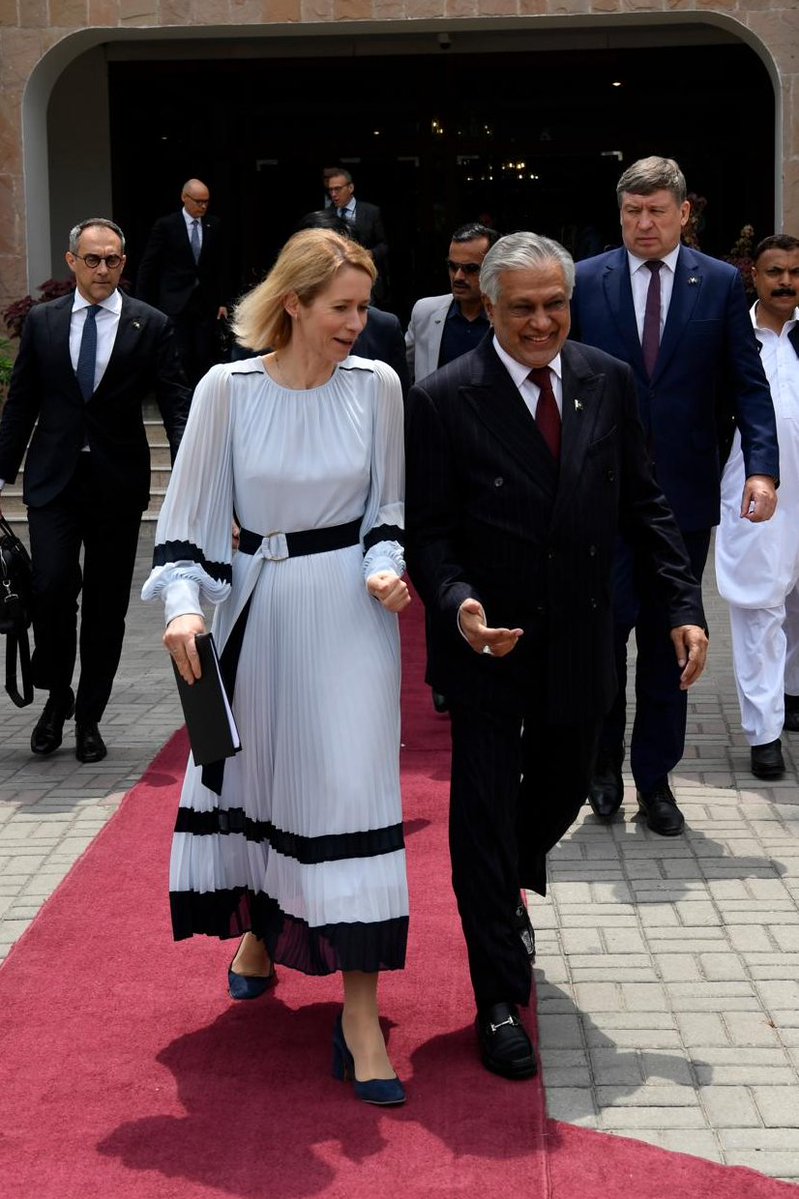
Today in Islamabad, I met with Prime Minister @CMShehbaz and Deputy PM and Foreign Minister @MIshaqDar50 for talks on further strengthening EU–Pakistan ties. I also met Chief of Defence Forces Syed Asim Munir in the Army HQ in Rawalpindi.
I commended Pakistan for its key role in facilitating US-Iran talks.
The EU is Pakistan's largest export destination and Pakistan is the world's leading beneficiary of EU trade preferences, the GSP+.
In Jan 1948, India acknowledged Jammu & Kashmir (J&K) as a dispute & sought UN intervention for settlement. Ergo, there is status of J&K under the Int'l law, i.e., disputed territory & then there is India's so-called position, which contradicts its own position adopted in 1948.
This represents a classic case of either historical illiteracy or cherry picking of historical facts. Worth recalling that India took the Jammu & Kashmir dispute to the UN under UN Charter's Chapter VI, which deals with "Peaceful Settlement of Disputes".
This represents a classic case of either historical illiteracy or cherry picking of historical facts. Worth recalling that India took the Jammu & Kashmir dispute to the UN under UN Charter's Chapter VI, which deals with "Peaceful Settlement of Disputes".
The EU- Pakistan joint communiqué issued after Kaja Kallas’ visit to Pakistan contains the following paragraph:
“The Pakistan side briefed on the issue of Jammu and Kashmir. The EU side briefed on Russia’s war against Ukraine. Both sides expressed support to peaceful resolution of conflicts through dialogue and diplomacy, in accordance with the principles of the UN Charter.”
This paragraph has many very objectionable elements.
By accepting this language in the text the EU accepts that Jammu and Kashmir is an international issue that can legitimately figure in a joint statement between Pakistan and a third party.
The implication is that Jammu and Kashmir remains an unsettled issue territorially.
India’s clear position is that Jammu and Kashmir is an integral part of India.
Worse, an equivalence between Ukraine and J& K is established.
If Pakistan briefs Kaja Kallas on the Kashmir issue, she briefs Pakistan on the Ukraine issue.
The EU is also terming J&K as a conflict, which is Pakistan’s formulation.
The EU is also accepting that the J& K conflict should be resolved in accordance with the principles of the UN Charter.
Even the Chinese formulation contains a reference to bilateral agreements between India and Pakistan.
By bracketing J&K and Ukraine, Kaja Kallas willingly have up that option and played Pakistan’s game.
We should reject this para strongly and state our position on J& K firmly.
"The deterrent imperative of FSD is to offset both India’s growing conventional and nuclear capabilities. Under such policy guidelines, Pakistan continues to produce effective countermeasures to retain a strategic balance in South Asia."
https://t.co/uBP4oLqPSk
"While the then-BJP govt sought regional dominance by leveraging nukes, Pakistan’s nuclear deterrence not only counteract the fallout of India’s nukes, but the equalizer feature of nuclear weapons meant that India’s conventional advantage also stood neutralized."
"Islamabad’s scramble to develop nuclear weapons was rooted in a well-founded security rationale. The May 1974 tests prompted Pakistan to initiate its nuclear weapons program, and 17 days after India’s May 1998 tests, Pakistan tested its nuclear devices."
"Islamabad’s scramble to develop nuclear weapons was rooted in a well-founded security rationale. The May 1974 tests prompted Pakistan to initiate its nuclear weapons program, and 17 days after India’s May 1998 tests, Pakistan tested its nuclear devices."
🌍 SVI Analysis |
"Not only did Pakistan’s nuclear deterrence counteract the fallout of India’s nuclear weapons, but the great equalizer feature of nuclear weapons meant that India's conventional advantage vis-à-vis Pakistan also stood neutralized."
✍️ Penned down by SVI Research Officer Hamdan Khan
🔗 Read More: https://t.co/vM9l2meFg7
On this blessed Eid ul Adha, Pakistan also marks Youm-e-Takbeer — 28 years since Chagai’s thunder restored balance in South Asia.
Our nuclear capability is for stability & peace: same atoms that deter war, also light homes, grow crops & treat cancer for millions.
Restraint by design. Strength by maturity.
#YoumETakbeer #EidMubarak #PakistanZindabad
https://t.co/dcvnb8MbbJ
@RadioactiveFrnd@CISSS_Karachi@ciss_ajk@CISS_Islamabad@SVI_Pakistan@bttn_quetta@OfficialDGISPR
🌍 SVI Analysis |
"With escalation cycles prone to becoming faster and more volatile due to ideological developments within India as well as New Deli’s offensive actions, South Asia’s escalation dynamics may become a direct casualty. Fiery and militarised rhetoric, and its integration into domestic political discourse can push states toward rapid demonstrations of resolve."
✍️ Penned down by SVI Research Associate Maryam Raashed
🔗 Read More: https://t.co/DMm0jowMBK
#SVI #StrategicVisionInstitute
🌍 SVI Analysis |
"Not only did Pakistan’s nuclear deterrence counteract the fallout of India’s nuclear weapons, but the great equalizer feature of nuclear weapons meant that India's conventional advantage vis-à-vis Pakistan also stood neutralized."
✍️ Penned down by SVI Research Officer Hamdan Khan
🔗 Read More: https://t.co/vM9l2meFg7
🧵
Pakistan's Commander Central Command & Commander ARFC Lt. Gen. Nauman Zakaria at IISS Shangri-La Dialogue 2026.
Highlights:
“The operationalization of emerging domains alongside the legacy domains has significantly complicated the strategic stability landscape.” (1/10)
“Strategic stability is not only about military capability; it is also about societal endurance... Strategic stability is ultimately about responsible statecraft.” (9/10)