Did you know? "SAGACIOUS" comes from Latin "sagax," meaning "keen" or "wise." It's related to "sagire" (to perceive keenly), and describes someone with sharp judgment and wisdom. 🦉
#wordoftheday#sagacious#WordsWithBammy
Did you know? "CAPRICIOUS" comes from Italian "capriccio," possibly rooted in "capra" (goat), evoking a goat's unpredictable jumping. It describes someone or something given to sudden, impulsive changes in mood or behavior. 🐐
#wordoftheday#capricious#WordsWithBammy
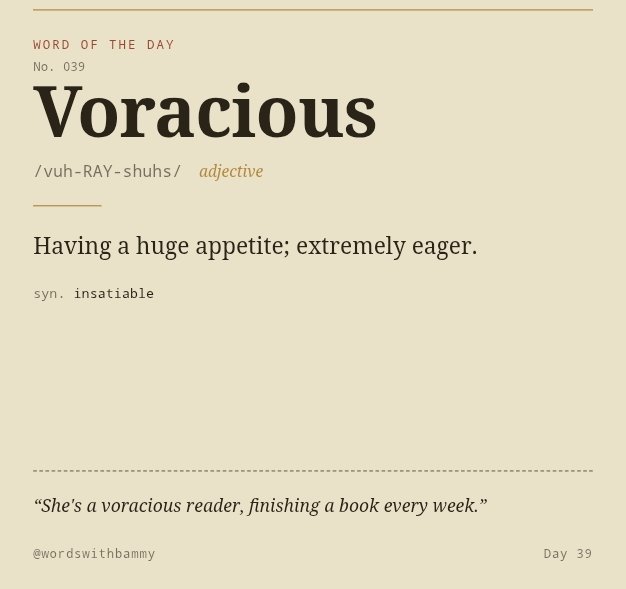
Did you know? "VORACIOUS" comes from Latin "vorax," rooted in "vorare," meaning "to devour." It describes an intense, insatiable appetite, whether for food, knowledge, or anything else. 🍽️
#wordoftheday#voracious#WordsWithBammy
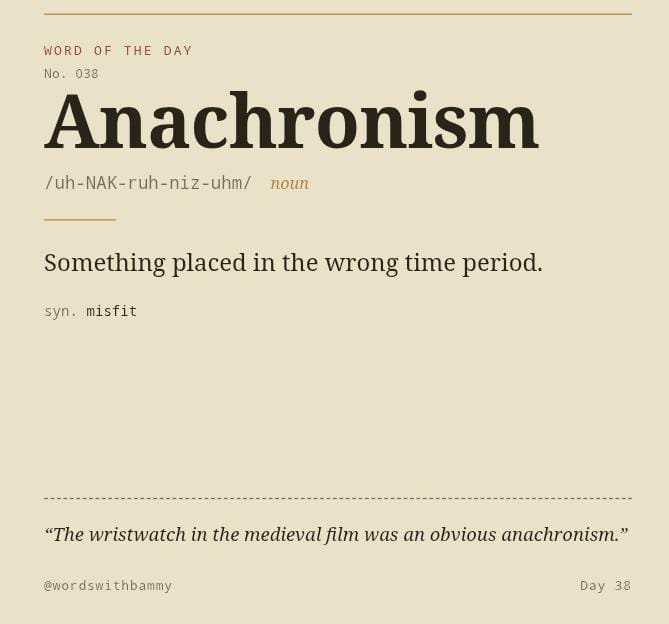
Did you know? "ANACHRONISM" comes from Greek, combining "ana" (backward) and "khronos" (time). It describes something placed in the wrong time period, like a clock appearing in a medieval painting. ⏳
#wordoftheday#anachronism#WordsWithBammy
Did you know? "POIGNANT" comes from Latin "pungere," meaning "to prick" or "to sting." It originally described a sharp physical sensation, and now describes something emotionally touching or deeply moving. 💔
#wordoftheday#poignant#WordsWithBammy
Did you know? "AMBIGUOUS" comes from Latin "ambiguus," combining "ambi" (both ways) and "agere" (to drive or lead). It describes something open to multiple interpretations, unclear, or uncertain in meaning. 🔀
#wordoftheday#ambiguous#WordsWithBammy
DYK? "CATHARTIC" comes from Greek "katharsis," meaning "purification" or "cleansing." Aristotle used it to describe the emotional release audiences felt watching tragic drama, and it now describes anything that provides a similar release of pent up emotion.
#wordoftheday
Did you know? "PLACATE" comes from Latin "placare," meaning "to calm" or "to soothe." It's related to "placere" (to please), which also gave us words like "please" and "pleasant."
#wordoftheday#placate#WordsWithBammy
Did you know? "ENIGMA" comes from Greek "ainigma," meaning "riddle." It's rooted in "ainissesthai" (to speak in riddles), and describes something or someone mysterious and puzzling.
@Giwason09, this one's one of your favourite words. 😀
#wordoftheday#enigma#WordsWithBammy
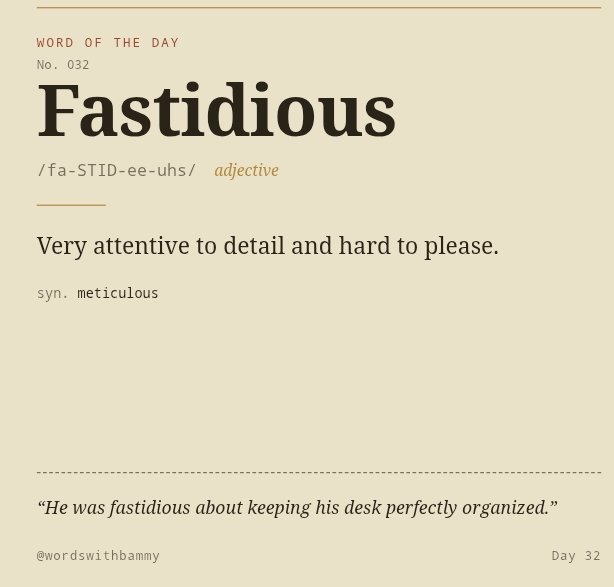
Did you know? "FASTIDIOUS" comes from Latin "fastidium," meaning "disgust" or "loathing." It originally described someone easily disgusted or hard to please, and now describes someone very attentive to detail and accuracy. 🧐
#wordoftheday#fastidious#WordsWithBammy
DYK? "IDIOSYNCRASY" comes from Greek, combining "idios" (one's own) and "synkrasis" (mixture). It originally described a unique blend of personal temperament, and now refers to a distinctive quirk or peculiarity specific to a person.
#wordoftheday#idiosyncrasy#WordsWithBammy
Did you know? "PARADIGM" comes from Greek "paradeigma," combining "para" (beside) and "deiknynai" (to show). It originally meant "pattern" or "example," and now describes a typical model or framework for how we understand something. 🧩
#wordoftheday#paradigm#WordsWithBammy
Did you know? "VICARIOUS" comes from Latin "vicarius," meaning "substitute" (the same root that gives us "vicar"). It describes experiencing something indirectly through someone else's actions or feelings rather than firsthand. 🎬
#wordoftheday#vicarious#WordsWithBammy
Christmas is around the corner
You can place your order for life chicken against December.
We also have regular ones for sale.
Average live weight: 2.6kg
Price: #3,000 per kg
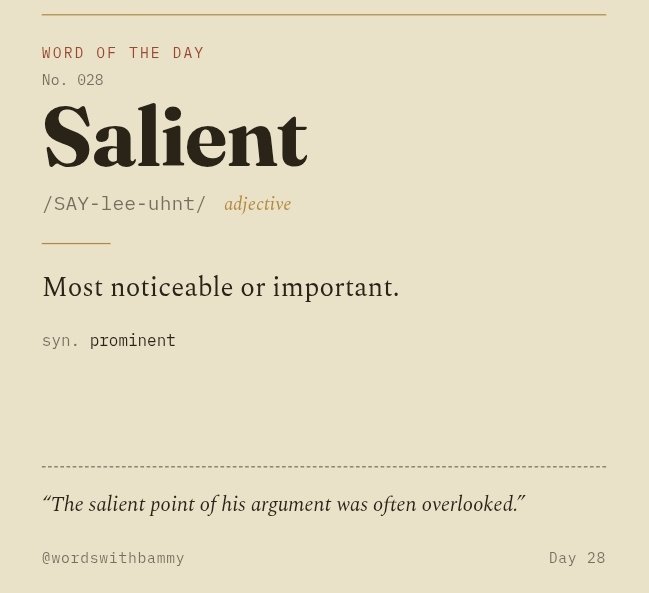
Did you know? "SALIENT" comes from Latin "salire," meaning "to leap" or "to jump." It originally described a leaping motion before evolving to describe something that stands out or is most noticeable. 🎯
#wordoftheday#salient#WordsWithBammy
Did you know? "CACOPHONY" comes from Greek "kakophonia," combining "kakos" (bad) and "phone" (sound). It describes a harsh, jarring mixture of sounds, basically the opposite of harmony. 🔊
#wordoftheday#cacophony#WordsWithBammy