📢Call for Abstracts: Case Studies on Extremist Movements
The World Anti-Extremism Network (WAEN) is pleased to invite scholars, researchers, and practitioners to submit abstracts for case studies on extremist movements in Afghanistan, Iran, Pakistan, and Tajikistan.
✍️📝Authors will be paid an honorarium for their work, and they will also be invited to present their case study at the World Anti-Extremism Network's Annual Conference in Toronto, Canada.
🗓️The deadline to submit 200-word abstracts is June 20, 2026 (11:59 p.m. ET).
For full details and application submission, please click the link below:
🌏 https://t.co/QxZufSWhWB
Now live: WAEN’s May 2026 Newsletter.
From violence in Mali and growing hostility toward Christians in Jerusalem to political repression in Iran, rising antisemitic attacks in the United States, and transnational pressure highlighted by the suspension of RightsCon in Zambia, the WAEN May Newsletter explores key global human rights flashpoints.
📝It also features research by Muhammad Anwar on civil resistance in Pakistan and an article on the erasure of girls’ education in Afghanistan.
👉 Read the full newsletter here:
https://t.co/Wtg6e0awNx
Katherine Barota, Local Coordinator at Students for Liberty, shared her perspective on the ‘Freedom Stage’ of the Toronto Democracy Forum 2025, noting that a lack of pluralism and tolerance poses a serious threat to democracy both locally and globally. She emphasized that rebuilding trust in civic institutions requires greater transparency, more open systems, and protecting the right to peacefully dissent and express public concerns.
Watch the reel from TDF 2025 for more insights.
📰 What happens when millions of girls are denied the right to learn?
Since 2021, the Taliban’s restrictions on girls’ education have reversed decades of progress in Afghanistan, deepening poverty, inequality, and social instability while silencing an entire generation of young women.
Read our latest published article, From Classrooms to Silence: The Erasure of Girls’ Education in Afghanistan on our website written by Aryan Adib, a graduate of the International Human Rights Certificate program.
https://t.co/d9dAcuIxBa
📰 WAEN’s Monthly Infographic Project returns with a focused look at the Israel–Iran War and its regional implications.
This edition highlights key developments, casualty figures, and wider humanitarian and economic impacts of the conflict.
Explore the full infographic series here—swipe to view.
👉For sources, references, and additional information, please visit our website.
🌐 https://t.co/GVjq0XBL8h
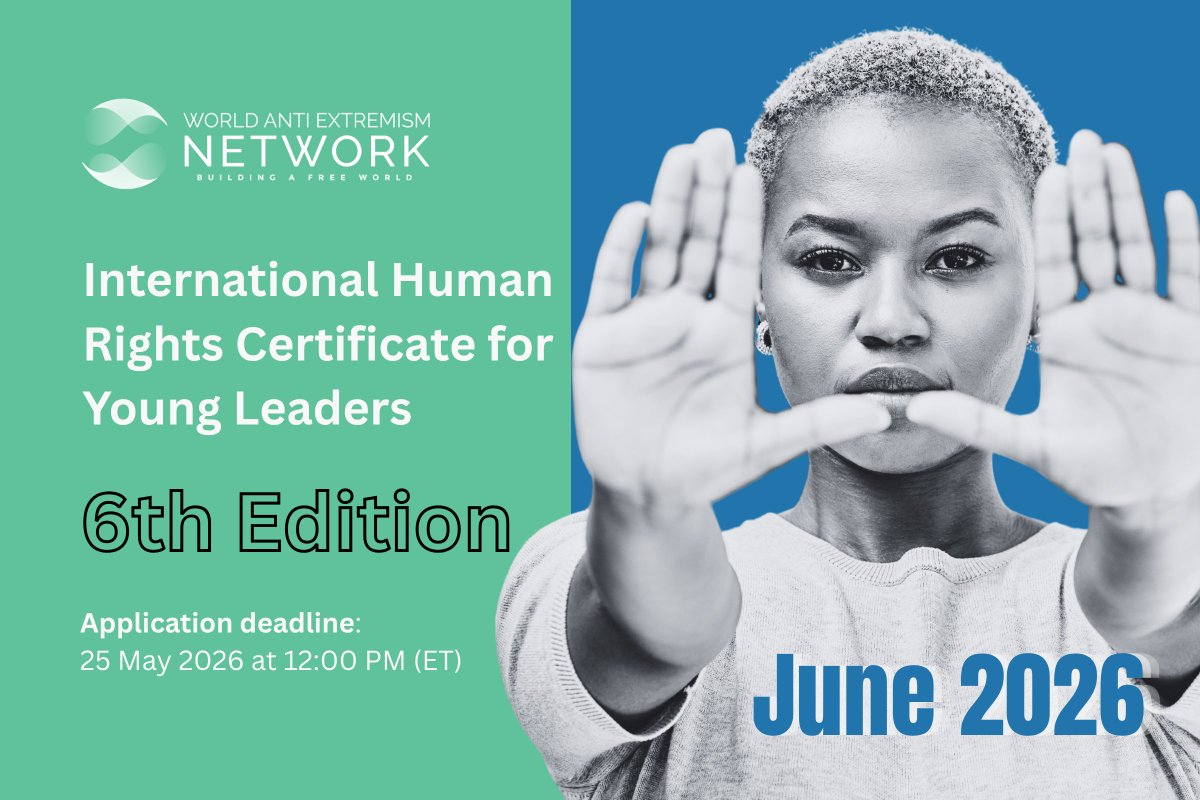
⏳ Only 6 days left to apply for WAEN’s International Human Rights Certificate for Young Leaders!
A one-month online program for emerging changemakers worldwide, now in its 6th edition.
Explore full details and apply before 25th May at 12:00 PM ET:
🚀 Applications are open — take the first step today.
🔗 https://t.co/CwzdLFoh3j
Josh Dehaas (@JoshDehaas), Counsel with the Canadian Constitution Foundation, shared his thoughts on the ‘Freedom Stage’ of the Toronto Democracy Forum 2025, highlighting complacency as a major threat to democracy, noting that many people “don’t bother educating themselves about the issues in elections” or understanding the importance of the rule of law. He also discussed extremism, noting that conflicts arise when people fail to engage in dialogue or listen to one another.
Watch the full interview from TDF 2025 to learn more.
The April edition of Uncensored Watch is here!
🗓️ This month, we unpack major human rights challenges shaping global headlines, from proposed online censorship rules in India and extremist violence in DR Congo and Pakistan, to democratic backsliding in Burkina Faso and harsh sentences against activists in Russia. Cases in Bahrain and Kazakhstan further raise concerns over accountability and rights protections.
📝It also features research papers presented at the Toronto Democracy Forum 2025, including Dr. Waqasia Naeem’s work on digital resistance to authoritarianism in Pakistan and Mustapha Radji’s study on Sufi-led peacebuilding in Algeria.
👉 Read the full April issue here:
🌏 https://t.co/QHMIfA2Vg3
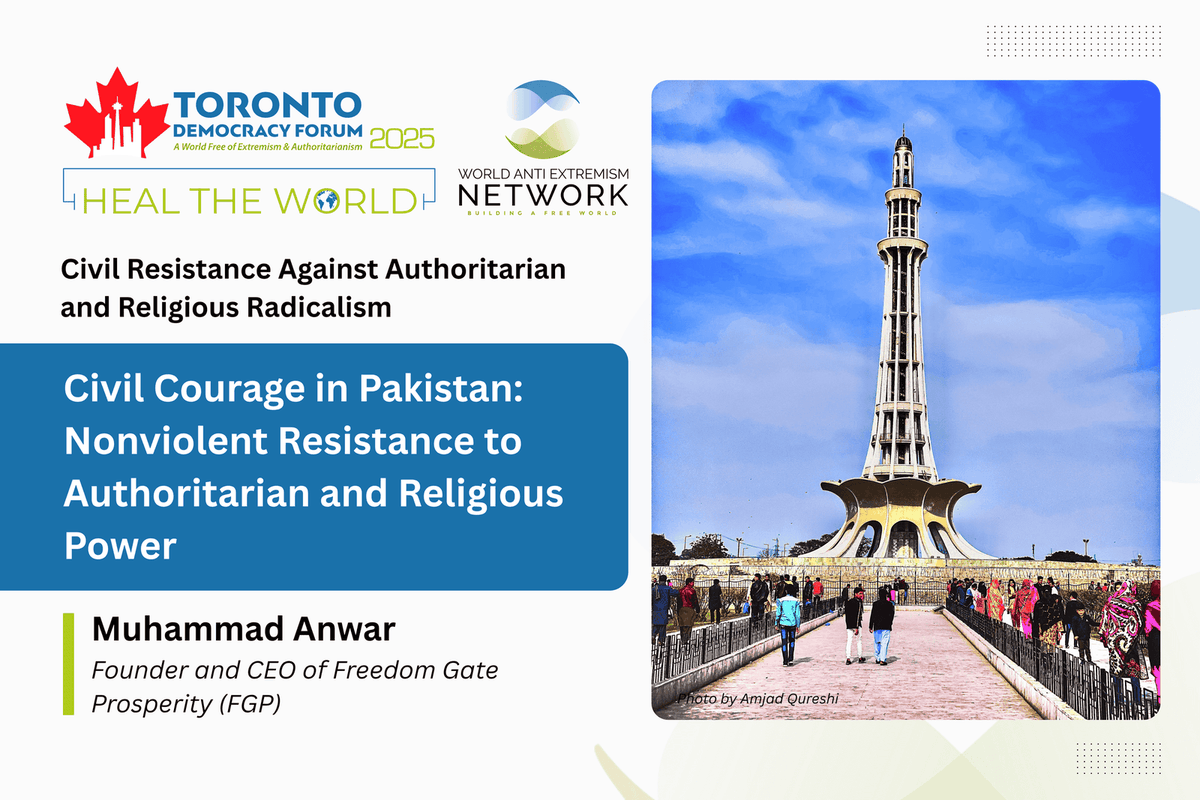
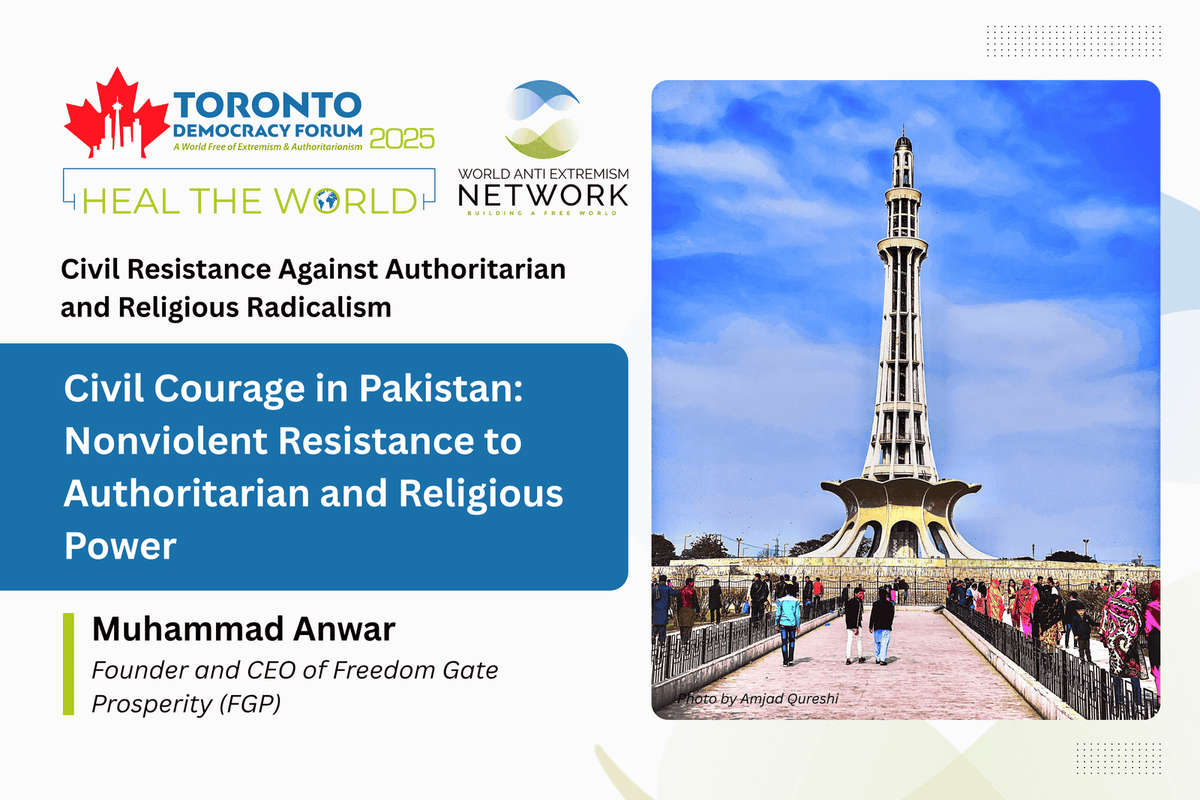
📑 Nonviolent resistance emerged as a powerful response to authoritarianism and religious extremism in Pakistan, with citizens reclaiming democratic space, challenging oppressive laws, and defending cultural expression despite threats and censorship. The solidarity of lawyers, women, youth, and cultural activists showed the power of civic action. These insights are articulated by Muhammad Anwar, CEO of Freedom Gate Prosperity, in his paper “Civil Courage in Pakistan: Nonviolent Resistance to Authoritarian and Religious Power”, presented at this year’s Democracy Forum.
👉 Read the complete paper in the link below:
🌐 https://t.co/Tg0tBOg6UU
📢Applications Now Open!
🕊️✊ The World Anti-Extremism Network (WAEN) is pleased to announce the 6th Edition of the International Human Rights Certificate for Young Leaders, a one-month online program bringing together young leaders, activists, journalists, and professionals committed to defending human rights and freedom in challenging environments.
🗓️ The application deadline is 20th May at 12:00 PM ET. For details and to apply, please visit the website link below:
🌎 https://t.co/CwzdLFoh3j
📰 How can culture, art, and personal stories empower citizens to resist extremism and authoritarianism? How did murals, poetry, and grassroots narratives inspire youth and women to assert their rights in Pakistan? Muhammad Anwar, Founder and CEO of Freedom Gate Prosperity (FGP), addressed these questions in his paper “Civil Courage in Pakistan: Nonviolent Resistance to Authoritarian and Religious Power”, presented at this year’s Democracy Forum.
👉 Read the complete paper in the link below:
🌐 https://t.co/Tg0tBOg6UU
Ayemen Fatima, Associate Director of International Programs at Students for Liberty shared her insights on the ‘Freedom Stage’ of the Toronto Democracy Forum 2025, highlighting the need for more representation and dialogue in polarizing times. On rebuilding trust in civic institutions, she emphasized that “the first step would be honest conversation and acknowledgement that we have a problem,” alongside accountability to ensure elected officials remain connected to the people and the democratic process delivers on its promises.
Watch the interview from TDF 2025 for more insights.
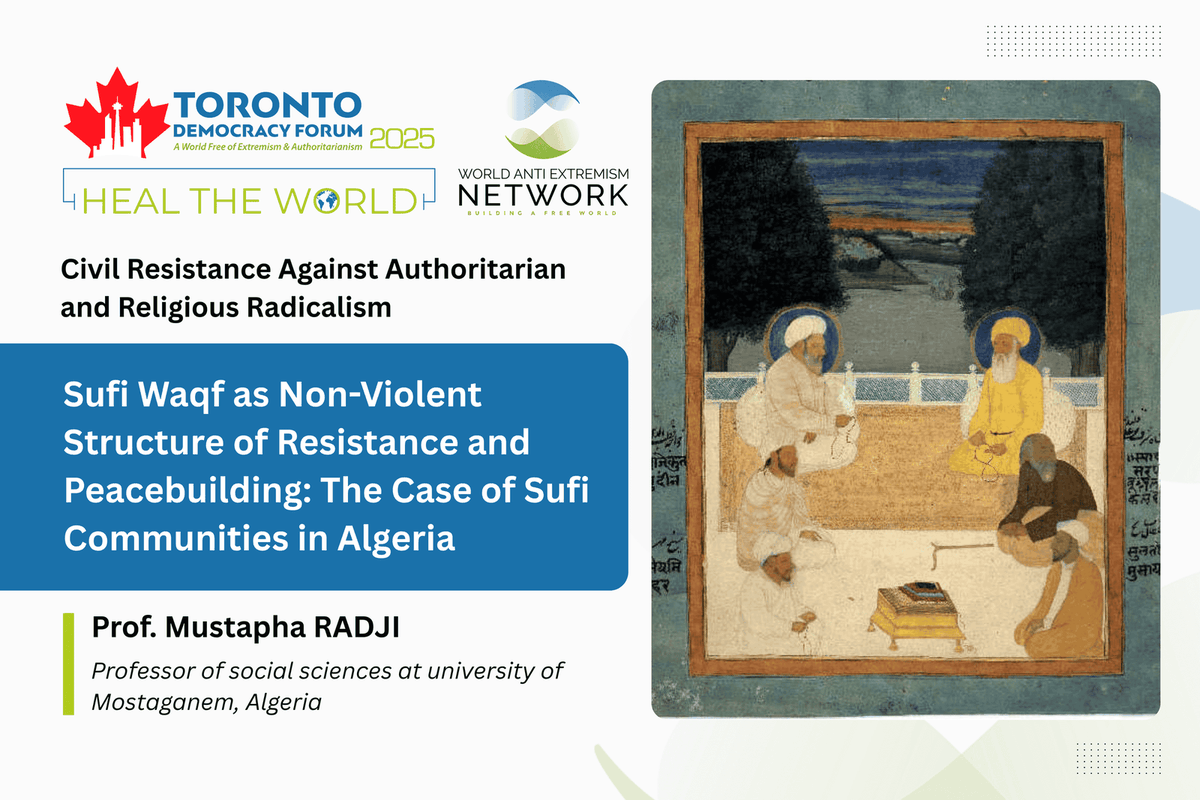
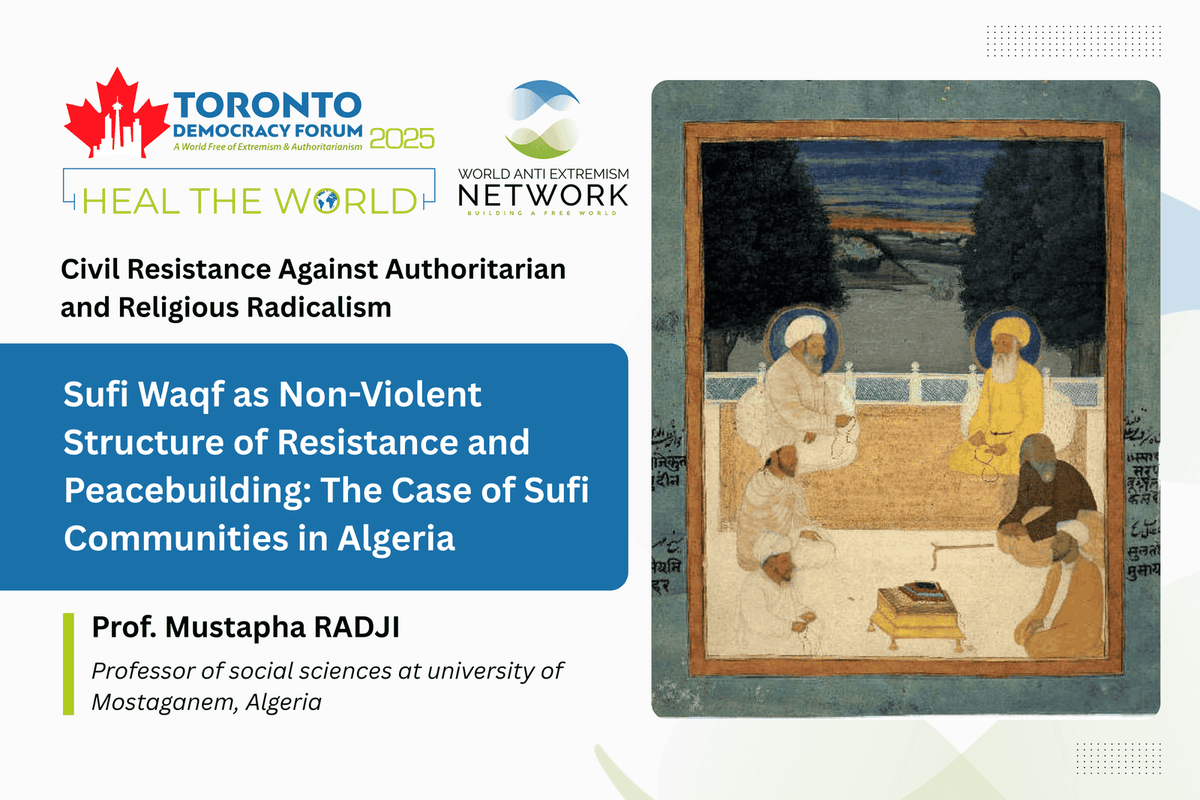
📑 Sufi waqfs also serve as instruments of peace. In his study, Prof. Mustapha Radji (@mradji1971) highlights how the Alawiyya Sufi order preserved cultural identity under repression and promoted reconciliation, culminating in the UN-recognized International Day of Living Together in Peace. The research emphasizes that with supportive legal frameworks, Sufi institutions could play a stronger role in fostering pluralism, civic engagement, and countering extremism in Algeria and beyond.
👉 Read the full paper in the link below:
🌐 https://t.co/bo47b3uRSZ
Giulia Di Lollo, a human rights student at Wilfrid Laurier University, shared her thoughts on the Freedom Stage of the Toronto Democracy Forum 2025, noting that one of the biggest threats to democracy is people seeing each other as “us versus them.” She emphasized that democracy can be strengthened through unity and a shared commitment to the common good, and expressed hope in youth engagement shaping a more inclusive future.
See the full reel from TDF 2025 for more insights.
📰 Prof. Mustapha Radji (@mradji1971), Professor of Sociology of Development at the University of Mostaganem, presented “Sufi Waqf as Non-Violent Structure of Resistance and Peacebuilding: The Case of Sufi Communities in Algeria” at the Toronto Democracy Forum 2025. The paper examines how Sufi waqfs enabled the Alawiyya order to resist authoritarian rulers, maintain autonomy, and provide education, justice, and social support demonstrating a centuries-long tradition of non-violent civic resilience.
👉 Read the complete paper in the link below:
🌐 https://t.co/bo47b3vpIx
📑 Even under increasing authoritarian pressure, nonviolent resistance adapts rather than disappears. In Pakistan, social media platforms have become key spaces for civic expression, where hashtags, satire, and citizen journalism enable dissent while users navigate surveillance, censorship, and AI-mediated control.
An in-depth analysis of these dynamics is presented in Symbolic Dissent in the Digital Age: Multimodal Resistance to Authoritarianism in Pakistan by Dr. Waqasia Naeem, Associate Professor at Minhaj University, delivered at the Toronto Democracy Forum.
👉 Read the complete paper in the link below:
🌐 https://t.co/Xy7oAtNtg2
The March edition of Uncensored Watch is here!
📖This March, we spotlight the frontlines of human rights under threat, from a women’s rights activist killed in Iraq and a land defender denied medical care in China, to harsh Taliban decrees against Afghan women. Crackdowns on Aurat March in Islamabad and arbitrary detentions in Kashmir further reveal shrinking civic space.
📑It also highlights research papers presented at the Toronto Democracy Forum 2025: on how opposition movements resist rising autocracies by Owen Lippert and why Middle East protests often fail to spark lasting change by Fereydoon Rahmani. In addition, WAEN CEO Khalid Ramizy presented The Stolen Republic at the University of Ottawa, reflecting on Afghanistan’s collapse and civil society’s future.
👇Read the full March issue here:
🌐 https://t.co/OhPMO4jOD0
📰 In settings where political expression is tightly restricted, how do people continue to voice dissent? How do humour, symbolism, and digital creativity function as nonviolent forms of resistance under surveillance and censorship? And what broader insights does Pakistan’s experience offer for understanding resistance in hybrid regimes?
These themes are explored in “Symbolic Dissent in the Digital Age: Multimodal Resistance to Authoritarianism in Pakistan”, a paper by Dr. Waqasia Naeem, Associate Professor at Minhaj University, presented at the Toronto Democracy Forum this year.
👉 The paper is available in the link below:
🌐 https://t.co/Xy7oAtNtg2
Andrea J. Prasow (@andreaprasow), Executive Director at Freedom Now, shared her insights on the ‘Freedom Stage’ of the Toronto Democracy Forum 2025, saying she finds hope in “being in a forum full of a range of people, including younger people” and seeing young volunteers actively engaged with current issues. She also reflected on her upbringing, noting that being raised in an activist family taught her that “if you have a voice, you have to use it,” guiding her work as a human rights lawyer and advocate for a safer, more just world.
Watch the full reel from TDF 2025 for more inspiring perspectives.
WAEN CEO @Khalid_Ramizy Speaks at the Canadian Parliament on the Growing Threat of Extremist Ideologies in Canada and Around the World.
Read more at the link below:
https://t.co/XVRNJRXN2e