@Native3rd this same idea appears in cultures separated by oceans and centuries. Courage in the face of death. Honor. The warrior going home.
That man could have understood and fought with warriors anywhere, in any age.
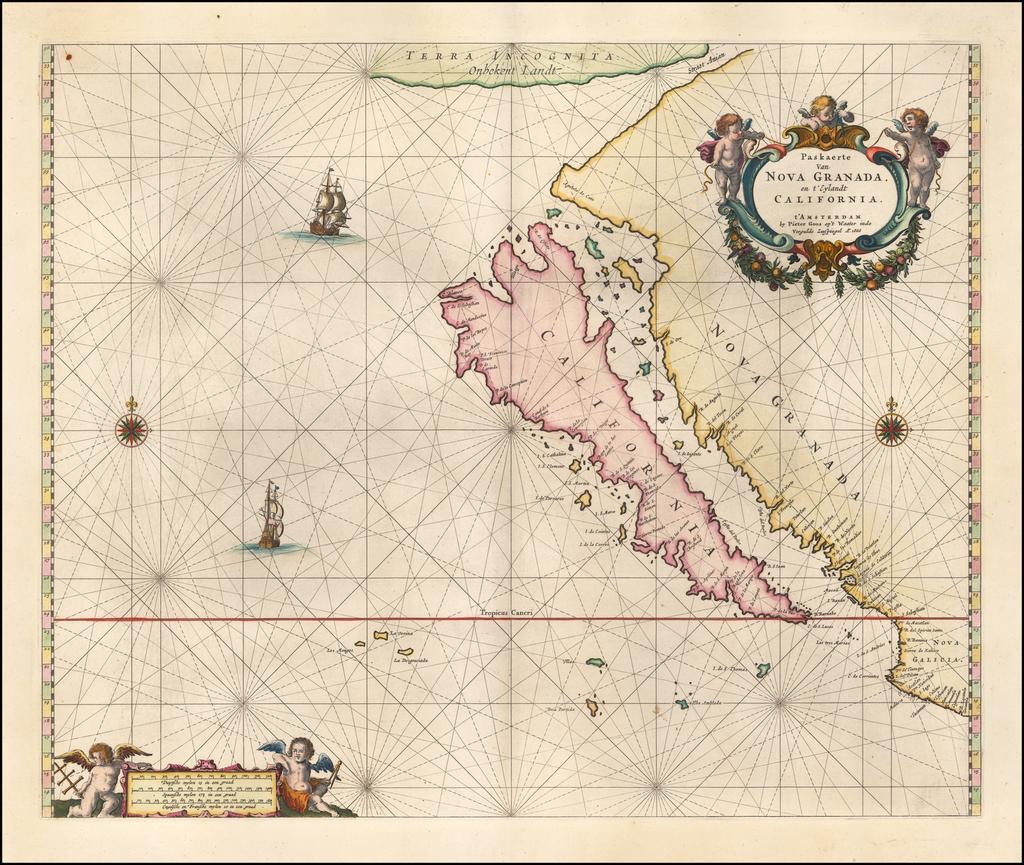
You’ve probably seen one of these old maps before where
California is an island.
But before dismissing it as a 17th-century cartographer getting geography wrong, think about what a cartographer actually did.
These maps existed in a world where geographic information had enormous economic and military consequences.
A badly wrong coastline could cost ships, cargo, time and lives.
Kings, merchants, naval commanders and trading companies depended on men like this.
This particular map was drawn around 1650 by Joan Vinckeboons, a professional Dutch cartographer whose work was used for merchant and military shipping.
And he wasn’t alone.
Multiple professional cartographers depicted California separated from the North American mainland.
So “old cartographers just got it wrong” isn't a very satisfying stopping point for me.
How did multiple professionals come to the same conclusion?
What information were they working from?
That’s what I wanted to find out.
I like this a lot. During the Upper Paleolithic, Ice Age hunter-gatherers in parts of Eastern Europe built shelters using mammoth bones and tusks as structural material. Some of the best-known examples come from sites in modern-day Ukraine, including Mezhyrich, dating roughly 15,000 years ago.
Do you think it resembled this reconstruction drawing?
@wakenminds It’s getting harder than ever to believe the mainstream narrative on things like this. There’s no way we know what happened in the world before
Olympia, Greece. 564 BC.
Arrhichion of Phigalia entered the Olympic Games as the defending champion in pankration, one of the most brutal sports of the ancient world.
There were no weight classes.
You could punch, kick, wrestle, choke and attack joints. Biting and eye-gouging were forbidden. Beyond that, the rules were pretty thin.
Arrhichion had already won pankration at the previous two Olympic Games.
Then came his final match.
According to the ancient account, his opponent got behind him, wrapped his legs around Arrhichion and began choking him.
Arrhichion didn't submit.
Instead, while being strangled, he twisted his opponent's foot so violently that the other man raised his hand and surrendered.
The crowd erupted.
Arrhichion had won his third Olympic championship.
Then they realized he was dead.
The judges reportedly crowned his body as the victor.
More than 2,500 years later, Arrhichion remains possibly the only Olympic champion to win his event after dying during the match.
Historical reconstruction.
Glenrio, Texas. 1967.
For decades, if you drove Route 66 across the Texas-New Mexico border, you passed through this tiny town.
The best historical records show only 30 permanent residents in 1945. But Route 66 transformed Glenrio, not by making it a big town, but by bringing the world to its doorstep
Glenrio had motels, diners, gas stations, bars and a dance hall. At night its neon lights appeared out of the darkness of the High Plains, offering food, gasoline and a bed to travelers headed toward California or Chicago.
Then America built Interstate 40.
In 1975, the new highway bypassed Glenrio.
The cars stopped coming.
The lights dimmed.
The businesses closed.
And a town built around the American road trip simply faded away.
Today, much of Glenrio still stands - but as one of the best-preserved Route 66 ghost towns in America.
Sometimes a town doesn't need a war, fire or disaster to disappear.
Sometimes the road just moves.
Texas Longhorn Motel
The marathon exists because of a story that probably never happened.
A Greek runner supposedly raced 26 miles from Marathon to Athens, announced a grat victory, then dropped dead.
Herodotus, our earliest source for the battle, never mentions it.
What he does describe is even crazier.
Before the battle, Athens sent a professional long-distance runner named Philippides to Sparta for help.
He covered 150 miles through the mountains of the Peloponnese in about 36 hours.
Then he turned around and went back.
Sparta agreed to help, but religious custom kept its army from marching until the full moon.
Athens would have to face the Persians without them.
And the running wasn't over.
After winning at Marathon, the Athenian army learned the Persian fleet was sailing for an undefended Athens.
The soldiers marched 26 miles back and reached the city first.
The famous story gives us one heroic runner.
The real story gave us two extraordinary runs.
We'll post this article tomorrow.
In the meantime, here's a recent article about Hannibal's shocking crossing of the Alps with 37 elephants:
https://t.co/XLh6qLiAEq
I write real history for people who don't want to read dull dissertations. If that's your kind of history, subscribe. 3 essays weekly, $5 per month.
Substack: https://t.co/kGKdHJth7w
If the Black Dinner sounded familiar, there’s a reason.
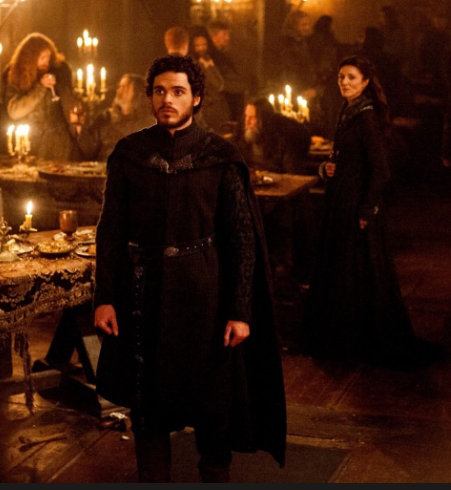
George R. R. Martin has said that two events from Scottish history helped inspire the Red Wedding in A Song of Ice and Fire: the Black Dinner of 1440 and the Massacre of Glencoe in 1692.
At the Black Dinner, teenage members of Clan Douglas were invited to dine at Edinburgh Castle before being seized and killed.
At Glencoe, members of Clan MacDonald were killed after having provided hospitality to soldiers who had been staying among them.
Martin took elements of both stories and created something even more infamous: a massacre carried out under the protection of hospitality.
The Red Wedding was fiction.
The history behind it wasn't.
World Before - somewhere along the timeline.
@westerosies - I thought you might appreciate the history behind this one.
Scotland, 1455.
Three years after King James II personally killed William Douglas inside Stirling Castle, the struggle between the Crown and the Black Douglases reached its end.
William’s brother James became the 9th Earl of Douglas.
He rebelled.
But James II had learned how to defeat a family that had once seemed almost untouchable.
He began stripping away its allies.
Then came the decisive blow.
On May 1, 1455, the Black Douglas forces met the king’s supporters at the Battle of Arkinholm near Langholm.
Three Douglas brothers were there.
Archibald Douglas, Earl of Moray, was killed.
Hugh Douglas, Earl of Ormonde, was captured and later executed.
John Douglas, Lord of Balvenie, escaped.
Their brother James, the 9th Earl, was in England seeking support.
And here is the extraordinary part:
Among the forces opposing the Black Douglases were members of another branch of their own family, the Red Douglases.
The dynasty that Scotland’s kings had struggled for decades to contain was finally broken partly with the help of its own blood.
James II confiscated the Black Douglas lands and titles. Their castles fell. Their political power collapsed. James, the last Black Douglas Earl, remained in exile.
Fifteen years after two teenage Douglas brothers walked into Edinburgh Castle for dinner, the most powerful noble house in Scotland had been brought down.
The Black Dinner hadn't destroyed the Black Douglases.
But it had opened a struggle that ended with their fall.
There was even a verse remembered afterward:
“A Douglas could not have been brought so low,
Had not a Douglas wrought his overthrow.
Images: Historical reconstruction of the Battle of Arkinholm, 1455; Threave Castle, stronghold of the Black Douglases.