At the core of the World of Geniuses lies a scientific understanding of genius as an innate potential embedded in the neural architecture of EVERY human brain.
Have you noticed that handwritten texts are remembered better than printed ones?
Research shows that students who take notes by hand often understand information better and remember it longer than those who type on a laptop. That’s due to how the brain works.
When you write by hand, you cannot write down information completely verbatim. Hence, the brain is forced to highlight the main points, paraphrase the material, and process it more deeply.
Whereas when you type, the “autopilot” mode is activated: a text is recorded faster, but it is comprehended more superficially.
It is precisely slow writing that helps you learn faster.
#learning #parenting #writingcommmunity #potential
Talent and Genius: We often use these words as synonyms. But they represent two completely distinct levels of human potential.
Talent is the ability to perfect existing ideas. It’s mastery operating beautifully within established rules and limitations. A talented professional does what others do, but exceptionally well.
Genius, on the other hand, is a qualitatively different type of thinking. A genius doesn’t just improve the field; they transform it. They rewrite the rules, shatter limitations, and open up entirely new horizons that no one else saw.
Genius, by its definition, requires highly individualized pathways that go beyond any standard curriculum.
Which trajectory are you choosing for your child?
#Genius #talent #potential
Why does the brain not separate the body and the mind?
It is generally believed that some areas of the brain are responsible for memory, others for emotions, and still others for body control. However, newest data indicate that this division might be too simplistic.
According to a study published in Nature Neuroscience, a number of cortical and subcortical areas of the brain are involved in regulation of internal body functions and cognitive processes at the same time. This system includes networks associated with attention, perception, emotions, actions, and control of the body's inner environment.
For instance, the hippocampus is usually considered a key memory center. Yet, evidence from animal studies shows that it may also be involved in regulating eating behavior and processing interoceptive signals related to reward.
Based on the study, the brain doesn’t work as a set of isolated centers. The same networks can simultaneously represent body condition, regulate internal organs, and participate in thinking, emotions, and decision-making. Hence, cognitive processes may be much more closely related to body condition than previously thought.
Source: J. Zhang et al., Nature Neuroscience, 2025. Cortical and subcortical mapping of the human allostatic–interoceptive system using 7 Tesla fMRI
#Neuroscience #genius #teenageers #teenageeer #teeen #neuroscience #Quantum #QuantumGTesting
Until recently, the subtlest electrical signals in neurons were unobservable. Now that has changed.
Neuroscientists at Stanford University developed a highly sensitive tool for detecting the weakest electrical fluctuations in neurons and their synapses — signals that were previously too subtle to be captured via existing methods.
According to the study, a significant portion of neural communication occurred below the sensitivity threshold of available tools. Researchers believe this discovery will allow for a new study of the mechanisms of learning and synaptic transmission.
Source: Wu Tsai Neurosciences Institute, Stanford University.
#Neuroscience #parenting
The 10-Year Rule
Researchers studying experts across science, music, sports, and business noticed a recurring pattern:
Extraordinary achievement usually takes years of deliberate practice. In many fields, the path to mastery often spans a decade or more.
But there is an important detail. Practice alone is not enough.
The greatest results emerge when long-term effort meets natural inclination and strong inner motivation.
People tend to persist longer in areas that genuinely match the way they think. That is why understanding a child's strengths early can be so valuable.
The earlier we identify where a child's natural abilities and interests align, the easier it becomes to direct effort where it can create the greatest long-term impact.
#teenageers #teenageeer #teeen #neuroscience #Quantum #QuantumGTesting
University Decisions & the Future of Work
For many parents, a familiar hope guides the future:
“I want my child to get into a good university.”
In a world where industries shift quickly and new professions appear overnight, how do we know which university is right?
How do we choose a major in a field that will still exist — and still matter — by the time our children graduate?
And what if a child spends years studying… only to discover that the chosen path was never truly theirs?
There is a different approach.
The Quantum G Test beta helps parents understand the unique neural architecture of their child’s brain — the innate patterns that define how they think, process information, and solve problems.
It does not measure knowledge.
It does not measure IQ.
It reveals who the child is at their core.
When a child grows in alignment with their natural area of genius, they become:
• more confident
• more motivated
• more resistant to burnout
• and naturally competitive in the field that fits them
And importantly:
Their genius is unique — impossible to copy or replace.
Not even by AI.
Choosing a university becomes easier when you understand who your child was born to be.
#QuantumG #WorldofGeniuses
"No pain, no gain." "Study harder." "Under pressure." We’ve been taught that stress builds character. But neurobiology says something completely different.
Neuroscientists at McGill University found that chronic, prolonged stress spikes cortisol levels, which physically disrupts memory formation in the hippocampus (published in Nature Reviews Neuroscience).
Learning under pressure does not speed up cognitive development. It completely blocks it.
Real breakthroughs, exceptional performance, and genius thinking only happen when the brain is in a "flow state" — driven by genuine curiosity, interest, and positive reinforcement.
If your child's education feels like a constant battlefield, you are fighting against their biology.
#stress #curiosity #neurobiology
Trust your eyes? Einstein or Monroe? The Hybrid Image Illusion Explained
Not a special effect. This is a hybrid image — the result of overlaying two different spatial frequency ranges of the same picture.
The image is built from two layers, each processed with a different filter.
Einstein's portrait is preserved in high frequencies — the sharp contours: wrinkles, lines, fine facial details.
Monroe's portrait is processed with a low-pass filter — only the large light-and-shadow shapes remain, with no fine detail.
Our visual system processes these frequency ranges separately, depending on visual acuity and viewing distance.
At high acuity — up close — the high-frequency signal dominates, and the brain reconstructs Einstein.
When acuity drops — at a distance, or when the image is blurred — the high-frequency information is lost first, and the low-frequency signal takes over. The brain reconstructs Monroe's face from the remaining large-scale shapes.
#opticallillusion #illusion #neuroscience #brainfacts #brain #Einstein
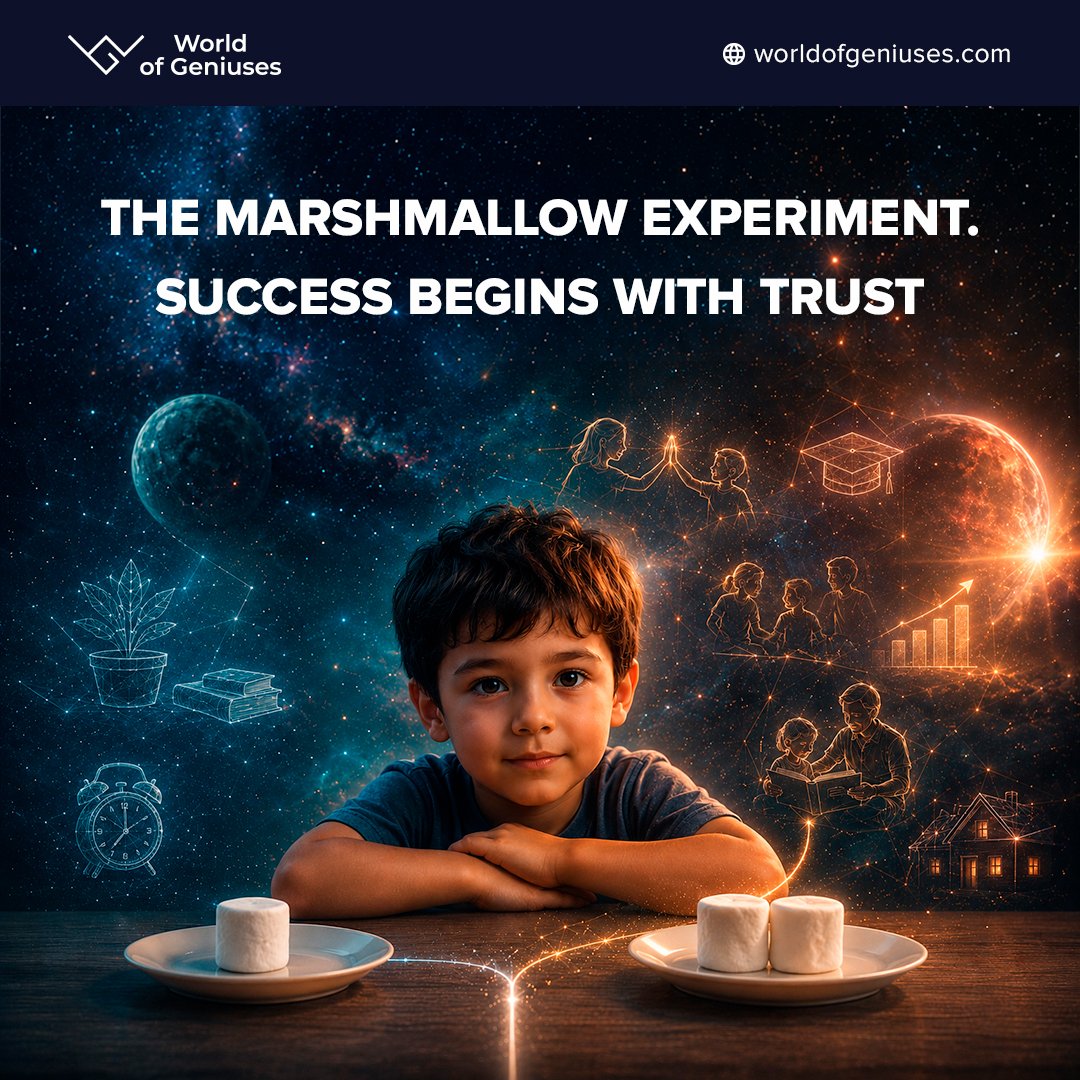
What did the famous Marshmallow Experiment really teach us?
In the 1970s, researchers gave children a choice:
Eat one marshmallow now.
Or wait and receive two later.
For many years, this experiment was seen as proof that self-control was the key to future success. But later research revealed a more complex picture.
Children who grow up in stable, supportive environments are more likely to wait.
Why?
Because they learn to trust promises. To believe that effort pays off. To believe that investing in the future is worthwhile.
The most important takeaway?
Success is not determined by willpower alone.
Environment matters. Support matters. Trust matters.
Every child develops within a network of relationships.
Sometimes the greatest gift an adult can give is not pressure, but the confidence that curiosity, effort, and growth are worth pursuing.
#marshmallow #experiment
How does the brain build billions of connections if DNA cannot contain separate instructions for each of them?
According to research, nature solves this problem much more elegantly. The brain doesn't store a complete “wiring scheme.” Instead, it can create a system of internal addresses for neurons in the course of development.
The idea is that when cells divide, they leave behind molecular “hints.” Gradually, those “hints” form a map: which cells are closer to each other, which regions are related, and where a future axon should roughly grow. In other words, a neuron doesn't need to “know” the entire path in advance. It simply reads those “hints” step by step, like a route.
Therefore, the brain's uniqueness may actually originate not from one “program,” but from the way its own unrepeatable map of connections is assembled step by step during development. This very map contains a person's unique potential — their way of thinking, their talents, and their own form of genius.
#Science #brain #DNA
Have you ever known something before you could explain it?
Many people call it intuition. Neuroscience offers an interesting perspective: intuition may be the brain recognizing patterns before conscious awareness catches up.
It isn't magic. It's the result of incredibly fast information processing happening beneath the surface.
Understanding how the brain works helps us better understand how children learn, think, and solve problems.
Swipe through to see what neuroscience says about intuition.
#Science #brain
Chronic inflammation isn’t just a bodily process. It affects brain functions directly.
According to research from 2025, neuroinflammation markers offer new opportunities for early diagnosis of cognitive and emotional disorders. Neuroinflammation is associated with impaired synaptic transmission and decreased neuroplasticity in key cognitive areas of the brain.
Neuroscience believes that the immune system condition and the levels of inflammation in the body have a measurable effect on cognitive functions. Scientists consider this to be one of the mechanisms connecting physical health and brain operation.
Source: npnHub, Top Neuroscience Discoveries, 2025; Neuroinflammation and Cognitive Functions
#neuroscience #health
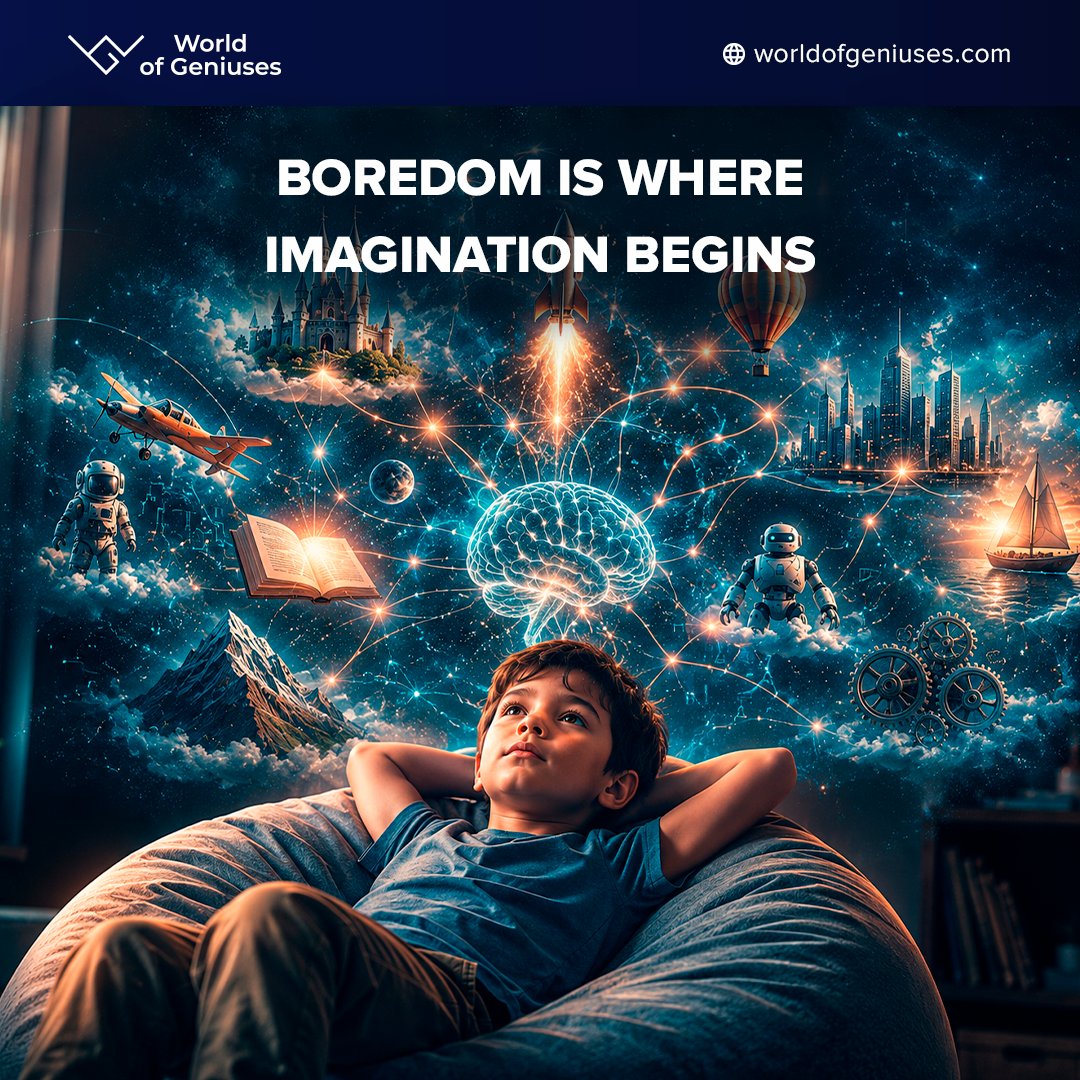
Why boredom can be good for the brain
Many parents feel they need to keep children busy every minute. Neuroscience suggests something different. When the brain is not focused on an external task, a network known as the Default Mode Network becomes active.
This network is associated with:
• imagination
• creativity
• self-reflection
• insight
Interestingly, many breakthrough ideas appear not during intense work, but during periods of rest, walking, daydreaming, or quiet reflection.
The brain is still working. It is connecting ideas. Finding patterns. Building new possibilities. Not every free moment needs to be filled. Sometimes creativity begins where constant stimulation ends.
The challenge is not to eliminate boredom completely.
The challenge is to create enough space for imagination to emerge.
#creativity #science #neuroscience
Why can we do stupid things in a stressful situation?
According to research, stress disrupts functioning of working memory — the system that helps keep information in mind and make decisions.
This is due to changes at the level of neural connections: signals in the prefrontal cortex become weaker.
Consequently, the brain is worse at “collecting” a picture and more often relies on automatic reactions.
That is why, in a stressful situation, we can act easier than we’re actually able to.
#stress #mentalhealth #brain #science
Even if a teenager doesn’t use their phone before falling asleep, the very presence of the phone in their bedroom is associated with sleep impairment.
A meta-analysis by Carter et al. (Jams Pediatrics, 2016) that combined data from more than 125,000 children and adolescents has shown a link between using electronic devices at bedtime and:
— shorter sleep,
— poorer sleep quality,
— and increased daytime sleepiness.
Moreover, sleep problems were observed even in those kids who simply had their devices nearby at night.
According to research, sleep quality can be affected not only by using a phone before bedtime, but also by its presence next to one’s bed. Scientists believe that the brain keeps perceiving the device as a potential source of information that can interfere with proper transition into sleep mode.
#parenting #genius #teenager #sleep
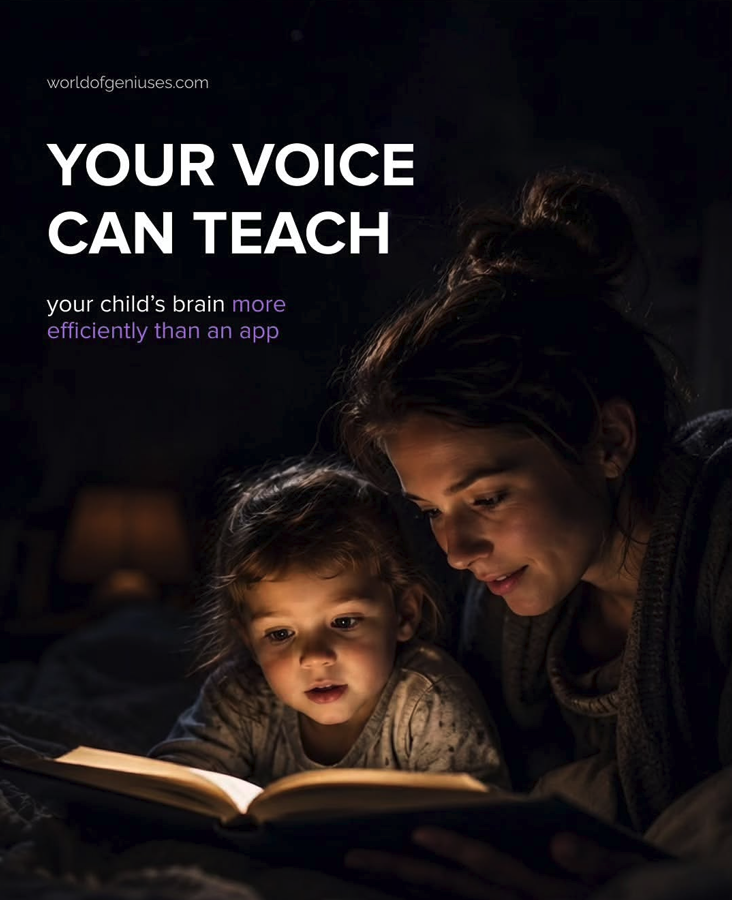
A 2025 fMRI study found that parental storytelling activates brain networks linked to attention, executive function, sensory processing, and future reading.
It’s not just a story that matters. What matters is the connection between a parent and their child.
Your voice helps the brain listen, imagine, and collect meanings. Joint reading isn’t an “extra” activity.
It is development of the brain.
Science keeps showing that learning isn’t only about information. For a little child, relationships where this information emerges are also important.
Source: Pediatric Research. Engagement of networks related to attention, executive function, and sensory processing during parental vs experimenter story-listening: an fMRI study.
#parenting #genius #storytelling
Researchers have digitized just 1 cubic millimeter of the human brain.
The resulting file took up 1.4 petabytes of data.
In that microscopic volume, there were about 57,000 cells and over 150 million connections between them.
The deeper scientists look into the brain, the more complex its structure turns out to be.
#brain #science #research
The protein that was considered a marker of Alzheimer's disease turned out to be necessary for a newborn's brain.
According to a 2025 discovery, healthy newborns have high levels of tau protein. In the early period of life, this protein apparently stabilizes developing neurons and naturally decreases only afterwards. This fundamentally changes the idea of the role of tau protein.
Neuroscientific data show that the same protein can perform fundamentally different functions, depending on the stage of brain development. Researchers believe that understanding this could open up new approaches to the prevention of neurodegenerative diseases.
Source: Healthcare Research Worldwide, Neuroscience in 2025; Science, 2025
#alzheimer #newborns #tauprotein #protein #neuron #neuroscience #mentalhealth #HealthyAging
Why does the brain fixate gaze on certain details?
A human makes about 200,000 eye movements every day. Yet, before each movement, the brain decides how long to fixate gaze at a given point.
According to a study published in Nature Neuroscience, longer fixations do not necessarily mean that an image is harder to recognize. In an experiment with MEG and eye movement tracking, participants viewed 4,080 natural scenes, while researchers analyzed which details held their gaze longer.
It turns out that fixation duration is more closely associated not with visual complexity, but with subsequent encoding of information into memory. The more memorable a part of an image is, the longer the brain holds gaze on it.
The study indicates that eye movements are controlled not only by perception, but by memory too. The brain doesn’t just fixate gaze where it’s difficult to recognize an object, but where information may be important to retain.
P. Sulewski et al., Nature Neuroscience, 2026. Fixation duration on natural scenes is explained by memory encoding not processing demand
#brain #memory #neuroscience