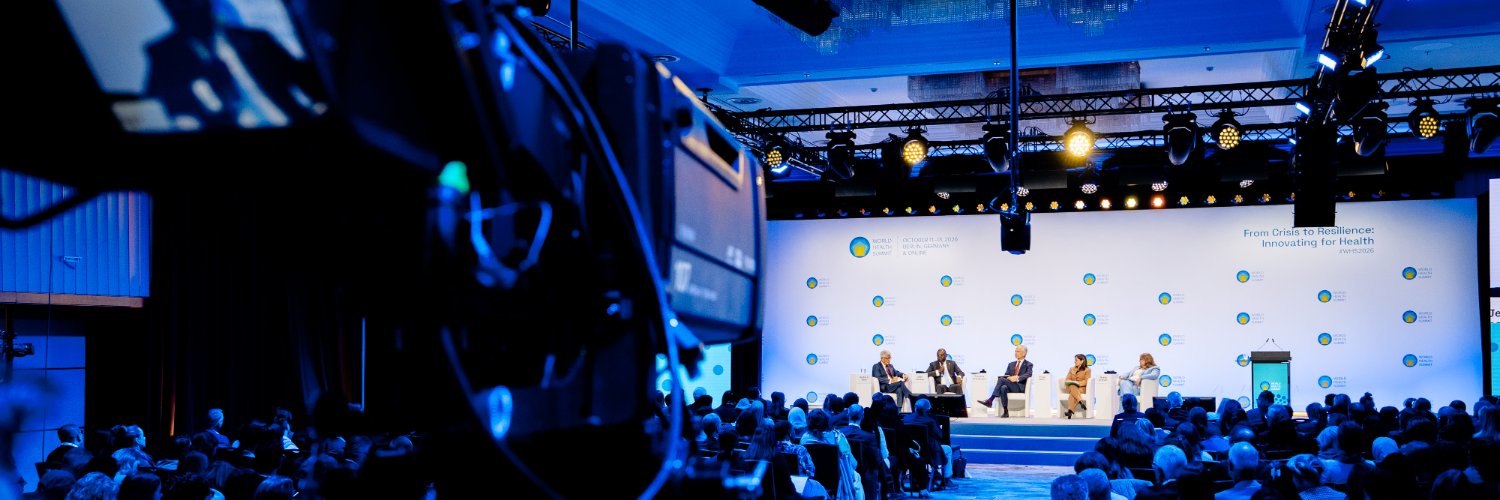
🌍 The leading platform for global health
WHS Regional Meeting 2027, May 7–9 | Hong Kong, China
World Health Summit 2027, October 10–12 | Berlin, Germany
The WHS Regional Meeting 2026 Report is out
In April, more than 3,000 participants from over 80 countries came together at the United Nations Office at Nairobi under the theme “Reimagining Africa’s Health Systems: Innovation, Integration, and Interdependence”, hosted by Aga Khan University.
A central message emerged: advancing health sovereignty requires greater African ownership, mutual accountability, and global partnerships on equal footing. The report further highlights the need to turn the ideas and partnerships built in Nairobi into concrete policies, investments, and practical solutions for stronger health systems.
These priorities were carried forward in the Nairobi Declaration 2026, presented at the WHS 2026 Opening Night in Berlin. Signed by Africa CDC Director General Jean Kaseya, WHO Regional Director for Africa Mohamed Yakub Janabi, WHS President Axel R. Pries, and Aga Khan University’s Lukoye Atwoli, the Declaration affirms that Africa’s health future must be shaped by African priorities, evidence, and leadership, supported by equitable global partnerships.
“We from the Nairobi Summit call for a global health architecture in which Africa is not only a recipient of solutions but a co-creator, co-investor, co-producer and co-author of the global health agenda.” - Lukoye Atwoli, WHS International President 25/26
📥 Read the full report: https://t.co/yrG2UyJnH0
#WHSNairobi2026
🏥 What happens when a life-saving treatment is followed by an infection that antibiotics can no longer treat?
Antimicrobial resistance (AMR) is a serious threat to cancer patients, whose weakened immune systems can make infections particularly dangerous.
At #WHS2026, Dame Sally Davies spoke about the often-overlooked role of AMR in patient deaths and why greater transparency and awareness are urgently needed.
💬 During World AMR Awareness Week her message is a reminder: We need to share patients' stories and make the human impact of AMR visible.
#WAAW2026 #AMR #AntimicrobialResistance #PatientSafety #CancerCare
🌡️ Is El Niño a health problem?
At #WHS2026, Dr. Patricia Ferrini Rodrigues, International Partnerships Manager at Instituto Ar, explained how Brazil changed course: El Niño is now also treated as a health problem.
💬 With a very strong El Niño underway and #COP31 wrapping up in Antalya, her statement is a reminder: preparing for climate shocks means preparing health systems too.
#ElNiño #ClimateAndHealth #GlobalHealth
"A government that gives away the patient data of their own country is betraying the people they represent." @RBaptista (@healthai_agency) on data, aid and sovereignty.
🎥 Live from #WHS2026@WorldHealthSmt on the #InsideTrack from @TDRnews. Check out the full episode: 👉 https://t.co/xSJLBs5okz
The health community doesn’t always see the full picture, unlike a finance minister, says @CKyobutungi
(@aphrc). What's missing are the tools to show how health produces wealth.
🎥 Live from #WHS2026@WorldHealthSmt on the #InsideTrack from @TDRnews. Check out the full episode: 👉 https://t.co/xSJLBs5okz
In our latest edition of Curated Conversations, Prof. Jean-Jacques Muyembe-Tamfum (@MTamfum), Director-General of the National Institute of Biomedical Research (INRB), DRC, and 2026 @virchowprize co-laureate, reflects on lessons from decades of outbreak response, gaps in epidemic preparedness and what African countries need to lead their own infectious disease research.x
Catch the full conversation: https://t.co/6rkWlyglcO
#CuratedConversations
We have the tools. So, what is standing between us and ending AIDS?
The Executive Director of @UNAIDS, @Winnie_Byanyima, has a compelling answer. What could it be? 🤔
Hear from her in the upcoming episode of our Curated Conversations, featuring our MD, @VIhekweazu, at #WHS2026. The episode will be published on Friday, 27 November. Stay tuned!
#CuratedConversations #EndAIDS
How can health systems become more resilient to climate change?
At #WHS2026, Katrín Jakobsdóttir, former Prime Minister of Iceland and Chair of the Pan-European Commission on Climate and Health, highlighted three key priorities:
✅ Training health workers to address climate-related health challenges
✅ Adapting healthcare infrastructure to extreme weather
✅ Reducing emissions from health systems
With #COP31 underway in Antalya, her message underscores why building climate-resilient health systems must be part of the global climate agenda.
#Health #COP31 #ClimateAction #ClimateCrisis
World AMR Awareness Week starts today 💊
Antimicrobial resistance is not a future threat. It is already here, and we can all help control it.
This year’s theme is “One Health, one action: Prevent AMR now”, a reminder that the health of people, animals, plants and the environment is deeply connected.
Small everyday actions can help keep life-saving medicines working.
Swipe to learn what AMR is and what you can do 👉
#WAAW #AMR #OneHealth #GlobalHealth
“People don’t live in silos. We need to move away from the fragmentation.”
At #WHS2026, Inger Ashing, CEO of Save the Children International, called for a more holistic approach to children’s health, built on strong community health systems that reach every child.
#GlobalHealth #ChildHealth
Funding Down, Sovereignty Up?
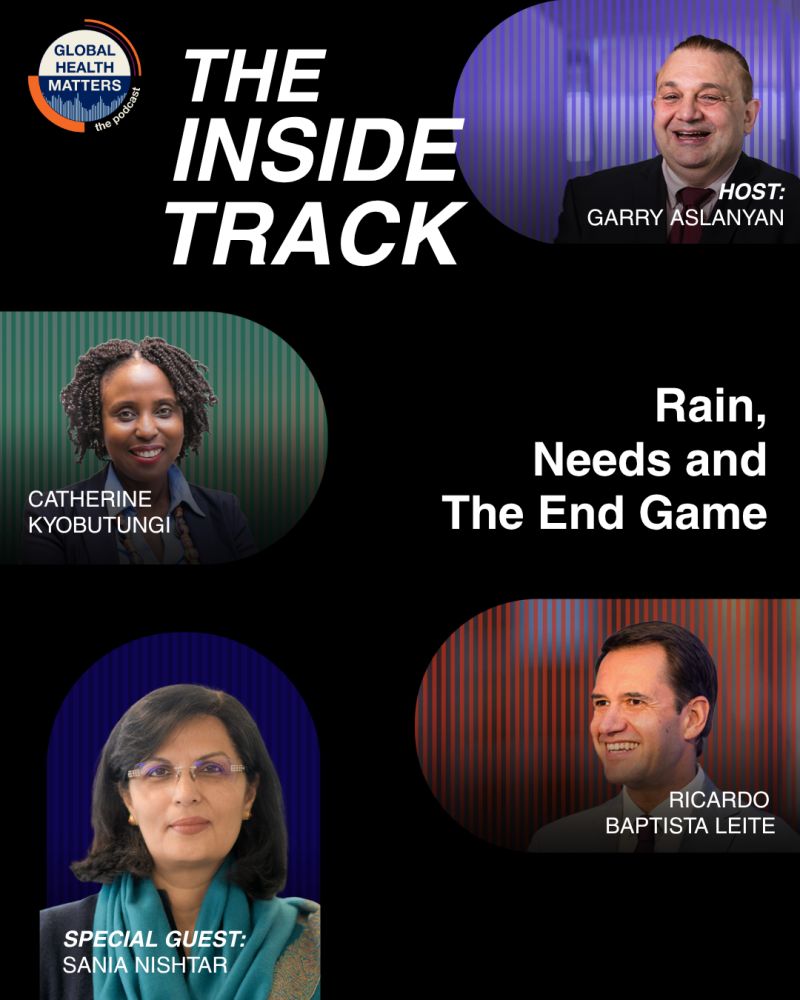
Recorded live at the @WorldHealthSmt in Berlin, the Global Health Matters podcast examines the Accra Reset and its implications for global health financing, domestic resource mobilization and decision-making power.
Host Dr. @GarryAslanyan is joined by @CKyobutungi, @SaniaNishtar and @RBaptistaLeite to explore a central question: Who pays, who decides, and who holds the power?
🎥 Watch the full conversation: https://t.co/Dsp6tO09Bj
@gavi@UNITE_MPNetwork@aphrc@TDRnews
"The summit is only a point in time where many things come together, but the real work has to be done in between.”
At #WHS2026, Axel R. Pries, President of the World Health Summit, reflected on what needs to happen before the next Summit: turning new ideas, innovations and concepts into action in workplaces, to improve health in every corner of the world.
#GlobalHealth
“If we want to sustain human health, we have to protect our planet.”
Maria Paola Chiesi, Chiesi Group, at #WHS2026
As COP31 is underway in Antalya, her words from Berlin feel more relevant than ever.
At #WHS2026, the speakers from the Global Health Lab on low-carbon health systems agreed there is no trade-off between protecting people and protecting the planet. Health systems face the impacts of climate change while producing around 5% of global emissions, so they need to do both.
Solutions already exist, but action is still scattered. Speakers called for clear rules, shared standards and stronger partnerships, because the real cost is inaction.
Watch the full session : https://t.co/fiFVsYmyvw
#COP31 #ClimateAndHealth
“When we cut greenhouse gas emissions, we reduce the risks of dangerous climate change, but we also, in the near term, benefit human health.”
At #WHS2026, Andrew Haines, Professor of Environmental Change and Public Health at the London School of Hygiene & Tropical Medicine, pointed to two ways of protecting health in a changing climate: adapting to the changes we can no longer prevent, with better early warning systems, and cutting emissions, a win-win for both the planet and people’s health.
As #COP31 takes place in Antalya, his message is a clear reminder: climate action is health action.
#GlobalHealth #COP31
🔬 The WHS Academic Alliance is joining Together for Science and Health, a global movement initiated by the World Health Organization.
Science is essential to improving health. Yet misinformation and declining trust can undermine people’s confidence in scientific evidence and shape decisions about prevention, treatment and care. Strengthening trust and access to reliable, understandable health information is a shared responsibility.
Launched today, the movement brings together scientists, policymakers, health professionals and communities to strengthen trust in science, promote trustworthy health information and support evidence-based decision-making.
As the scientific network of the World Health Summit, the WHS Academic Alliance brings together leading academic institutions from across all continents. It fosters international collaboration, connects scientific expertise and supports evidence-based health policy and practice.
By joining the movement, the Alliance builds on its work and contributes to a collective effort to strengthen the relationship between science and society for better health.
🔗 Learn more about the movement: https://t.co/ZSiFGy6e23
#WHSAcademicAlliance
The WHS Academic Alliance at #WHS2026 🌍
💬 Bringing academic expertise to the global health dialogue.
The WHS Academic Alliance co-hosted 11 sessions at #WHS2026, helping shape the program as the scientific network of the World Health Summit.
Topics ranged from health systems in fragile and conflict-affected settings, climate action, and health diplomacy to financing, digital health, oral health, and academic responsibility.
Bringing together leaders and experts from across regions and sectors, the Alliance fostered scientific exchange on key health priorities and brought academic expertise into evidence-based decision-making.
🟦 The WHS Academic Alliance is the scientific network of the World Health Summit. It brings together 30 leading academic institutions worldwide to connect the scientific community and support evidence-informed health policy and practice.
Watch the full sessions: https://t.co/w7GrRBDD4L
#WHSAcademicAlliance
🌍 The climate crisis is a health crisis.
As world leaders gather in Antalya for #COP31, health needs a seat at the negotiating table.
In 2024, global temperatures exceeded 1.5°C above pre-industrial levels for the first time. Around 3.6 billion people now live in areas highly vulnerable to climate change, and between 2030 and 2050, climate change could cause an additional 250,000 deaths every year.
Heat, air pollution, shifting disease patterns, food insecurity and displacement: the impacts fall hardest on those least responsible, and action is still not keeping pace.
Protecting health means placing it at the center of climate policy, and linking human, animal and environmental health as one.
#GlobalHealth