Every 2 seconds someone, somewhere in the world is having their first stroke. We need everyone to be able to spot the signs and call for emergency medical care. #WorldStrokeDay#ActFAST https://t.co/VsqcdJi6cS
🧠 Stroke nurses, what do you watch for in the first hours after a stroke?
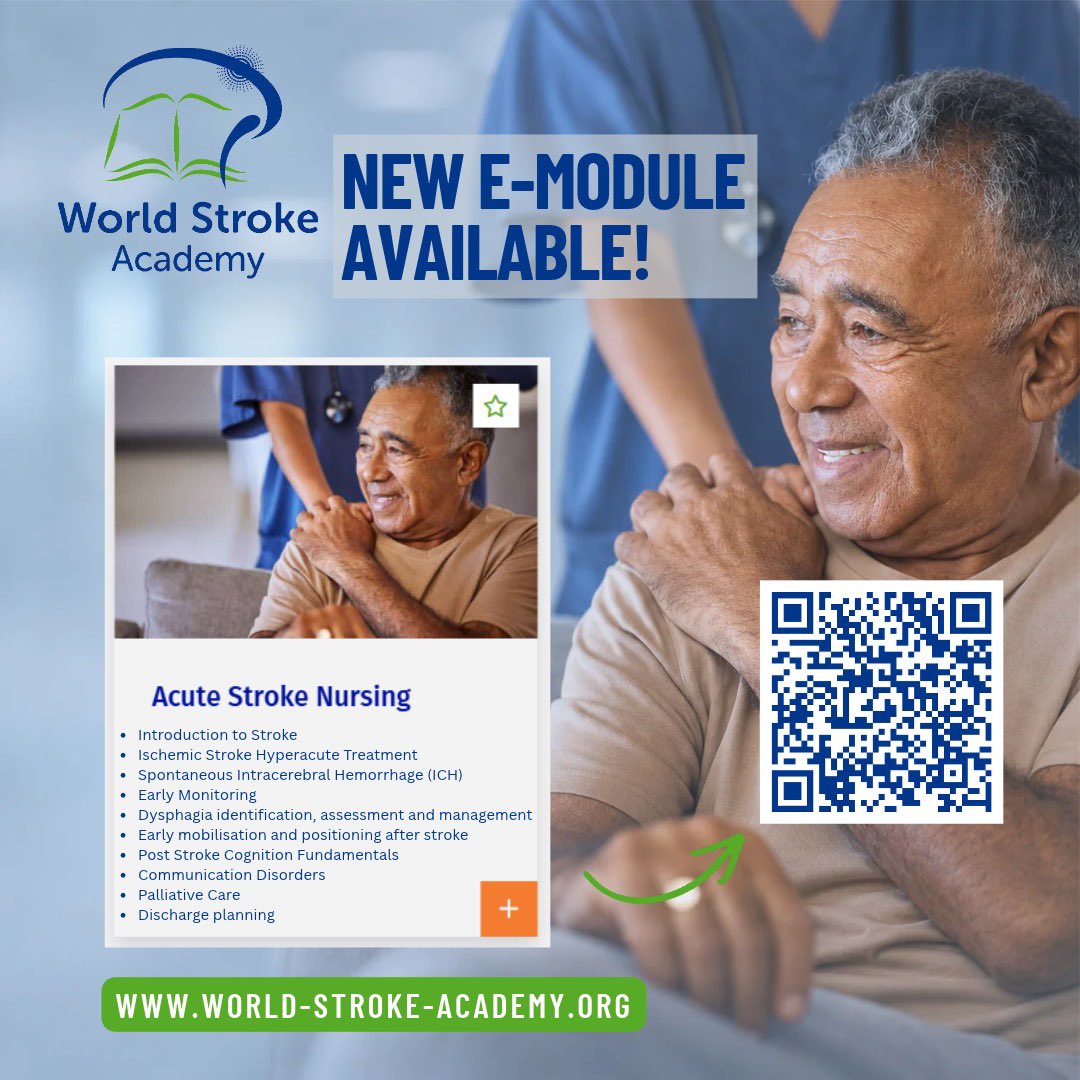
Join *Acute Stroke Nursing*, the World Stroke Academy’s online course on early monitoring, rehabilitation, and discharge planning.
Start learning 👉 https://t.co/puHYTPh8yg
#StrokeNursing
#MondayTip
🩸ICH care goes beyond the acute phase
✅Use the A–G checklist, then add H: hypertension management for 2ry prevention
🔱TRIDENT supports a low-dose triple pill plus usual care to 📉 recurrent stroke. Aim for SBP<130 mmHg; monitor tolerability
https://t.co/O3kVWeVXxL
🧠Our November #PaperOfTheMonth explores OPTIMAL-STROKE: intensive BP control reduced major cardiovascular events by 21%
🔍Discover the findings and implications for stroke prevention. Expert commentary by @opontesnetoMD: https://t.co/jjtghfVtpb
#StrokeEducation#OPTIMALSTROKE
#MondayTip
📉After ischemic stroke or TIA, how low should systolic BP go?
🧠In OPTIMAL-STROKE, a target <120 vs <140 mm Hg reduced MACEs (10.9% vs 13.5%) over 3.9 years
💧Renal events were more frequent
🔍Monitor kidney function as you titrate
🔗https://t.co/uyPnnLJdey
#MondayTip
In ESUS, <50% carotid stenosis does not exclude a relevant plaque
📈CTA-based #PlaqueRADS 3–4 was associated with ipsilateral recurrence
⭕️Assess plaque morphology
☝️This observational study does not establish a benefit from revascularization
🔗https://t.co/Pke1mDi8Qq
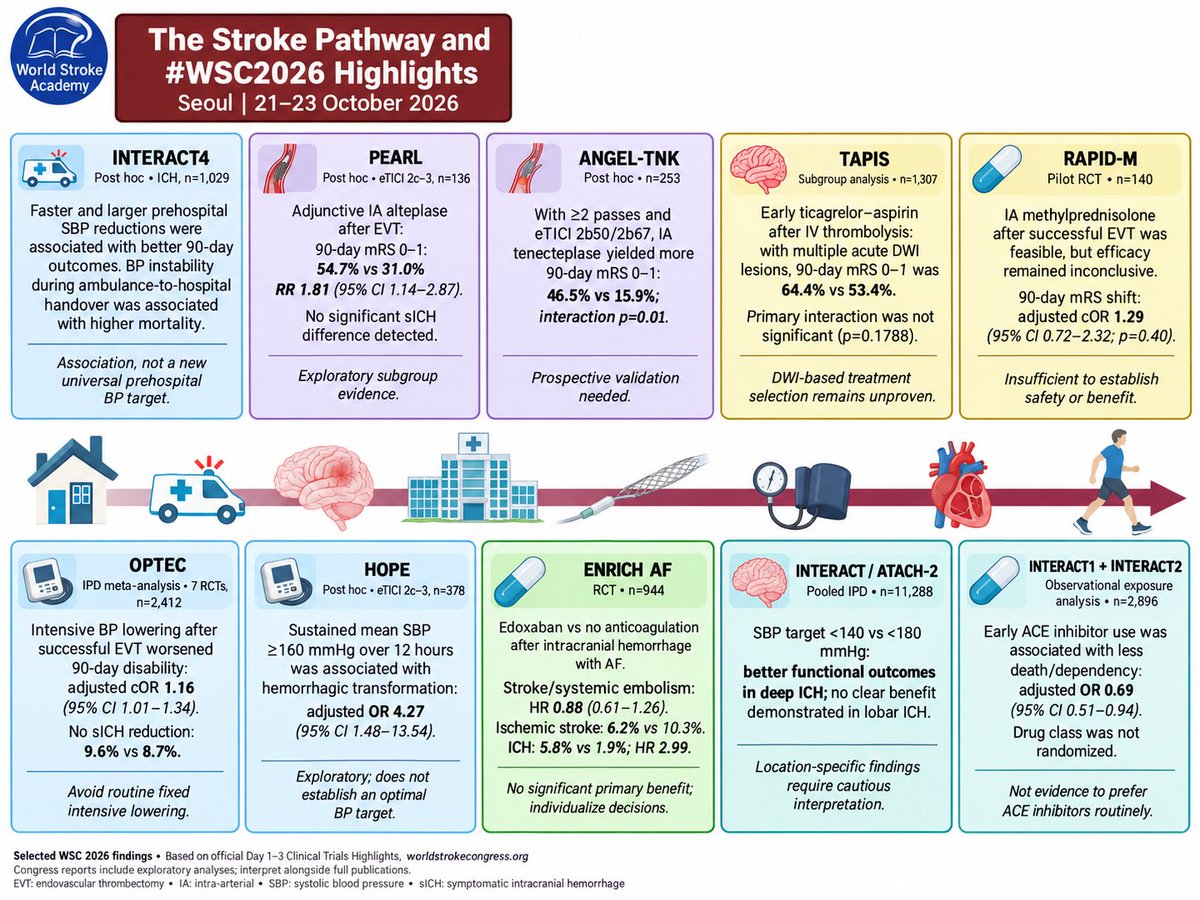
🧠What stood out at #WSC2026 in Seoul?
#MondayTip brings you 10 key studies across the stroke pathway: from reperfusion to 2ry prevention
📊Explore the infographic
💬Which finding could have the biggest impact on your practice?
Highlights webinar👉Nov 10
https://t.co/Z3huWz9csm
📢 Missed #WSC26 in Seoul — or ready to revisit the key takeaways? We’ve got you covered!
🌍 The @WorldStrokeOrg@ESOstroke and @American_Stroke are joining forces on November 10th for a special joint webinar
➡️ Register now: https://t.co/MEE9LWcBek
#StrokeEducation
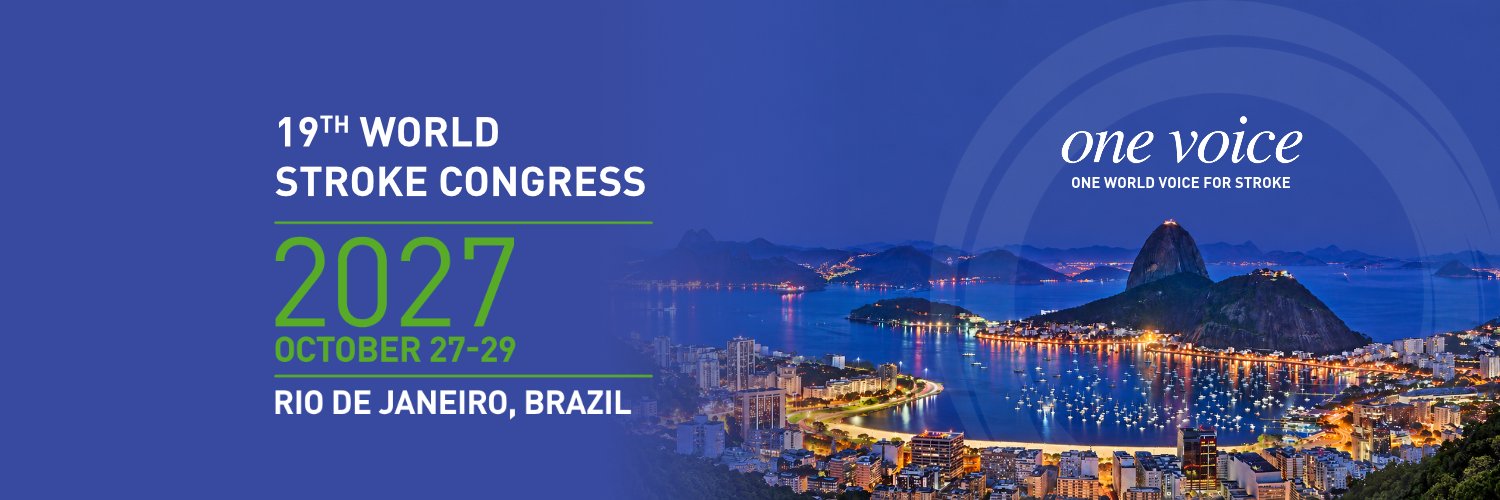
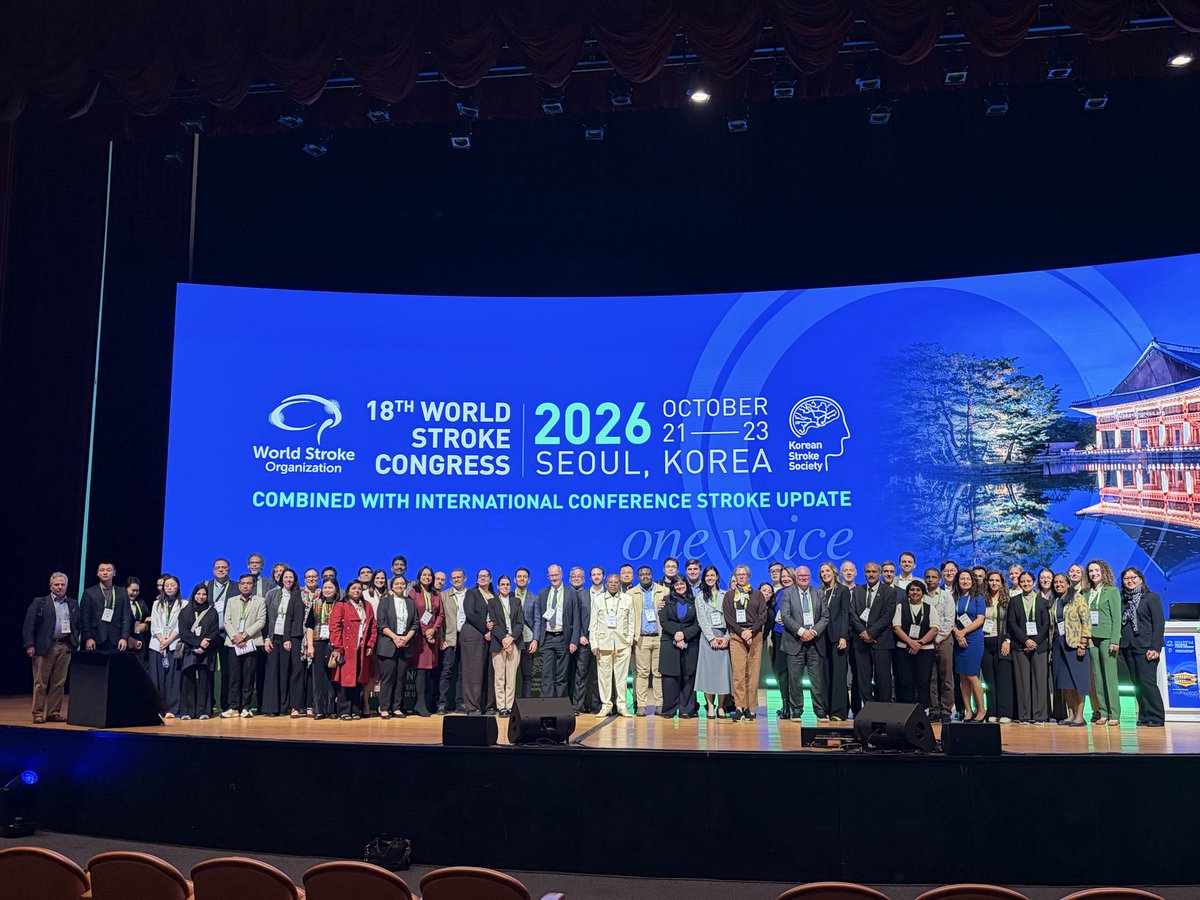
#WSC2026 has officially come to a close. To everyone who joined us, shared their research, exchanged ideas, met new colleagues, and helped make WSC 2026 so special: Thank you! 💙 Next stop: Rio de Janeiro, October 27-29, 2027!
A truly inspiring Congress experience for Jessica Nolan!
From moderating an e-poster session, graduating from the Future Leaders Programe and more.
#WSC2026 may be coming to an end, but we still have more inspiring stories and highlights to share! Stay tuned for more!
Dorcas Gandhi, physiotherapist from India, WSO Rehabilitation Certification Program participant and WSO Future Stroke Leader, and Deise Catamo Vaz, neurologist from Mozambique and WSO Future Stroke Leader, as they share their experiences, insights, and reflections from #WSC2026
Good morning from Seoul for the final day of #WSC2026!
There is still a full day of science ahead - make the most of every session.
https://t.co/ORCNNGyEPT
#StrokeResearch#WorldStrokeCongress
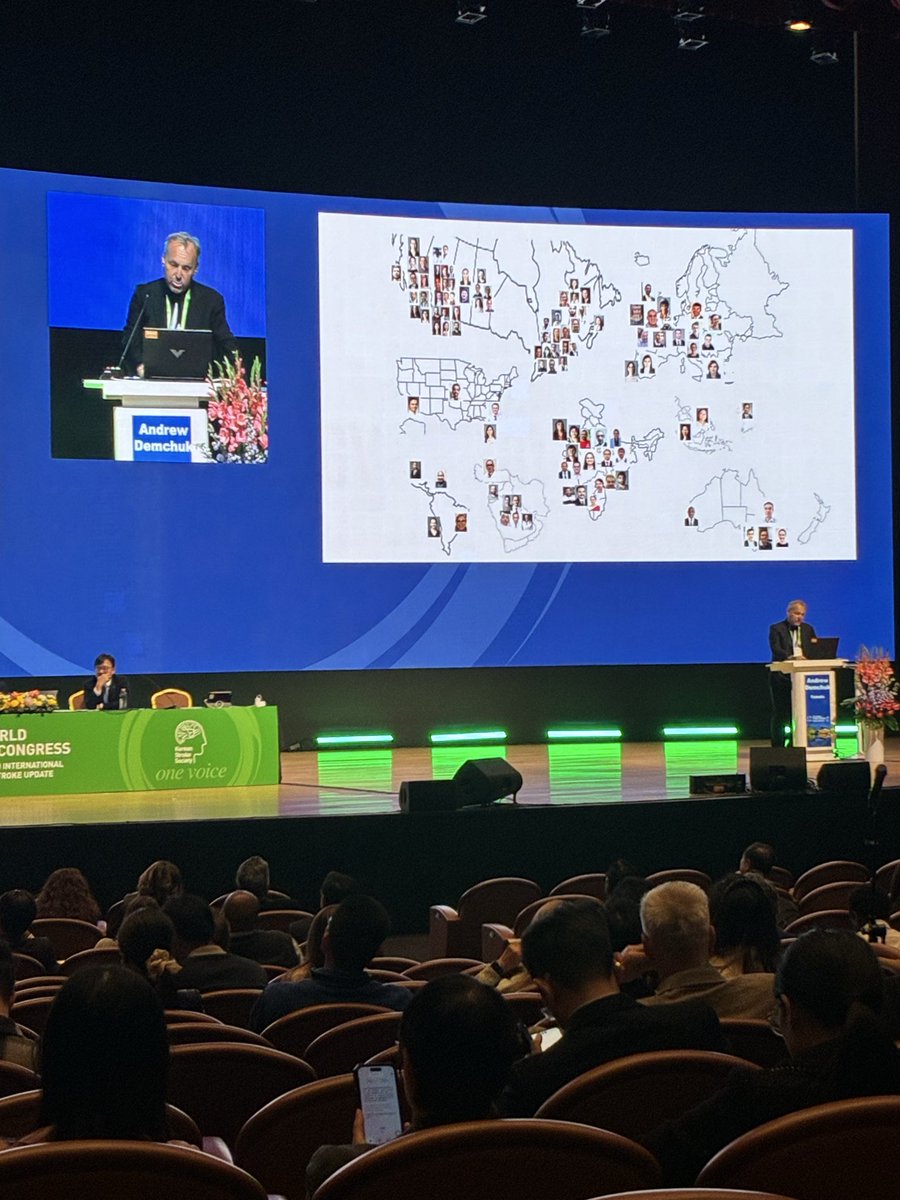
@demchuk_andrew receiving WSO award for #stroke service in Seoul, Korea! Andrew and the Calgary Folks mentored hundreds of stroke researchers and clinicians around the world! Well deserved! @WorldStrokeOrg@WorldStrokeEd
At the General Assembly during the #WSC2026 Dr. Pandian handed over the WSO Presidency to Prof. Anderson, with Prof. Caso as President-Elect.
Thank you, Dr. Pandian, for your leadership! Congratulations and best wishes to Prof. Anderson and Prof. Caso!
#WorldStrokeOrganization
Day 1 at a #WSC2026 through the eyes of Virginia Cancellaro, a Future Stroke Leader, who shares the key insights and takeaways. Watch here: https://t.co/rY0yRVlIVg