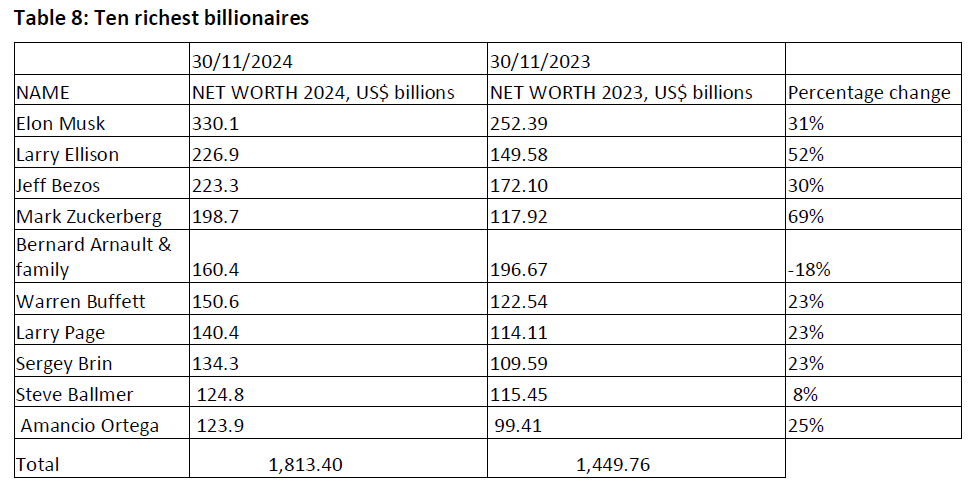
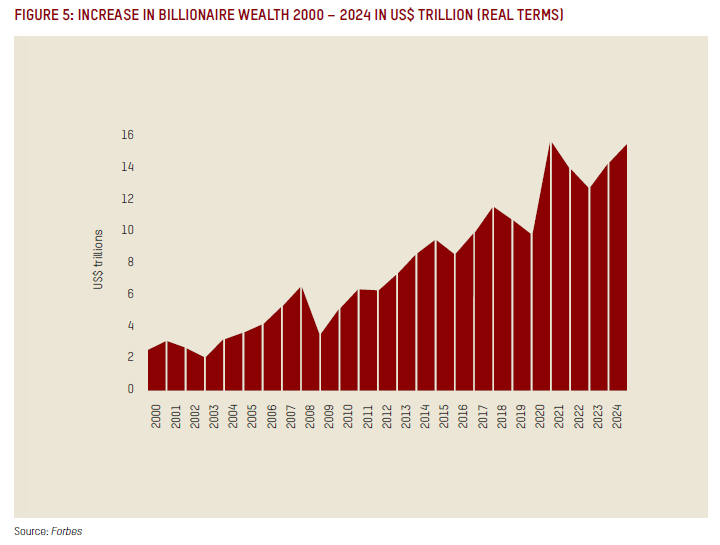
In 2024, the combined wealth of the 10 richest billionaires grew by $364 billion in real terms, from $1.45 trillion to $1.81 trillion. This is equivalent to $994 million per day on average, or $99 million per day for each of the 10 billionaires.
Source: https://t.co/Agx7Fzz7xq
Income inequality in Europe
Note: A Gini value of 100 means that only one person receives all the income in the country, while a Gini value of 0 means that income is distributed equally across the population.
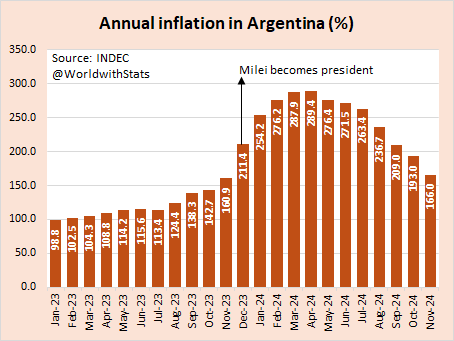
When Milei became president on December 10, 2023, annual inflation in 🇦🇷 Argentina was 160.9%. After Milei came to power and devalued the currency, inflation reached 289.4% in April 2024. A year has passed and annual inflation in Argentina is currently 166%.
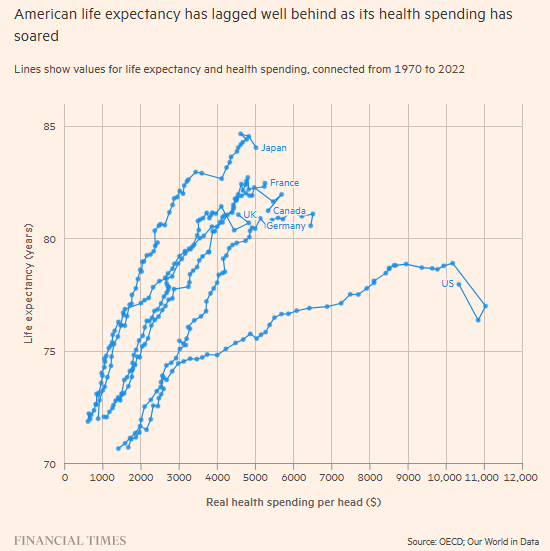
"US life expectancy is forecast at 79.5 years for both sexes this year. This makes it 48th in the world. ... Yet the US spends far more on health, relative to GDP, than any other country."
Source: https://t.co/dvKcspyCXu
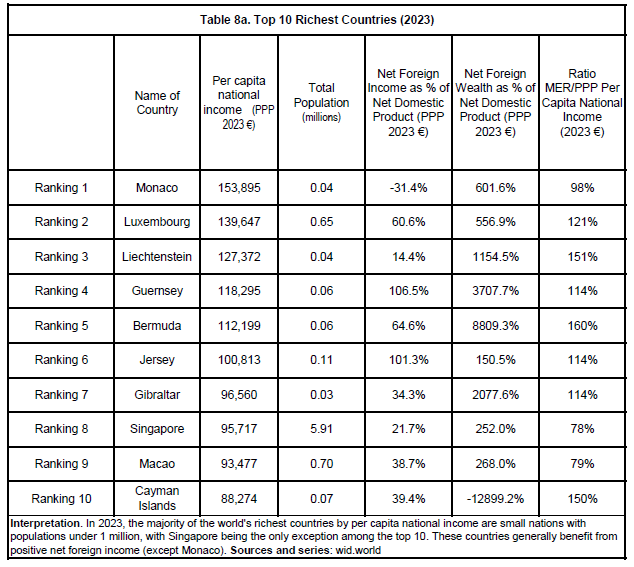
"In 2023, the majority of the world's richest countries by per capita national income are small nations with populations under 1 million, with Singapore being the only exception among the top 10. These countries generally benefit from positive net foreign income (except Monaco)."
Source: https://t.co/UxBFw3Djwq
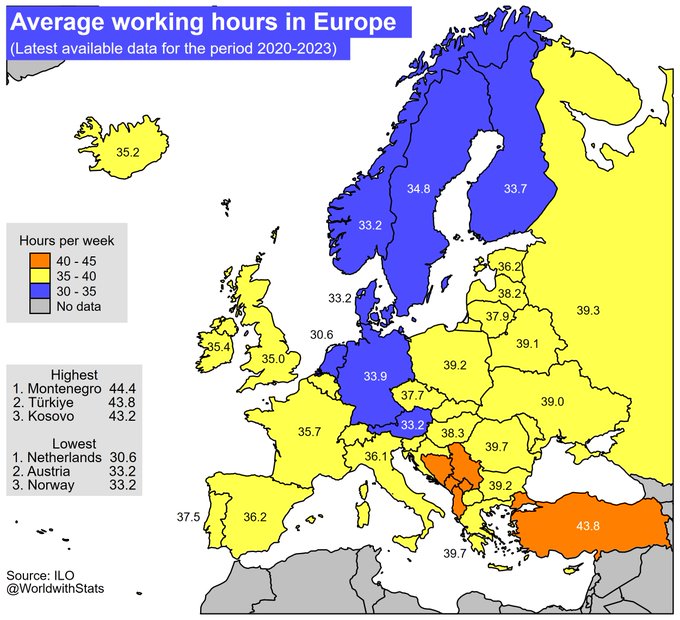
Average working hours in European countries: Montenegrins 🇲🇪 work the most (44.4 hours per week) and the Dutch 🇳🇱 work the least (30.6 hours per week).
Click for more: https://t.co/SRTdGNzmQs
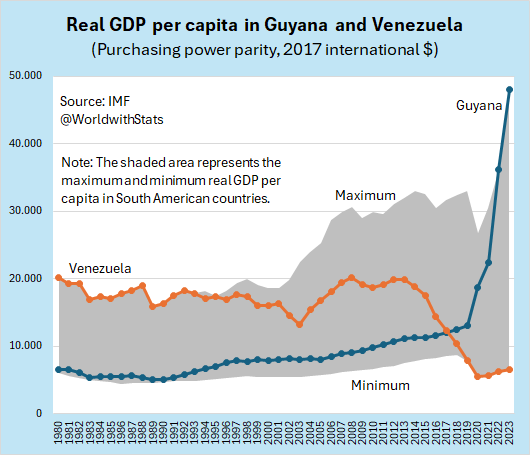
Guyana 🇬🇾 was one of the poorest countries in South America until 5 years ago, but it is now the richest country on the continent. Following the discovery and production of large amounts of oil, Guyana’s real per capita income has skyrocketed over the past 4 years.
Meanwhile, Venezuela 🇻🇪, which was the richest country in South America until 30 years ago, has become the continent's poorest country. Venezuela is also an oil-rich country but has long suffered from political and economic instability. United States sanctions and deteriorating infrastructure have reduced oil production in Venezuela and led to a sharp decline in real per capita income.
It should be noted that Guyana and Venezuela are two neighbouring countries, and Venezuela lays claim to Guyana's oil-rich region of Essequibo. In fact, Venezuela's claim to this region dates back a long time, but the dispute between the two countries escalated after oil was discovered in the region. The fact that the Essequibo region makes up three-quarters of Guyana further increases the dispute.
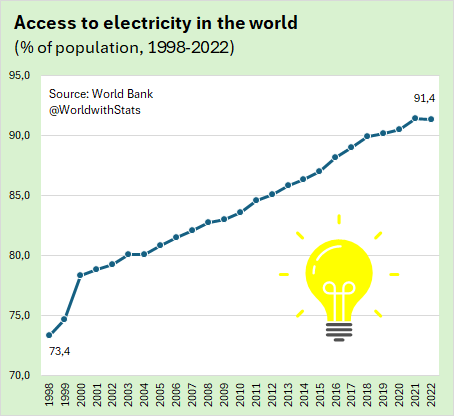
Despite rapid increases in electrification over the last 25 years, 8.6 percent of the world's population still lacks access to electricity.
Most countries with low access to electricity are in sub-Saharan Africa. In the worst-off country, South Sudan 🇸🇸, only 8.4 percent of the population has access to electricity.
The country with the lowest access to electricity outside Africa is Papua New Guinea 🇵🇬, where 19 percent of the population has access to electricity.
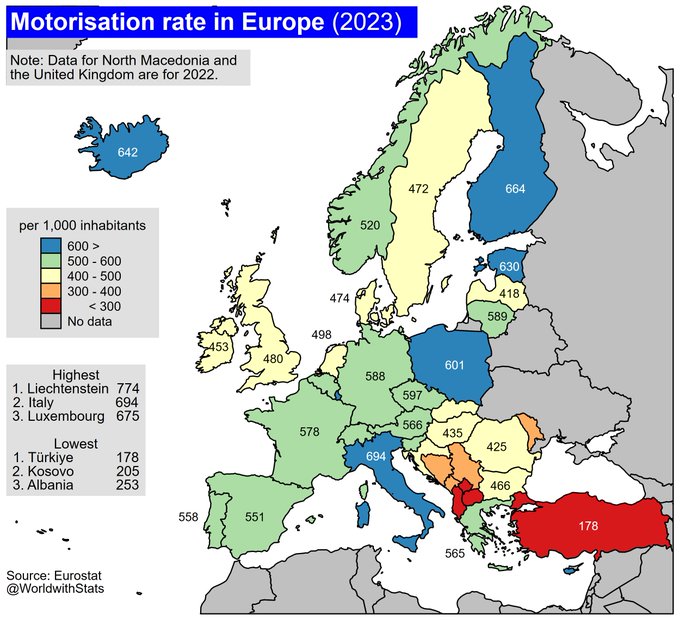
🚗 Motorisation rate in European countries: The highest rate is in 🇱🇮 Liechtenstein (774 passenger cars per 1,000 inhabitants) and the lowest rate is in 🇹🇷 Türkiye (178 passenger cars per 1,000 inhabitants).
Click for more: https://t.co/QIQCXLf9wH
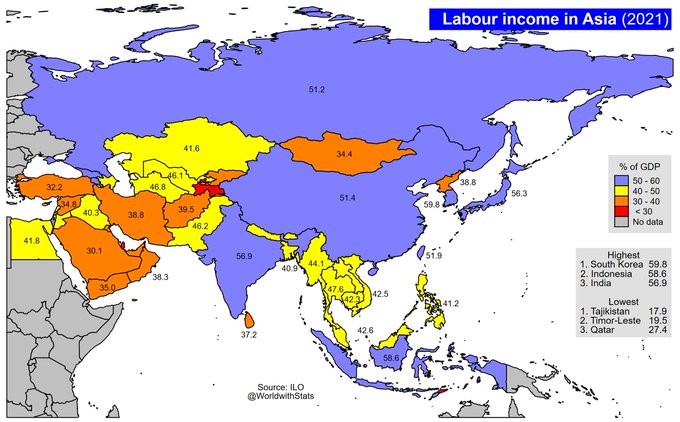
Labour income share of GDP in Asian countries: The highest share is in 🇰🇷 South Korea (59.8%) and the lowest share is in 🇹🇯 Tajikistan (17.9%).
The share of labour income in GDP is a measure of functional income distribution.
Click for more: https://t.co/BEFeqDbS2w
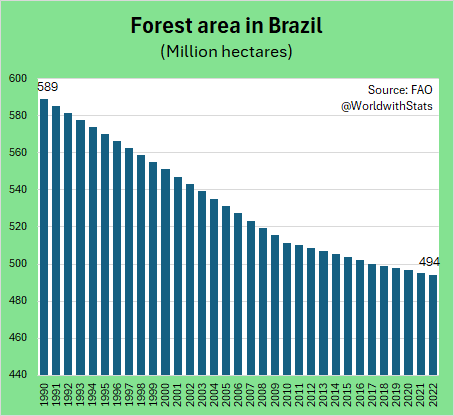
🇧🇷 Brazil has the second largest forest area in the world after Russia, but the size of forest areas in that country has decreased by 16.1 percent since 1990.
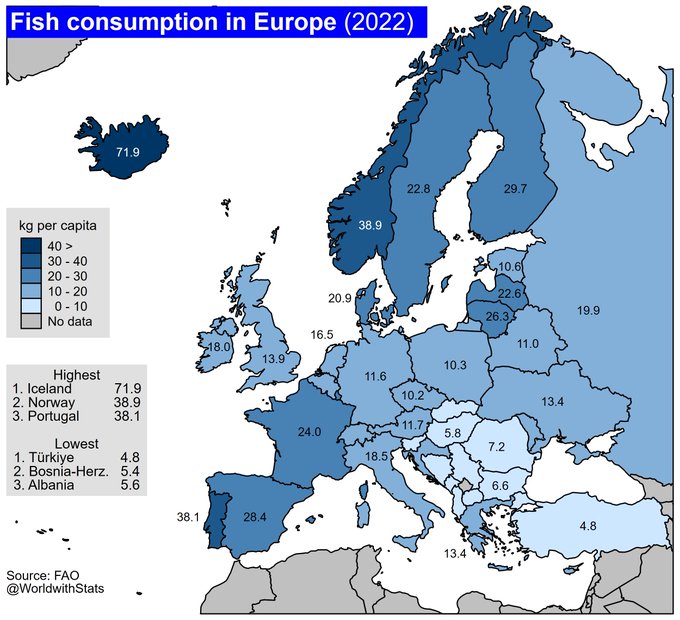
🐟 Fish consumption per capita in European countries: The highest consumption is in 🇮🇸 Iceland (71.9 kg) and the lowest consumption is in 🇹🇷 Türkiye (4.8 kg).
Click for more: https://t.co/o2cxdS6nb0