One of the hardest things I’ve had to grasp about money is that an entity can have ample liquidity and still be unable to settle its next obligation
The hierarchy of money explains the vertical dimension. It shows that fiat money is an interconnected web of liabilities, and it clarifies the counterparty risk we take on with each layer of liquidity: central-bank reserves, commercial-bank deposits, stablecoins. It maps the different tiers of "money"
What it does not fully capture is the fragmentation that exists within those same tiers. It tells us nothing about where a particular asset actually sits, or whether it can be applied to the specific settlement sitting in front of us, even when that asset belongs to the same tier of money we need
Case in point: a bank can hold reserves in its RTGS account that are unavailable for an operation settling inside an FMI structure. It can own eligible collateral yet be unable to move it from the custodian and place it under the counterparty’s control in time to rebalance margin. It can hold dollars, but in the wrong correspondent bank or after the cut-off
You then realise payments are not settled by aggregate liquidity. They are settled by eligible cash, sitting in a specific account
This has a direct consequence for the balance sheet. The operational buffer is sized against the cumulative net outflow that can arise while the treasury desk is still mobilising fresh liquidity, including under stress. The longer and more uncertain that interval, the more cash and collateral must be prepositioned
Just a quick caveat here: operational friction is only part of the story. It’s easy to oversimplify, but these buffers are heavily driven by macroprudential and structural mandates, strict cross-border capital controls and legal entity ring-fencing that physically trap liquidity
The financial system uses tools such as netting, intraday credit, committed lines, repo and FX swaps to shrink that requirement, yet none of them eliminate it. All of them still depend on credit limits, haircuts, operating hours, market capacity and on the assets being available the moment they are needed
This is the thinking behind Creating More Liquidity in Markets, our latest report at Tempo (Link in the first comment)
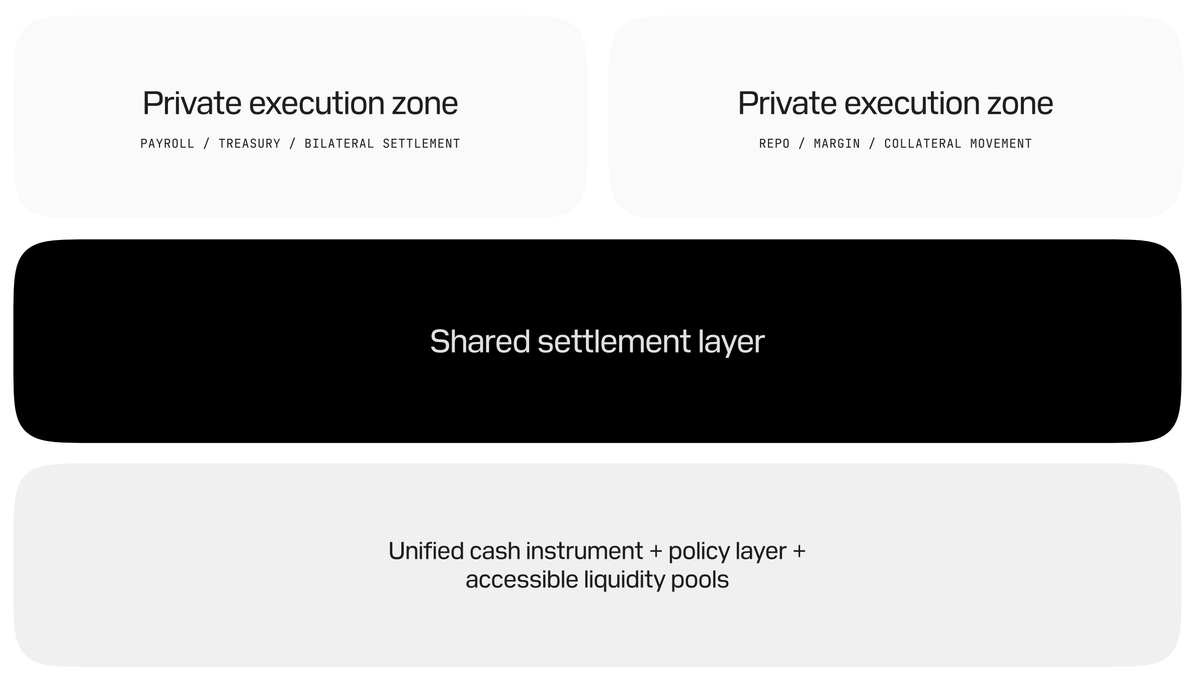
I tend to obsess over balance sheets, but liquidity mobility is not simply about moving a token "faster". It is about shortening the distance between owning cash or collateral and being able to apply it to an obligation, without having to invent a new instrument, a new integration and a new liquidity pool for every market
One of the clearest lessons from the various DLT solutions of recent years is that a shared settlement layer, paired with private execution environments, can solve the confidentiality problem without also forcing the isolation of the liquidity that backs each trade
But mind you, faster settlement does not automatically reduce funding needs. Immediate gross settlement can actually increase them if netting is lost, and interoperability may simply shift the timing mismatch onto an issuer, a dealer or a liquidity facility. That is why the trade-offs matter
What we need to examine is whether the architecture lowers the consolidated peak of cash and collateral required to keep settling, after taking account of netting, intraday credit, haircuts, legal eligibility and exit conditions under stress
If the ability to live on the same ledger and move beyond double-entry accounting delivers that reduction, we are talking about balance-sheet capacity being released
I would add that we still do not know the true economic impact, because the operating standards, risk management and balance-sheet practices of every participant on that network would change as well
What I do know is that at Tempo, we're going to find out
Private credit is in a strange place today.
The economy is tied to the cost of money. Low interest rates mean cheap borrowing, which in theory should lead to higher utilization of credit facilities. Conversely, high interest rates mean less affordable borrowing and, in theory, reduced demand for credit.
We've been living through a high-interest-rate environment since the Federal Reserve began its aggressive tightening cycle in March 2022, raising rates from near zero to over 5% by mid-2023, the fastest hiking cycle in four decades. Rates have remained elevated through early 2026, with only modest cuts. For many consumers and businesses that initiated borrowing during the low- or mid-rate era, and whose obligations remain outstanding, this translates into a significantly higher cost of capital, a burden that compounds over time.
This all sounds normal. Finance is part of almost every phase of a company's lifecycle, from growth to maturity. The problem arises when the cost of capital stays elevated for too long, creating unmanageable expenses for borrowers.
Businesses typically borrow from financial institutions like banks, or from asset managers in the form of private credit.
How do private credit funds work?
Private credit funds are typically either closed-end or semi-liquid vehicles managed by asset managers. This structure makes sense: the funds need to deploy capital into lending opportunities to generate returns. Investors in private credit range from pension funds, insurance companies, and family offices to, increasingly, retail investors.
Closed-end funds don't allow redemptions until maturity, usually 7 to 10 years. Semi-liquid funds offer quarterly redemption windows with limits. BDCs (Business Development Companies), which are publicly traded, provide liquidity via daily trading on exchanges.
In essence, private credit funds function as private banks: they lend capital to businesses and collect interest.
What does private credit fund?
Typically, private credit finances leveraged buyouts for private equity, middle-market corporate loans for companies that lack access to public bond markets, certain asset-backed lending (such as aircraft, shipping, and consumer loans), and real estate credit.
Private credit funds generally fill the funding gap that banks have vacated. This shift has been driven primarily by post-2008 regulation, particularly Basel III, which pushed banks out of riskier corporate lending. Today, private credit finances an estimated 80 to 90% of leveraged buyouts in the U.S. middle market.
Who are the players?
Apollo ~$460B AUM
Blackstone ~$330B AUM
Ares ~$280B AUM
KKR ~$220B AUM
Carlyle ~$190B AUM
Blue Owl ~$170B AUM
What's going on?
Recently, distress has emerged across private credit. The persistent cost of capital driven by high interest rates remains a reality, and AI is reshaping perceptions of many software companies that private credit has funded, creating uncertainty about these borrowers' futures.
The market has already begun repricing private credit:
VanEck BDC Income ETF: ~15% decline over the past year
Blue Owl Capital: ~50% decline over the past year, with ~30% of that during 2026
Apollo, Blackstone, Ares, KKR: shares down ~20% on private credit concerns
The average BDC now trades at roughly a 20% discount to NAV while offering 10 to 11% yields, signaling that loan portfolios may be overvalued, defaults could rise, or liquidity risk is building. What makes this even more concerning is that historically, these funds traded at a premium.
Some funds' monitored loan default metrics have risen to as high as 9%. Blackstone's flagship private credit fund, BCRED, is a notable example.
BCRED recently limited its redemptions. The fund manages roughly $82B, and during Q1 2026, redemption requests reached $3.7B, approximately 8% of NAV. Blackstone injected $400M of its own capital to support liquidity. Technically, the fund was not gated, but it came very close.
Meanwhile, BlackRock's HPS Corporate Lending Fund (HLEND), a $26B fund, received $1.2B in redemption requests, reaching the point where gating was necessary. Roughly $580M in requests could not be honored.
Blue Owl's retail private credit vehicle experienced $2.9B in redemptions during Q4 2025, with redemption requests reaching 15% of NAV, largely driven by exposure to software lending.
Can the market handle a private credit fund default?
While total redemptions have been around $7B+ (5 to 10% of NAV) and public alternative managers are down 20 to 30%, the overall private credit market is still $1.8 to 2T in size. Even the largest funds top out at $20 to 80B, compared to the global bond market at $130T or banking assets at $180T. A single fund default would most likely not collapse the broader market or trigger the kind of contagion that amplifies crises. Large funds also hold diversified portfolios of hundreds of loans, and the semi-liquid or closed-end structure naturally forces investor lock-up, acting as a buffer against bank-run dynamics.
I've mapped out three scenarios of increasing severity:
Scenario A: One large fund defaults (~$50B)Investors lose capital, some companies lose financing, and credit spreads widen. The system likely absorbs the shock.
Scenario B: Several funds fail simultaneouslyCredit markets freeze, leveraged companies cannot refinance, and defaults cascade. This could trigger a credit-cycle downturn.
Scenario C: Private credit + leveraged loans collapseA broader corporate credit crisis unfolds: private equity deals fail and banks become exposed. This would be genuinely systemic.
Fortunately, private credit funds remain relatively small in the broader picture and are unlikely on their own to pose systemic risk. However, the most worrisome scenario is one where loss of confidence begins in private credit markets, particularly around lending to businesses vulnerable to AI disruption, and then bleeds into public bond markets. This contagion path is plausible because the larger corporates in bond markets are arguably more exposed to automation and AI disruption than the leaner, high-growth businesses that private credit typically funds.
How does this affect RWAs and DeFi?
The most immediate impact of private credit distress falls on capital allocators. Many private credit funds have been distributed to retail investors via publicly traded BDCs, private credit ETFs, or semi-liquid funds like Blackstone's BCRED, Apollo's Debt Solutions BDC, and BlackRock's HPS Corporate Lending Fund.
These funds share common characteristics: quarterly (or monthly) redemption windows, redemption limits typically capped at 5% of NAV per quarter, and target returns of 8 to 11%. Recently, some funds have also begun gating redemptions.
From a DeFi capital allocator's perspective, the biggest risk I see is structural: private credit is packaged in DeFi in ways that many retail-oriented users don't fully understand before committing capital. We've seen countless examples of DeFi users eagerly supplying funds into high-yielding RWA strategies, only to discover later that the underlying exposure carries significant duration risk.
I believe RWAs represent the biggest opportunity for DeFi in the near term. However, my greatest fear is that institutional opportunists could view DeFi as a channel to offload illiquid and distressed products that Wall Street has already soured on, effectively using DeFi participants as exit liquidity. This risk is amplified by the fact that assessing RWA allocation opportunities is inherently harder: they don't carry the same transparency or onchain verifiability that native DeFi opportunities provide.
That said, private credit done well onchain offers something traditional finance fundamentally cannot: smart contract-enforced guarantees. Redemption windows, withdrawal limits, collateral ratios, and distribution rules can be encoded immutably, meaning fund managers cannot arbitrarily change the terms after capital has been committed. In traditional private credit, investors discovered the hard way with BCRED and HLEND that redemption policies can be tightened or gated at the discretion of the manager when conditions deteriorate. Onchain, those rules are transparent from day one and enforced by code, not by a fund administrator under pressure. This is precisely where RWAs and DeFi can outperform the traditional model for this asset category.
For RWAs to succeed in DeFi, and for DeFi to scale meaningfully through real-world assets, the industry needs deliberate and careful structuring of opportunities that bridge TradFi and onchain markets. That means robust transparency standards, proper risk disclosure, independent verification of underlying collateral, and governance frameworks that protect onchain participants from asymmetric information disadvantages. Without these safeguards, the convergence of TradFi and DeFi risks becoming extractive rather than additive.
DeFi should not become Wall Street's exit liquidity.
Stablecoin FX spreads by region
- Asia 7 bps
- LatAm 128 bps
- Africa 299 bps
Africa is 44x more expensive than asia. All 5 of the widest corridors globally are African.
https://t.co/rXDjLeIqnV
If you haven't been able to keep up with the stablecoin 'rewards' / CLARITY drama (I've been... busy!), this is a great summary & analysis from @AlexH_Johnson:
https://t.co/ALmL0srZNm
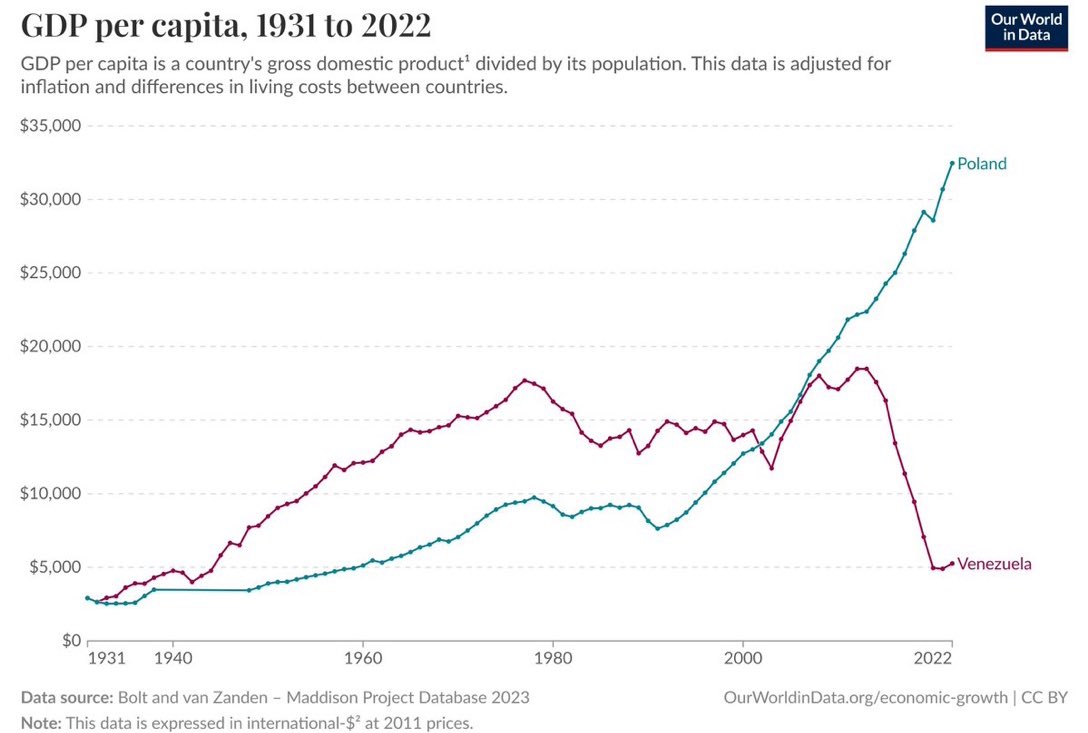
Venezuela used to be much wealthier than Poland, which was suffering under socialism. Then Poland implemented free-market and capitalist principles and enjoyed an economic boom.
Venezuela chose socialism, which brought poverty and misery to its people.
That’s the difference.
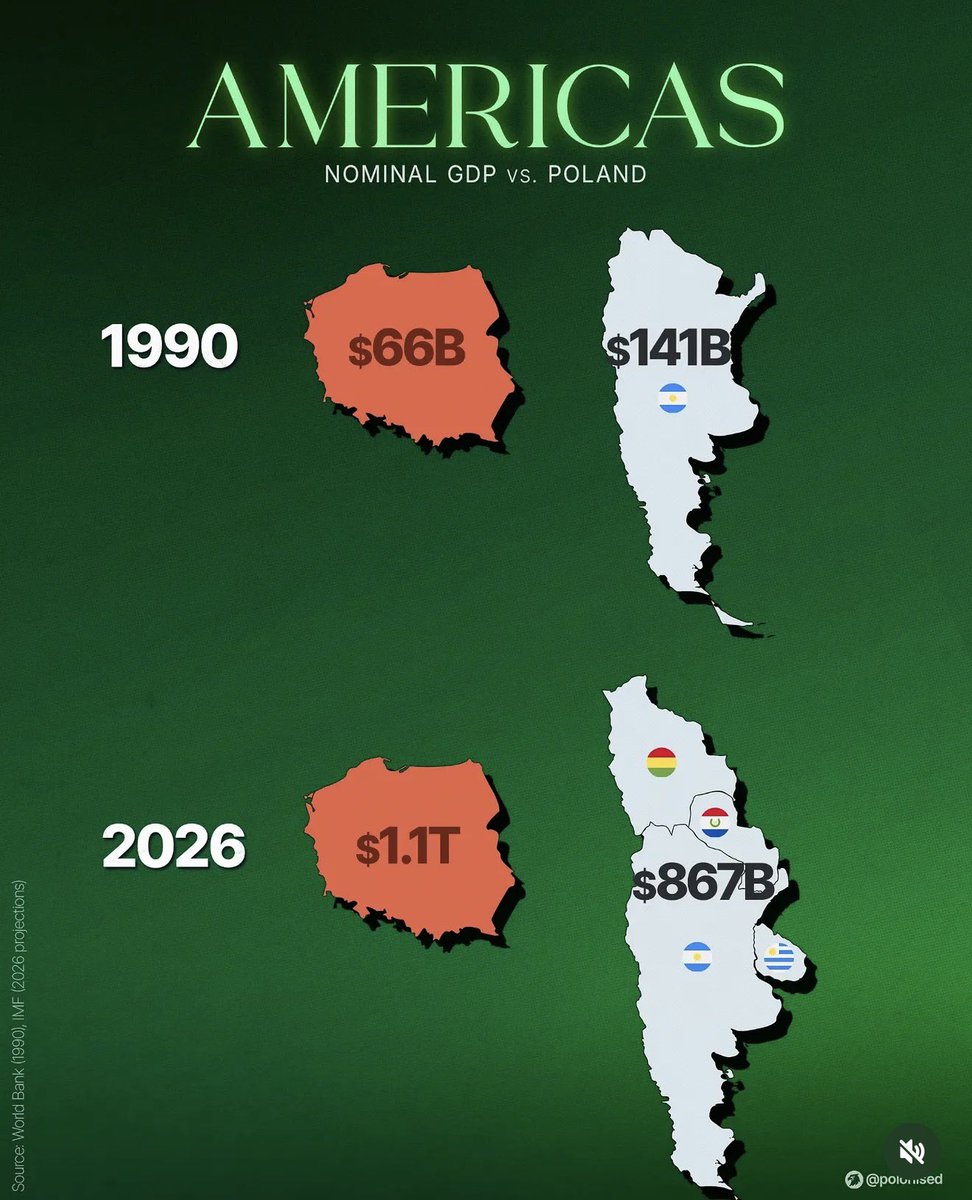
🇧🇴 Bolivia eliminated taxes on large fortunes, financial transfers, gambling, and business promotions, and announced a 30% cut in public spending by 2026: it seeks to attract investment amid the worst economic crisis in 40 years.
Territorial tax regime, could become a very interesting nomad destination
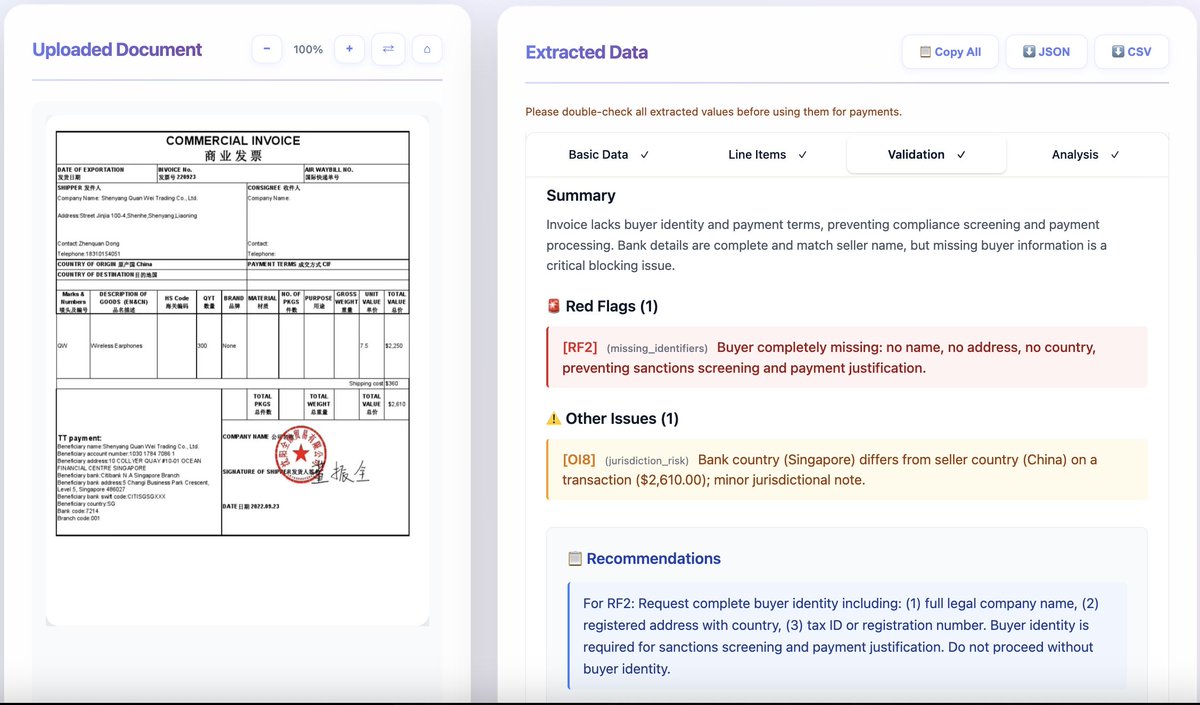
We scaled 20× in 5 months at Loula. Great for business… challenging for compliance ops.
Manually reviewing trade docs was a pain and slow to catch issues like:
- entity name ≠ beneficiary/issuer
- incomplete or inconsistent addresses
- totals not matching line items
- missing or inconsistent banking details
OCR tools could read text but none could validate the logic of a trade document.
So we built our own engine to pre-validate every invoice before it hits a banking rail.
It’s been quite effective internally that we’re now opening it up to a few PSPs and stablecoin platforms stuck in manual reviews.
Happy to compare notes or share a quick demo.
Awesome to see @monad launched today and a ton of partners already live, but how is their growth / expansion strategy different from existing chains? Why does Monad win?
Talked to corps who have “trapped cash” in their subsidiaries in LatAm.
we’ve built compliant rails to move capital out using stablecoins and local payment networks to help repatriate their funds to HQ.
If you operate in Argentina, Bolivia, or Brazil (or others), and struggle of getting profits back to HQ, send me a DM.
I was trying to check how much visible liquidity exists in the parallel market on Binance in Bolivia - and realized it’s not visible anywhere (or maybe is somewhere?)
built a quick tool to visualize it; a quick Sunday code session.
It shows real-time order book depth, available liquidity, and trade simulation for USDT and USDC on Binance P2P for BOB.
Tired of manually checking Binance P2P prices and liquidity in 🇧🇴 Bolivia?
We built a real-time order book visualizer that shows:
• Market depth & liquidity
• Trade simulation
• USDT & USDC support
Version 0.1 - feedback welcome!
-> https://t.co/KvavrNDtK3
#Fintech #Crypto #Stablecoins #LatAm #Bolivia
Noticed a growing demand for crypto-backed physical cards in emerging markets. Wonder if a small, DePIN, issuer-agnostic card manufacturing operation in various regions would be feasible