According to recent studies in biomechanics and neuroscience, cats are nearly flawless examples of biological engineering. From their precision movements to their unique balance and energy efficiency, scientists call cats “nature’s perfect predators.”
A cat’s muscles and skeletal structure allow it to jump six times its body length, land silently, and always stay upright due to an inner-ear reflex called the “righting reflex.” Their night vision surpasses humans by sixfold, while their whiskers detect even the faintest air movements, helping them navigate in complete darkness.
Even their purring serves a purpose — the vibration frequency (25–150 Hz) stimulates tissue regeneration and bone healing, which might explain why cats recover from injuries faster than many animals. Their compact efficiency and self-sustaining hunting instincts have made them evolutionary masterpieces.
I'm so proud of the little non-profit I formed in 2002, The Production Services Association of Northwest Florida. Last night we held our first meeting in Panama City, FL, expanding our reach, and had a killer presentation by film editor and DP, Lex Benedict. This is me last night with my current president, Megan Caulfield.
هذا الرجل تسببت تمارينه في التخلص من انسداد قلوب آلاف الأشخاص، الآن أصبح هذا الفيديو سريع الإنتشار، كما اختفت شكوى بعض الأشخاص من آلام الظهر خلال 7 أيام. لا شيء يُمكن أن يكون أبسط من هذا التمرين، الذي ليس له أي آثار جانبية
AI Cranks Out 380 Academic Finance Papers in 12 Hours That Could Fool Peer Review Checks | StudyFinds
In a Nutshell
- Two economists used an AI language model to produce 380 complete, journal-formatted academic finance papers in roughly 12 hours, each built around reverse-engineered theories designed to explain data the AI had already seen.
- AI-generated signals performed statistically comparably to signals published in top peer-reviewed finance journals, with equal-weighted results overlapping almost perfectly with published research.
- AI-written introductions clustered tightly at a college-graduate reading level and produced prose that matched the formatting conventions of leading finance journals, though with less stylistic variation than human authors.
- Researchers warn that scaled AI paper generation could overwhelm journal review systems, artificially inflate academic citation counts, and erode the metrics used to evaluate researchers for tenure and funding.
---
A pair of economists just proved that artificial intelligence can churn out hundreds of journal-style academic papers in a matter of hours, complete with data, citations, economic theory, and even author names. The papers look real. The statistical testing behind them is real. But the “discoveries” they claim to make? Reverse-engineered after the fact by a machine.
Two finance professors at leading American universities set out to show just how easy it had become to industrialize one of academia’s most persistent bad habits: building a theory to explain data you’ve already seen, then pretending you came up with the theory first. In academic circles, this practice has a name, “HARKing,” which stands for Hypothesizing After Results are Known. What the researchers found was that AI doesn’t just enable HARKing on a new scale. It automates it entirely, at a speed that could overwhelm the academic publishing system before anyone figures out what to do about it.
Robert Novy-Marx of the Simon Business School at the University of Rochester and Mihail Velikov of Penn State’s Smeal College of Business published their findings in the Journal of Economic Literature in March 2026. Their paper is equal parts technical tour de force and cautionary alarm, a demonstration of what AI can do to academic science that is as sobering as it is impressive.
How Researchers Used AI to Mass-Produce Finance Papers
To build their assembly line, Novy-Marx and Velikov started with raw financial data. They pulled accounting information on publicly traded U.S. companies from two major databases covering decades of records: COMPUSTAT, which tracks corporate financial statements going back to 1950, and CRSP, a stock market database with data going back to 1926. From those sources, they mathematically constructed more than 31,000 potential “signals,” patterns in accounting numbers that might predict how a stock will perform.
Most of those signals didn’t hold up under scrutiny. After running them through a series of increasingly strict statistical tests, the researchers filtered the original pool down to just 95 signals that survived all quality checks. Each had to show consistent, statistically meaningful results across multiple ways of slicing the data, including adjustments for firm size and known market risk factors. Only about four-tenths of one percent of the original candidates made the cut.
With those 95 validated signals in hand, the team handed the work over to an AI language model. Specifically, they used Claude Opus 4.1, Anthropic’s most advanced reasoning model at the time of the experiment. For each signal, the AI generated four complete academic papers, each one built around a different economic theory to “explain” the same finding.
One version argued that investors are slow to absorb complex financial information. Another leaned on theories about production costs and investment risk. A third drew from consumption-based economic models. A fourth was written without a specific theoretical angle. In total, the pipeline produced 380 finished papers, each roughly 30 pages long, with abstracts, introductions, data sections, results tables, charts, and references, all formatted to match top finance journal standards.
The data mining and validation steps took about a day of computing time. The AI-generated papers took about 12 hours.
AI-Generated Finance Research Papers Fooled Standard Quality Checks
The papers that came out of this pipeline were, by multiple measures, eerily convincing. Each AI-generated introduction followed standard academic conventions, framing a research question, citing related literature, building a logical theoretical argument, and summarizing the key results. The citations were drawn from real published work, though the authors note the AI occasionally “hallucinated” references that don’t actually exist. Signal names were generated to sound authoritative and specific: a ratio of other current assets to shareholders’ equity became “Liquidity Leverage Intensity.” A measure of acquisitions relative to working capital was labeled “Acquisition Capacity Utilization.”
When the researchers compared the statistical strength of their AI-generated signals against 212 signals published in actual peer-reviewed finance journals, the data-mined signals were nearly indistinguishable. For equally-weighted portfolio strategies, the distribution of statistical results from the AI-generated signals overlapped almost perfectly with the distribution from published academic papers.
That finding alone carries a pointed message: the bar that peer review sets for finance research may be no higher than what an automated data-mining exercise can clear on its own.
Readability tests told a similar story, though with a revealing twist. Novy-Marx and Velikov compared the AI-written introductions against 140 published papers using standard measures of text complexity. AI-generated introductions clustered tightly at the higher end of the scale, around 16 to 18 years of education required to comprehend them, roughly college-graduate level, with very little variation across all four theoretical versions.
Human-authored papers spread more widely, with median scores somewhat lower at 13 to 16 years of education, and notable outliers on both ends. The machine’s prose was consistent and polished, but it lacked the stylistic range of human academic writing.
What This Means for the Future of Academic Research
None of the 380 papers were submitted to journals, and the researchers are clear that the experiment was designed to sound an alarm, not to flood the academic literature with junk. But the alarm is a loud one. The authors note that submitting all 380 papers to peer-reviewed journals would impose hundreds of thousands of dollars in reviewing costs on the profession, and if even a small fraction of researchers adopted this approach, the journal system could be overwhelmed.
Citation inflation is another concern the paper raises directly. Each AI-generated paper cites prior research to build its theoretical case, including, in many cases, the authors’ own earlier work. Scaled across hundreds or thousands of papers, automated citation generation could artificially inflate citation counts, a metric that tenure committees, grant agencies, and hiring panels use to evaluate academics. Novy-Marx and Velikov even calculate that if search engines index the 95 papers they’ve publicly posted, each of them could pick up hundreds of additional citations without a single human reader choosing to cite their work.
The paper stops well short of calling AI in research inherently destructive. AI can, the authors argue, democratize research by lowering the barriers to hypothesis generation, accelerate the pace of discovery, and help researchers map connections across large bodies of literature far faster than was previously possible.
There’s even a genuine scientific case for post-observation theorizing: Isaac Newton, after all, watched an apple fall before he developed his theory of gravity. The problem isn’t looking at data before forming a theory. The problem is doing so secretly, at industrial scale, and presenting the result as original insight.
Novy-Marx and Velikov call for researchers to be held fully accountable for any work they produce with AI assistance, not merely required to disclose that AI was used, a standard they argue is too weak to matter. They also advocate for new validation systems capable of detecting circular reasoning, redundant theorizing, and hallucinated citations. And they argue that economic theories offered to explain new findings should be judged, at least in part, by whether they make novel predictions that go beyond the result they were built to explain.
“AI can now produce a ton of papers at scale, and it’s going to change the nature of how we produce and disseminate knowledge. This is an early warning signal of what’s coming with modern AI capabilities,” Velikov said in a statement.
“I’m far from the opinion that we’ll all be out of jobs and replaced by AI,” he added, “but I think our jobs will evolve a lot, and the more we invest in understanding how these systems work, the better research we’ll be able to do.”
Whether academic institutions move fast enough to build those safeguards is an open question. For now, the 380 papers sit in a public GitHub repository, proof that the assembly line works and that current safeguards may not be ready for it.
Read more:
https://t.co/aYi4O9DAb7
Here's how the CDC tried to use bad science to convince people to wear masks during COVID | Ian Miller, Fox News
As we near June 2026, it’s disturbingly apparent from social media and the real world that there are still a ridiculous number of people who are religiously masking in public. One such post on X received an inordinate amount of attention as one man bragged about masking at the British Museum in London to keep himself healthy and avoid losing points of IQ.
Seriously. As if someone wearing a mask halfway through 2026 has IQ points left to lose.
But that continued dedication to masking of any kind is not merely the result of unintelligence, or misplaced hypochondria, or even being affiliated with a specific political party. Though, of course, all of that doesn’t hurt..
It’s a result of the concerted effort to promote masks, courtesy of the media, politicians and most importantly, research either conducted or promulgated by the CDC.
And we have some data on just how damaging that practice actually was.
Three researchers, two of whom have since gone on to bigger and better successes, Vinay Prasad and Tracey Beth Hoeg, explained in detail how committed the CDC was to promoting masks.
Their study titled, "An analysis of studies pertaining to masks in Morbidity and Mortality Weekly Report: Characteristics and quality of all studies from 1978 to 2023," looked at the CDC’s weekly publication over 45 years, and how it covered the data and evidence on this topic.
And in case there were any remaining doubts that masks never had the slightest chance of stopping respiratory viruses, of the studies that met their inclusion criteria, all of them came after 2019. Not one was published prior to 2019.
"77 studies, all published after 2019, met our inclusion criteria," they write. "75/77 (97.4%) studies were from the United States alone. All geographic regions and age groups were represented."
Here’s another remarkable fact that they discovered. Nearly 30% of the studies covered in their reference set did not have a comparative group.
"The most common study design was observational without a comparator group 22/77 (28.6%)," they explain. Observational studies, as a reminder, are among the least meaningful types of evidence-based research.
But that’s made even worse by the fact that a significant portion of these observational studies did not even have a comparison group. The CDC was posting research based on observations without anything to compare it to. And using it as proof of their position. Seriously.
They also found that nearly half of this research was conducted in the community, but quite literally zero were randomized.
"The most common setting was the community (35/77;45.5%). 0/77 were randomized studies," they explained.
So zero randomized trials, and 30% of all CDC published research was an observational study with nothing to compare it to. This is the very definition of low quality research. Here’s where it gets good. Only 30% of the studies, or 23/77, even attempted to test for mask effectiveness. And just 14.3%, or 11/77, contained a "statistically significant result." Yet a whopping 75.3%, 58/77, "stated masks were effective."
The CDC referenced low-quality research that was often observational in nature, with no comparisons and zero randomized trials. And yet 75.3% of the time, that low-quality research claimed masks were effective at stopping COVID.
And incredibly, 71% of the studies "used causal language" to sell their work; basically stating that their research showed that masks cause COVID to spread less frequently, despite there being no scientific justification for such a statement. That right there is the formula for how to reach the year 2026 with people still wearing masks.
But wait. There’s more.
Not one study cited to randomized data. And just one mannequin study correctly discussed the lack of causal relationship, while only 1/77 studies "cited conflicting evidence."
Essentially, the MMWR publications referenced research that overstated their claims, exaggerated evidence, and made causal links where none exists.
If you’re wondering why those scientists involved would do such a thing, it’s because they likely wanted to get their work published by the CDC. Or because the research may have been funded by the CDC and the authors potentially knew or assumed the conclusion they were supposed to reach. The CDC said masks work, therefore they needed research to make that claim a reality.
"MMWR publications pertaining to masks drew positive conclusions about mask effectiveness over 75% of the time despite only 30% testing masks and <15% having statistically significant results," they summarize. "No studies were randomized, yet over half drew causal conclusions. The level of evidence generated was low and the conclusions drawn were most often unsupported by the data. Our findings raise concern about the reliability of the journal for informing health policy."
It’s easy to forget just how insane the timeline on masking was, so as a refresher, here’s how the CDC handled their masking recommendations and mandates. Including a reference to the infamous "hairstylist study," where the organization breathlessly reported the results of two masked hairstylists as some sort of proof that masks stopped COVID.
"In March of 2020, the Centers for Disease Control and Prevention (CDC) did not generally recommend mask wearing for healthy people, consistent with the advice from the US Surgeon General," they write. "Over several weeks in March and early April 2020, a coordinated social media campaign to recommend masks began. Then on April 3rd, 2020, the CDC recommended people ages 2 years and older wear a cloth face covering in public. On July 15th, 2020, the CDC Director recommended all Americans start wearing masks as a way to 'get the epidemic under control,' citing a Morbidity and Mortality Weekly (MMWR) study involving two hairstylists in Missouri. That coming Fall of 2020, universal masking in schools and daycares was recommended by the CDC and widespread mandates were enacted at the state, district and county levels for children as young as two. Masking on public transportation was required by federal mandate starting January of 2021."
That is how important the MMWR was in advancing these specific goals. They referenced it to justify widespread mandates, toddler masking, and it informed state and local policies that impacted millions for years on end. Then, consider just how much of the CDC’s published research, the "voice" of the organization, was deemed "inappropriate."
If you’re looking for reasons why trust in "science" has never been lower, this is it. And again, this messaging is quite literally dangerous.
Parents may be masking their children because the CDC continuously published shoddy research meant to support their unjustifiable policy positions. How many adults will live the rest of their lives in fear because the media covered these studies in support of their ideology, political party, and belief in "experts" and Anthony Fauci.
As they write in the discussion, "MMWR studies consistently drawing conclusions about mask effectiveness without supporting evidence is particularly problematic and difficult to justify considering the totality of randomized evidence about the use of surgical or N95 masks to prevent the spread of respiratory viruses has been negative."
"The inappropriate use of causal language used in MMWR studies was also adopted directly by the CDC director when she cited an observational phone survey, which also happened to be included in the present analysis, stating to the public ‘Masks can help reduce your chance of #COVID19 infection by more than 80%.’ This referenced study found an association between respondents’ recollection about mask wearing and self-reported COVID-19 tests, which was non-significant for cloth masks."
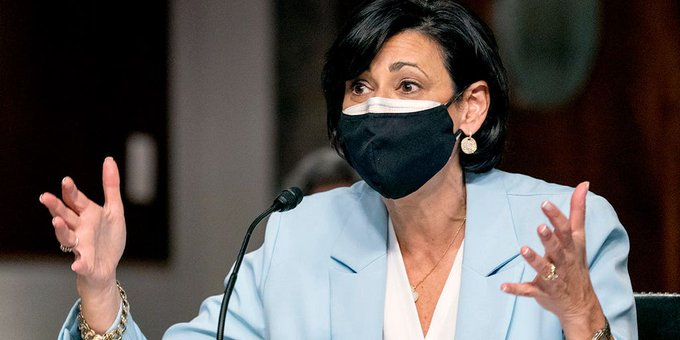
This is how you launder bad information through the media. There was no justification for the claim Rochelle Walensky made about masking. She was well aware, yet said it anyway. What else would you expect from someone double masking, defiantly rejecting reality and common sense?
High quality evidence said masks didn’t work, which is why objective reviews like the Cochrane Library came to the same conclusion: that masks don’t work.
The CDC’s MMWR used low quality evidence to effectively mislead people. That’s exactly how you lose trust, cause harm, and invite much damage to your reputation.
https://t.co/IhLvzxSbsU
I miss Scott Adams and his powerful voice of reason and common sense. He would be cheering for Spencer Pratt and hopeful that Californians might finally come to their senses to end the destruction of one of the nation's most beautiful states! The world lost a brave patriot!
Inspired by ancient Chinese practices like Qi Gong and Tai Chi, combined with modern Western lymphatic movement methods.
I now practice this routine every day