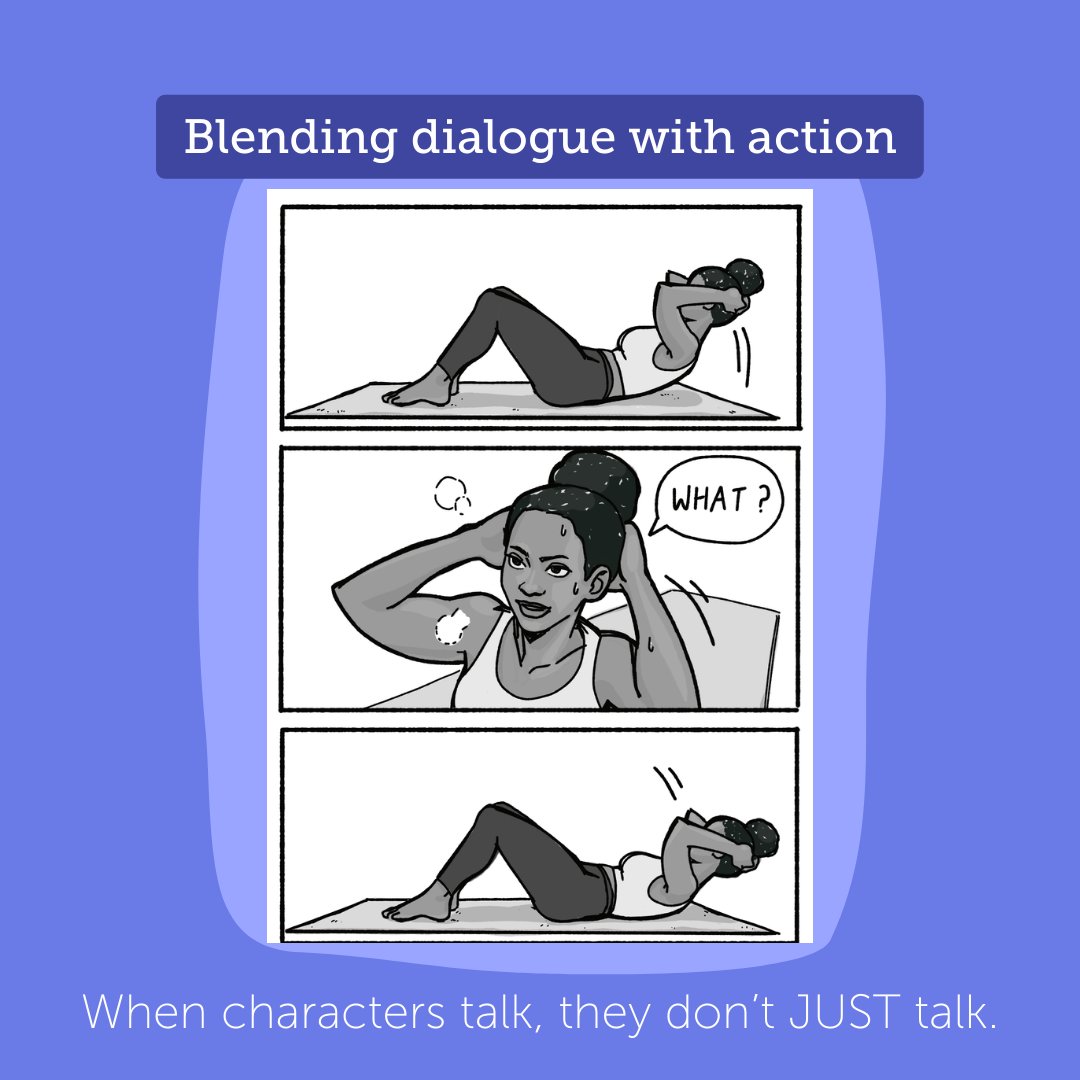
Another illustration, this one about blending dialogue with action. (Example snippet comes from Mango Delight by @fracaswellhyman)
https://t.co/t2xkhtuhQ0
Dialogue can either be direct from the speaker, using quotations, or reported indirectly. Example snippets from @_MTAnderson and @fracaswellhyman
https://t.co/tb1PuWmNt5
In this example from The Suburb Beyond the Stars—part of a strange-cool-weird adventure series by @_MTAnderson—a troll called Kalgrash is telling a story about being on the run from humans.
https://t.co/2gri8oXnQu
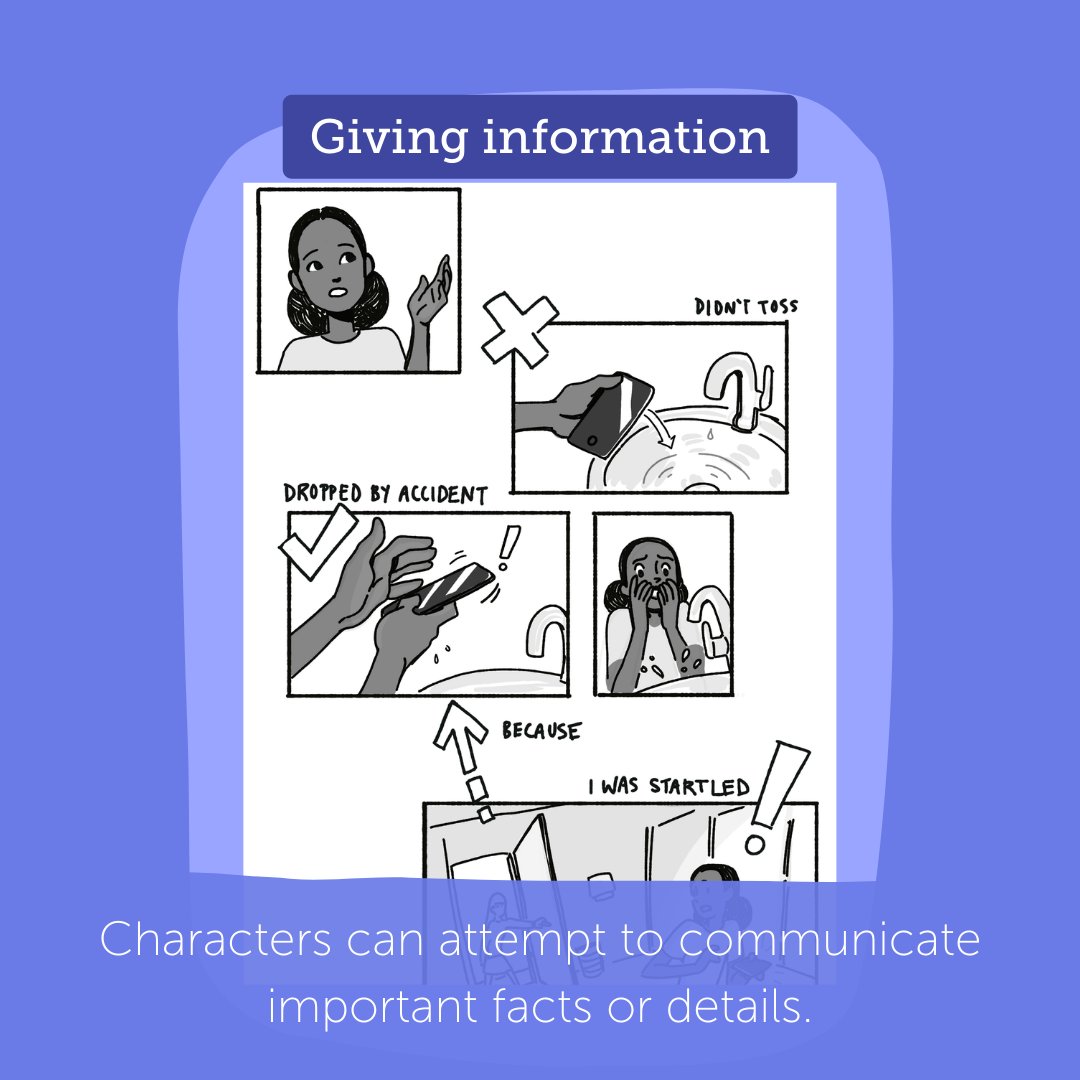
When characters share information, it tells us what they do and don’t know, what they want other people to know, and why they want them to know it. (Snippet from @fracaswellhyman)
https://t.co/sY6RLs6xy5
In this example from Mango Delight, the character Brook is asking about her hair—but she’s not looking for facts about her hair, she's really looking for emotional reassurance. https://t.co/Zm7Xop3gKL
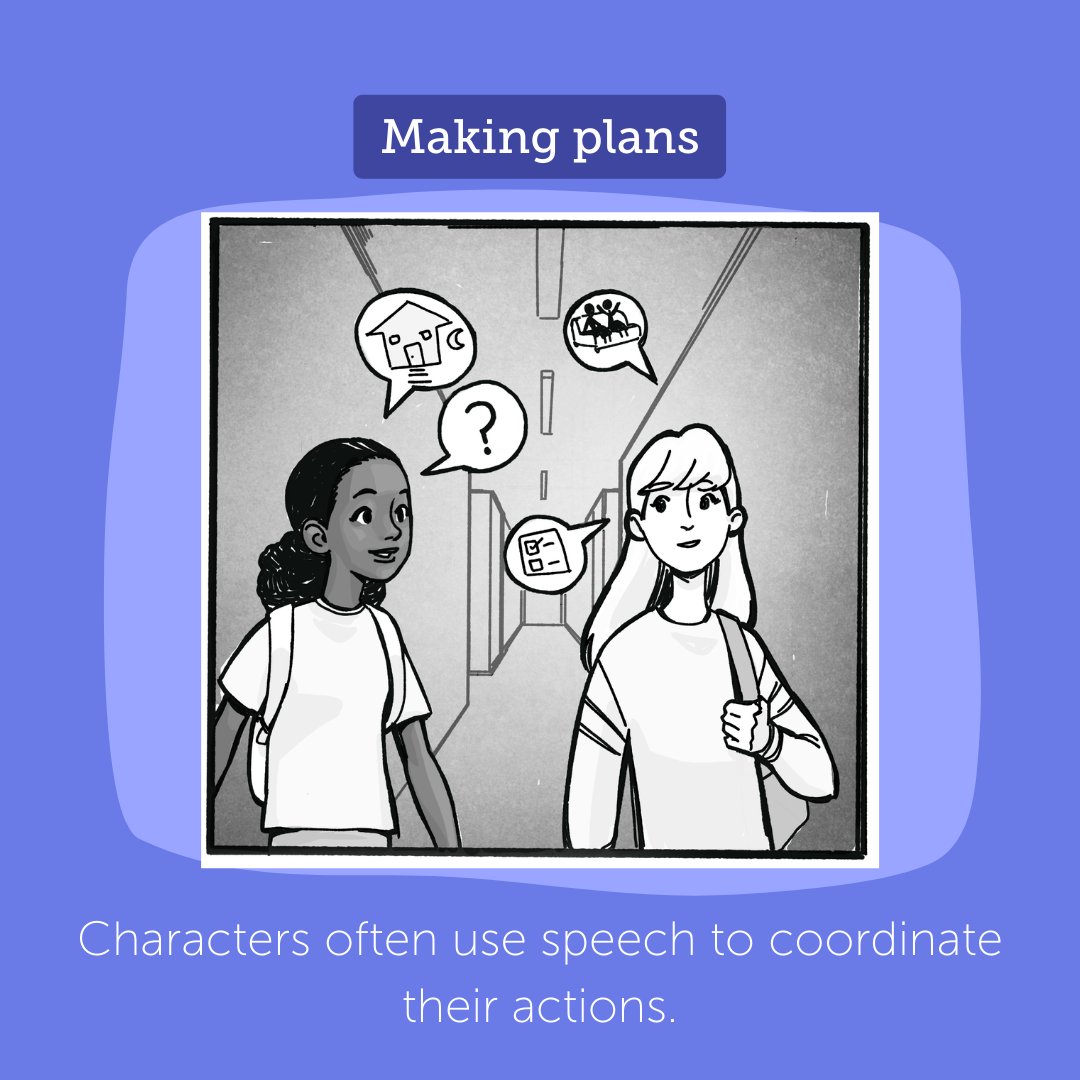
We learn a lot from what characters make plans about, who they make plans with, and how they talk to each other. (Example from Mango Delight by @fracaswellhyman) https://t.co/CCArYzLHBM
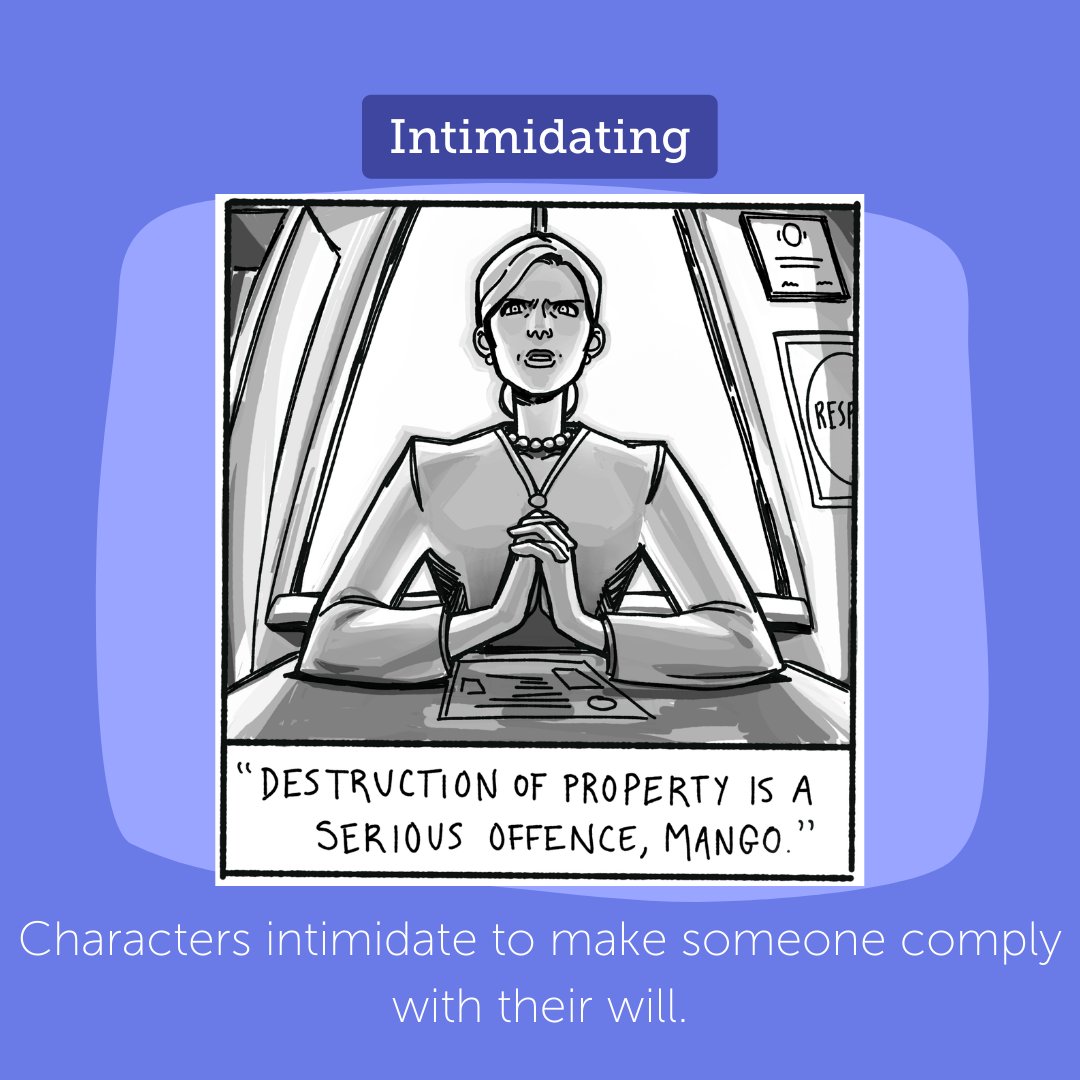
Intimidation usually involves a threat, whether direct or indirect. Here's a great example of an indirect threat from Mango Delight by @fracaswellhyman.
https://t.co/6An1V8Vjk3
Characters tease to get a rise out of someone or lower their status. In Mango Delight by @fracaswellhyman, the main character Mango is teased about her name. https://t.co/rOpNPk7QL2
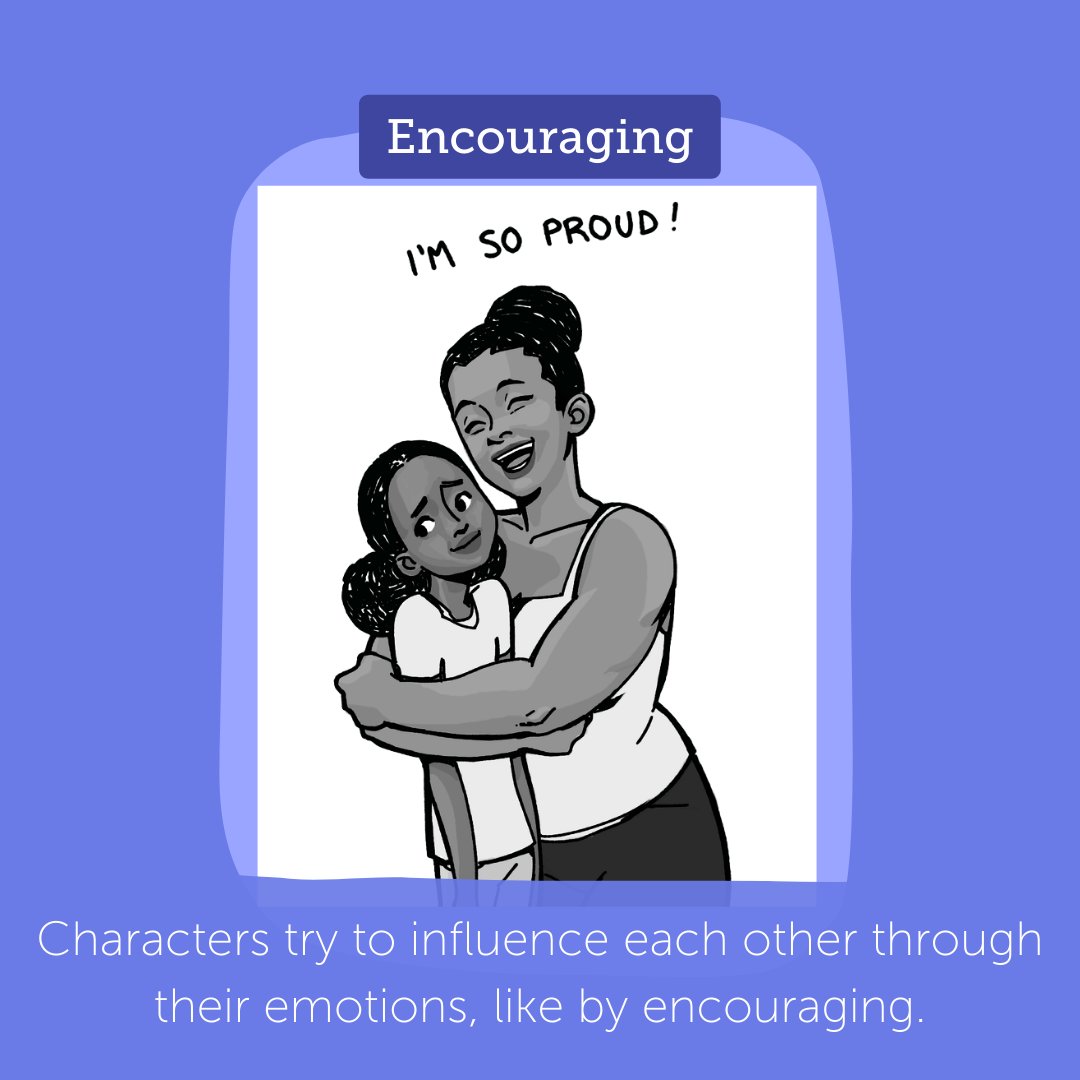
Characters can use speech to affirm or encourage. In this example snippet from @fracaswellhyman, Mango's mother repeatedly encourages her to believe in herself, despite Mango's protests. https://t.co/jmHcpyNbi0
The way in which someone gives a command, what they give a command about, and who they give it to, can tell us a lot about the character. https://t.co/31GzVf2rFP
Even something as small as a greeting can tell us about characters, their roles, and their relationships. Is the greeting open and familiar? Cold and distant? Has it been a long time since they met, or do they see each other every day? https://t.co/5SJsB6PMGD
We've illustrated our lesson on dialogue! We speak to persuade, entertain, inform, frighten etc, so this lesson teaches dialogue as a form of action. We use lots of snippets from @fracaswellhyman who does great character voices in Mango Delight. 🥭😊https://t.co/Db375h6GzT
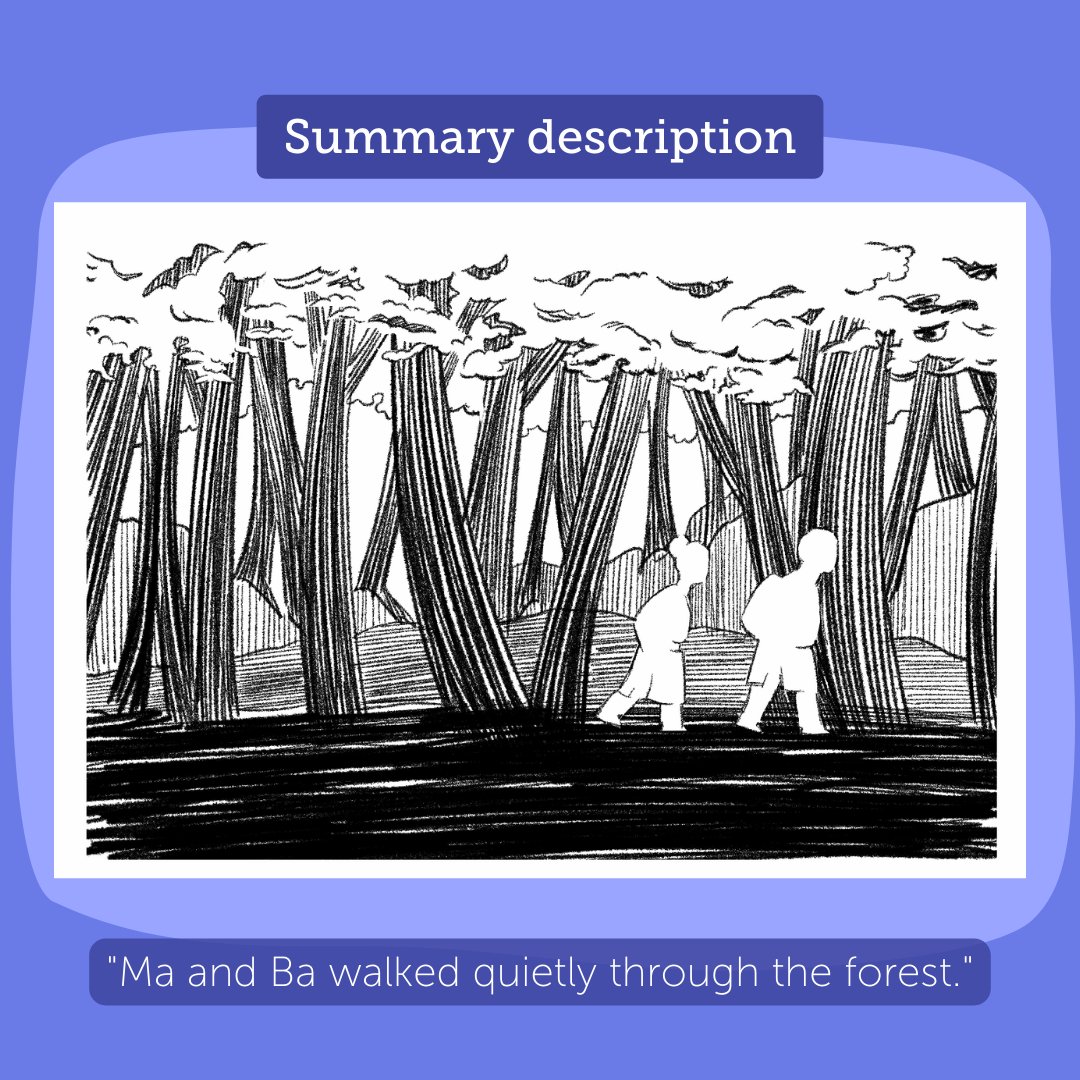
Setting Tip #7: Use summary description when the details aren’t important. In this snippet Grace Lin is letting us know that the detail of the forest isn’t important; it’s just a forest. That's all you need to know for now.
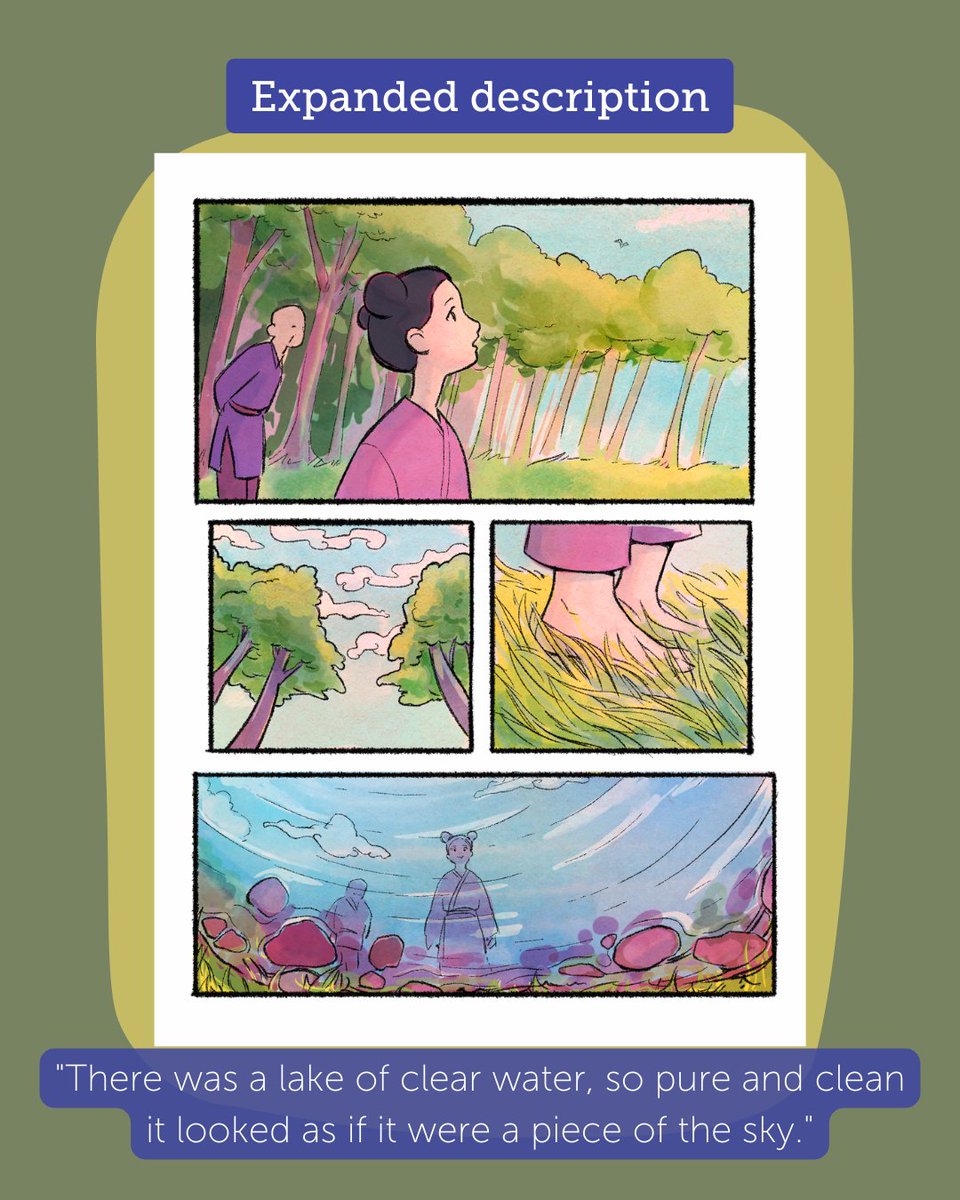
Setting Tip #8: Use expanded description when the details are important. In this snippet, the forest is really important. @pacylin wants us to see how beautiful and special it is, so she describes the isolation, trees, grass, and water in detail.
Setting Tip #6: Guide the reader's eye through the scene by choosing compelling focal points and linking them with prepositions.
In this snippet, Tomi Adeyemi guides the reader's eye around a haunting plateau.