US semiconductor funds are seeing unprecedented demand:
The semiconductor ETF, $SOXX, attracted +$5.4 billion in inflows on Tuesday, the largest daily intake since the fund’s launch in 2001.
This is more than +300% above the previous record daily inflow.
The 3x leveraged long semiconductor ETF, $SOXL, posted +$1.2 billion in inflows, the 2nd-largest daily inflow this year.
In total, US long semiconductor ETFs took in +$7.1 billion in fresh capital on Tuesday.
Year-to-date, $SOXX alone has posted +$13.3 billion in inflows.
Investors are buying the dip in semiconductors at an unprecedented pace.
BREAKING: Micron, $MU, announces plans to invest up to $3 billion to "strengthen the US semiconductor supply-chain ecosystem."
Micron also raises its planned US investment to over $250 billion through 2035, which it expects to create over 90,000 jobs.
The stock extends gains to over +6% on the day.
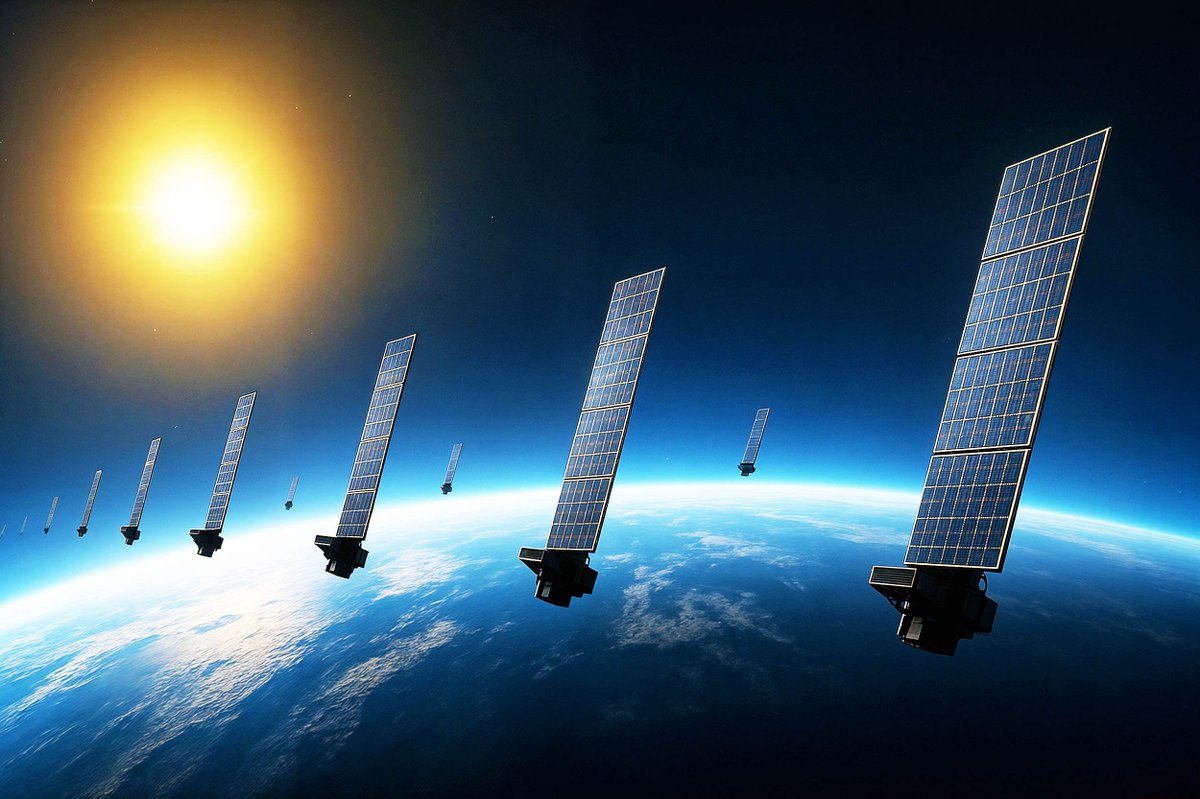
$SPCX launched 1,589 Starlink satellites in 1H 2026.
At the current run rate, SpaceX could surpass last year’s record of 3,180 Starlink launches while $AMZN LEO network has deployed roughly 400 satellites over the past 15 months.
Micron $MU plans to invest up to $3B in the U.S. semiconductor supply chain, including $500M to help GlobalWafers expand its 300mm raw silicon wafer plant in Sherman, Texas. The companies also plan a 10-year supply deal for Micron.
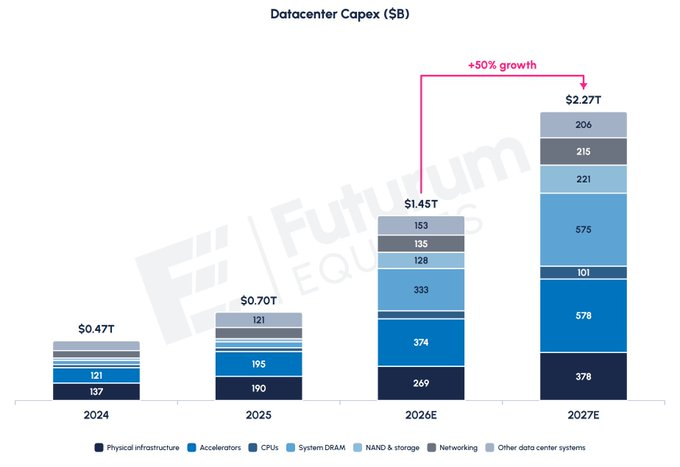
Futurum Equities expects to see 50% growth in datacenter capex in 2027 to $2.3T:
• Accelerators | 25%
• System DRAM | 25%
• Physical Infrastructure | 17%
• NAND & Storage | 10%
• Networking | 9%
• Other Data Center Systems | 9%
• CPUs | 4%
Just when the market thought capex is slowing down
Two headlines
- $META investing $10b into Canada data center
$AMZN investing $5b into Philippines data center
Gene Munster on AI CapEx spend for 2027:
"Street is looking for 23% CapEx growth for next year, few weeks ago it was 17%. If we take what CNBC is reporting this year on the $25B raise from Amazon and the recent comments from Google on their capital raise, that probably suggests the numbers are going to be up 37%."
$AMZN $GOOGL $MSFT $META
$MU $DRAM $SNDK Total memory revenue
$2,625 billion by 2030
14x growth. Six years.
Commodities do not grow 14x in six years. Foundational AI Infrastructure does.
Stop asking when the cycle ends. Start asking how much intelligence the world will need.
$2.6 Trillions
The AI infrastructure buildout is entering a new phase:
US tech companies are committing to spend a record $850 billion on data center leases over the next several years.
This marks a +$570 billion YoY increase, or +204%, and +$200 billion QoQ increase, or +31%.
Meta, $META, added the most in Q1 2026, committing +$79 billion in new leases, a +76% QoQ increase, bringing its total to ~$183 billion.
At the same time, Microsoft, $MSFT, added +$41 billion, a +26% QoQ increase, bringing its total to ~$197 billion.
Oracle leads with the largest total commitments at ~$250 billion, having already secured many of the key sites needed to fulfill its contract with OpenAI.
Tech companies are doubling down on AI.
The AI spending boom is redefining the US economy:
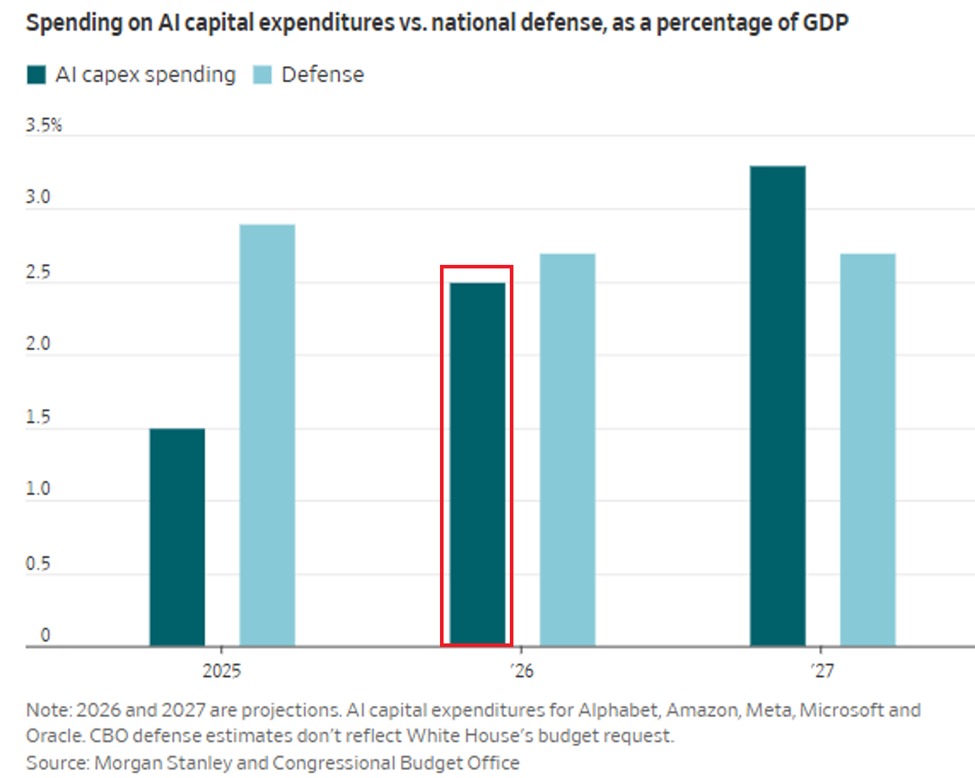
AI CapEx across Alphabet, $GOOGL, Amazon, $AMZN, Meta, $META, Microsoft, $MSFT, and Oracle, $ORCL, is projected to rise to ~3.2% of US GDP in 2027.
If that materializes, annual CapEx will surpass national defense spending for the first time in history, which is projected at ~2.7% of GDP next year.
For this year alone, AI CapEx is set to increase to ~2.5% of GDP, from 1.5% in 2025, close to the estimated defense spending of ~2.7%.
This comes as AI CapEx of these 5 companies is projected to surpass $800 billion in 2026.
Subsequently, in 2027, this is expected to rise further, to a record $1.1 trillion.
Truly mind-blowing numbers.