I don’t want to connect my coffee machine to the wifi network. I don’t want to share the file with OneDrive. I don’t want to download an app to check my car’s fluid levels. I don’t want to scan a QR code to view the restaurant menu. I don’t want to let Google know my location before showing me the search results. I don’t want to include a Teams link on the calendar invite. I don’t want to pay 50 different monthly subscription fees for all my software. I don’t want to upgrade to TurboTax platinum plus audit protection. I don’t want to install the Webex plugin to join the meeting. I don’t want to share my car’s braking data with the actuaries at State Farm. I don’t want to text with your AI chatbot. I don’t want to download the Instagram app to look at your picture. I don’t want to type in my email address to view the content on your company’s website. I don’t want text messages with promo codes. I don’t want to leave your company a five-star Google review in exchange for the chance to win a $20 Starbucks gift card. I don’t want to join your exclusive community in the metaverse. I don’t want AI to help me write my comments on LinkedIn. I don’t even want to be on LinkedIn in the first place.
I just want to pay for a product one time (and only one time), know that it’s going to work flawlessly, press 0 to speak to an operator if I need help, and otherwise be left alone and treated with some small measure of human dignity, if that’s not too much to ask anymore.
The first ever recorded customer complaint comes from Mesopotamia and is over 3,800 years old (1750 BC).
It is a complaint to a merchant named Ea-nasir from a customer named Nanni. Written in Akkadian cuneiform, it is considered to be the oldest known written complaint. It is currently kept in the British Museum.
Ea-nasir travelled to Dilmun to buy copper and returned to sell it in Mesopotamia. On one particular occasion, he had agreed to sell copper ingots to Nanni. Nanni sent his servant with the money to complete the transaction. The copper was considered by Nanni to be sub-standard and not accepted.
In response, Nanni created the cuneiform letter for delivery to Ea-nasir. Inscribed on it is a complaint to Ea-nasir about a copper delivery of the incorrect grade, and issues with another delivery; Nanni also complained that his servant (who handled the transaction) had been treated rudely. He stated that, at the time of writing, he had not accepted the copper, but had paid the money for it.
The “Complaint Tablet To Ea-Nasir” was found in the ruins of Ur inside an old Babylonian house, which may have been the residence of Ea-Nasir. The tablet was discovered and acquired by Sir Leonard Woolley, leading a joint expedition of the University of Pennsylvania and the British Museum from 1922 to 1934 in the Sumerian city of Ur.
The tablet's full text:
“Tell Ea-Nasir: Nanni sends the following message:
When you came, you said to me: “I will give fine quality copper ingots.”
You left, but you did not do what you promised me.
You put ingots which were not good before my messenger and said:
“If you want to take them, take them; if you do not want to take them, go away!”
What do you take me for that you treat me with such contempt? …
… How have you treated me for that copper?
You have withheld my money bag from me in enemy territory;
it is now up to you to restore to me in full.
Take notice that I will not accept any copper from you that is not of fine quality.
I shall select and take the ingots individually in my yard,
and I shall exercise against you my right of rejection because you have treated me with contempt.”
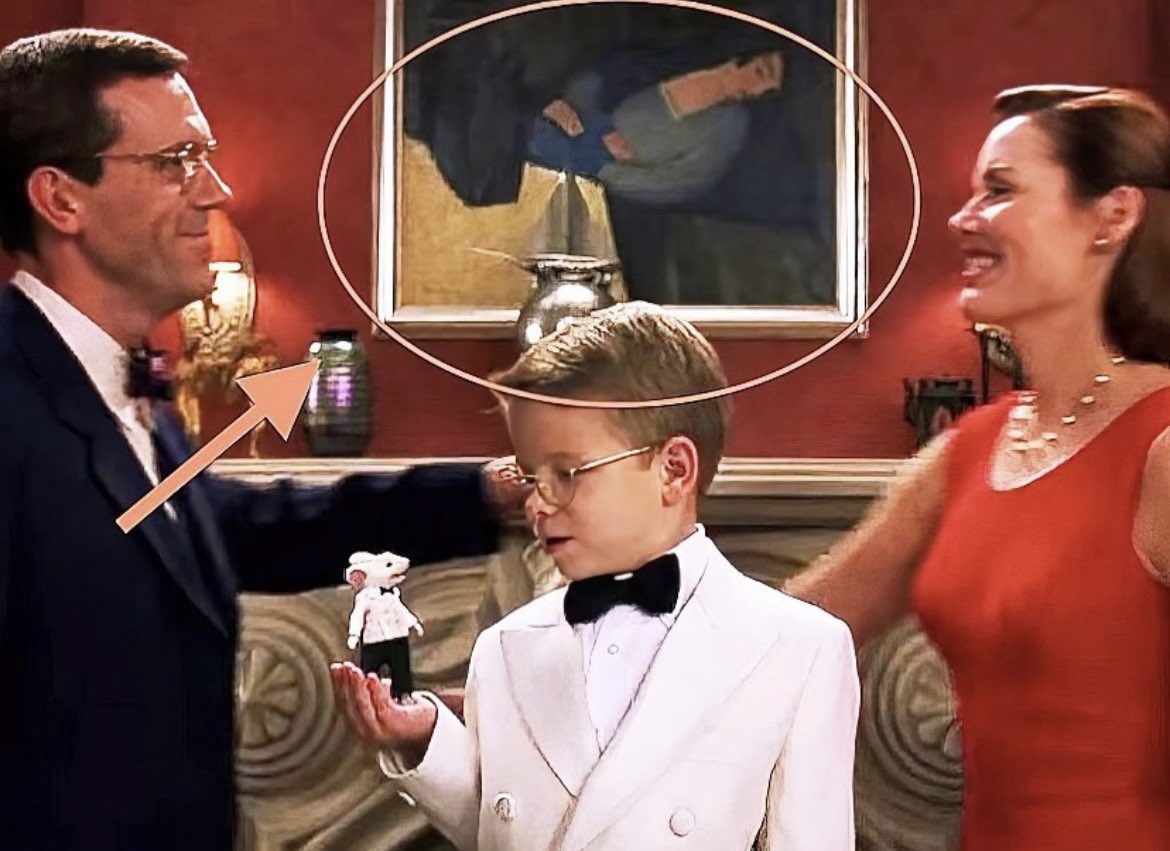
In 2009 while watching "Stewart Little" (1999), Hungarian art historian Gergely Barki saw the painting "Sleeping Lady with Black Vase" by Róbert Berény. It had been missing for 90 years and had been used as a prop. It was the original.
The painting disappeared in the 1920s, but Barki recognised it immediately even though he had only seen a faded black-and-white photo from an exhibition in 1928.
He sent a flurry of emails to staff at the film's makers, Sony Pictures and Columbia Pictures, and received a reply from a former set designer on the film - two years later.
"She said the picture had been hanging on her wall," Barki said.
"She had snapped it up for next to nothing in an antiques shop in Pasadena, California, thinking its avant-garde elegance was perfect for Stuart Little's living room."
Life finds a way
This tree that grew its way through the pavement and the inside of a stop sign in Los Angeles
[📹 Marika Sparrow: https://t.co/sT5Sjlsq5v]
https://t.co/aPPbPMSCOl