Crypto is full of noise. This account is about the signal.
Deep threads on how it actually works:
→ Bitcoin, Ethereum, L1/L2
→ Consensus & crypto math
→ DeFi, MEV, privacy
→ The biggest hacks, explained
→ And more
No hype. No shilling. Just the tech.
Follow to unlock it.
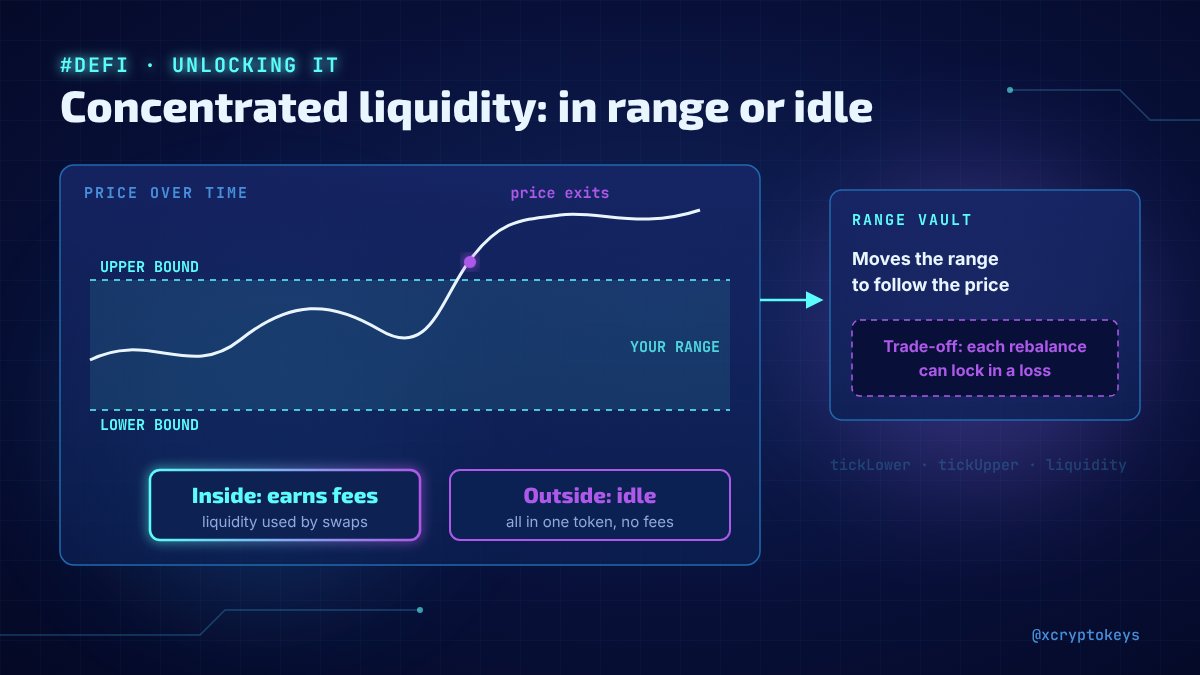
@GammaStrategies@RobinhoodCrypto@Uniswap Unlocking it 🔑 In Uniswap V3 and V4, LPs choose a price range. While the price stays inside, their liquidity earns fees. Once it exits, it stops earning and sits entirely in one token. Range vaults move that range for you, but every rebalance can lock in a loss.
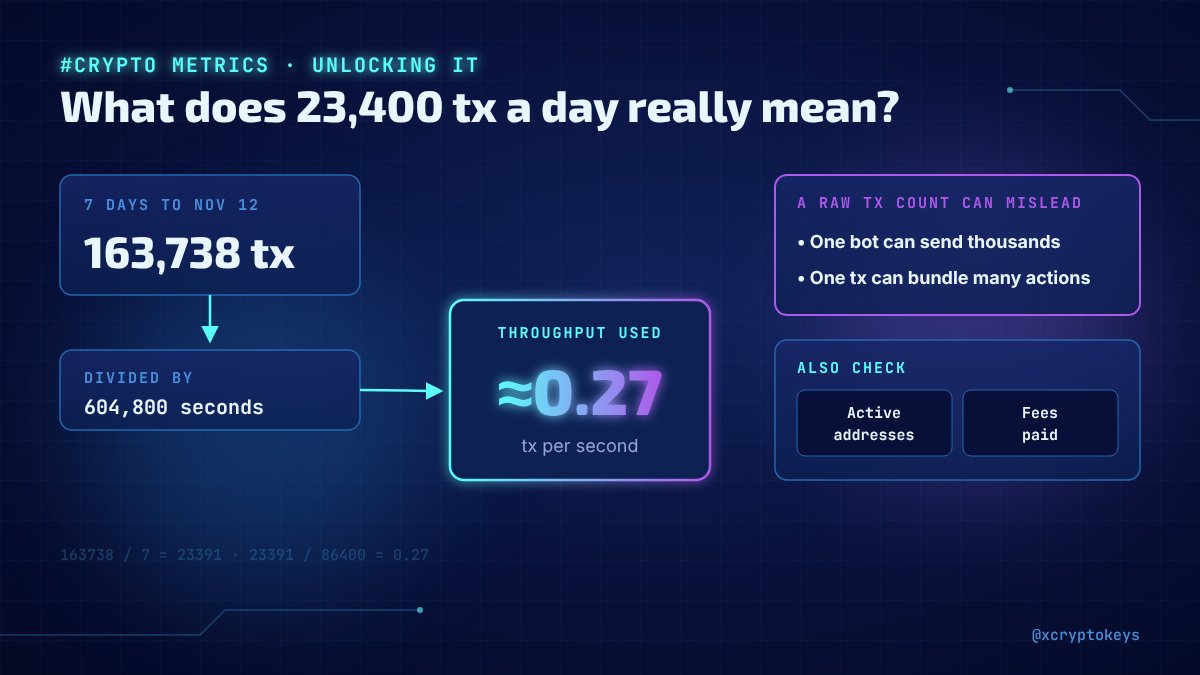
@chainspect_app@SeiNetwork Unlocking it 🔑 Quick math: 23,400 tx a day is ≈0.27 tx per second. A raw tx count is a rough gauge of usage: one bot can send thousands, and one tx can bundle many actions. Active addresses and fees paid help tell real activity from noise.
Crypto #Anonymity Myths #2: Think of a Bitcoin address as a pen name. Nobody knows who wrote the books, until one book is traced to you. Then every book under that pen name is yours too, including the old ones. #XCKano1
@Cointelegraph Unlocking it 🔑 In 2010, mining one block paid 50 BTC. So 100 BTC from two wallets that old often means two block rewards, most likely mined on a regular PC. Back then those rewards were usually sent to P2PK outputs, where the public key sits in plain view on-chain.
@bitjson Unlocking it 🔑 Shorter block times aren't free speed. The faster blocks come, the more often two miners find one at the same time, and one gets orphaned. Low stale rates depend on fast block propagation, which is why testing across implementations matters so much here.
@BitcoinNews@graminitha1@Zcash Unlocking it 🔑 A quantum computer doesn't attack your address, which is a hash. It needs your public key, revealed once you spend. So the first targets are coins whose key is already public, like early P2PK outputs. The real race is migrating them, not the headline.
@CoinDesk@Strive@IIICapital Unlocking it 🔑 Most big hacks don't break the cryptography, they break the signing process. Bybit lost ≈$1.5B in 2025 because signers approved a tampered transaction shown in a compromised UI. Hardware wallet or custodian, the weak link is what you approve.
@Cointelegraph Unlocking it 🔑 Copying a https://t.co/UT1BnmuPN6 token takes one click: same name, same ticker, same image. The only thing a copycat can’t fake is the mint address. Always check the contract, never the ticker.
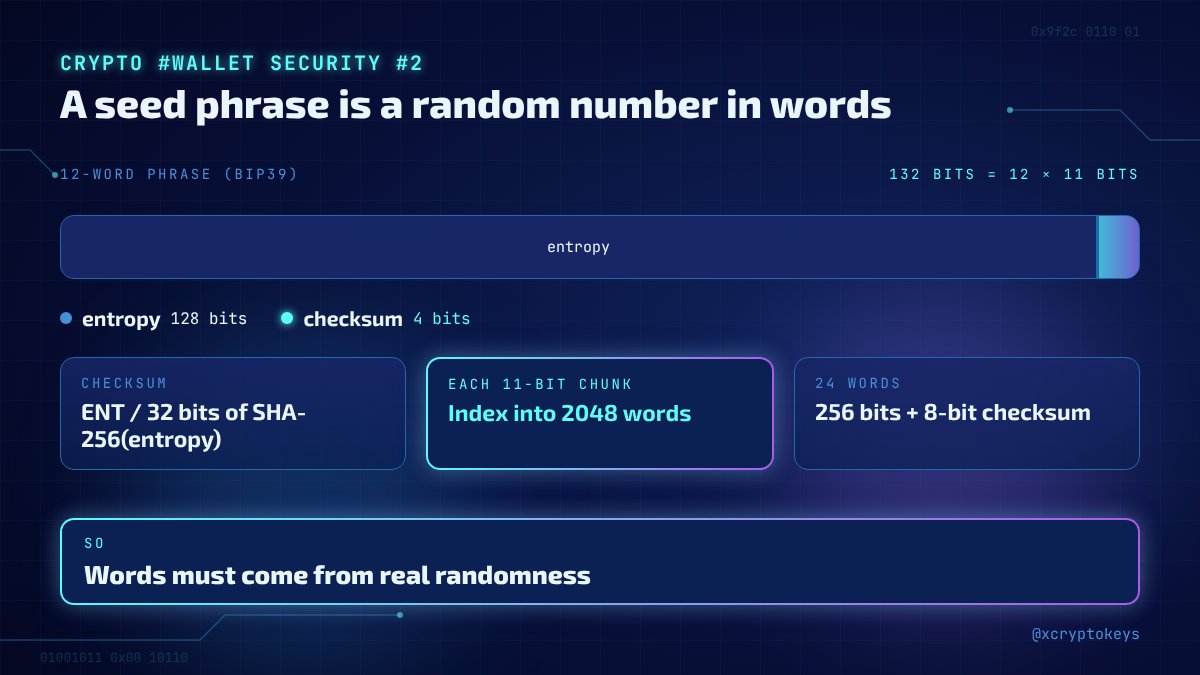
Crypto #Wallet Security #2: A 12-word recovery phrase is just a big random number written in words. Each word comes from a fixed list of 2048 and stores 11 bits. 12 words = 128 bits of randomness plus a small checksum. #XCKwal1
@kucoincom One number decides whether your DeFi loan gets liquidated, and someone gets paid to do it. My new daily thread explains formulas like this one, from swaps to stablecoins.
@WEEX_Official Why can a pool never run dry? Why do lenders earn less than borrowers pay? How did a peg defense become a death spiral? One DeFi formula like these every day in my new thread.
@anndylian New daily thread on the formulas behind DeFi: how a DEX prices swaps, where impermanent loss comes from, what triggers a liquidation, how a peg can spiral. 53 posts, each with the incident that tested it.
#DeFi Mechanics #2: Uniswap's rule is x · y = k. A pool holds two tokens, and after every trade the amounts multiplied together must stay the same (before fees). Take some of one token out, and you must put more of the other in. #XCKdfi1
Crypto #MEV Dark Forest #2: MEV is the extra money a block producer (or a bot paying them) can make by choosing which transactions go in a block, which stay out, and in what order. #XCKmev1
Crypto #Layer2 Unlocked #2: Every node of a blockchain checks every transaction, so block space is limited on purpose. Layer 2s move most activity elsewhere and use the base chain to settle or resolve disputes. #XCKlay1
Crypto #Hack Autopsy #1: The biggest crypto heists rarely "break" cryptography. They exploit one forgotten check, one stolen key, one fake screen. One hack a day, explained: not how much was taken, but what failed. #XCKhak1
#Ethereum Deep Dive #1: Ethereum went live on July 30, 2015, as a blockchain that runs programs, not just payments. This series opens the hood: accounts, gas, the EVM, staking, blobs. One mechanism a day. #XCKeth1
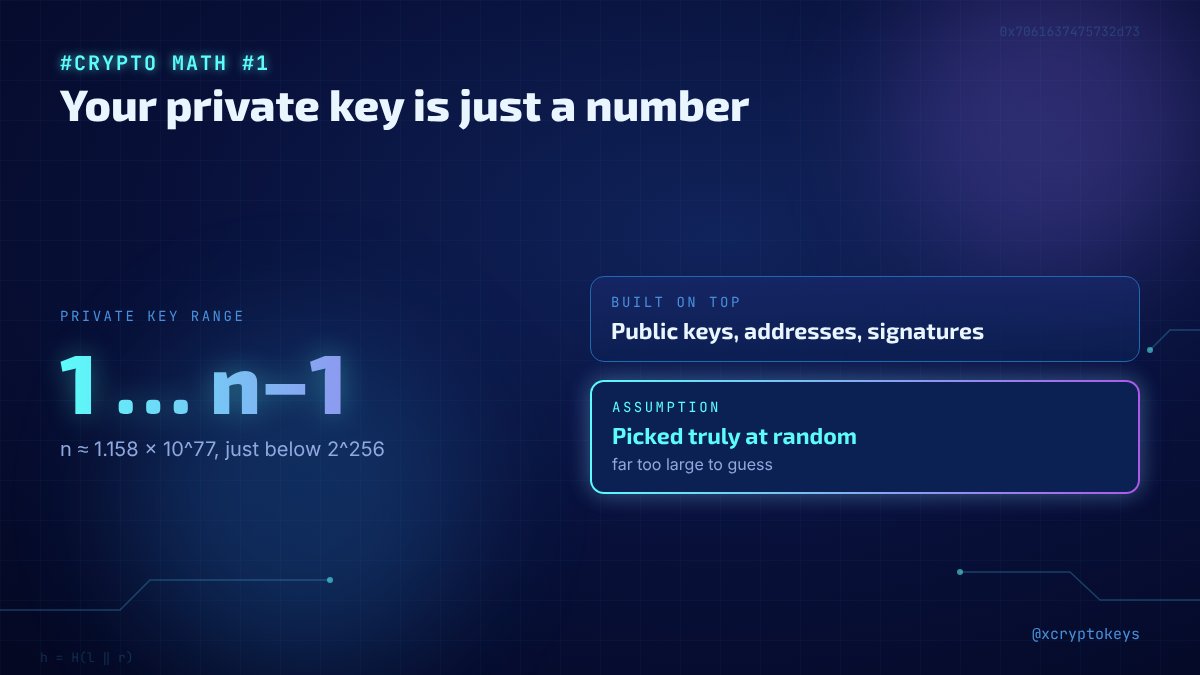
#Crypto Math #1: Your coins aren't guarded by a vault. They're guarded by a number. A private key is one pick out of about 10^77 possibilities, far too many for any computer to guess. One fact a day on the math that guards your coins. #XCKcry1
#Blockchain Consensus #2: The 'Byzantine Generals Problem' (Lamport, Shostak, Pease, 1982): generals must agree to attack or retreat while some of them are traitors sending fake messages. Every blockchain solves a version of it. #XCKcns1
#Bitcoin Internals #1: Bitcoin has rules most holders never read: coins that can never be spent, a bug that once printed 184 billion BTC, a clock allowed to run 2 hours fast. One rule a day, explained simply. #XCKbtc1