እልልልልልልል !
The four continental winners of Round 1 of the Miss World People’s Choice Award have been announced!
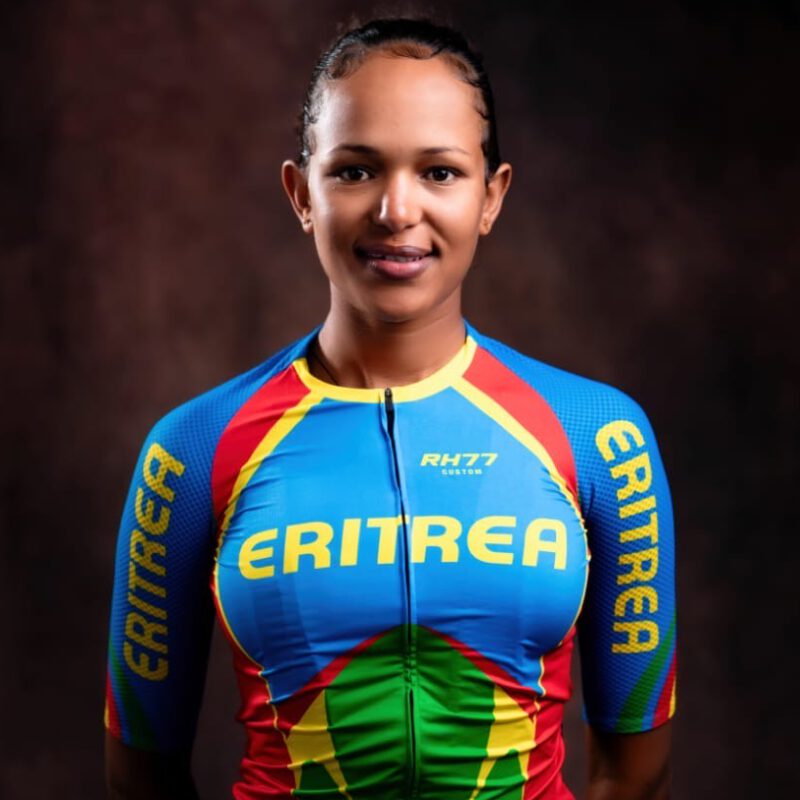
Africa: Snit Habteab, #Eritrea 🇪🇷
Americas & Caribbean: Angelin Fan, Canada
Asia & Oceania: In Leakena, Cambodia
Europe: Julia Horne, Gibraltar
Congratulations to our four winners, who have earned direct entry into the Top 40 of the 75th Miss World!
@martinplaut The Houthis don’t need a base in Eritrea to threaten Bab el-Mandeb. They’ve already demonstrated long-range capabilities, including reaching Israel. The strait is only 32 km wide. The U.S., UK, France, China & others monitors the area & this guy pretends know better than them.
@martinplaut#Eritrea self resilience is UNDENIABLE poor man. The raw data you provided talks it self. U r trying an old man's trick "confusing folk with % ". Even at z highest yr its only 14 mil. There is no project to be accomplished with such little money.
You may have seen my X post on "Eritrean" 🇪🇷 Bruke Desalagne who raped a 60 old man outside a church in. I have had two Eritreans @eritrean_post & now @Eritrea1952 who confirm he's an Ethiopian 🇪🇹, and he sent me his Facebook page. It's an immigration scam as Eritreans are rarely refused asylum.
His name is written in Amharic the native language of Ethiopia and says his place of birth is the capital Addis Ababa.
English is compulsory in Eritrean schools and Desalagne needed an interpreter.
The image is lifted from his FB page.
Snit Habteab Tewoldemedhin representing #Eritrea is currently leading the African regional group on the first People's Choice leader board for the 75th Miss World Festival in Vietnam.
please be careful about making claims regarding a person's nationality without clear evidence. We understand that Mon from Ethiopian not Eritrean, but this should be independently verified by the relevant authorities.
No one should be separated, targeted or labelled based on nationality, origin or assumptions without proper evidence. We should all respect the law, due process and human dignity.
@UKHomeOffice@GOVUK@metpoliceuk@BBCNews@CNBC
#Ethiopia #Eritrea #Immigration #Asylum #HumanRights #DueProcess #Evidence #UK
🇪🇷Eritrea’s location on the Red Sea near Bab el-Mandeb gives it major strategic importance for global shipping & undersea communications.
It lies near
����critical trade routes &
📌submarine cables connecting Europe, Asia, Africa, & the wider Indian Ocean.
#Eritrean #RedSea
Warsai-Yikealo School Officially Begins Academic Year
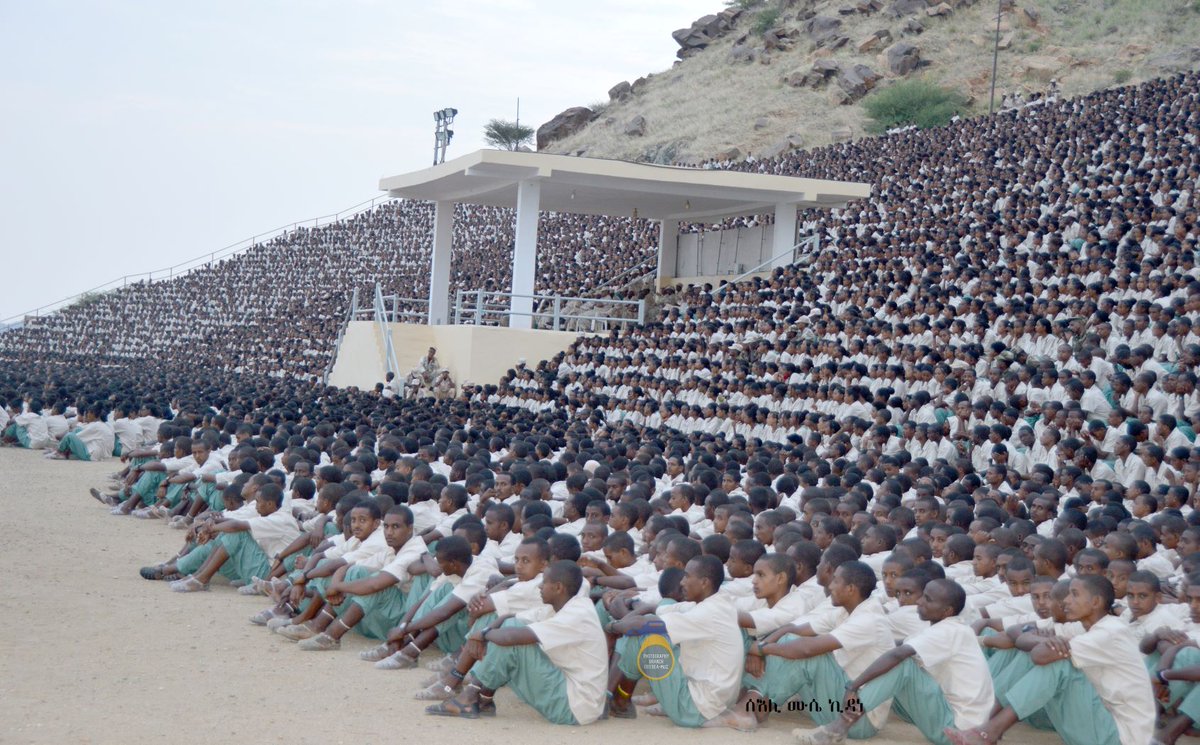
Sawa, 17 August 2026—Students who went to Sawa from high schools across the country to pursue their 12th-grade education and fulfil their national service obligations as members of the 39th round have officially begun the 2026/2027 academic year.
At the opening event conducted on 16 August, the director of the school, Mr. Russom Gebrehiwet, provided detailed information regarding the school’s regulations and guidelines. He also called on the students to take advantage of the opportunities provided by the school and excel in their studies.
Noting that the number of students has increased by 20% compared with last year, Mr. Russom confirmed that the school and the national service training center have made all the necessary preparations.
Mr. Russom went on to say that, alongside its regular academic program, the school also conducts various activities, including sports and cultural activities, general knowledge competitions, debates and discussions, programs aimed at empowering females, seminars, entertainment programs and popular campaigns.
Commending the detailed information provided, the students expressed their readiness to make the best use of the opportunities available to them.
https://t.co/7ZivnZg7bW
Eritrea’s Sovereignty Is Not Negotiable: Neither Is the Sovereignty of Any Other African Nation
The Embassy of the State of Eritrea has taken note of recent articles by Deutsche Welle (DW), “Eritrea: Key Player in the Geopolitical Gamble at the Horn,” and Foreign Policy Journal, “Eritrea Emerges as a Critical Strategic Player in the Horn of Africa’s Shifting Geopolitical Landscape.”
While both acknowledge Eritrea’s strategic importance, domestic stability and growing relevance in the Red Sea and Horn of Africa, they reproduce remarkably similar narratives that distort Eritrea’s history, minimize, and normalizes the implications of Ethiopia’s declared unlawful pursuit of “sovereign access” to the sea, portray Eritrea’s legitimate regional diplomacy as an anti-Ethiopian project, and employ politically loaded characterizations of Eritrea.
At the heart of current Eritrea-Ethiopia tensions is a fundamental question that should not be obscured: commercial access to a port is one matter; sovereignty over another country’s coastline or territory is entirely another.
Eritrea has no territorial claim against Ethiopia, demands no Ethiopian land or resources, and seeks no alteration of Ethiopia’s internationally recognized borders. Eritrea has never, in recorded history, opposed Ethiopia’s legitimate commercial use of regional ports through mutually negotiated arrangements. Landlocked countries throughout the world conduct international commerce through neighboring coastal states without acquiring sovereignty over their territory. In fact, commercial necessity creates opportunities for cooperation among countries; it does not create territorial entitlement.
Ethiopian official rhetoric concerning “sovereign access” to the Red Sea therefore cannot be sanitized as a simple dispute over maritime trade. Economic aspiration, demographic size or geographical disadvantage cannot be converted into sovereign entitlement, nor can they justify revising internationally recognized African boundaries. Any suggestion to the contrary constitutes a flagrant violation of international law and would establish a profoundly destabilizing precedent for the continent.
The historical framing employed in both articles is equally troubling. DW describes Eritrea as having “split” from Ethiopia, while Foreign Policy Journal asserts that Eritrean independence “stripped Addis Ababa of its direct coastal outlet.” Such terminology reverses historical cause and effect and inadvertently lends legitimacy to contemporary territorial revisionism such as that by Ethiopian leaders.
The mere truth is that the Eritrean people are endowed with their own, separate, and rich history in the millennia prior to the advent of European colonialism to the African continent. In this respect, Eritrea’s modern territorial boundaries, like those of virtually all African states, were consolidated during European colonial rule, with the Italian colony of Eritrea formally established in 1890. Eritrea subsequently passed through Italian colonial rule, and a ten-year British Military Administration, (BMA), in the immediate aftermath of the Second World War before being linked with Ethiopia under a bogus “Federal Arrangement” to mollify the “overriding” geopolitical interests of major powers and against the expressed will of the Eritrean people.
Moreover, Ethiopia unilaterally abrogated the “Federal Arrangement” ten years later and annexed Eritrea in 1962, precipitating the three decades of protracted armed struggle for independence.
In the internationally supervised referendum of 1993, 99.805 percent of Eritreans voted for independence, after which Eritrea was admitted to the United Nations. To portray this internationally recognized process as Ethiopia being “stripped” of a coastline is historically prejudicial and legally untenable.
Furthermore, the Eritrea-Ethiopia boundary is neither provisional nor unresolved. Following the 1998–2000 border war, both countries signed the Algiers Agreement and voluntarily submitted the “putative dispute” on some areas on the common boundary – specifically, “Badme and its environs” – to independent international arbitration.
The Eritrea-Ethiopia Boundary Commission (EEBC) rendered its delimitation decision in April 2002 based on the “Colonial Treaties of 1900, 1902, 1910) and applicable international law”, further expressly stipulating, in accordance with other provisions of the Algiers Agreement, that the determination is final and binding.
The articles also attempt to interpret Eritrea’s relations with Egypt, Somalia, Saudi Arabia, the United Arab Emirates, the United States, and other partners primarily as an effort to construct a “counterweight” against Ethiopia.
This is an Ethiopia-centric and reductive interpretation of the legitimate foreign policy of a sovereign state. Eritrea is a Red Sea nation situated along one of the world’s most consequential maritime corridors. Its international relations naturally encompass maritime security, regional stability, trade, investment, transportation, and bilateral cooperation. Eritrea does not require an Ethiopia-centered explanation for every diplomatic relationship it maintains.
Equally problematic is the contradiction between acknowledging Eritrea’s remarkable stability while simultaneously disparaging that stability as merely “authoritarian.” The articles invoke terms such as “autocratic,” “repressive,” and “authoritarian,” speculate about institutional collapse after a future leadership transition and reproduce sweeping and pejorative comparisons with “North Korea”. Political labels and hypothetical succession scenarios are not substitutes for evidence or serious analysis. Eritrea’s political system must be examined within its historical experience, social fabric, national institutions, its people’s unity, and independent nation-building trajectory – not judged exclusively through predetermined ideological templates.
This contradiction is particularly striking because the articles themselves recognize Eritrea as comparatively peaceful, cohesive, and secure, strategically positioned along the Red Sea, and increasingly important to regional and international partners. These realities deserve examination on their own merits rather than being reframed as evidence of political deficiency.
The overall principle at stake extends far beyond Eritrea. Africa’s interstate order rests on respect for inherited international colonial boundaries, sovereign equality, and territorial integrity. If established borders can be reopened because one country is larger, landlocked, economically ambitious or considers another state’s territory strategically necessary, virtually no African boundary would remain immune from challenge.
Eritrea claims no territory belonging to another state and seeks peaceful, mutually beneficial relations with Ethiopia and all its neighbors. What is not open to negotiation is Eritrea’s sovereignty and territorial integrity.
Eritrea’s sovereignty is not a geopolitical bargaining chip. It is an internationally recognized legal right, and the same right upon which the security, sovereignty and territorial integrity of every African nation ultimately depend.
Embassy of the State of Eritrea
Washington, D.C.
17 August 2026
Eritrea’s Sovereignty Is Not Negotiable: Neither Is the Sovereignty of Any Other African Nation
Embassy of the State of Eritrea
Washington, D.C.
17 August 2026
*"...At the heart of current Eritrea-Ethiopia tensions is a fundamental question that should not be obscured: commercial access to a port is one matter; sovereignty over another country’s coastline or territory is entirely another".
*"...Eritrea has no territorial claim against Ethiopia, demands no Ethiopian land or resources, and seeks no alteration of Ethiopia’s internationally recognized borders. Eritrea has never, in recorded history, opposed Ethiopia’s legitimate commercial use of regional ports through mutually negotiated arrangements. Landlocked countries throughout the world conduct international commerce through neighboring coastal states without acquiring sovereignty over their territory. In fact, commercial necessity creates opportunities for cooperation among countries; it does not create territorial entitlement".
*"...The overall principle at stake extends far beyond Eritrea. Africa’s interstate order rests on respect for inherited international colonial boundaries, sovereign equality, and territorial integrity. If established borders can be reopened because one country is larger, landlocked, economically ambitious or considers another state’s territory strategically necessary, virtually no African boundary would remain immune from challenge".
*"...Eritrea claims no territory belonging to another state and seeks peaceful, mutually beneficial relations with Ethiopia and all its neighbors. What is not open to negotiation is Eritrea’s sovereignty and territorial integrity".
*"...Eritrea’s sovereignty is not a geopolitical bargaining chip. It is an internationally recognized legal right, and the same right upon which the security, sovereignty and territorial integrity of every African nation ultimately depend".
https://t.co/n8P1UmwP21
Eritrea's roster for the 2026 World Championships in Montréal is set!🇪🇷
Men Elite: Biniam Girmay, Henok Mulubrhan, Natnaiel Tesfatsion, Amanuel Ge/her, & Merhawi Kudus
U23: Milkiyas, Nahom, & Yafiet
Women: Monaliza Araya
Good luck, champs - best prep wishes! @shabait
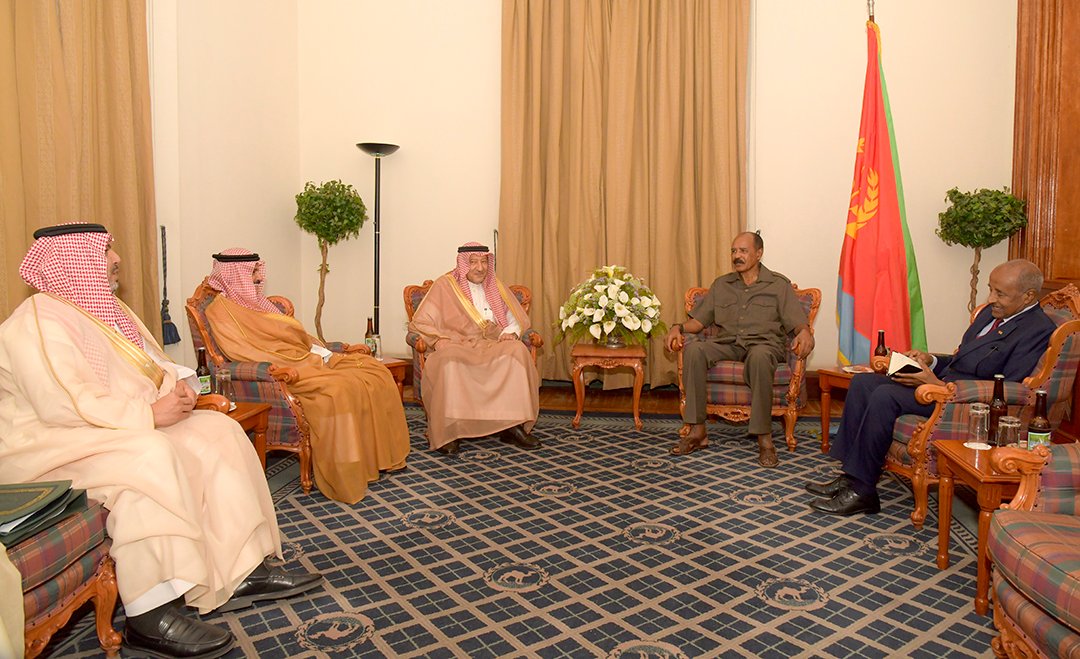
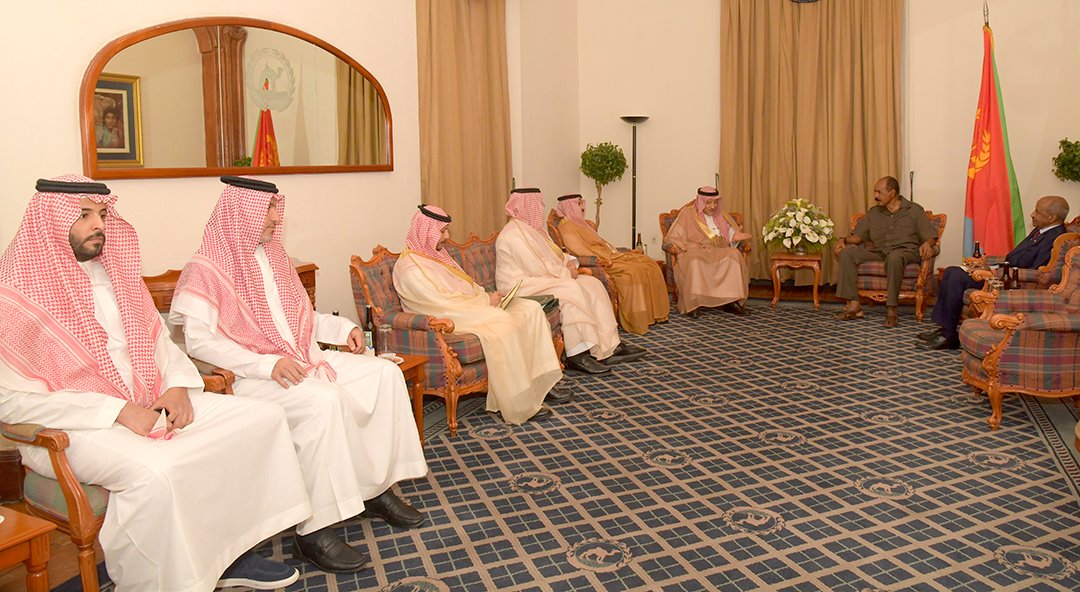
President Isaias Afwerki met, at the Denden Guest House in the late afternoon hours today, Saudi delegation led by the Deputy Minister of Foreign Affairs, Engineer Waleed Bin Abdulkarim al-Khereiji.
President Isaias underlined the importance of further consolidating the historical bilateral ties of friendship and cooperation between Eritrea and the Kingdom of Saudi Arabia through the cultivation of shared and aligned views and positions on vital regional and international issues.
The two sides discussed, in greater depth, the role of the littoral States of the Red Sea in guaranteeing the peace and security of the region against the backdrop of fluid regional and international developments and trends.
In this context, the two sides decided to expedite the concrete implementation of cooperation agreements in the political, economic, security, cultural and social sectors previously reached between Eritrea and Saudi Arabia.
Sudanese Academics Join Eritrean Counterparts to Strengthen Scientific Cooperation Between the Two Countries
A number of Sudanese university professors, including academics from the University of Khartoum, International University of Africa, and Bahri University, recently participated alongside their Eritrean counterparts in a series of academic evaluation activities, scientific committees, and examination supervision assignments as part of ongoing efforts to exchange expertise and enhance the quality of higher education in Eritrea.
https://t.co/KpXnSl91PX
🇪🇷❤️ Highly relevant arguably more than when 1st submitted:
📌Regional ownership by littoral states
📌Realistic threat assessment
📌National naval & defense capacity
📌Respect for sovereignty & international law
📌Limited external support when regional capacity is insufficient
In these tumultuous times, charting out synergetic and complementary architecture of collective regional security, and more broadly, modalities and mechanisms of wider cooperation has become more vital and urgent than ever before.
The overarching political considerations and operational calculus behind this conviction are the imperatives of ownership and agency; the need to avoid a polarized climate of global rivalry; and the rationale for enhancing local capacity building and mutual cooperation between the main stakeholders to secure and enhance enduring regional peace and stability.
In the Red Sea, this broad framework translates and is better summed up in the following 12 points that Eritrea submitted to the Council of Red Sea and Gulf of Aden Littoral States few years ago.
Eritrea maintains that these parameters can indeed serve as substantive inputs that can be enriched through continuous and rigorous consultation against the backdrop of fluid and changing realities.
1. Comprehensive and unbiased assessment of the current realities of the Red Sea and associated matters, in all their dimensions and perspectives in a realistic manner;
2. Full clarity on the desired objectives and goals;
3. Detailed mapping of the threats to the peace and security of the Red Sea; and, categorization and specification of these parameters;
4. Formulation of a viable strategy that will ensure achievement of constructive objectives and goals;
5. Formulation of strategies to contain and eliminate the threats in tandem with the positive policies of cooperation;
6. Mapping out detailed schemes and plans that will ensure holistic implementation of the twin strategies;
7. Stipulation of the implementation mechanisms, associated structures and mobilization of the requisite resources;
8. Ensuring that all the organizational configurations and frameworks that are developed are anchored on respect of sovereignty and international law;
9. Ensuring that all littoral States build and possess their own effective defense capabilities and naval forces (without delegation to others);
10. Supplementing, through collective efforts and synergy, those specific tasks that cannot be met through individual domestic capabilities and resources;
11. All relevant States will create appropriate modalities of cooperation with “external forces” for tasks or missions that are beyond their collective capability on the basis of a consensual framework;
12. Creation of competent committees to address all these issues in a comprehensive and professional manner.
GENEVA
H.E. Sidharto R. Suryodipuro, President of the UN Human Rights Council, has appointed Mr. Habtom Zerai , Chargé d’Affaires a.i. of Eritrea’s Permanent Mission in Geneva, as Chair-Rapporteur of the 2026 Social Forum.
The appointment followed the regional group nomination process.
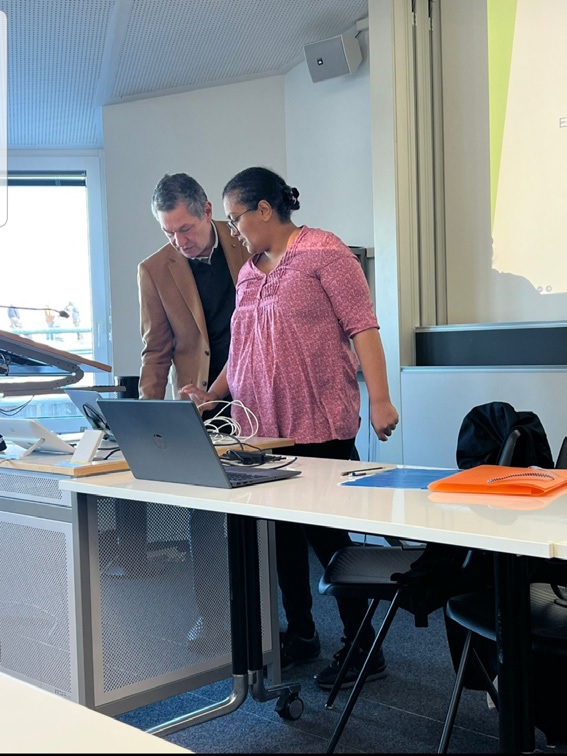
Profile Q & A : Born in Beijing and Raised in Geneva, but Dreaming of Eritrea: Dr. Helen Awet
By: Kidane Shimendi
Eritreans across the diaspora continue to return to their homeland with inspiring missions, bringing their professional expertise, global insights, and personal assets home to address local challenges. Dr. Helen Awet Weldeyohannes is a prime example of this enduring commitment. Born in Beijing and raised in Geneva, she has always had her heart set on Eritrea. Last month, she visited home to share her doctoral research on the engagement and mobilization of the Eritrean diaspora. Eritrea Profile sat down with her to discuss her personal background, career journey, and ongoing research.
https://t.co/mT5rAwXjRT
A beautiful moment of respect in the Eritrean countryside: a young woman greets her elder with the traditional gesture of kissing the hand. This is how we honor those who came before us. #Eritrea#Culture#RespectForElders