One might think smooth faults are more likely to host supershear earthquakes than rough faults, yet our recent study shows the opposite trend. The key is to understand the initial stress & strength conditions over earthquake cycles.
Please check it here: https://t.co/F986NwfLzA
Glad to share @DDTSUSTech 's work: observable back-propagating ruptures can be excited by a variety of perturbation mechanisms, and observations confirm their wide existence.
Rewinding the Fault: Stress Perturbations Promote Back-Propagating Ruptures https://t.co/SbIfAFEJeq
@JudithGeology In the lab, if a fault is made very smooth, it will creep, at least for some period of time. To get rid of this effect, people usually re-roughen the fault a bit. So a related question is how to define "smooth", in what sense and to what degree.
A recent study shows that a prominent fault-interior asperity initially hosts microseismicity and casts a wide slip shadow, then impedes slow slip migration, and finally produces large co-seismic slip. Thus, asperity can show quite diverse behaviors.
https://t.co/njwkoSSvOf
@SeismoSocietyAm Sub-parallel strike-slip faults and normal faults may emerge in the same region, e.g., in a relay zone between two strike-slip fault systems. Similar feature can also be found along the Dead Sea fault, e.g., in the rupture zone of the 1995 Mw 7.2 Gulf of Aqaba earthquake.
Good to read this work in conjunction with a recent anti-repeating EQ paper. Useful for class teaching about the who-drag-whom debate underlying plate tectonics.
Analogous to linear algebra and finite frequency, there is an "eigenvector" in fault mechanics along which fault damage zone width can be minimized. Such effect can overtake fault maturity in controlling rupture behaviors.
Liu‐Zeng et al. AGU Advances https://t.co/A01ofeUpHO
Along‐Strike Variation of Rupture Characteristics and Aftershock Patterns of the 2023 Mw 7.8 Türkiye Earthquake Controlled by Fault Structure https://t.co/D5ncP7cZuN
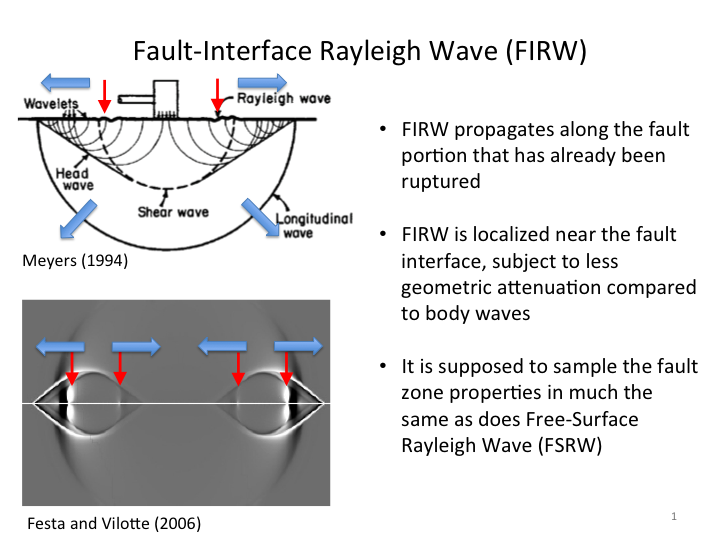
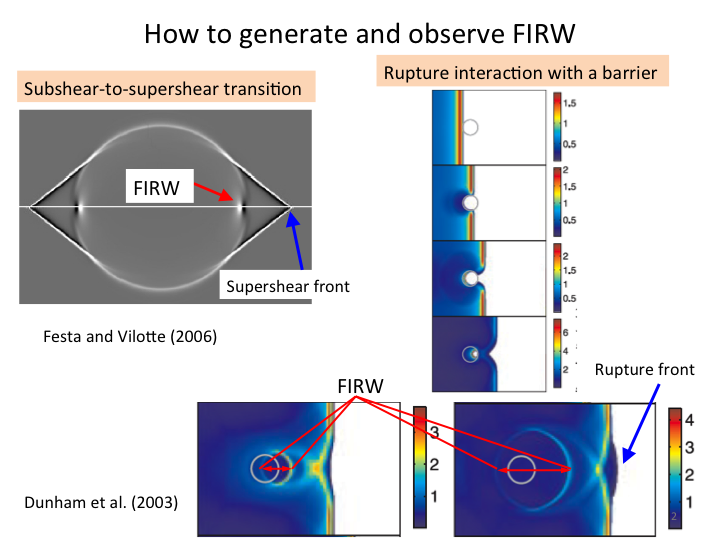
A nice study showing "hidden" ruptures, or a mixture of ruptures and interface waves (https://t.co/5sktTw5Gjw), in the wake of a primary rupture. It also reminds us to pay attention to what we are measuring in the lab.
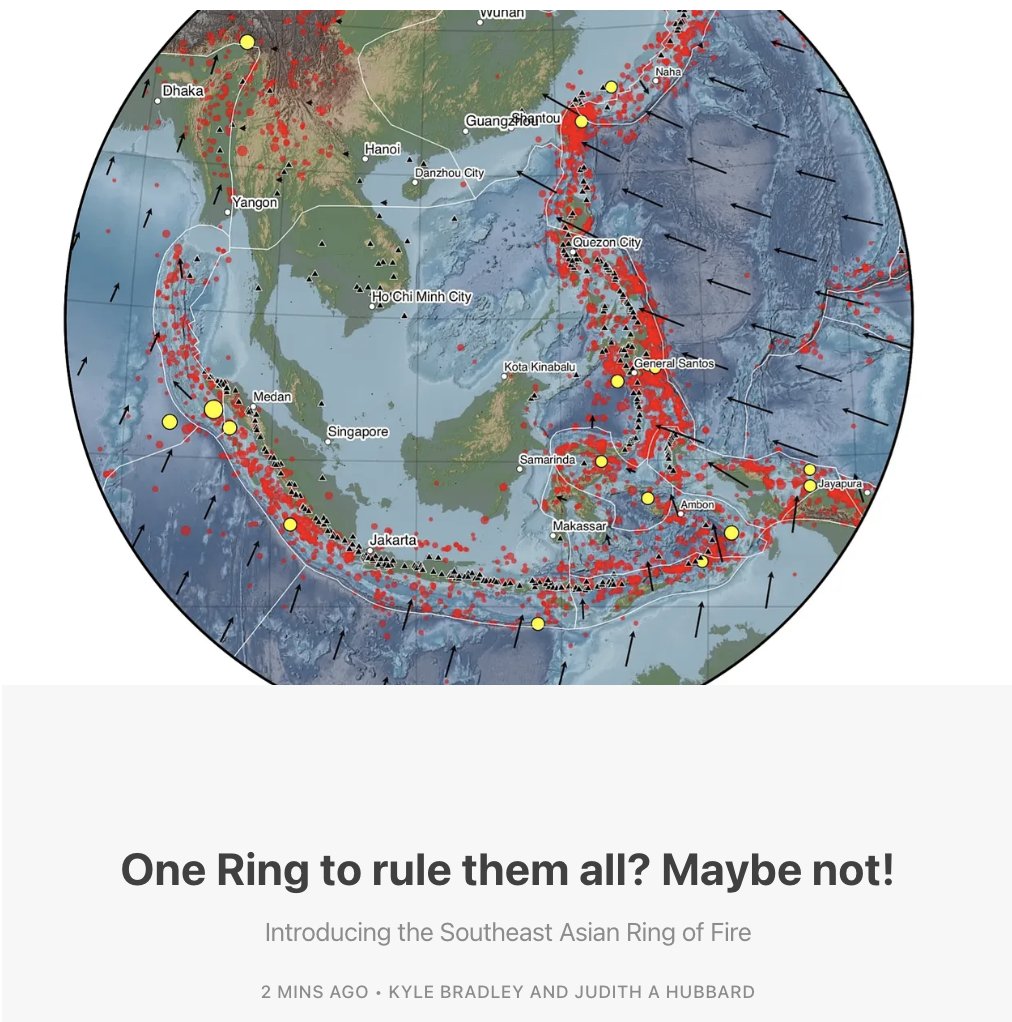
You've heard of the Pacific Ring of Fire. But you haven't heard of the Southeast Asian Ring of Fire! That's because we're defining it for the first time in our new blog post. We think these two features are distinct in important ways - check it out (link in my bio).
@WeAreSeismica@DDTSUSTech@martijnende@DocTerremoto@SUSTechSZ@Univ_CotedAzur In this work, we numerically show, in addition to a delayed (indirect) triggering mode commonly recognized by many other studies, another mode of direct rupture jump from the Narlı fault to the SW segment of the East Anatolian Fault, when the latter is initially close to failure.
Ding et al. simulate various scenarios to analyze a backward rupture branching during the 2023 Kahramanmaraş earthquake, and show it can occur by both direct and indirect triggering depending on the fault's initial stress and friction conditions.
Read 👉https://t.co/6nfqNy3hTq
@geosmx Fracture mechanics theory says that there is no inertia for the rupture front, meaning that it can change its propagating speed instantaneously. A mass particle, however, does have inertia, but if it is located close to the fault, its acceleration can be extremely high.
@geosmx In the lab, you can easily get acceleration as high as 10 km/s^2, e.g., see https://t.co/FzVDJV9tRB .
Rescaling suggests that high acceleration is also possible for natural EQs. The main questions are how close you can get to the fault, attenuation, and instrument response.
@BaoningWu Check this one and the references therein. Note: different communities have different perspectives and research tools.
https://t.co/Y5gY9xZOTD