BEL bags fresh orders worth ₹730 crore.
The company has secured additional orders since its last disclosure on 10 August 2026.
The orders cover communication equipment, radar systems, avionics, tank subsystems, electro-optics, cyber security, perimeter security, medical electronics, EVMs, jammers, batteries, spares and services.
#nifty50#giftnifty#banknifty
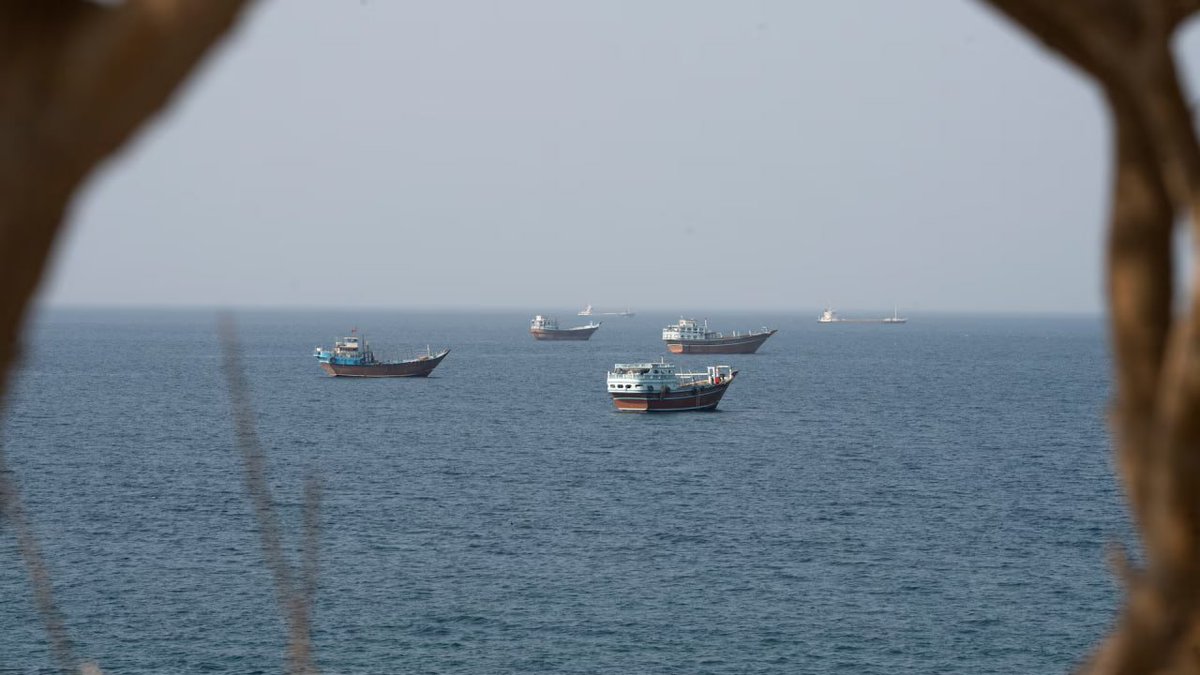
All mines are removed from strait of hormuz
Iran US reached a deal
(But they are not revealing it publically for now)
Fiis entered in Indian market with nifty50 target of 25000+
India - russia 100 billion dollars free trade deal reached
Trump claims all mines removed from Strait of Hormuz, threatens Iran
——
US President Donald Trump claimed on Tuesday that all Iranian mines had been removed from the Strait of Hormuz, claiming the US military was monitoring “every square inch” of the strategic waterway.
“I have just been informed by the United States Navy that all mines have been removed and/or detonated from within the International Waters of the Strait of Hormuz,” he said in a post on his Truth Social platform. “There is a Zero Tolerance policy on mine placement in full force and effect.”
The US president warned Iran that any vessel attempting to lay new mines would be “immediately and systematically destroyed.”
Trump also said the US Space Force was monitoring “every square inch” of the Strait, along with Pickaxe Mountain (Kolang Kouh) and the three other nuclear sites struck by the US last year.
India’s defence production has grown from around ₹81,100 crore in FY19 to ₹1.78 lakh crore in FY26, and the government is targeting ₹3 lakh crore by FY29. During the same period, the share of local manufacturing has moved from roughly 30–35% to more than 65%.
India has been assembling aircraft, missiles and other defence equipment for years, but many of the important parts still came from overseas. The govt now wants more engines, radars, sensors, communication systems, specialised metals, missile components and replacement parts to be made in India.
The latest Indigenisation List adds another 405 items, taking the total across six lists to 5,417 items. These items are used in fighter aircraft, helicopters, tanks, missiles, warships, radars and communication systems. As more of them are made locally, the orders will spread beyond the companies manufacturing the final aircraft, missile or warship.
Bharat Electronics
BEL has 227 items in the latest list, which is more than half the total. These include equipment used in Akash, Akash-NG and QRSAM missiles, fire control systems, electronic warfare, Revathi and Rohini radars, naval sonars, satellite communication and integrated air defence systems. The useful part about BEL is its presence across several programmes & it supplies equipment for missiles, aircraft, warships and ground defence systems, so it does not need one project alone to drive growth.
BEL currently has an order book of around ₹72,260 crore, roughly 2.6 times its trailing revenue. Defence equipment is also becoming more electronic, with greater spending on detection, communication, surveillance and electronic warfare. BEL already works across all four areas.
Hindustan Aeronautics
HAL has 86 items covering the LCA, Su-30MKI, ALH Dhruv, Light Utility Helicopter, Dornier-228, Hawk, Jaguar, Cheetah, Chetak, MiG-29 and the AL-31FP engine.
India can manufacture and assemble aircraft, but engines and several other complex systems still have significant foreign content. HAL has therefore created an indigenisation fund equal to 3% of its annual PAT to support the development of local components. HAL is working on engines, gearboxes, rotor assemblies, avionics and structural parts. Some of this work will take years because aerospace components have to go through lengthy testing and certification. But every part made locally increases the Indian share in HAL’s aircraft and helicopters.
BEL and HAL together account for almost 78% of the latest list. Most of the current work is therefore concentrated in defence electronics and aerospace.
Bharat Dynamics
BDL has 13 items connected with MRSAM, Konkurs-M and Invar anti tank guided missiles. It manufactures and integrates missiles, while parts such as seekers, guidance systems, propulsion and warheads are gradually being developed in India. Missile orders are also different from aircraft and warship orders. Missiles are used during training and operations, after which inventories have to be replenished. BDL can therefore gain from larger orders as well as higher Indian content within each missile.
BEML
BEML’s seven items include high mobility defence trucks used to transport missiles, radars, ammunition and command systems across difficult terrain. The missile gets most of the attention, but the truck is what carries it to the field. BEML also manufactures mining equipment, construction machinery and railway products, so it is not a pure defence company. Current estimates expect its PAT to grow from around ₹324 crore in FY26 to ₹620 crore in FY28. The company will have to improve margins and execute its orders well to reach those numbers.
Garden Reach Shipbuilders & Engineers
GRSE has seven items connected with warships and modular steel bridges. It manufactures frigates, patrol vessels, survey vessels and specialised ships for the Navy and Coast Guard. The shipyard receives the main order, but a warship also requires engines, propulsion systems, radars, sonars, communication equipment, pumps, valves and electrical systems. If more of this equipment is bought from Indian suppliers, more of the total order stays within the country.
MIDHANI
MIDHANI has seven items related to alloy melting. The number is small compared with BEL and HAL, but specialised alloys are difficult to develop, test and approve for defence use. Aircraft engines, missiles, armour and warships need metals that can withstand extreme heat, pressure and corrosion. MIDHANI supplies these materials to companies manufacturing defence and aerospace components.
Other Defence Companies:
The latest list directly includes BEL, HAL, BDL, BEML, GRSE and MIDHANI. Outside these names, Mazagon Dock and Cochin Shipyard are important listed companies in naval manufacturing, submarine construction, shipbuilding and repairs.
Private companies generally work in narrower areas. Data Patterns and Astra Microwave manufacture defence electronics and radar systems. Zen Technologies makes training simulators and anti drone equipment. Paras Defence supplies optics, optronics and other engineering products. ideaForge manufactures drones, while MTAR Technologies makes precision components for defence, space & nuclear projects.
Well, these companies may all be classified as defence companies, but their businesses are not similar. A shipyard, radar supplier, aircraft manufacturer and drone company have different customers, order cycles, margins and working capital requirements.
In the govt owned (but unlisted space), Armoured Vehicles Nigam, Goa Shipyard, Hindustan Shipyard and Munitions India manufacture armoured vehicles, specialised ships, fleet support vessels and ammunition. Their orders also reach smaller Indian companies supplying parts and materials.
India is already making more defence equipment & its now trying to make more of the engines, electronics, materials and components used inside that equipment. IN the long run a larger share of every aircraft, missile, tank and warship order should stay with Indian manufacturers & this part of the defence sector I find most interesting to track!
Hope QRSAM is ordered asap...the DAC approval was given last yr only and still we have CCS sitting on files
1000 Missile is a decent number to start with
AKASH NG orders are far for now atleast 3 yrs down the line :(
Also we should look to export these systems also ,will help to keep missile lines help
@PMOIndia if you all are serious about Mission Sudarshan Chakra mission then better approve these 2 now atleast
22 Aug 2026
🇮🇳 🚨 Bharat Electronics — $BEL
Bharat Electronics is emerging as one of India's most important defence-electronics companies as the country accelerates indigenous defence manufacturing and next-generation military technology.
📊 Key Numbers
• Core Business: Defence Electronics
• Key Areas: Radars + Electronic Warfare + Communication Systems
• Customers: Indian Armed Forces + Government
• Strategic Theme: Defence Indigenisation
• Growth Drivers: Defence Capex + Local Manufacturing
• Product Exposure: Radar + Missiles + Avionics + EW Systems
• Market Theme: Defence Technology + Electronics
⚡ Why Now
Defence Spending → Indigenisation → Electronics → Radar + EW → BEL
India's defence modernisation is increasingly shifting toward domestically designed and manufactured electronic systems.
BEL sits at the centre of this transition, supplying critical systems across radar, electronic warfare, communications, avionics and missile-related applications.
The structural opportunity is significant:
Higher defence spending → greater indigenous content → larger electronics share → stronger order visibility.
🔥 Bottom Line
$BEL = DEFENCE ELECTRONICS + RADAR + EW + AVIONICS + INDIGENOUS TECHNOLOGY
The next phase of India's defence growth is not only about missiles, aircraft and ships.
It is increasingly about the electronics and technology inside them.
BEL is positioned directly in that ecosystem.
The key question:
Can India's accelerating defence-indigenisation cycle translate into sustained multi-year order growth and earnings expansion for BEL? 🇮🇳🛡️📈
The MoU has been signed between BEL and RADIX CIPL with the objective of strengthening collaboration in the field of Tactical cellular solutions.
The agreement aims to promote development, technology exchange, and knowledge sharing in cellular technologies.
Bullish for defence sector
India is Preparing to Test the Indigenous 500-KG PGB-500 Bunker-Buster Bomb From an Su-30MKI in September–October 2026.
#nifty50#banknifty#BEL#HAL
#BEL
(Bharat electronics limited)
Don't buy now buy it after they will announce QRSAM deal approval in September
Share price is currently around 411
Buy it near 400