Birthrates are shrinking worldwide, reshaping lives & communities 📉@XYWorldwide is pioneering insights to the greatest demographic challenge of our time 🌏
🎁In the season of giving, we invite you to support our independent, evidence-based work on one of the defining challenges of our time: falling birthrates and rising unplanned childlessness.
👉 Donate securely via Donorbox: https://t.co/mzWuBipkmm
X·Y Worldwide is the first global non-profit dedicated to public awareness, independent research, and community education on this issue. 🌍
We support volunteer-led outreach, data and analysis, and policy-relevant public education, with a particular focus on younger generations.
If you’re not in a position to donate, reposting this message can be just as valuable.
As we prepare for our expansion in 2026, support of any size is appreciated.
Warm wishes to everyone at this special time of year.
What are we doing to our youth?
Not having a partner at the right time is a key driver of unplanned childlessness.
And that time is almost certainly before 40, PhD Grads included.
We now await the release of official 2025 data for these countries—and across the wider low-fertility world. In the meantime visit our Data Center for dashboards, analysis, and discussion covering over 40 nations and regions.
Until 2026!
In our final post of 2025, we leave you with fertility dashboards for the Baltic nations, after covering more than 30 countries and regions throughout December—spanning North America, Europe, Turkey, Russia, East Asia and beyond.
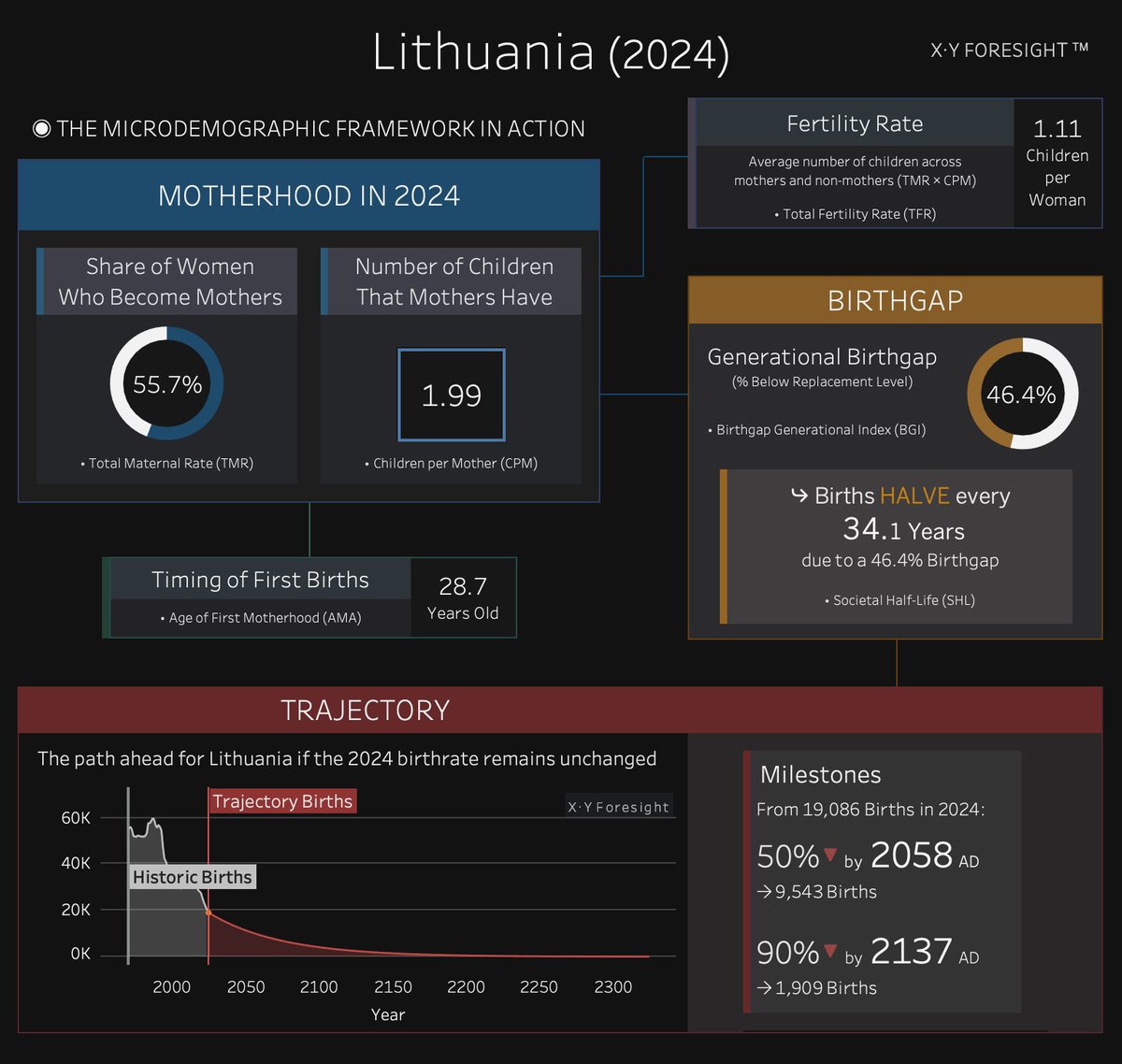
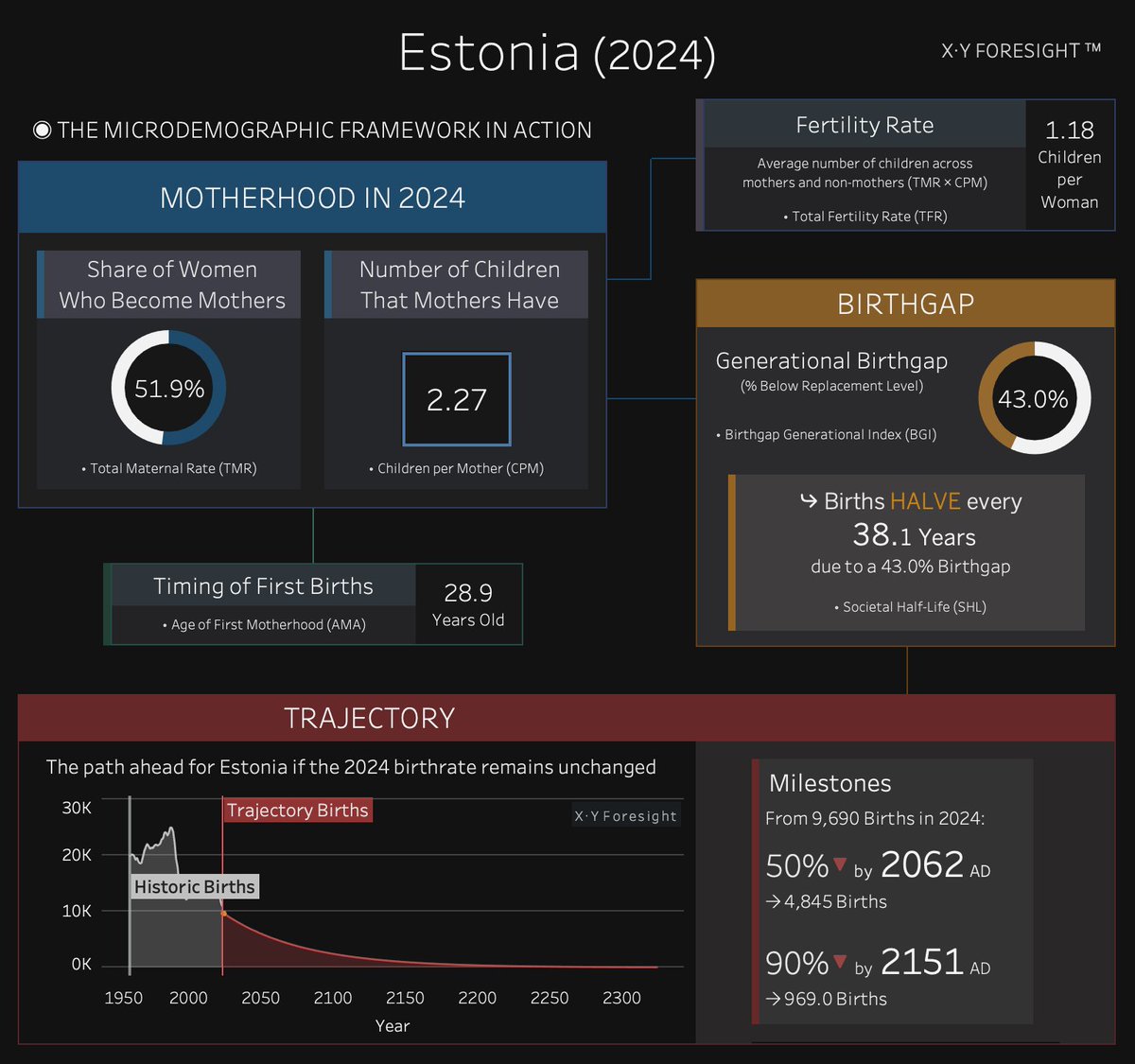
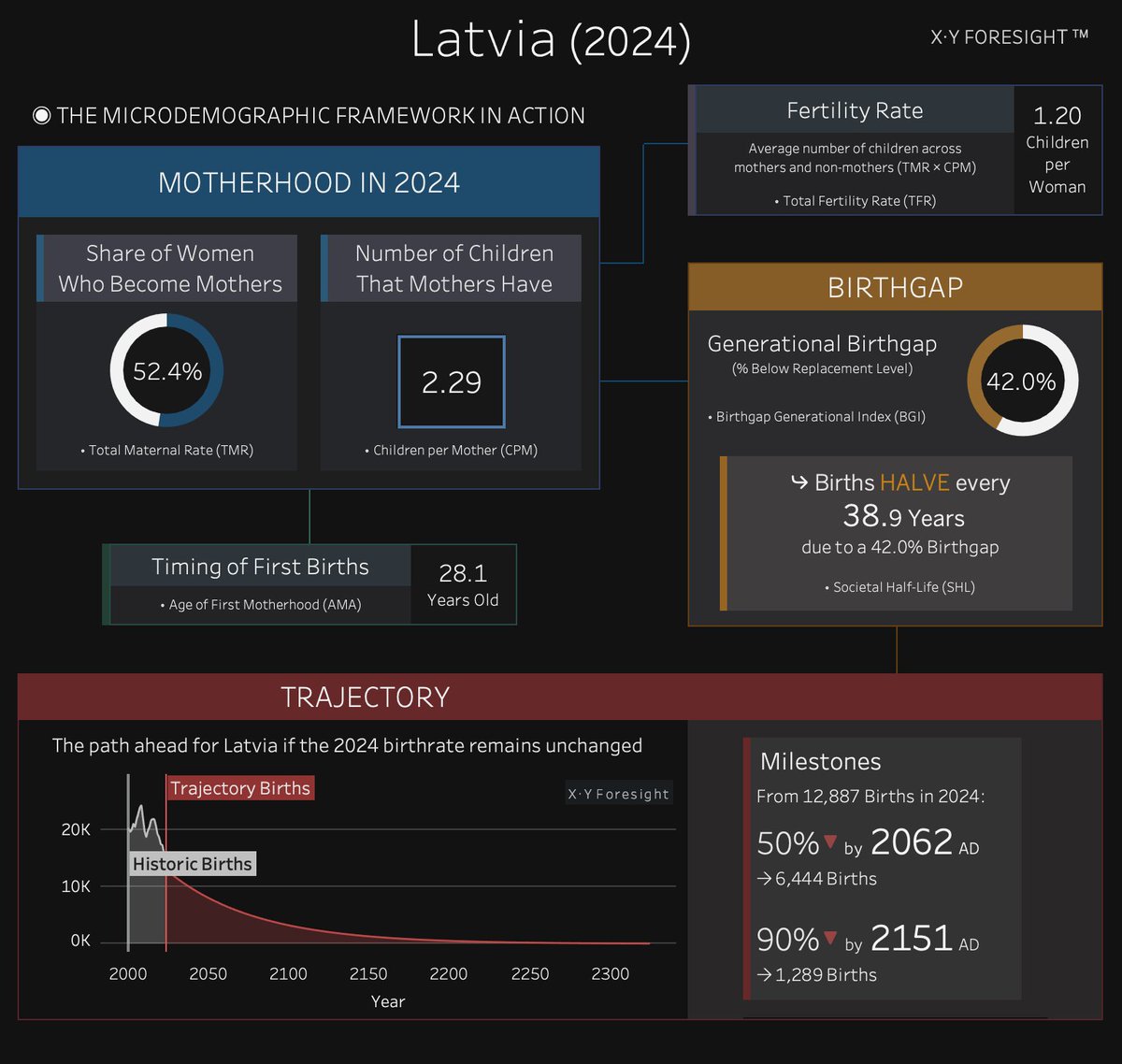
The outlook for the Baltics is bleaker than in many other low-fertility European countries: if 2024 birthrates were frozen in time, little more than one in two women would ever become mothers. Yet among those who do, family size remains relatively high—around 2.3 children per mother in Latvia and Estonia, with Lithuania closer to two.
Four more countries. Four more birthrate dashboards.
The same underlying pattern, revealed for the first time using our microdemographic analysis.
Austria, Hungary, the Czech Republic, and Croatia all converge on the same outcome: freeze 2024 birth patterns, and only around two in three women would ever become mothers.
Dashboards and data for 40+ countries and regions on our website.
In Croatia, births would halve in around 63 years, around 2087—slightly later than in the other countries shown, as mothers here have marginally more children. The trajectory, however, remains the same.
More nation dashboards will be posted later today.
To access our full Data Center for more dashboards and explanatory notes for over 40 nations and regions, visit the https://t.co/hjrTdZKq9g website
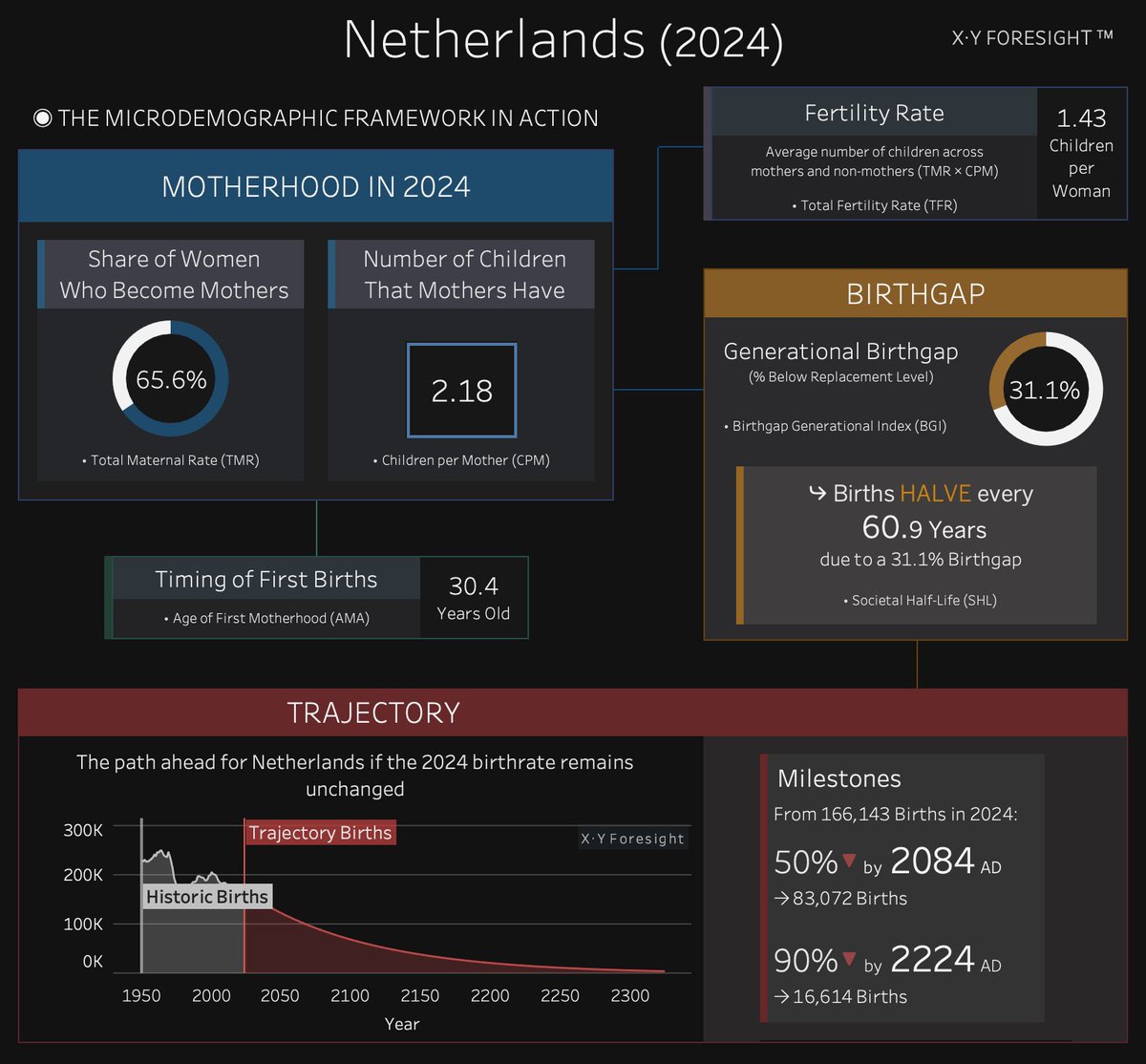
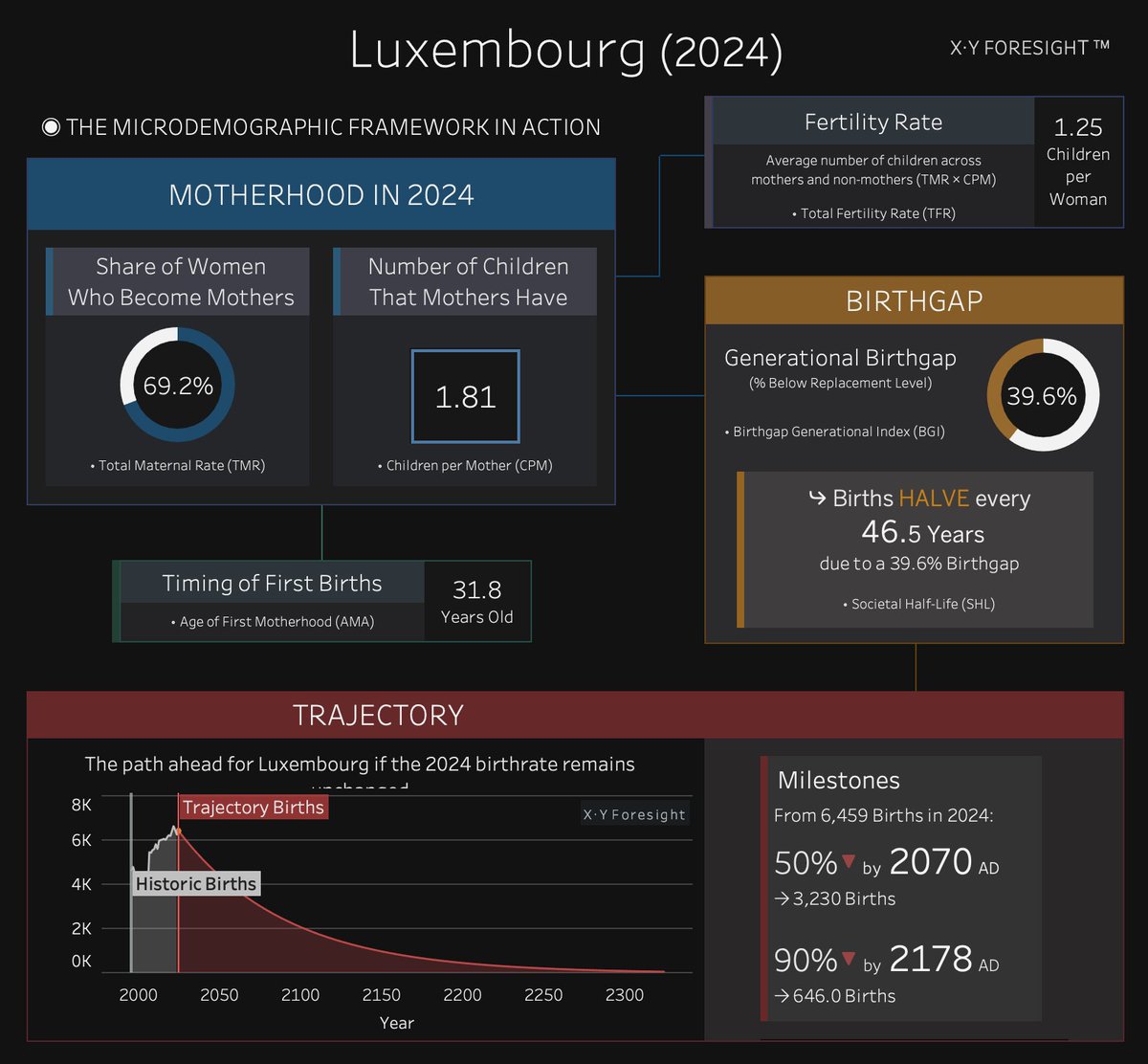
As we await 2025 birthrate data, we close our December series today with dashboards from over a dozen nations—beginning with the Netherlands, Denmark, Belgium, Iceland, and Luxembourg.
The common thread is striking: freeze 2024 birthrates, and only around two in three women would ever become mothers. Yet in all but Luxembourg, those who do still have about 2.2–2.3 children each.
In short: the Netherlands is on track for births to halve roughly every 61 years...