Eileen Gu / Jay Shatty interview:
“I love how your life reflects a belief that I have, which is that life is more about collecting and connecting things than it is about doing or being any one thing.
When I hear you speak, I feel like you’re collecting things from Silicon Valley and fashion, experiences from academia, and things from sport. Then you connect all these things.
That’s who you are: a collection and connection of all these ideas, philosophies, beliefs, interests, and values, as opposed to saying, ‘I’m an athlete,’ or putting yourself into any other box.
I love that your generation doesn’t have to look up to someone and think, ‘Oh, that’s what I have to do.’ You can be all these different things at the same time. You don’t have to choose or deal with the tension of fighting between them.”
Hardwork is overrated, direction is underrated.
Direction.
NEW: BodyPark launched a pocket-sized AI camera that coaches your workouts.
BodyPark ATOM watches your form, counts your reps, gives real-time voice feedback, and builds workout plans around your goals and equipment.
-34-point skeletal tracking maps your movement
-Auto-counts reps so you can stay in the set
-Voice cues correct your form in real time
-160° ultra-wide camera captures full-body exercises
-SmartPath tracks bar path, center of gravity, range of motion, and power
-AI creates workouts for strength, HIIT, Pilates, mobility, and recovery
-MagMount design clips onto racks, tripods, desks, or gym setups
Pricing is $219.
anthropic just published the official playbook for getting the most out of Fable 5.
it's a long technical doc, but I pulled out the best prompting techniques you can actually use here:
1. tell it why you're asking. fable 5 works better when it knows what the task is for. instead of "write me X," say "i'm building X for Y, they need Z, so write me X." that context helps it pick the right approach instead of guessing what you wanted.
2. stop writing long prompts. older models needed you to spell out every rule. fable 5 follows one short, clear instruction just as well as a 20-line list. anthropic's actual advice in the guide: go back into your old prompts and delete instructions. the long ones you wrote for older models now make fable 5's answers worse.
3. give it your hardest problem first. most people only test a new model on easy tasks, so they never find out what it can really do. it's like using a ferrari to drive to the mailbox. anthropic says the teams getting the most out of fable 5 are the ones handing it their biggest, messiest, still-unsolved problems.
4. make it check its own work before it reports back. on long tasks, models tend to say "done" when they're not actually done. the fix from the guide: tell it "before you tell me you finished something, show me the proof, and if you haven't verified a step, say so." in anthropic's testing this almost completely stopped the model from claiming work it hadn't done.
5. turn the effort up or down on purpose. fable 5 lets you set how hard it thinks, from low to max. even on its lowest setting it beats the best setting of the previous generation of models. use high effort for hard thinking, low effort for simple stuff you just want done fast.
6. tell it when to stop and ask you. on its own it'll either bug you too much or charge ahead and do too much. one line fixes it: "only stop and check with me before something you can't undo, a real change in scope, or anything only i can answer. otherwise keep going."
7. when you're just thinking out loud, tell it that. fable 5 has a habit of "fixing" things you were only describing. so say it directly: "i'm just thinking through this, don't change anything yet. give me your read on it and stop there."
8. give it a memory. fable 5 gets noticeably better when it can write down what it learned and read it back later. this can be as simple as one notes file: one lesson per line, plus why it mattered. it stops making the same mistake every time you start a new chat.
9. have it run several agents at once. fable 5 is much better than older models at managing helper agents. you can tell it to split a big job into parts and run a separate agent on each part at the same time, while the main one keeps working. one person directing a whole team of bots.
10. have a second agent check the first one's work. when a model reviews its own output, it misses its own mistakes. so use a fresh agent that hasn't seen the task and ask it to check the result against what you originally asked for. an outside checker catches what the original misses.
11. expect it to run for a long time. on hard tasks, one request can think for several minutes, and a fully autonomous run can go for hours. anthropic now tells teams to stop staring at the screen and just check back later, the way you'd check in on a coworker.
I’m so excited to share this update on @Conception –
We’ve generated the first early human eggs derived from stem cells.
This is a big deal -- the potential to redefine fertility is real.
My First purchase of SpaceX will be in 10 months.
All IPOs trade in a similar trend.
Shocking stats:
- Most IPOs drop 50% after going live. Look at $CAVA $RDDT $ALAB $CRWV $CART $CBRS
- Some drop further to 70-80%, look at $HOOD $PLTR
- And some never recover: $MBLY $CRCL $KLAR
Claude Mythos is like Hiroshima for software.
everything you own online, your bank, your email, your photos, your identity, is now dangerously exposed in ways that didn't exist 48 hours ago
that's why Karpathy's digital hygiene guide is probably the most important thing you can read this week
here's every step to protect yourself in these uncharted times:
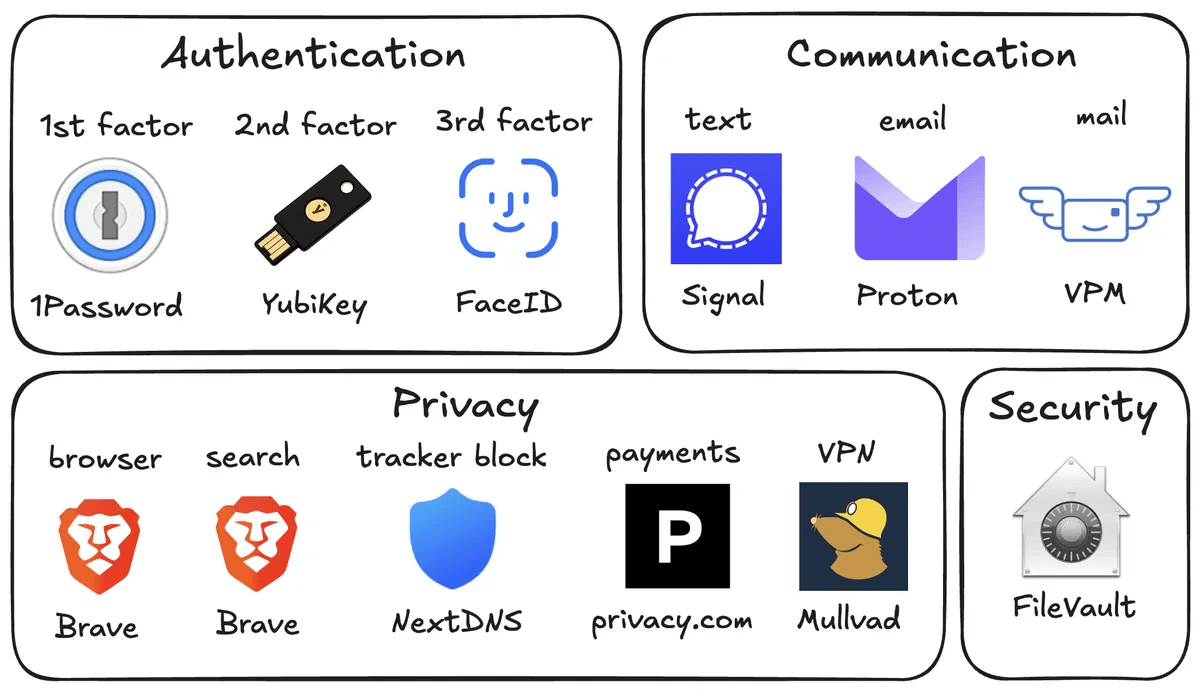
> use a password manager for every account
> set up physical security keys so attackers can't log in
> enable face id and fingerprint everywhere
> randomize your security question answers
> encrypt your hard drive
> get rid of unnecessary smart home devices
> switch to signal for private messaging
> use brave instead of chrome
> switch to brave search instead of google
> mint virtual credit cards for every purchase
> get a virtual mailing address
> never click links inside emails
> use a vpn on public wifi
> block ads and trackers at the dns level
> install a network monitor to see which apps are spying on you
full breakdown of each step below: