Who reviewed this paper?
A few days ago @gcabanac tweeted about a paper that had published a remark that it had been forced to cite irrelevant papers. You can see the tweet here: https://t.co/FpSr5QLPfW. We remarked that if it was not so serious, it would be funny.
Since reading that tweet, we have not been able to get it out of our head, so we thught that we would document it in a little more detail. We are doing this for three reasons.
1️⃣ In our view, it descerves more detail to be made available.
2️⃣ We'd like these details to be be kept as a matter of public record, so we are posting similar posts on our X account and our LinkedIn account.
3️⃣ It should be of interest to this community, so we hope that this raises even further the ethical issues around this topic.
The first image shows the paper that we are looking at. What is interesting is the text that appears on at the end of the introduction (highlighted in red). This appears to show that the reviewer insisted that a set of 13 papers be cited, else they would not accept the paper. It would be interesting to see the review repport, so that we could be certain what had been said. If you want to see the paper, it is available here: https://t.co/mlv5UDdp5T
In the rest of this 🧵, we show the papers that have been asked to be cited (i.e. [35]-[47]). These have been taken from the paper mentioned above. You'll notice (as we have highlighted it) that every paper is "et al." meaning, of course, that there are quite a few authors on each paper.
Gicven that we cannot see all the authors, the other images on this 🧵 shows the full set of authors on each of these 13 papers.
We leave it an an exercise for the reader to hazard a guess as to the reviewr is?
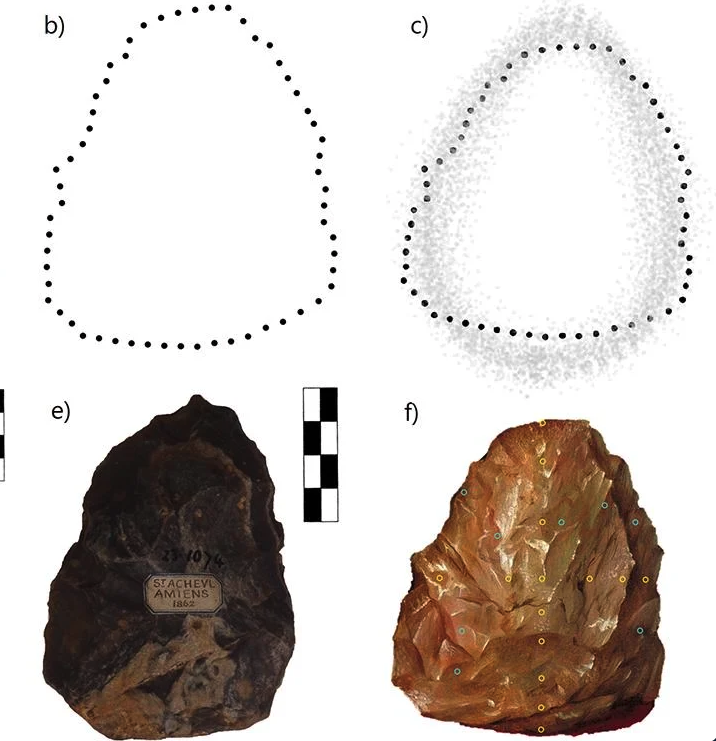
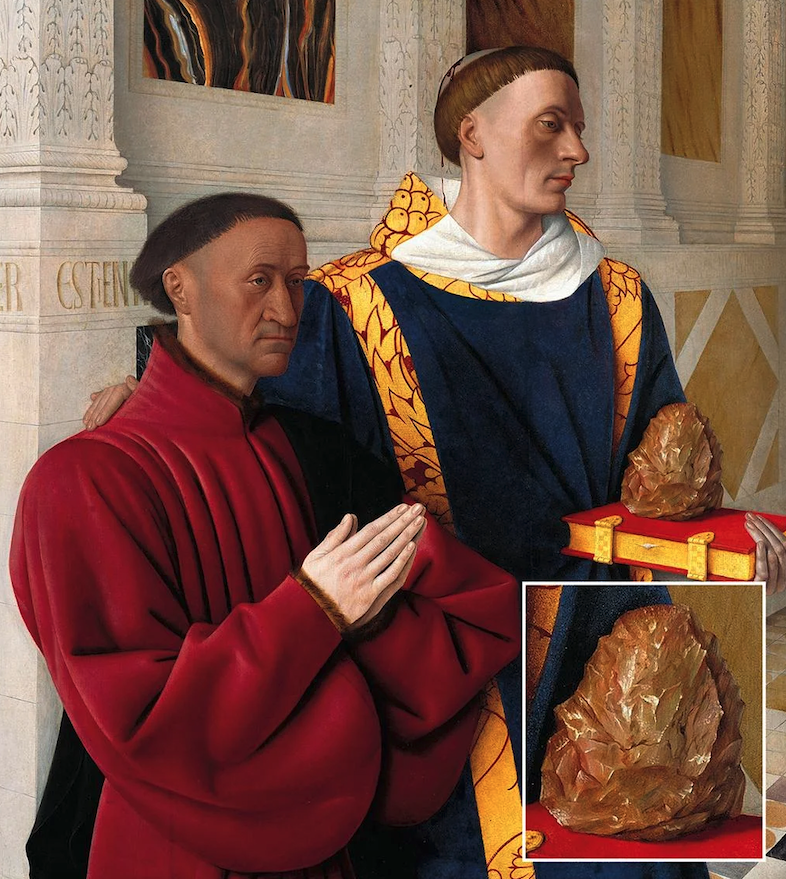
Researchers believe a 15th-century painting, the Melun Diptych, may feature the earliest artistic depiction of an Acheulean handaxe.
These stone tools, crafted as early as 2 million years ago, are found all over the world.
In European folklore hand axes also known as “thunderstones” were thought to have healing powers.
This discovery suggests these artifacts may have been more widely known in medieval France than previously thought, potentially carrying cultural or religious significance.
This weekend on North02, we’re diving deeper—by making handaxes and actually putting them to the test.
You won’t want to miss this one!
#science #history #Archaeology
Our final presentation of the day is by @XanaBarroso, who sent through a recording of their presentation on Crafting connections: Handaxes and symbolic communication in the social landscapes of the Late
Middle Palaeolithic, which blends object theory and GMM. Bout-iful!
@ESHallinan has joined the New Kingdom Research Foundation in Egypt to help the team learn more about the early prehistory of the area. The landscape is covered with scatters of stone tools dating back as far as the Lower Palaeolithic/Early Stone Age. 1/2
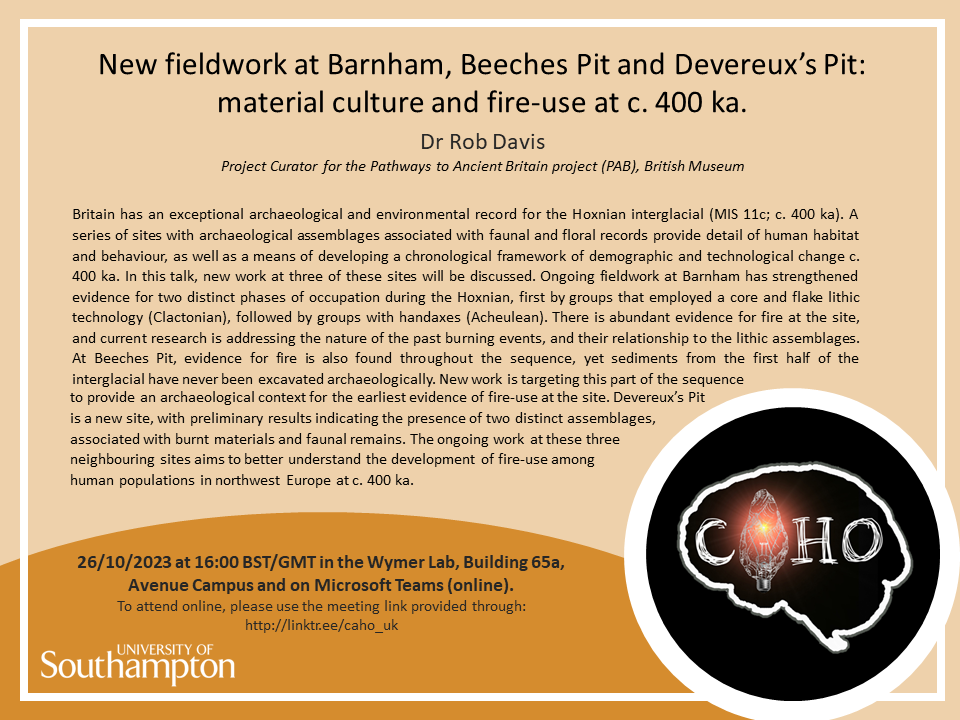
TODAY at 16:00 GMT we have an exciting talk from Dr Rob Davis, curator for the Pathways to Ancient Britain project (British Museum). See the poster below for details. Anyone can join us virtually via: https://t.co/pAoAeCt88j
Looking forward to seeing you there! ✨
@ChrisStringer65 Here is the poster for Dr Rob Davis' talk tomorrow (below).
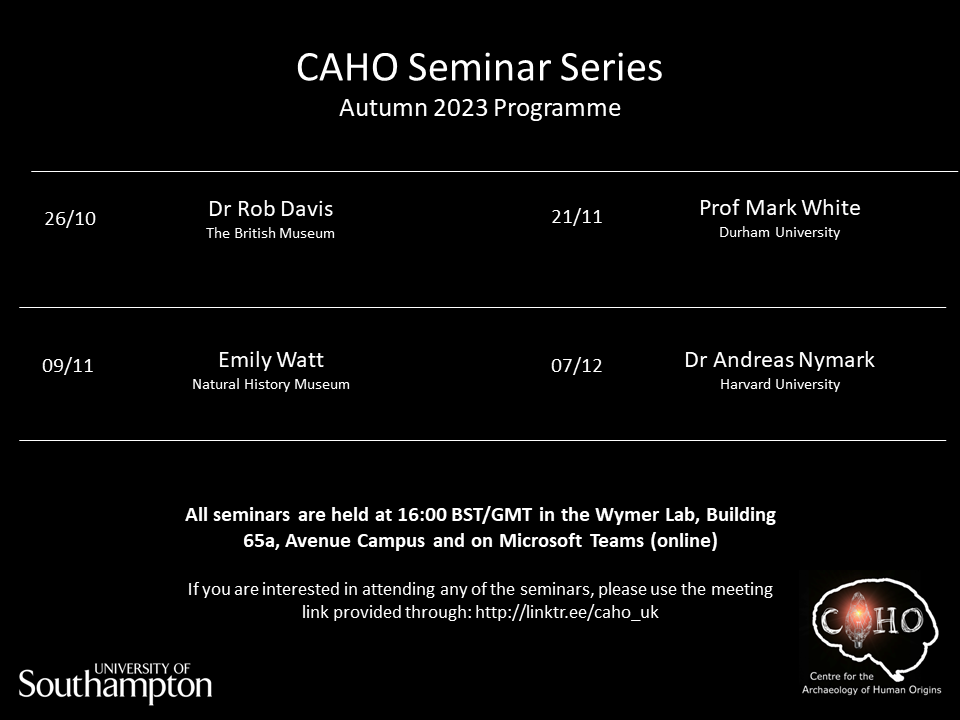
This is the Teams link for all of our Autumn talks: https://t.co/pAoAeCt88j
Thank you for your interest! :D
We are excited to share with you our list of speakers for this year's Autumn Term. 🎉 Join our #Archaeology talks on Teams via the link below! They are freely open to everyone. 😊
#HumanOrigins#Palaeolithic#Mesolithic#CAHO#UoS
https://t.co/pAoAeCt88j
Researchers @sotonarch@unizar@UA_University have discovered ancient cave art near Valencia in Spain.
It's thought to be the most important find of its kind on the Eastern Iberian Coast.
Find out more 👉 https://t.co/aS4s40MaKO
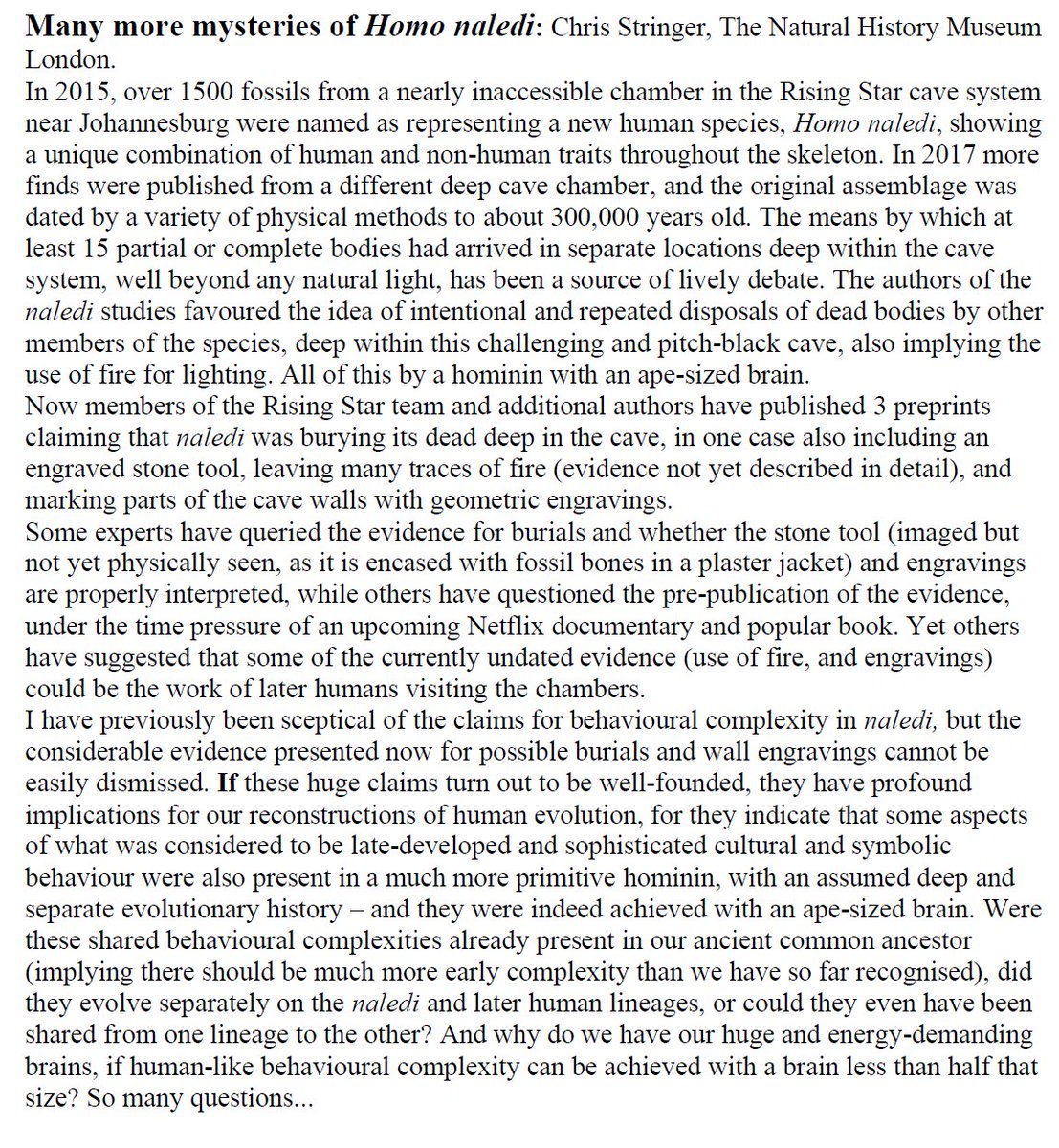
We pose and address 3 questions:
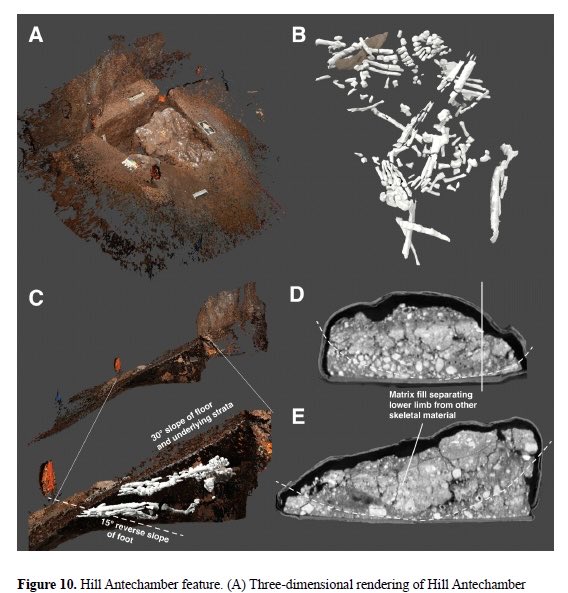
Did Homo naledi bury their dead?
Did Homo naledi make rock art?
Did Homo naledi light up Rising Star Cave?
https://t.co/UuhKf9XDSs
Our researchers have examined prehistoric tooth enamel to piece together the diet and hunting habits of Neanderthals who lived in Portugal around 95,000 years ago.
Read more 👉 https://t.co/DbZei1rT42
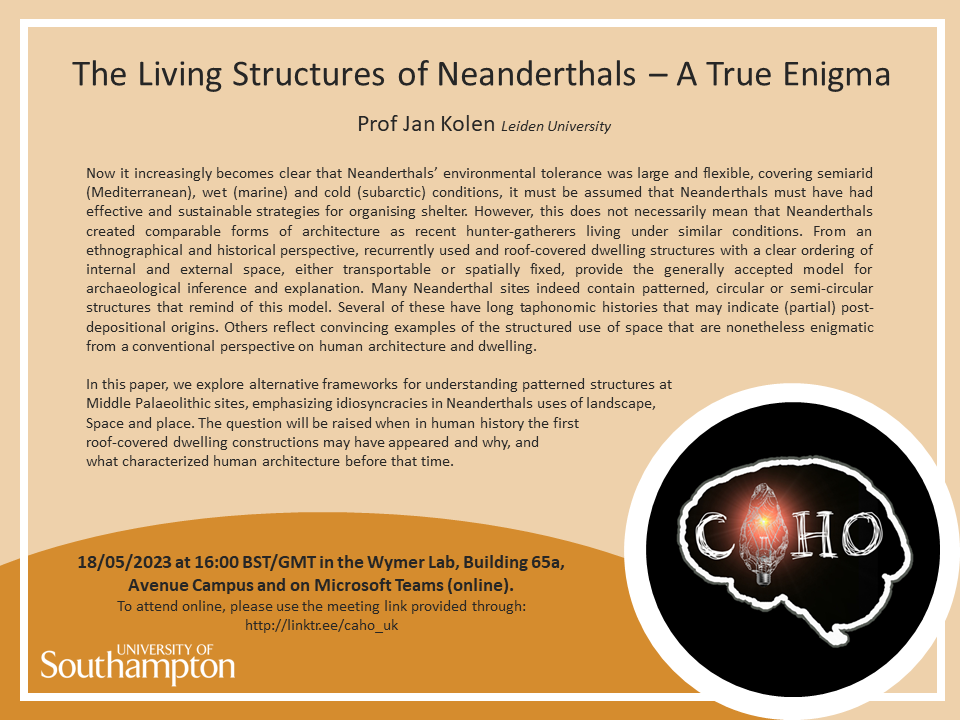
Coming up next on the CAHO Seminar series, we have a talk by Prof Jan Kolen from Leiden University! Please find the abstract and title in the image below. Tune in on 18/05/2023 at 16:00 BST to watch using our https://t.co/thydDhuQtK (below and in bio)!👣🛖🏡









![fake_journals's tweet photo. Who reviewed this paper?
A few days ago @gcabanac tweeted about a paper that had published a remark that it had been forced to cite irrelevant papers. You can see the tweet here: https://t.co/FpSr5QLPfW. We remarked that if it was not so serious, it would be funny.
Since reading that tweet, we have not been able to get it out of our head, so we thught that we would document it in a little more detail. We are doing this for three reasons.
1️⃣ In our view, it descerves more detail to be made available.
2️⃣ We'd like these details to be be kept as a matter of public record, so we are posting similar posts on our X account and our LinkedIn account.
3️⃣ It should be of interest to this community, so we hope that this raises even further the ethical issues around this topic.
The first image shows the paper that we are looking at. What is interesting is the text that appears on at the end of the introduction (highlighted in red). This appears to show that the reviewer insisted that a set of 13 papers be cited, else they would not accept the paper. It would be interesting to see the review repport, so that we could be certain what had been said. If you want to see the paper, it is available here: https://t.co/mlv5UDdp5T
In the rest of this 🧵, we show the papers that have been asked to be cited (i.e. [35]-[47]). These have been taken from the paper mentioned above. You'll notice (as we have highlighted it) that every paper is "et al." meaning, of course, that there are quite a few authors on each paper.
Gicven that we cannot see all the authors, the other images on this 🧵 shows the full set of authors on each of these 13 papers.
We leave it an an exercise for the reader to hazard a guess as to the reviewr is?](https://pbs.twimg.com/media/GcHPaEpWwAAZCAL.jpg)