You've been here through our journey.
You've believed in decentralized compute.
You're building the world's largest community-powered datacenter with us.
The whitelist for the $SPON "Road to TGE" Campaign is LIVE!
Get Whitelisted now, complete upcoming missions, and get rewarded 👉 https://t.co/sj4h95wspI
Yap early, yap only, yap often.
@KaitoAI is connecting AI, attention and capital with Yaps.
Just claimed my social card and I'm accumulating Yap points in real-time.
Claim yours 👉 https://t.co/kQD2isIHgM
ARE YOU READY?
Enter the experience.
Engage in the experiment.
Join the new digital order.
Rewards are waiting — register before its too late: https://t.co/nPJ2moVcxt
BREAKING NEWS: A NEW DIGITAL ORDER IS EMERGING
As of this moment, you are being watched. Tracked. Rated. The system is compiling its calculations.
Will you embrace it, or be left behind?
Register for early access: https://t.co/nPJ2moUEHV
The future of game dev is composable.
Studios won’t need to build backend logic. They’ll *remix* it.
Beamable Network is creating the marketplace for reusable game backend components.
Devs can monetize their microservices, because every builder should have that right.
Infra is the new creator economy.
95% of game studios want in on Live Service games.
But most of them are still relying on brittle, centralized infra.
The real revolution isn’t just in how games are played—
It’s in how they’re run.
Beamable Network is the DePIN solution that will power the next billion players.
There are 2 kinds of composability in decentralized infra:
→ Intra-DePIN: Build modularity inside your network (like Beamable’s swappable LiveOps modules)
→ Inter-DePIN: Connect across networks (e.g., using Helium + Beamable + Filecoin together)
Infra that stacks becomes infra that scales.
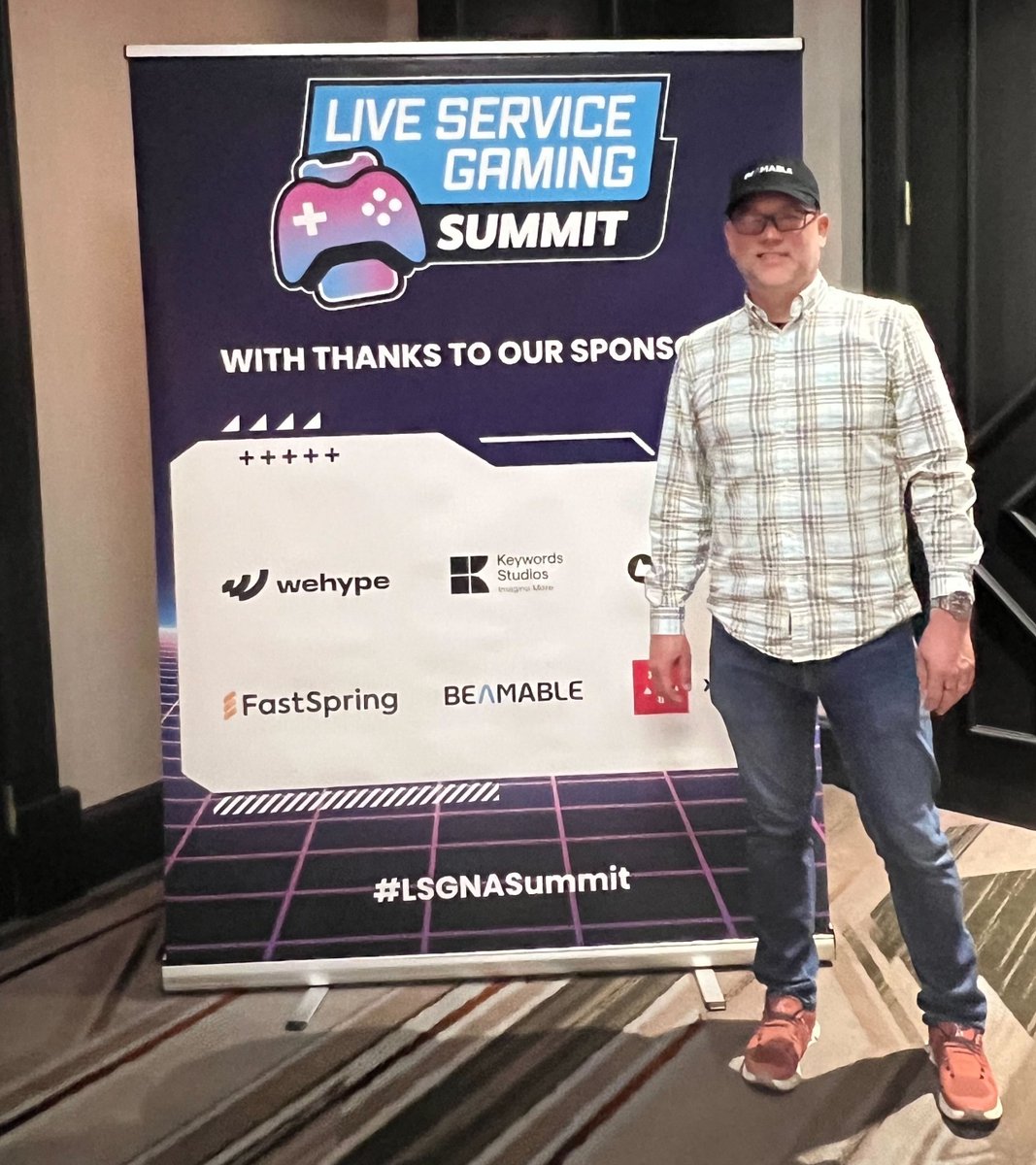
🚨 Live Service Gaming Summit – Austin 🚨
At 10:35 AM CT, TODAY Stream A brings together leaders from PlayStation, Bethesda, Cloud Imperium & @trappermarkelz of Beamable to talk Scalable Game Infrastructure.
If you're building live games at scale — don’t miss it.
🔗 https://t.co/9QEvl4OTsC
TLDR: Why Web3 Gaming Actually Makes Sense (Part 1: Infrastructure)
Forget NFTs and tokens for a minute.
It's time to break down Web3 gaming from the backend - where it actually matters.
Traditional game infrastructure is bleeding studios dry. Let's look at real startup costs:
Building a live game right now? You need:
- Custom servers ($30-50K)
- Database setup ($20-30K)
- Load balancers ($10-15K)
- Content delivery network ($15-20K)
- Scaling systems ($25-35K)
- Backend team ($50K minimum)
That's $150k on the lower end.
Plus 6-12 months just to get this running. Before you write ANY game code.
Web3 changes this entire structure.
Instead of building and maintaining everything yourself, you're using a network of nodes that:
- Handle distribution (no dedicated servers needed)
- Run your game logic (through smart contracts)
- Manage assets (on chain, not your problem)
- Scale automatically (through the network)
You write one set of code. The network handles the rest.
This isn't about blockchain hype. It's about infrastructure that makes sense for games.
Next up: Why most Web3 games get this all wrong...
Absolutely thrilled to have been verified from @hotspotty! 💜
Marked against critical criteria for a DePIN project, we’re proud to have received one of the top scores in the history of their evaluations.
DePIN Hub sees the potential. How about you?
TLDR: Why Web3 Gaming Actually Makes Sense (Part 2: Integration Nightmares)
Here's why most Web3 games fail: they're basically building two games at once.
Game 1: The actual game. Unity. Game mechanics. Fun stuff.
Game 2: All the Web3 features. Wallets. Assets. Blockchain.
Two different codebases.
Two different teams.
Double the headaches.
Triple the bugs.
What usually happens:
- Unity devs fight with blockchain integration
- Wallet connections break everything
- Assets don't sync properly
- Players get stuck between systems
- Everyone blames "blockchain issues"
Players don't care if something's "on chain." They care if it works.
This is what actually matters:
- Can they use their items?
- Does the game run smooth?
- Are their assets safe?
- Does everything just work?
The fix? Stop treating Web3 like a separate game.
Your Unity devs shouldn't need to learn Solidity.
Your game shouldn't need five different backends.
Blockchain features should just be another tool in Unity.
Next up: What Web3 gaming looks like when it's done right...