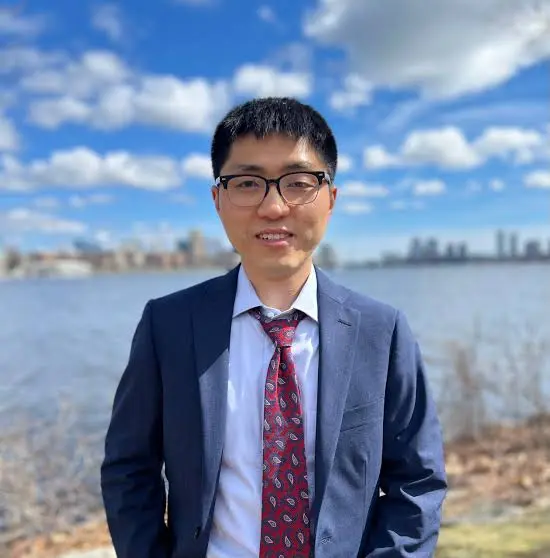
Today, we say goodbye to Thomas Thornton. Thomas is the first undergraduate to graduate from our group. He developed a GPU-accelerated RNA simulation platform (https://t.co/UNxWmyIGnk), received McCormick Outstanding Research Award, and will begin PhD at Northwestern University.
I am incredibly excited and grateful for the support from the NSF CAREER Award, and we look forward to bringing new science and discoveries to our community!
Congratulations to @XingchengLin on receiving an #NSF CAREER Award! 🎉
Using #AI and physics-based simulations, this project will uncover how epigenetic changes shape DNA organization and gene regulation—advancing our understanding of genome function and human disease.
We extend our earlier version of the protein-DNA predictive tool (https://t.co/DdWtLOmTMJ) to predict position-specific methylation sensitivity and integrate WGBS data to improve genomic protein–DNA binding site predictions.
Glad to share our latest work on DNA methylation prediction, focusing on position-specific methylation sensitivity and genomic protein-DNA binding.
https://t.co/x808JEDG0c
Excited to share our latest pre-print on predicting protein-RNA interactions! We present a biophysics-inspired machine learning framework that predicts sequence-specific binding and identifies strong-binding RNA motifs.
https://t.co/bd8CxBlzQH
Glad to share that our protein-DNA binding prediction paper is now published in @eLife: Interpretable protein-DNA interactions captured by structure-sequence optimization https://t.co/2Qze74Dstg
Check out Yafan's summary video for the upcoming ISMB/ECCB 2025 conference.
Excited to share our latest manuscript
https://t.co/rrdu9POe3U
In this manuscript, we utilized an explicit-ion chromatin model to quantify the effects of histone 4 acetylation on the higher-order chromatin structure.
Excited to share our latest manuscript
https://t.co/rrdu9POe3U
In this manuscript, we utilized an explicit-ion chromatin model to quantify the effects of histone 4 acetylation on the higher-order chromatin structure.
3. This modest reduction in inter-nucleosome interactions is amplified at the chromatin level, leading to nucleosome destacking and exposure of nucleosomal DNA. The destabilization of chromatin structure is driven by fluctuations in the entry-exit angles of linker DNA.
This work is led by Yafan Zhang, a first-year Bioinformatics graduate student at NCSU. We greatly appreciate fruitful discussions with Dr. Keith Weninger, Dr. Faruck Morcos (@faruckm), Dr. Qin Zhou, and Dr. Arun Kumar Ganesan (@genome_voyager).
Excited to share our latest manuscript https://t.co/s9W5jlMpgL
In this manuscript, we introduce "IDEA", a predictive biophysical model for quantitative predictions of genome-wide binding sites and binding affinities of DNA-binding proteins.
3. The trained energy model allows for direct interpretation of physicochemical interactions between individual amino acids and nucleotides and is further incorporated into a coarse-grained simulation framework to accurately predict protein-DNA binding free energies.