Happy birthday to illustrious and distinguished Nigerians.
A highlight of my weekend was attending the special birthday celebrations of two distinguished Nigerians whose lives continue to reflect service, leadership, and nation-building.
The first was His Royal Majesty, Igwe Nnaemeka Alfred Ugochukwu Achebe (Agbogidi), CFR, the Obi of Onitsha and Chancellor of Ahmadu Bello University. He is a respected symbol of cultural heritage, enterprise, and traditional leadership, who marked his 85th birthday. I worked closely with him in my eight years as Governor, where he showed a passion for good governance. His life and reign continue to represent dignity, continuity, and the preservation of our rich cultural identity.
Also celebrated was Chief Yomi Edu, former Minister of the Federal Republic, who turned 80. His years of public service and contributions to the corporate world and national development were duly honoured by family, friends, and well-wishers.
The occasion was further graced by eminent personalities, including former President Olusegun Obasanjo, the former President of Ghana, the Governor of Lagos State, captains of industry, former governors, and other distinguished guests from across Nigeria and Africa at large. It was a gathering that reflected deep respect across political, cultural, and generational lines.
Moments like this remind us of the value of longevity, service, and the importance of celebrating those who have contributed in various ways to the growth of our nation and continent.
We continue to pray that God grants them good health, strength, and many more fruitful years ahead. -PO
Father’s Day: A Time for Reflection
Today is Father’s Day. After attending church service and in my routine reflection, I find myself once again asking a difficult question: Are we cursed, or are we the cause?
I grew up in a Nigeria that was more united and peaceful. In my primary, secondary school and university days, students related freely without divisions of religion, ethnicity, or region. We simply saw ourselves as Nigerians.
After university, I entered business in an environment where partnerships were built on trust and competence, not tribe or religion. I also lived in Nigeria, where the naira commanded respect, and Nigerians enjoyed dignity abroad, with easier global mobility and much respect for our passports.
I lived in Nigeria, where I travelled across the country—from Onitsha to Lagos, Maiduguri, and Calabar—without fear. Roads connected people, and life was more secure. Nigeria’s Armed Forces and the Police were also widely respected for their role in global peacekeeping and international stability.
Beyond security and unity, there was also a stronger sense of public trust in institutions, with greater confidence in elections, a clearer culture of accountability in governance, more stable universities that served as centres of intellectual excellence and national pride, a more functional and accessible healthcare system, and relatively better-performing basic infrastructure such as electricity, roads, and public utilities, which—though imperfect—were far less chaotic than what we experience today.
Today, as a father reflecting on Nigeria, I am pained that much of this has changed. Insecurity has grown, national unity has weakened, and many citizens no longer feel safe. Opportunities have also diminished for the younger generation compared to what we once had.
It is also worrisome that Nigeria’s influence in global affairs appears reduced, as seen in recent international gatherings such as the just-concluded G7 meeting, where African countries like Egypt and Kenya were invited, while Nigeria was absent. Whether symbolic or not, it reflects a decline in standing we cannot ignore.
As fathers, we must not only lament. We must not bequeath this reality to our children. We owe them a better Nigeria built on security, opportunity, fairness, and national pride.
A key part of achieving this is active civic participation. We must obtain our Permanent Voter Cards (PVCs), vote responsibly, and remain committed to protecting the integrity of our votes. Change will not come from complaints alone but from citizens who choose and defend accountable leadership.
With responsibility, unity, and determination, we can together build the new Nigeria that is POssible. -PO
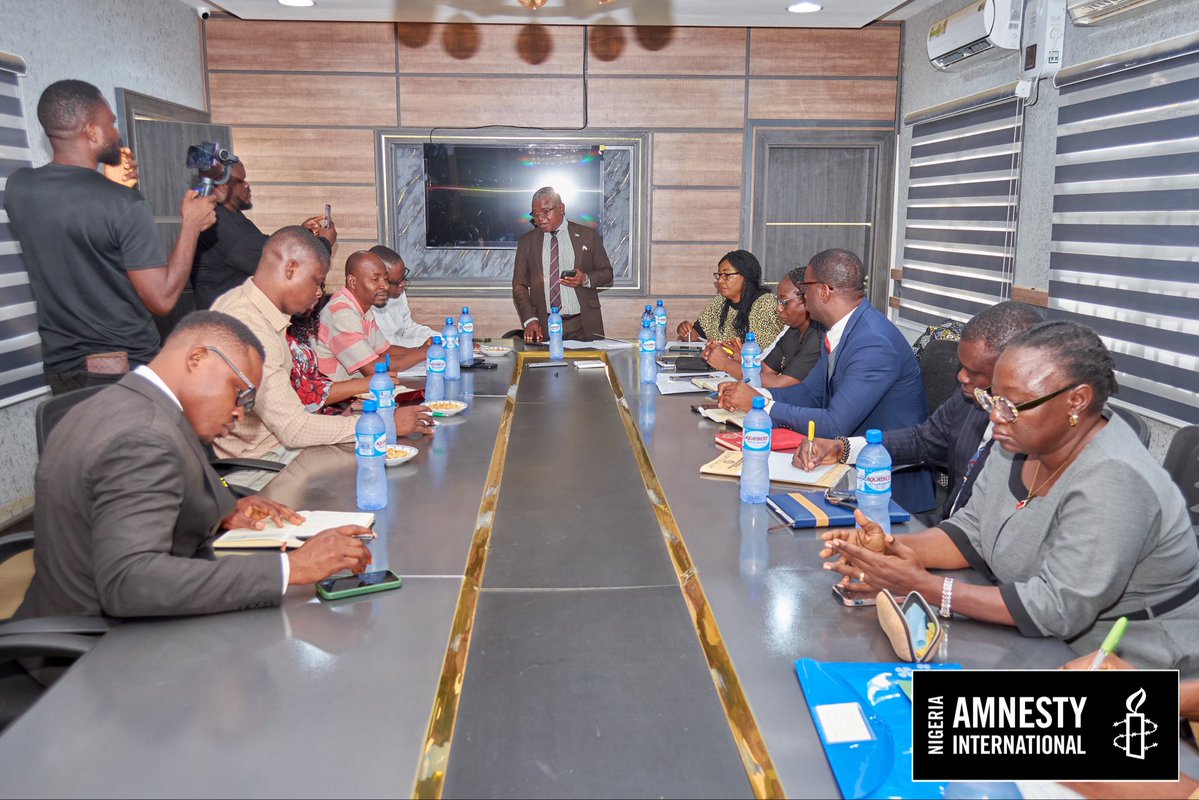
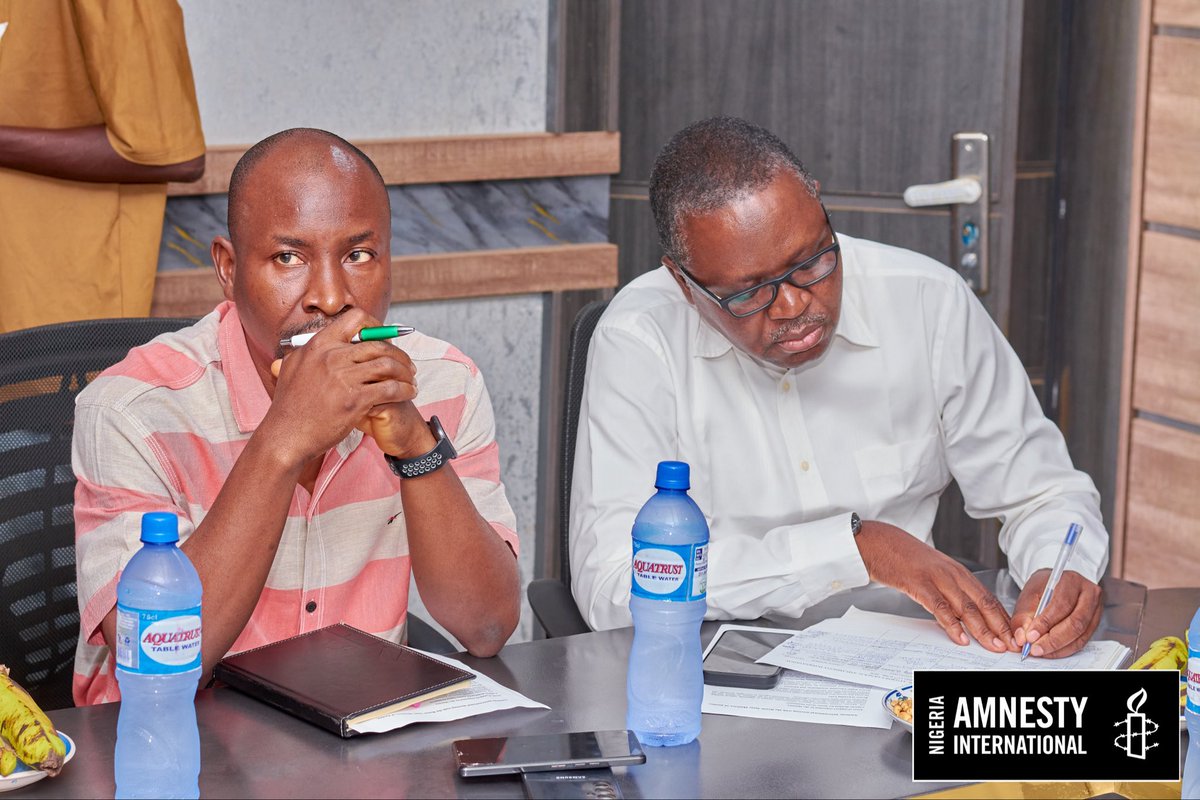
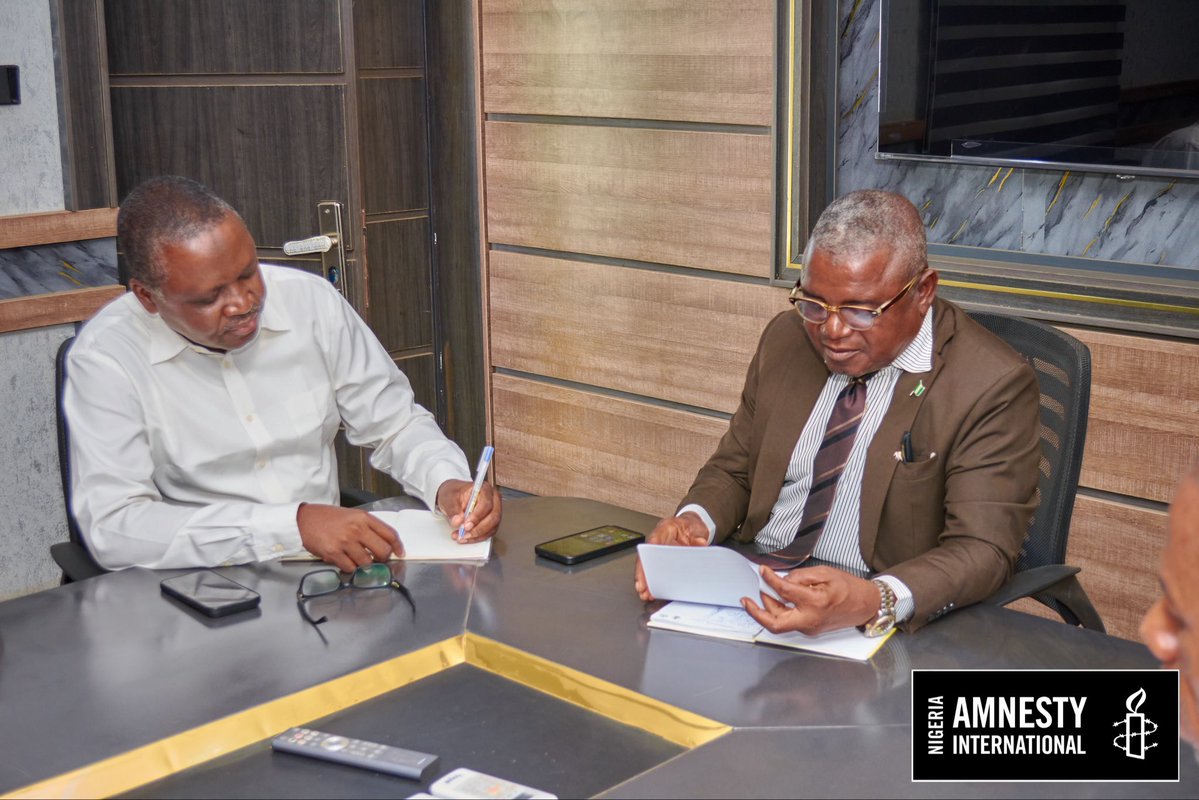
In Makurdi, our team was received by Permanent Secretary and Solicitor General Mr. Ese Thomas and directors of the Ministry of Justice. The judiciary is a pivotal partner in our fight for human rights.
The collaboration is an initiative of Professor Ornguga Yangien, the Commissioner for Justice and Attorney General of Benue state.
Amnesty International Nigeria and Benue state ministry of justice will soon commence collaborative programmes in the areas of human rights education, prosecution of human rights related cases and documentation of human rights abuses and violations.
This will mark the beginning of the efforts to ensure that victims of atrocities get justice — while also ensuring effective human rights education across the state.
On Tuesday 16 June 2026, Amnesty International Nigeria team met with officials of the ministry of justice in Makurdi where plans were set for enhancing human rights awareness and accountability in Benue state.
I have just received the sad news of the death of one of our Obidient family members from Edo State, Comrade Benedict Inaede.
On behalf of my family and the Obidient Movement family, I sincerely condole with his immediate family and the entire Obidient family. His death is a painful and irreplaceable loss to us all.
May Almighty God, who has called him home, grant him eternal rest and grant his family and all of us the fortitude to bear this profound loss.
May we continue to remember his family in prayers for God Almighty's continued blessings. -PO
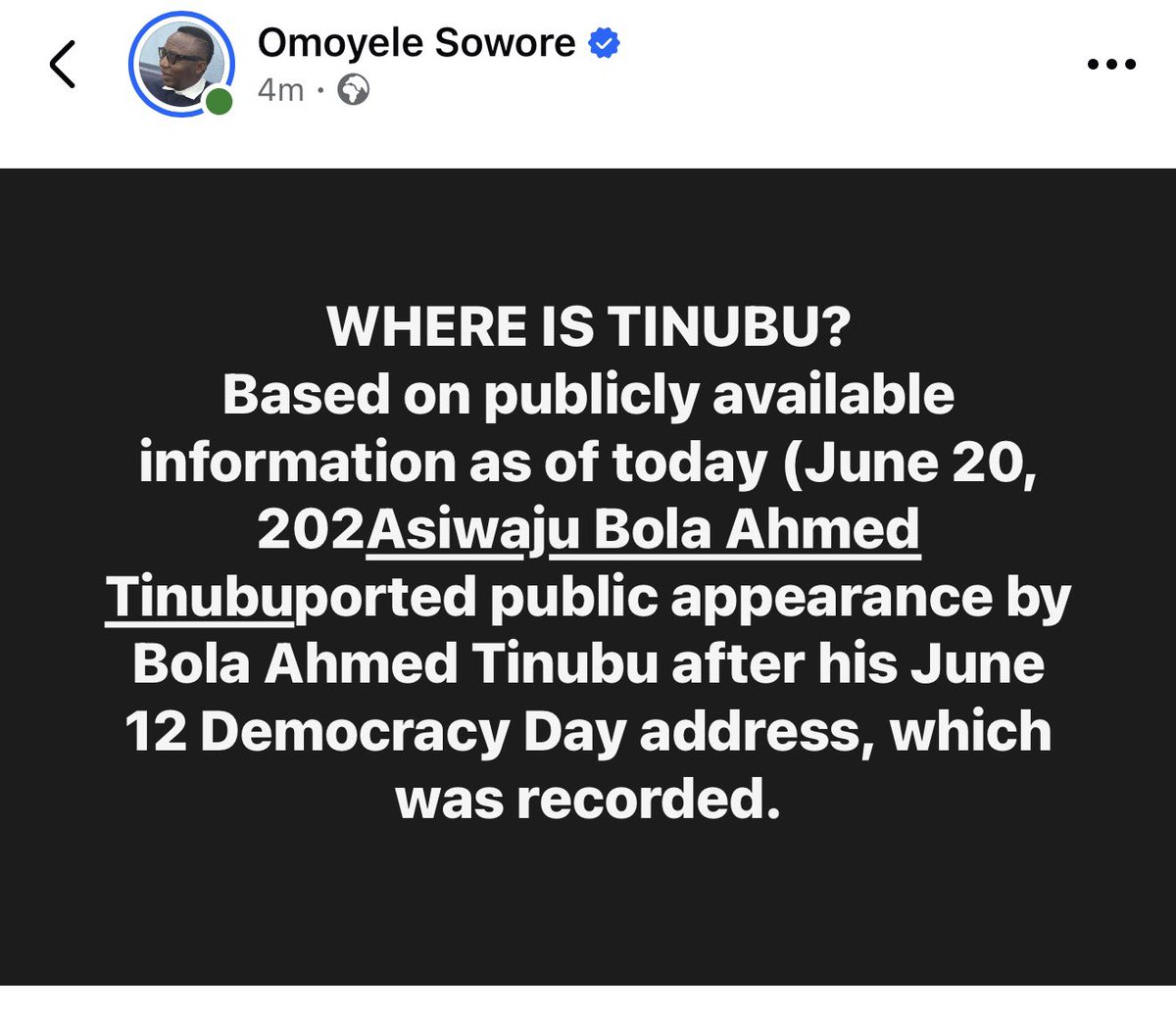
Based on publicly available information as of today (June 20, 2026), there is no widely reported public appearance by Bola Ahmed Tinubu @officialABAT after his June 12 Democracy Day address, which was pre-recorded.
The Election Results Analysis Dashboard ERAD 2.0 is live. The ERAD 2.0 is your single source of truth for all results transmitted on the INEC IReV portal. To follow the results visit https://t.co/BXRFugEEsZ We are monitoring, tracking and analyzing the results are published by INEC
#ERAD #EkitiDecides2026 #WatchingTheVote
Today is World Refugee Day.
Yet, millions of Nigerians have become refugees in their own country. Across the North and other parts of Nigeria, communities have been displaced by terrorism, banditry and violent attacks, with IDP camps now a painful symbol of our national failure to protect our people.
Many of these camps are grossly underfunded and inadequate for the thousands forced to live there. Families struggle daily for food, healthcare, education and basic dignity. For many, survival has become their only reality.
Children are abducted from schools. Families are forced to flee their homes. Farmers abandon their lands. Citizens live in fear of kidnapping and violence.
Worse still, with insecurity continuing to spread and intensify, there is little hope for many displaced Nigerians to return to their communities and rebuild their lives safely. This is not OK
On this World Refugee Day, we must remember that behind every statistic is a human life disrupted, a family uprooted, and a future put on hold. Nigerians deserve safety, dignity and the right to live peacefully in their own country.
A new Nigeria is POssible. -PO
Supporting Education with a visit to Shanahan University
I remain firmly convinced that no nation truly develops without investing deeply in human capital. The more a society invests in education, the more sustainable its development becomes. Education remains the most critical driver of progress; the more educated a state is, the more its prospects to develop become.
Guided by this conviction, I visited Shanahan University, Onitsha, Anambra State, again yesterday, an institution I have supported on several occasions. During the visit, I continued my support with an additional donation of 25 million Naira.
I wish to sincerely commend the management, lecturers, and staff of the university for their dedication and the excellent work they are doing in nurturing a new generation of morally upright, academically sound, and socially responsible leaders. I am particularly encouraged by the vision and commitment of the institution to building a better society through quality education.
I also urge the students to remain focused on their studies and to keep hope alive. The future belongs to them, and with discipline, hard work, and strong values, they can play a vital role in building the New Nigeria we all desire.
A New Nigeria is POssible. -PO
In Support of Healthcare Delivery and Human Dignity
Today, I visited the Mother of Christ Specialist Hospital, Enugu State, which was recently affected by a devastating fire incident. During the visit, I inspected the damaged sections of the hospital, including the children’s ward, and made a donation of ₦10 million to support the ongoing renovation efforts.
I commend the Reverend Sisters of the Immaculate Heart of Mary and the hospital management for their commitment to healthcare delivery and service to humanity. Their sacrifice and dedication, often carried out with little recognition, remain invaluable to our society.
Healthcare and education are among the most critical needs of any nation. No meaningful development can occur where these sectors are neglected. It is, therefore, imperative that we continue to support institutions and individuals working tirelessly to provide quality healthcare and educational services to our people.
I encourage the management not to relent in their noble mission despite the challenges they face. As a society, we must collectively invest in and strengthen facilities for healthcare, education, and poverty alleviation.
A new Nigeria is POssible. -PO
Accountable Borrowing: The South Africa Example.
I have consistently maintained that borrowing, in itself, is not a bad thing. Every nation borrows. The critical issue is not the act of borrowing, but what the borrowed funds are used for and whether citizens can clearly see and measure the impact of such borrowing in their daily lives.
There is a lot to learn in the open and transparent manner in which South Africa handled its recently secured a $1 billion loan from the New Development Bank, with a clearly defined purpose. Publicly announcing the targeted purpose of the loan for all to know and monitor, upgrading water supply systems, modernising sanitation infrastructure, improving electricity distribution, and strengthening waste management services across eight major metropolitan cities, including Johannesburg, Cape Town, and Durban.
This is indeed what accountable borrowing should look like; the purpose is clear, the projects are identifiable, and the expected benefits to citizens are measurable. Such investments directly improve living conditions, enhance productivity, and stimulate economic growth.
In Nigeria, however, the opposite is the case: public debt has risen dramatically under the current administration, and its deployment is shrouded in secrecy from the people who will indeed pay back the loan. Today, our total public debt has increased from about ₦87 trillion in 2023 to nearly ₦200 trillion.
Yet, despite this unprecedented accumulation of debt, Nigerians are often left without a clear and detailed account of how these borrowings are being deployed to improve critical sectors such as education, healthcare, power, security, and infrastructure.
Borrowing must never become an end in itself. Every loan obtained in the name of the Nigerian people must be tied to specific, productive investments capable of generating economic value, creating jobs, reducing poverty, and improving the welfare of citizens.
Good governance demands transparency and accountability. The government must be able to clearly explain what was borrowed, where it was invested, and what measurable outcomes have been achieved. The ordinary Nigerian should be able to see and feel the benefits of every debt incurred on their behalf.
At a time when millions of Nigerians are struggling with rising costs of living, unemployment, insecurity, and declining purchasing power, fiscal discipline and prudent management of public resources are no longer optional; they are imperative.
Every borrowing decision should answer one simple question: How does this improve the life of the ordinary Nigerian? If that question cannot be convincingly answered, then we risk merely transferring today's burdens to future generations.
A New Nigeria is POssible. - PO
BRICS bank approves $1 billion lifeline for South Africa’s struggling cities | Business Insider Africa https://t.co/VN0C0Xo8zp