Microsoft just made Docker Desktop optional on Windows.
WSL Containers was announced at Build 2026 and it is coming to public preview this month.
Linux containers will now run natively inside WSL. No Docker Desktop. No third party runtime. No background service eating your RAM. Just WSL.
Here is what it actually does:
→ Run any OCI compatible Linux container directly on Windows through WSL
→ A new CLI called wslc.exe ships with the next WSL update automatically. Same syntax as Docker so zero learning curve.
→ A full developer API lets Windows apps run Linux containers silently in the background without the user ever touching a terminal
→ Enterprise ready out of the box. Works with MBE, Intune and every enterprise management tool your IT team already uses
→ No separate installation. It arrives as part of your next regular WSL update.
WSL started as a way to run Linux tools on Windows. With WSL Containers the line between the two keeps getting thinner.
Docker Desktop costs $21 per month per developer for commercial use. WSL Containers is built into Windows and costs nothing.
Microsoft is not just making Windows more Linux friendly. They are quietly making every reason to leave Windows for Linux a little harder to justify.
Full details here:
https://t.co/CKPbLf8Byc
A French engineer who lives quietly in Paris has spent 30 years writing software that the entire internet now runs on without knowing his name.
He wrote the code that streams every YouTube video, every Netflix show, every TikTok clip. He wrote the code that runs the virtual servers underneath AWS, Google Cloud, and Microsoft Azure. He calculated more digits of pi than anyone in history. He has no Twitter. He has no marketing. He just keeps shipping.
His name is Fabrice Bellard.
Here is the story, because almost nobody outside the systems programming world knows what one man has built.
Fabrice was born in 1972 in Grenoble, France. He studied at École Polytechnique, the top French engineering school. He never went to Silicon Valley. He never built a startup empire. He just wrote code.
In 2000 he started a project called FFmpeg, an open-source multimedia framework for encoding, decoding, and streaming video. He was 28. The project did one thing nobody else had done well. It handled every video and audio format that existed, in one library, on every operating system. He led it himself for years.
Today FFmpeg is the invisible engine of the internet. YouTube uses it. Netflix uses it. VLC uses it. Chrome and Firefox use parts of it. Every Android phone, every iPhone, every smart TV, every video editing tool you have ever touched runs FFmpeg somewhere underneath. If you have watched a video on a screen in the last 20 years, Fabrice's code processed it.
He was not done.
In 2003 he started QEMU, a machine emulator and virtualizer. He wrote it solo until version 0.7.1 in 2005. QEMU lets you run any operating system on any other operating system. It became the foundation of modern virtualization. KVM, the Linux kernel hypervisor, runs on top of QEMU. Every major cloud provider, AWS, Google Cloud, Microsoft Azure, IBM Cloud, runs virtual machines on infrastructure built around it. The Quick Emulator is the most cited piece of cloud infrastructure code on Earth.
He kept going.
In 2001 he won the International Obfuscated C Code Contest with a small C compiler that grew into TCC, the Tiny C Compiler. TCC can compile and boot a Linux kernel from source in under 15 seconds. In 2004 he calculated the most digits of pi ever computed at the time, using a personal desktop computer and an algorithm he derived himself called Bellard's formula. In 2011 he wrote a complete PC emulator in pure JavaScript that runs Linux in your browser, a project called JSLinux that engineers still cannot believe is real.
In 2019 he released QuickJS, a small but complete JavaScript engine that fits where V8 cannot. In 2021 he released NNCP, a neural network based lossless data compressor that immediately took the lead on the Large Text Compression Benchmark.
Then he turned his attention to large language models. He built TextSynth Server, a web server with a REST API for running LLMs locally. He released ts_zip and ts_sms, compression utilities that use language models to compress text and short messages at ratios traditional algorithms cannot reach. He released TSAC, a very low bitrate audio compression system. In December 2025 he released Micro QuickJS, a new JavaScript engine for microcontrollers, separate from QuickJS, designed for environments with almost no memory.
Fabrice co-founded a telecom company called Amarisoft in 2012, where he serves as CTO. Amarisoft builds 4G and 5G base station software used by carriers and labs around the world. He has been running it for over a decade while continuing to ship personal projects from his own home page at bellard dot org
He has no Twitter. He has no Instagram. He gives almost no interviews. His personal website is a flat list of projects with no styling, no fonts, no marketing copy. Just titles and links.
A quiet French engineer who never moved to Silicon Valley wrote the code that quietly runs the internet.
He is still shipping.
Caching is one of those things every .NET dev thinks they've figured out.
Until production breaks.
Most teams I've worked with use IMemoryCache or Redis, and stop there. Both come with real problems that only show up at scale.
Then .NET 9 shipped HybridCache, and it quietly fixed the stuff most devs were patching around manually.
Let me walk through it.
𝗜𝗠𝗲𝗺𝗼𝗿𝘆𝗖𝗮𝗰𝗵𝗲 𝗳𝗶𝗿𝘀𝘁
Super fast. It lives inside your app, so reads are basically free.
But the moment you deploy more than one instance, things get weird. Each server keeps its own copy. A user hits server A and gets fresh data. The next request goes to server B and gets stale data. Bugs that only show up in production.
𝗥𝗲𝗱𝗶𝘀 (𝗼𝗿 𝗮𝗻𝘆 𝗱𝗶𝘀𝘁𝗿𝗶𝗯𝘂𝘁𝗲𝗱 𝗰𝗮𝗰𝗵𝗲)
Shared across every instance. That fixes the consistency problem.
But every read is now a network call plus serialization on both ends. Still faster than the database, but you lost the speed you had with in-memory.
𝗛𝘆𝗯𝗿𝗶𝗱𝗖𝗮𝗰𝗵𝗲
The idea is simple: why not use both?
Check memory first (L1). If it's there, return it instantly.
If not, check Redis (L2). If it's there, return it and populate memory too.
If not, hit the database, store it in both layers, return.
Memory speed for hot data. Distributed consistency for everything else.
𝗧𝗵𝗲 𝗽𝗿𝗼𝗯𝗹𝗲𝗺 𝗻𝗼𝗯𝗼𝗱𝘆 𝘁𝗮𝗹𝗸𝘀 𝗮𝗯𝗼𝘂𝘁
This one still catches people off guard.
Imagine a popular cache key expires. In that same moment, 500 requests come in for that exact key. All 500 miss the cache. All 500 hit the database at once.
Your database chokes. And this kind of bug is almost impossible to reproduce locally.
Most teams work around it with a SemaphoreSlim and some retry logic. HybridCache handles this out of the box. Only one request actually fetches the data, the rest just wait for the same result.
𝗪𝗵𝘆 𝗜 𝘁𝗵𝗶𝗻𝗸 𝗶𝘁'𝘀 𝘁𝗵𝗲 𝗻𝗲𝘄 𝗱𝗲𝗳𝗮𝘂𝗹𝘁
• Works without Redis. Start with in-memory only, add Redis later without rewriting code.
• Tag-based invalidation built in. No more tracking keys manually.
• Protects you from the concurrent-miss problem above, for free.
• One clean API - GetOrCreateAsync handles the full flow.
• First-party, shipped with .NET 9.
If you're still writing cache-aside logic with manual locks and retries, HybridCache probably already does what you need.
Have you moved to HybridCache? Or still sticking with plain IMemoryCache or Redis?
Here is how to set up HybridCache for your .NET apps, the right way: https://t.co/FdIS4GQNsG
IT'S NOT JUST A COMMAND. MICROSOFT SHIPPED SOMETHING WINDOWS DEVELOPERS HAVE NEEDED FOR YEARS
sudo natively, on windows
no more closing your terminal and relaunching as admin just to run one command
it's built into windows 11...written in rust & it actually ships in the os, not as a third-party workaround
the caveat..? it's not a linux sudo port different OS, different permission model...
Some unix scripts won't transfer directly
but for 95% of day-to-day dev tasks, this is the fix windows has needed for years
enable it:
settings → developer features → sudo for windows
→ https://t.co/8F4QlHnDRQ
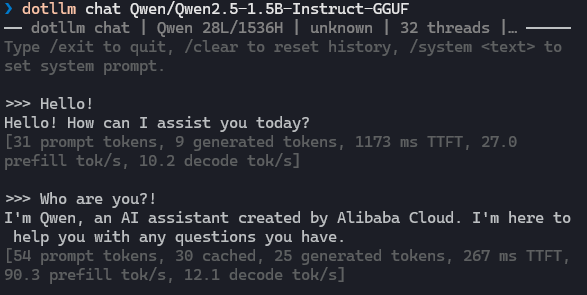
I've built a full LLM inference engine in C#/.NET 10. From scratch. Not a wrapper - native GGUF loading, BPE tokenizer, attention, KV-cache, SIMD-vectorized CPU kernels, CUDA GPU backend, OpenAI-compatible API. Solo dev, ~2 months, AI-assisted (not vibe-coded!). First preview is out.
Check it out for mode details at https://t.co/Bl5wAYalYY and https://t.co/rQWhKN0iVA
We just released a free, open-source course: GitHub Copilot CLI for Beginners.
It includes 8 chapters and a hands-on project that walks through installing Copilot CLI, using context, creating custom agents, working with skills, connecting MCP servers, and more.
Announcing the Azure Skills Plugin!
The Azure Skills Plugin brings that idea to Azure work. It bundles Azure skills, Azure MCP Server, and the Foundry MCP Server in one install. It can reason about Azure workflows and then execute them with real tools.
https://t.co/GxPsaFabzB
🎁 Concours – Tentez de gagner Metroid Prime 4: Beyond – Nintendo Switch 2 Edition ainsi que son porte-clés et partez explorer une planète mystérieuse.
🔄 RT + Follow @NintendHOME et @NintendoStoreFR
#️⃣ Commente avec le hashtag #MetroidPrime4
📅 Tirage le 19/11 (2 gagnants)
🎁 Concours
⚔️ À vos manettes, héros d’Hyrule !
🛡️ Tentez de gagner Hyrule Warriors : Les Chroniques du Sceau sur Nintendo Switch 2 👉 https://t.co/a2kQYRKmMA
👑 3 jeux à remporter… serez-vous digne du sceau légendaire ?
✔️ RT + FOLLOW @Cdiscount
🍀 TAS le 13/11
🎁 CONCOURS 🎁
Tentez de gagner 2 packs chacun composés d'un jeu "Hyrule Warriors : Les Chroniques du Sceau" et d'un poster officiel double-face !
🔁 RT + S'abonner à @NintendoFrance & @SavoirsZelda
🔴 Commente avec le hashtag #HyruleWarriors
TAS le 13/11 🍀