What is the purpose of YHS - BR?
Hydrology in Brazil is diverse and complex, encompassing everything from the world's largest river basin, the Amazon, to significant basins like the Paraná, São Francisco, and Tocantins-Araguaia.
Source: Getty images
📢 Presentation Announcement
We are excited to share that MSc. José Gescilam Uchôa will present his work during an Oral Session at the AGU Fall Meeting:
🗓️ Date: Wednesday, 11 December 2024
⏰ Time: 14:10–15:40 EST
📍 Location: Convention Center, Room 147 A
Presentation Details:
Abstract ID: 1517250
Final Paper Title: H33T-04 – Implications of Widespread Streamflow Losses Across Brazil
Session Title: H33T – Groundwater–Surface Water Interactions in Terrestrial, Coastal, and Marine Environments III
SHARE YOUR AGU24 RESEARCH!
Are you going to AGU24? Would you like to showcase your research to a broader audience?
The Young Hydrology Society chapter Brazil invites you to share a summary and we will post it on our platforms!
This is a great opportunity to highlight your work and connect with others eager to learn about your research.
It’s easy: just click the link below and fill out the form—we’ll take care of the rest!
https://t.co/6kZzc0IXrk
🌍✨ EGU 2025 is almost here!
📢 Submit your abstract by 15 January 2025 and don’t miss out on the chance to showcase your work!
💡 Need travel assistance? Check out the Roland Schlich Travel Support for on-site participants. Apply by 02 December 2024!
Hey y’all! Today was the last day of the YHS LATAM School 2024. Check out the summary of Day 5/5
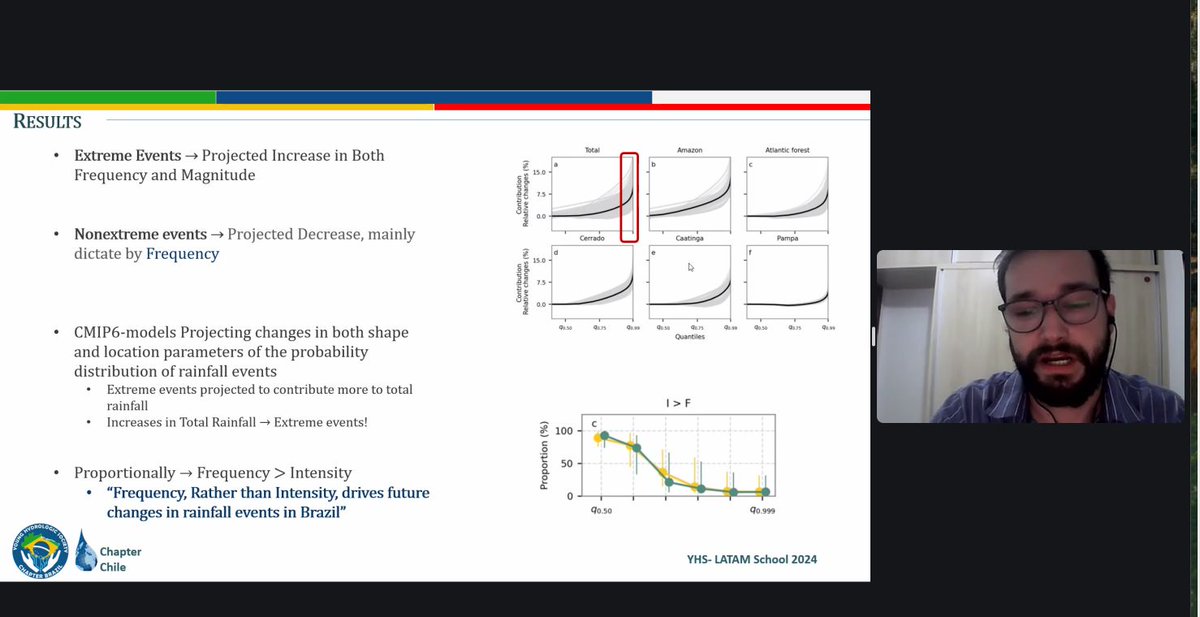
-Ballarin showed us how extreme rainfall events in Brazil will become more frequent and intense by the end of the century.
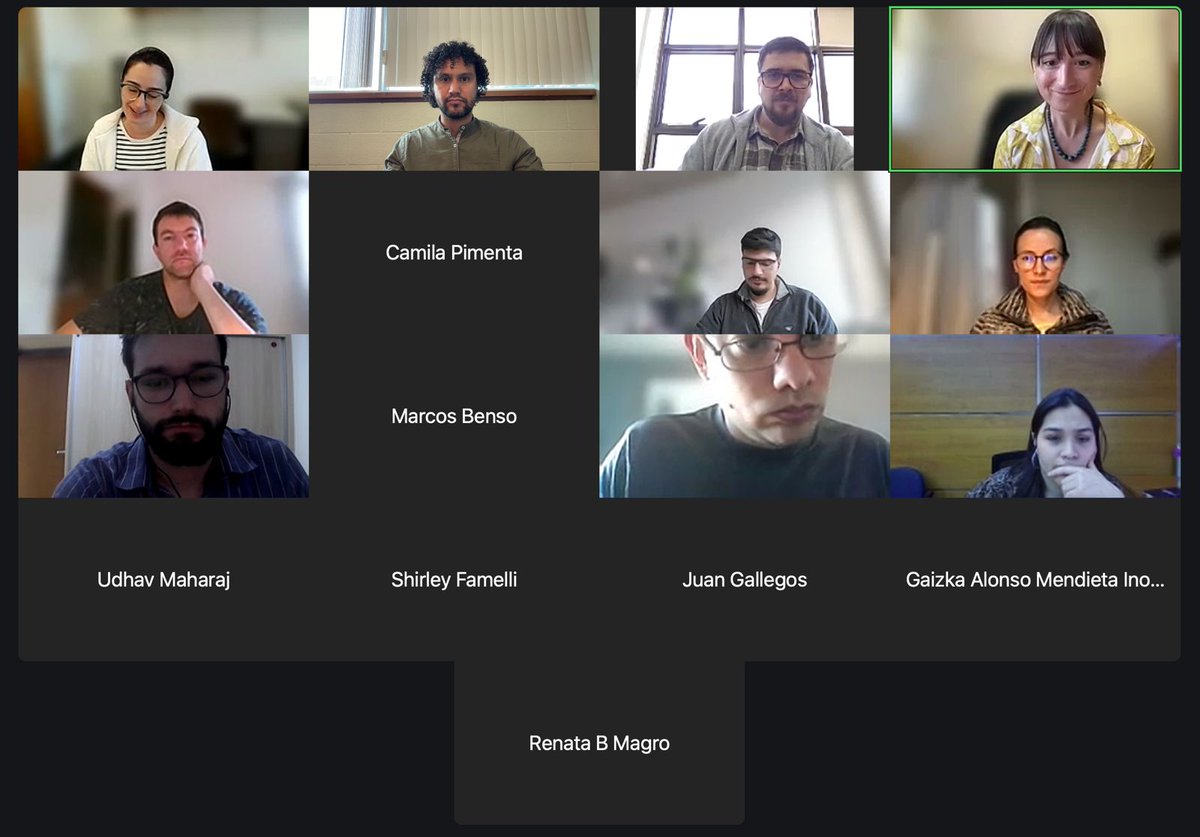
- Their final message was that we need to collaborate more in South American hydrology to advance the field using our different perspectives and experiences. Our school was one of the many activities we could do to connect researchers in South America."
Hey y'all, check out the summary of Day 4/5 from the YHS LATAM School 2024!
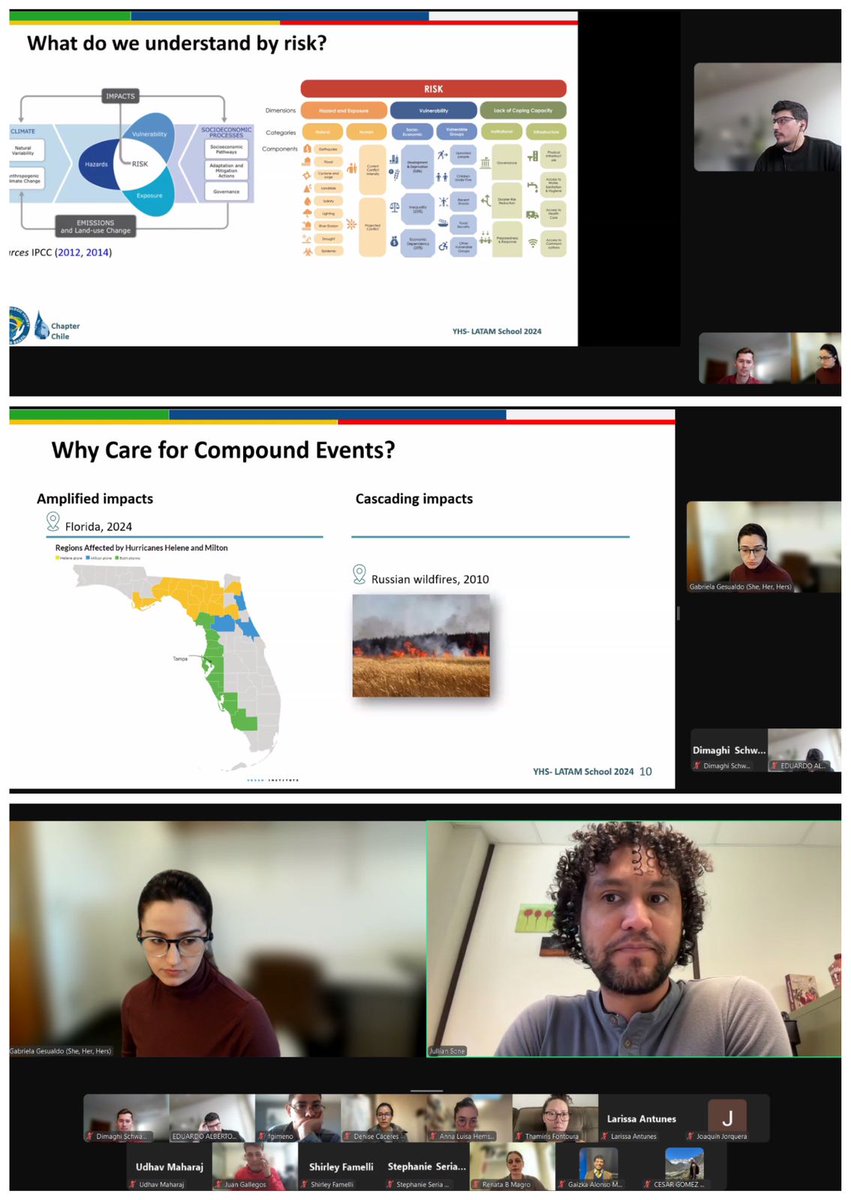
- Eduardo reminded us about the concept of risk as an intersection zone of hazards, vulnerabilities, and exposure.
Hey y'all, check out the summary of Day 3/5 from the YHS LATAM School 2024!
-@Dimaghi highlighted the applicability of traditional, advanced and low-cost monitoring
-Livia presented the use of Machine learning techniques to improve processes modeling (hybrid: physical aware ML, constrained and benchmarked with in situ observations)
-In group, we discussed the difficulty of monitoring evapotranspiration and the reliability of low-cost.
- Jullian stated that besides uncertainties, all models should be considered valid alternatives
- Joaquin reminded us of the many sources of model uncertainties from data (e.g. missing data) and model (e.g. chaotic or stochastic behavior)