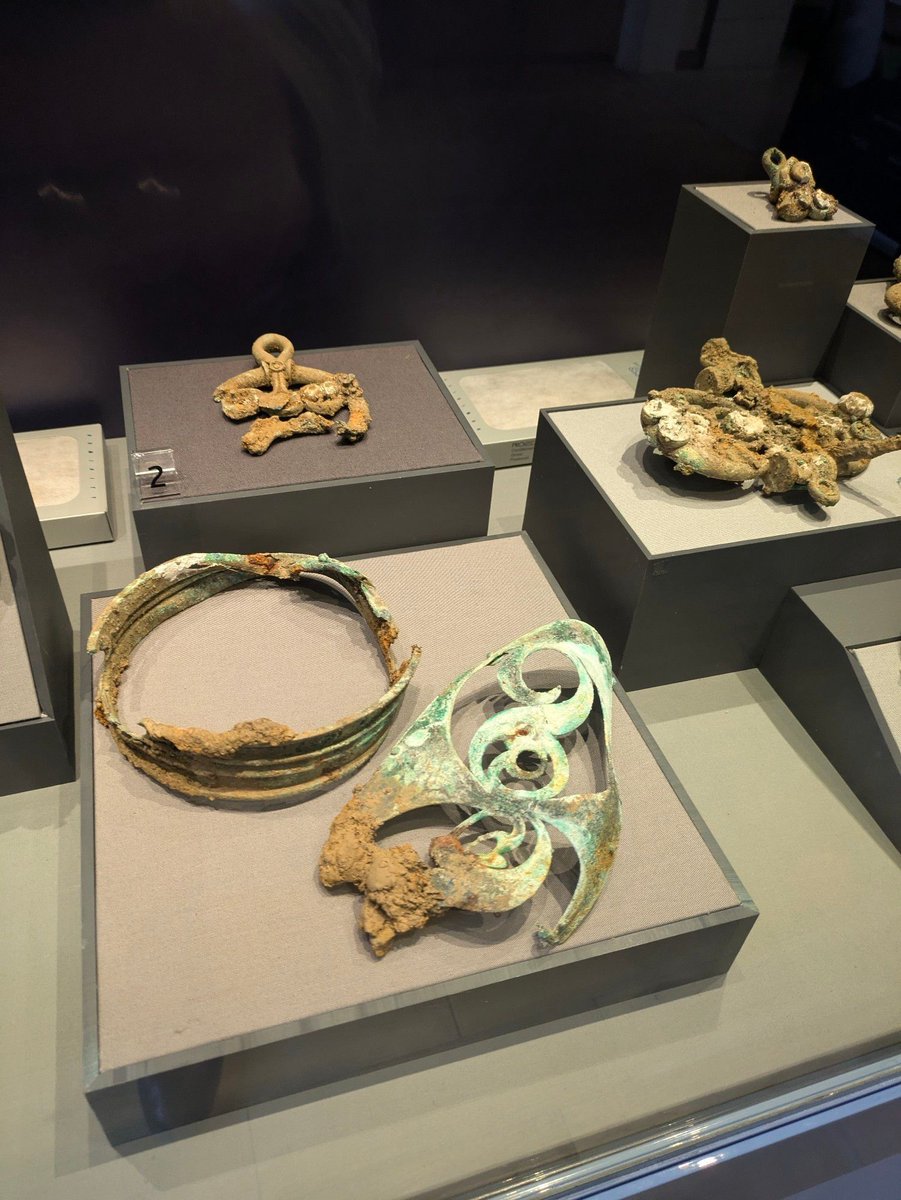
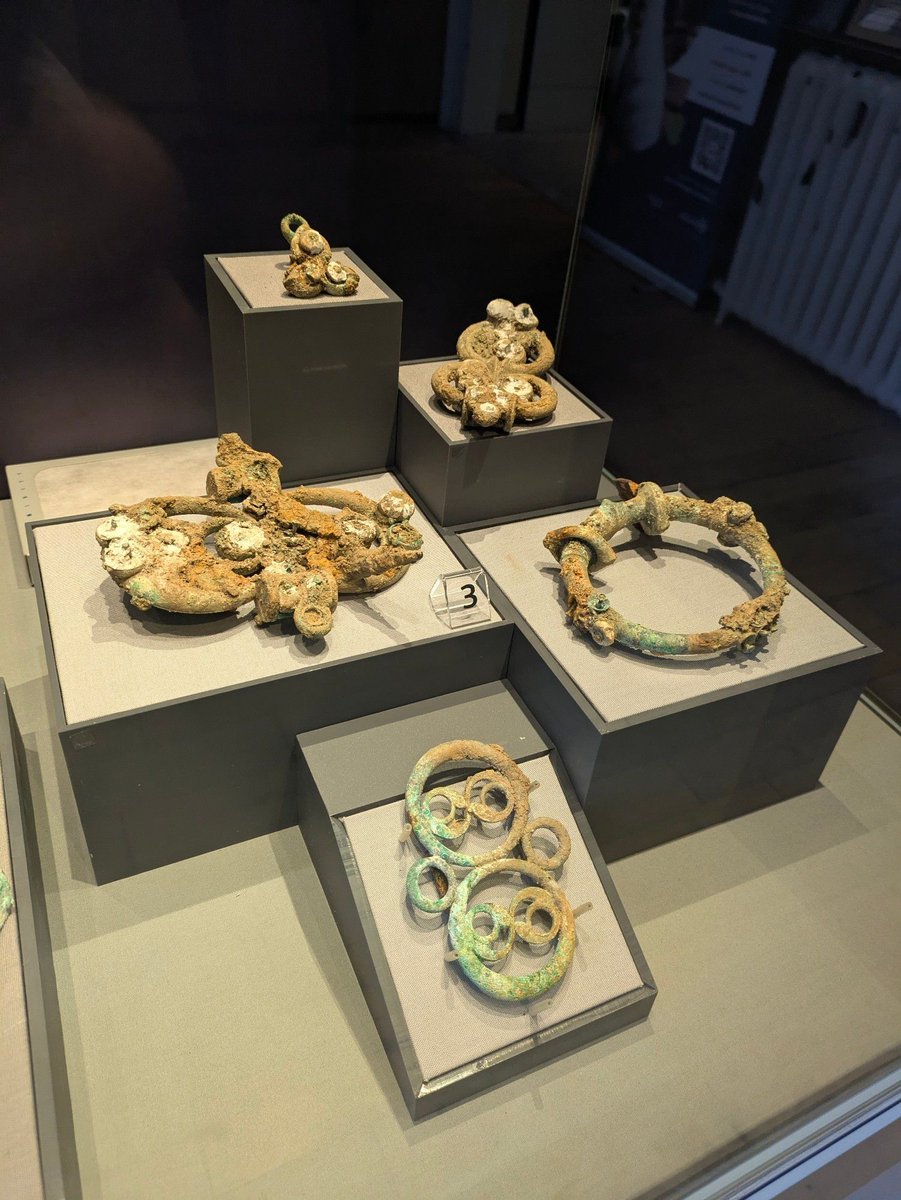
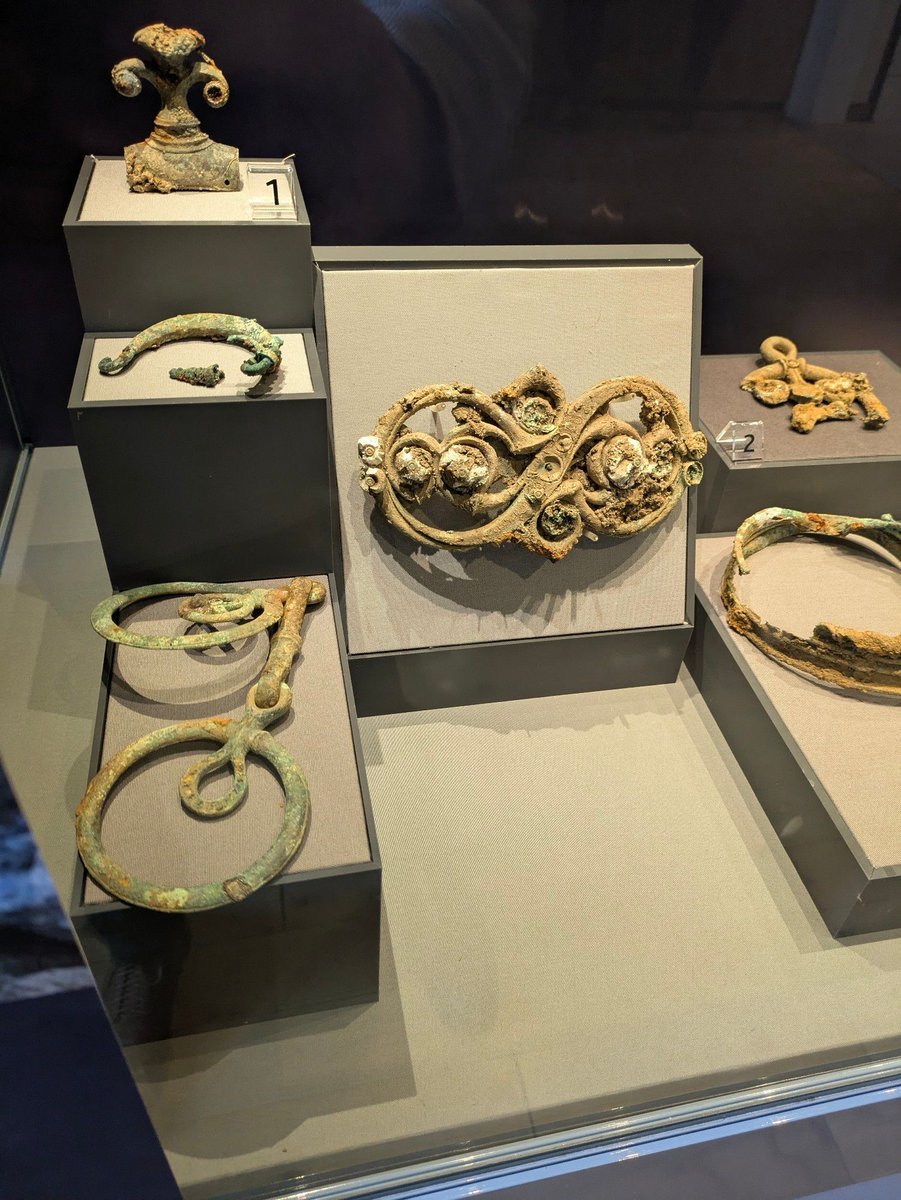
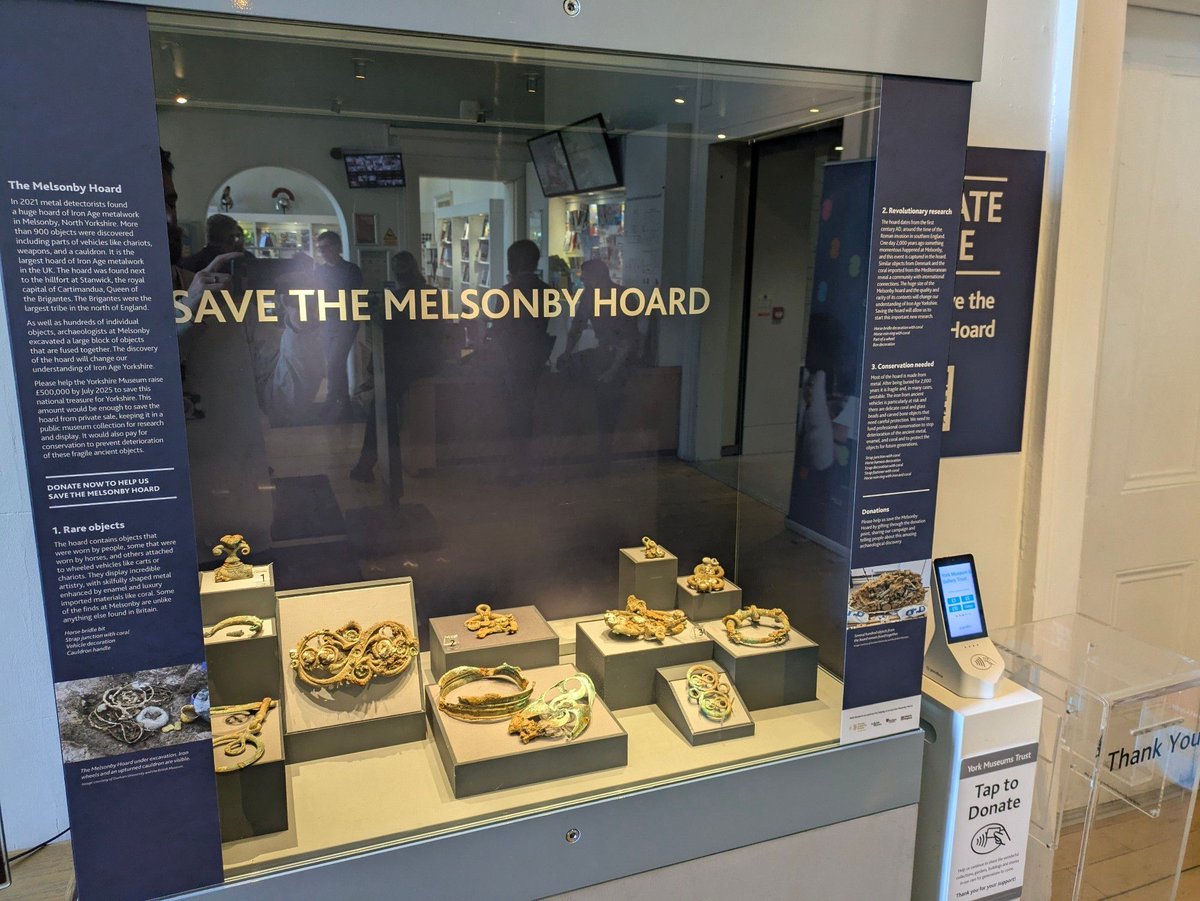
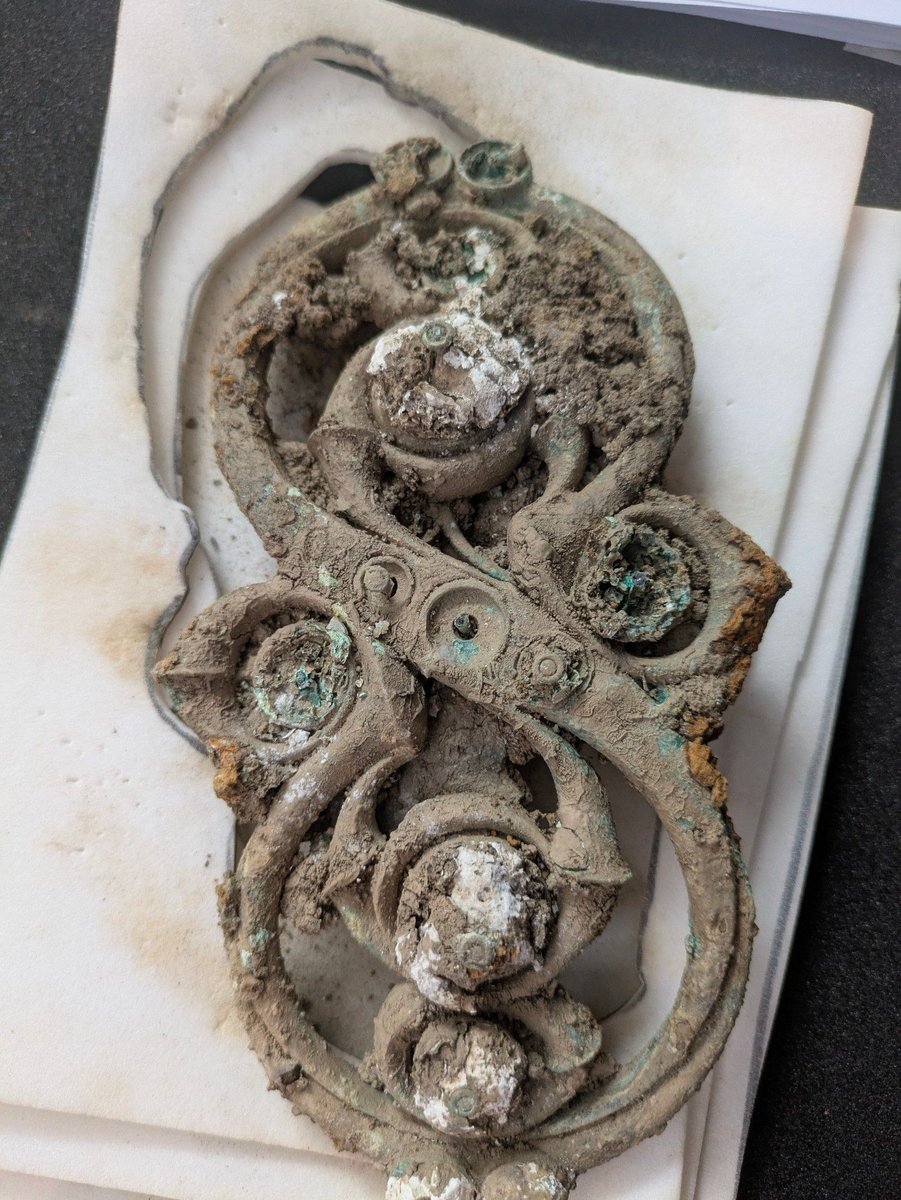
Discovered after 2,000 years, the Melsonby Hoard is a significant Iron Age find including over 900 items, including chariot wheels, ornate horse-harness fittings, cauldrons, and weapons. Support the Yorkshire Museum's fundraising effort here: https://t.co/DRVr3d8jSf #FindsFriday
The Melsonby Hoard is one of the UK's most significant Iron Age finds & could rewrite what we know about the period. Help the Yorkshire Museum acquire & conserve the hoard, keeping it in a public collection. #FindsFriday#SaveTheMelsonbyHoard Donate today: https://t.co/PrKt8FlvB0
@EleanorThomas17@YorkshireMuseum Please donate or share our campaign to help us save this hoard from private sale, and keep it in a public collection for research and display. Thank you!
@EleanorThomas17@YorkshireMuseum Hi! The Melsonby Hoard is classed as Treasure under English law, which means that local museums (in this case the Yorkshire Museum) have the first right to try to acquire it, but only if we can pay the market value. We are fundraising to reach this value. https://t.co/foh6FUkYrJ
NEW DISCOVERY The #MelsonbyHoard of 800+ Iron Age treasures from North Yorkshire has been announced today. Please donate to help @YorkshireMuseum save this amazing hoard in a public museum collection for the people of Yorkshire. https://t.co/tkogPuoWXi
The Melsonby Hoard was discovered by a metal detectorist in 2021 & declared Treasure. The Yorkshire Museum aim to raise £500,000 to acquire & conserve the hoard, keeping it in a public collection. Help keep the hoard in Yorkshire and donate today at: https://t.co/PrKt8FlvB0
NEW DISCOVERY The #MelsonbyHoard of 800+ Iron Age treasures from North Yorkshire has been announced today. Please donate to help @YorkshireMuseum save this amazing hoard in a public museum collection for the people of Yorkshire. https://t.co/5zqLkSLf7r
NEW DISCOVERY The #MelsonbyHoard of 800+ Iron Age treasures from North Yorkshire has been announced today. Please donate to help @YorkshireMuseum save this amazing hoard in a public museum collection for the people of Yorkshire. https://t.co/tkogPuoWXi
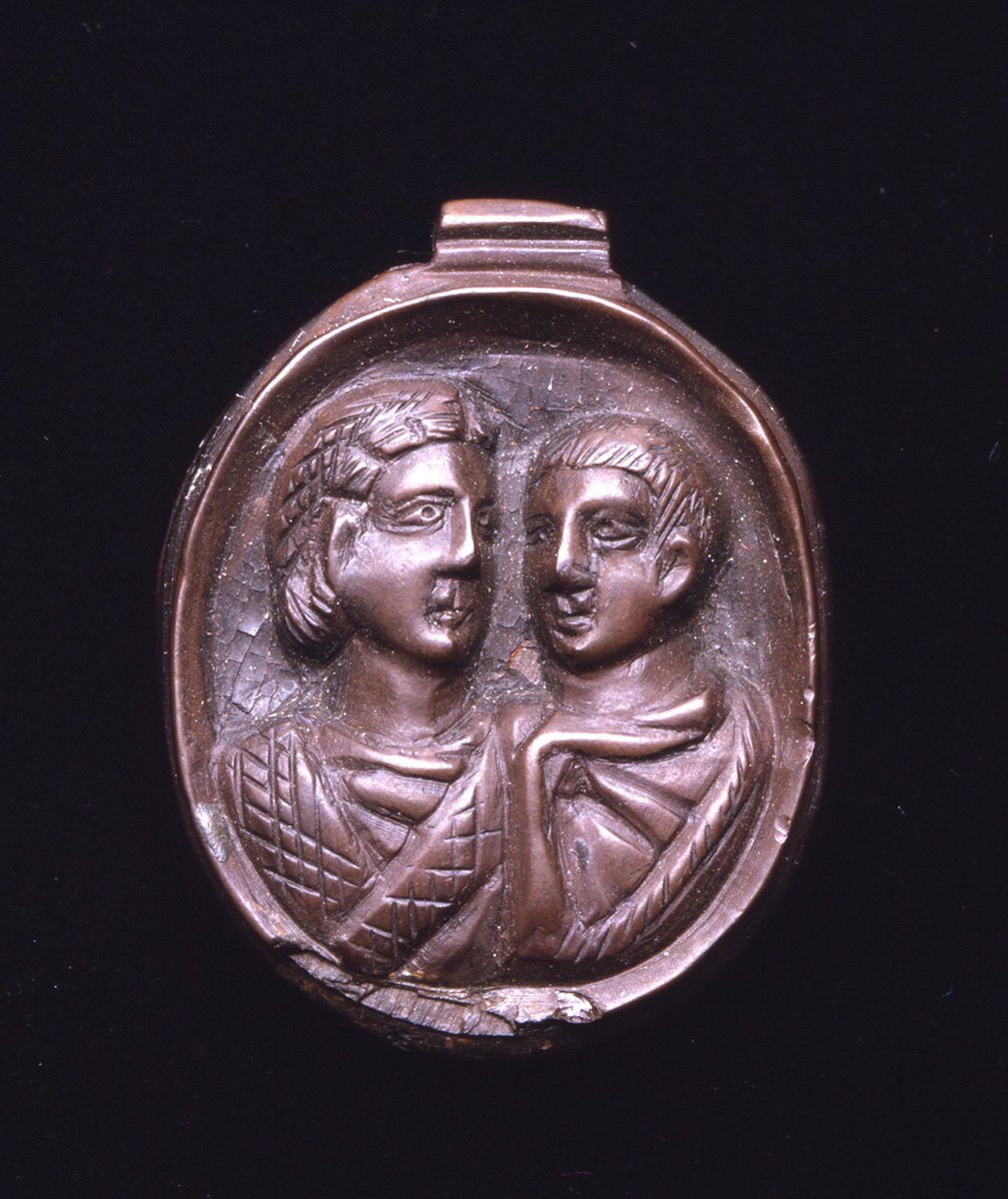
Third century #Roman jet pendant from York, depicting a man and a woman. While similar pendants have been found elsewhere, this is the only example from Britain where the pair are shown side by side instead of embracing. #YorkRomans#archaeology
Inscribed #Roman stone sarcophagus, found during the railway construction of Scarborough Bridge, York, in 1877. The inscription reads "To Julia Fortunata of Sardinia, faithful wife to her husband Verecundius Diogenes." #YorkRomans#archaeology
#Roman gold finger ring with a blue glass intaglio depicting the goddess Victory with wings, holding a wreath, and standing on a globe. 4th century AD. Found near Wistow in 2013. #YorkRomans#archaeology
#Roman ceramic vessel, dating to the 2nd century AD. Found at Burton Stone Lane, York, in 1858. The ceramic is a fabric type known as Ebor ware, a very local type of pottery produced in York (Eboracum). #YorkRomans#archaeology
Complete #Roman glass unguent bottle, probably for storing oils, perfumes, or ointments. Found in 1872, during the York Railway Excavations of a large Roman cemetery site. #YorkRomans#archaeology
#Roman copper-alloy saucepan with a suspension hole in its handle. It may once have been part of a soldier's kit, suspended from their bags for transport. The bowl has been mended in one place with a silver-coloured alloy. #YorkRomans#archaeology
If you’ve got a couple of minutes, please help Malton Museum find out what its future should look like! Whether you’ve visited or not, we’d love to hear from you.
🏺🖼️🧸📺🛶🚂🏇🥛🥪 🏰
#museum#archaeology#socialhistory#localhistory#NorthYorkshire
https://t.co/6C33ABswI8
#Roman antler weaving comb, found at Selby Dam, Selby, 1978. The teeth would slot between the vertical threads (warp) to push down the horizontal threads (weft) when weaving. The handle hole and slots show it was hung around the neck or from a belt. #YorkRomans#archaeology
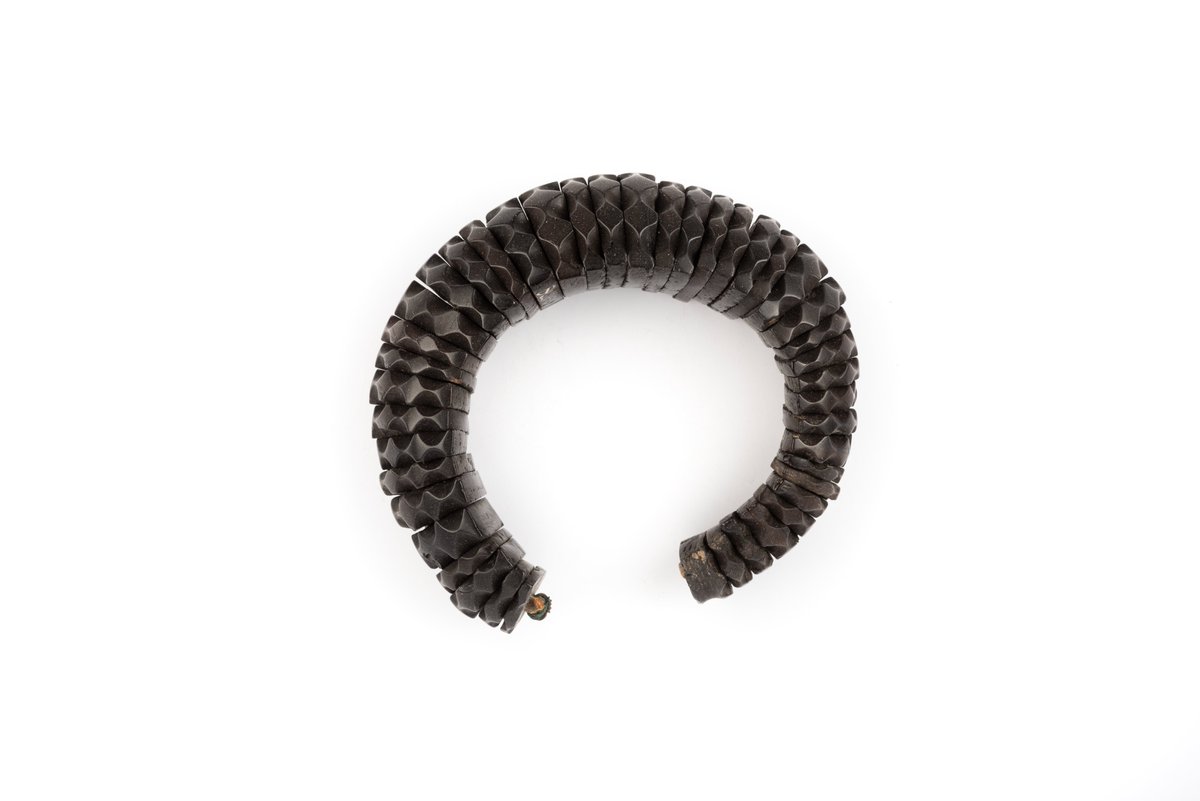
#Roman jet armlet made of 43 beads. Found during the excavation of a Roman stone sarcophagus burial in Blossom Street, York, 1852. #YorkRomans#archaeology
#Roman inscription recording that Perpetuninus and Aeternus restored the Temple of Hercules in Eboracum (York). A replica inscription can be found on one of the buildings on High Ousegate, near where this dedication stone was found. #YorkRomans#archaeology
#Roman box flue tile. Tiles like this were part of Roman hypocausts - a heating system where hot air from a furnace was channelled underneath raised floors and up through hollow box flue tiles in the walls to heat a room, often a bath house. #YorkRomans#archaeology