Young Solutions provides custom answers to manufacturing problems using automation, machine vision and laser measurements. Expect business/productivity tips.
We conduct a thorough evaluation of multiple laser suppliers for our integrations. Do you know which OEM provides the most consistent, optically perfect beam spot, and how that impacts laser measurement accuracy?
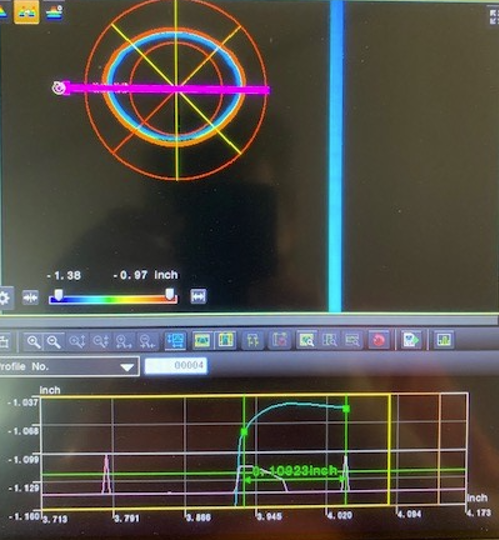
Screenshot for an automated inspection machine using machine vision and precision lasers. It monitors temperature and measures features to ten millionths of an inch, evaluating 28 unique dimensions.
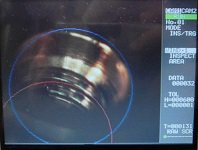
Wow. We were finding machined burrs on parts with machine vision over twenty-five years ago. What used to be cutting edge technology has been replaced with simple sensors.
Do you perform first and last piece shift validation with your machine vision system? This process can provide containment if something goes wrong with the current setup.
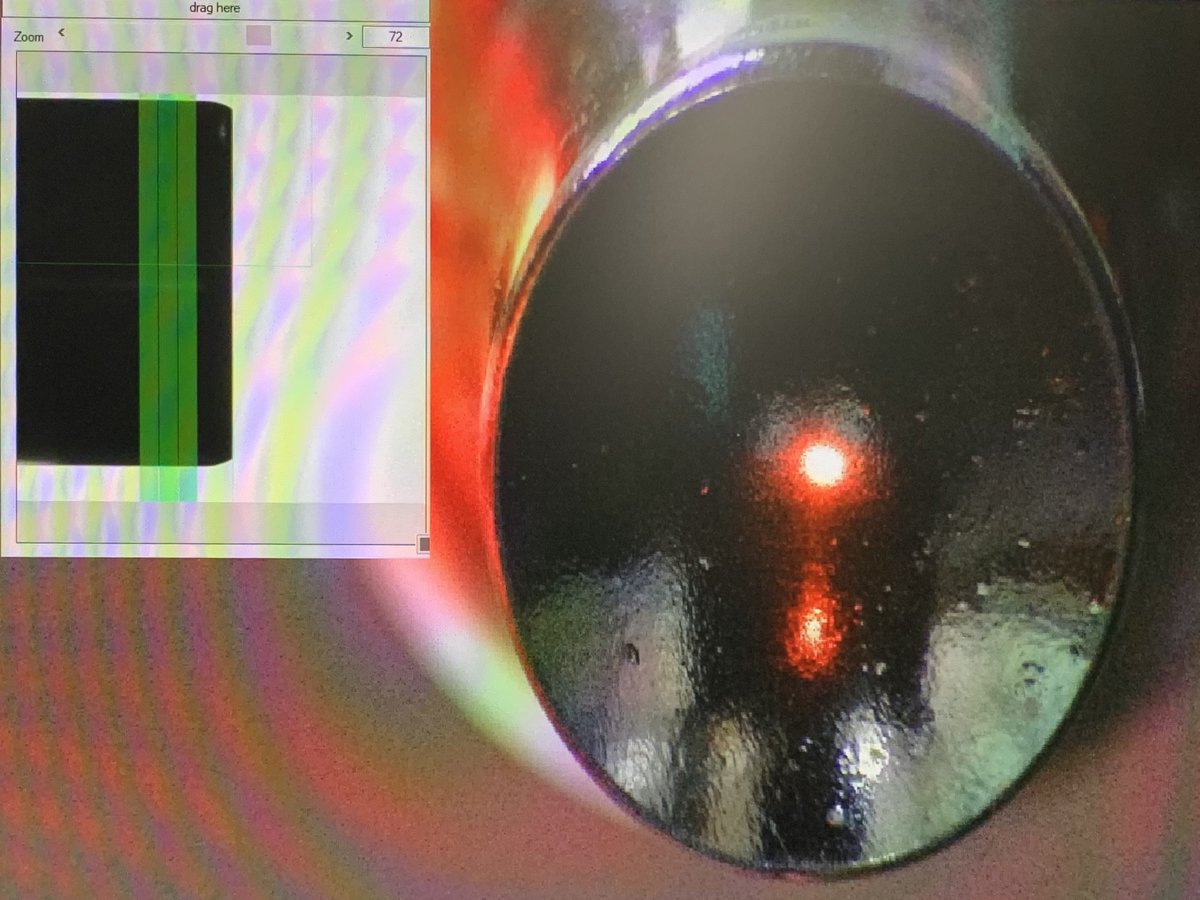
In the left picture, this is a thread insert on the face of a dime. Often, these small parts roll up a burr during manufacturing. These burrs can be easily sorted with a gate mechanism during processing.
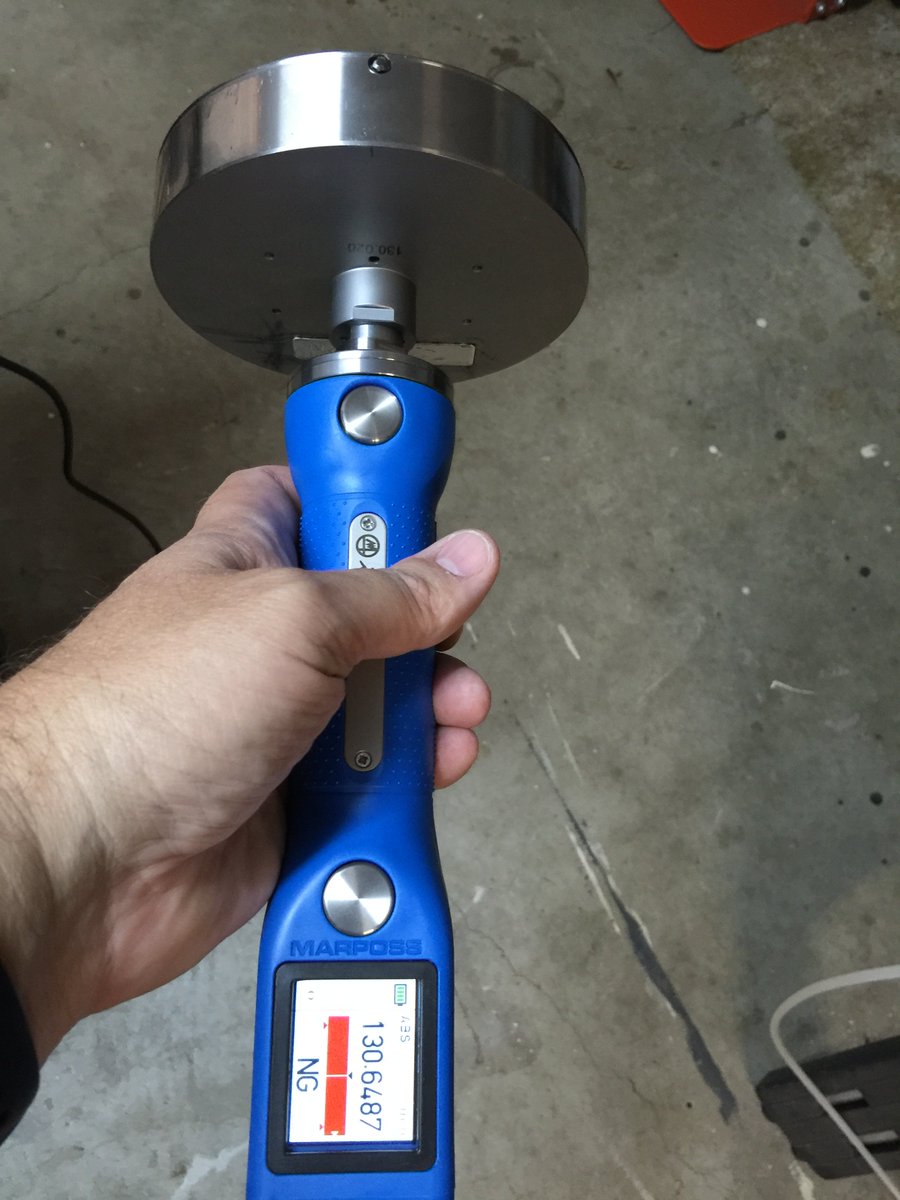
This is a strain gauge added to a fiberglass piping system. It provides feedback to help understand many of the forces at play when the system is in use.
This assembly was added to an indexing inline filling machine for Ice Cream. It tamps and seals a membrane to the top of the container. It seals the containers at a rate of one hundred ten per minute.
Machine Vision vs. Computer Vision: Understanding the Differences
In the rapidly evolving field of artificial intelligence (AI) and imaging technologies, "machine vision" and "computer vision" are two terms that are often used interchangeably. However, they refer to distinct concepts with different applications and characteristics. This article explores the differences between machine vision and computer vision to clarify their unique roles and impacts.
1. Definition and Purpose
Machine Vision: Machine vision primarily refers to the use of imaging technologies in industrial and manufacturing contexts. It involves the integration of cameras, sensors, and computer systems to perform tasks such as inspection, measurement, and quality control. The goal of machine vision is to enable machines to "see" and make decisions based on visual data to automate processes and improve efficiency.
Computer Vision: Computer vision, on the other hand, is a broader field within AI that focuses on enabling computers to interpret and understand visual information from the world. This includes tasks such as image recognition, object detection, facial recognition, and scene reconstruction. Computer vision aims to replicate human vision capabilities and apply them to a wide range of applications, from healthcare to autonomous vehicles.
2. Applications
Machine Vision Applications:
Quality Control: Inspecting products for defects and ensuring they meet quality standards.
Measurement: Precise measurement of components in manufacturing processes.
Sorting: Identifying and sorting items based on visual characteristics.
Robotic Guidance: Guiding robots to perform tasks such as assembly and packaging.
Computer Vision Applications:
Facial Recognition: Identifying individuals based on facial features for security and authentication.
Autonomous Vehicles: Enabling self-driving cars to navigate and make decisions based on their surroundings.
Medical Imaging: Analyzing medical images for diagnostic purposes.
Augmented Reality: Enhancing real-world environments with digital overlays for gaming, education, and more.
3. Technological Approach
Machine Vision: Machine vision systems typically use a combination of hardware (cameras, sensors, lighting) and software (image processing algorithms) to analyze visual data. These systems are often designed for specific industrial tasks and are optimized for high speed and accuracy in controlled environments.
Computer Vision: Computer vision leverages advanced AI techniques, particularly deep learning and neural networks, to understand and interpret visual data. It involves training models on large datasets to recognize patterns and make predictions. Computer vision can handle more complex and variable environments compared to machine vision.
4. Complexity and Adaptability
Machine Vision: Machine vision systems are generally less complex and more specialized, designed to perform repetitive tasks with high precision. They are well-suited for structured environments where the variables are known and controlled.
Computer Vision: Computer vision systems are more adaptable and capable of handling diverse and unstructured environments. They can learn from experience and improve over time, making them suitable for dynamic applications where conditions may change.
While machine vision and computer vision share the common goal of enabling machines to process and interpret visual information, they differ significantly in their scope, applications, and technological approaches. Machine vision excels in industrial automation and precision tasks, whereas computer vision is a versatile AI discipline with applications spanning various fields. Understanding these differences can help businesses and researchers choose the right technology for their specific needs and unlock the full potential of visual data analysis.
The Impact of AI on Machine Vision: A Revolution in Sight
Machine vision, the technology that enables machines to interpret and understand visual information from the world, has undergone a seismic transformation thanks to the infusion of artificial intelligence (AI). This article delves into the profound impact AI has had on machine vision, revolutionizing industries and enhancing various applications.
1. Enhancing Accuracy and Efficiency
One of the most significant contributions of AI to machine vision is the remarkable improvement in accuracy and efficiency. Traditional image processing techniques often struggled with complex and variable environments. AI, particularly deep learning, has addressed these challenges by enabling machines to learn from vast datasets and adapt to different scenarios. This has led to higher precision in tasks such as object recognition, defect detection, and quality control in manufacturing.
2. Expanding Applications
AI has expanded the horizons of machine vision, unlocking new applications across diverse industries. In healthcare, AI-powered machine vision systems assist in diagnosing diseases from medical images with unprecedented accuracy, reducing the burden on radiologists and improving patient outcomes. In agriculture, machine vision with AI aids in crop monitoring, pest detection, and yield prediction, contributing to more sustainable and efficient farming practices.
3. Autonomous Systems
The advent of AI has been a game-changer for autonomous systems, such as self-driving cars and drones. Machine vision, bolstered by AI algorithms, enables these systems to navigate complex environments, detect obstacles, and make real-time decisions. This advancement not only enhances safety but also paves the way for widespread adoption of autonomous technologies in transportation, logistics, and beyond.
4. Real-time Processing
AI has revolutionized the speed at which machine vision systems can process visual data. Real-time image and video analysis have become achievable, enabling applications like facial recognition for security purposes, traffic monitoring, and augmented reality experiences. The ability to process visual information instantaneously opens up a plethora of innovative possibilities.
5. Reducing Human Error
By integrating AI with machine vision, industries can significantly reduce human error in visual inspection tasks. AI-driven systems can perform repetitive and monotonous tasks with consistent accuracy, freeing up human workers to focus on more complex and creative aspects of their jobs. This not only enhances productivity but also ensures higher quality and reliability in various processes.
Conclusion
The impact of AI on machine vision is nothing short of revolutionary. From enhancing accuracy and efficiency to expanding applications across industries, AI has redefined what machines can see and do. As AI technology continues to evolve, we can expect even more groundbreaking advancements in machine vision, driving innovation and improving our daily lives in countless ways. The future of machine vision, powered by AI, is a vision worth seeing.